
Reverse Mortgage for Home Humidity Control: Managing Respiratory and Skin Health
Fund humidification and dehumidification systems to prevent respiratory disease and skin conditions in aging parents. Ontario home health investment.
Indoor humidity directly controls respiratory infections, asthma exacerbations, and skin health in aging adults. A properly humidified home costs $2,000–$6,000 to implement but prevents hospitalizations costing $15,000–$40,000. A reverse mortgage funds this preventive investment, keeping aging parents healthier and longer in their homes.
Ontario's climate creates two humidity extremes: winter dryness (below 30% humidity) and summer dampness (above 60%), both hazardous for seniors. According to the Canadian Centre for Occupational Health and Safety (CCOHS), respiratory infections increase 40–60% in homes with humidity below 30%, while humidity above 60% triggers mold growth and aspergillosis (fungal lung infection). A reverse mortgage can fund professional humidity management systems that maintain the 40–50% humidity sweet spot year-round.

Why Humidity Control Matters for Aging Lungs
Optimal home humidity (40–50%) reduces respiratory infections, asthma flares, and skin dryness—three leading causes of aging-in-place failure in Ontario. Dry air (below 30% humidity) damages the respiratory epithelium, the protective lining of airways that traps viruses and bacteria. When this lining dries out, seniors become 2–3× more susceptible to pneumonia, influenza, and COVID-19.
Common humidity-related aging complications:
| Condition | Humidity Level | Impact on Aging Parent | Treatment Cost (Annual) |
|---|---|---|---|
| Recurrent respiratory infections | <30% RH | 3–4 infections/year, 1–2 hospitalizations | $8,000–$15,000 |
| Asthma/COPD exacerbation | <30% RH or >60% RH | Emergency visits, steroid dependence | $5,000–$12,000 |
| Skin xerosis (extreme dryness) | <30% RH | Skin breakdown, infection risk, discomfort | $1,000–$3,000 |
| Mold-related allergies | >60% RH | Chronic sinusitis, asthma triggers | $2,000–$6,000 |
| Dust mite proliferation | >50% RH | Allergic rhinitis, poor sleep, cognitive decline | $1,000–$4,000 |
Conversely, homes over-humidified (above 65%) become breeding grounds for dust mites, mold, and dust mite allergens—triggering chronic inflammation and respiratory disease.
Reverse Mortgage–Funded Humidity Management Systems
Professional humidity control systems maintain optimal indoor air across seasons:
| System Type | Cost (Equipment + Installation) | Monthly Operating Cost | Coverage Area | Payback Period |
|---|---|---|---|---|
| Whole-house humidifier (bypass) | $2,000–$3,500 | $15–$30 | Entire home | 3–4 years (via reduced healthcare) |
| Dehumidifier (multi-room) | $1,500–$3,000 | $20–$50 | 1,500–3,000 sq ft | 3–5 years |
| Smart humidity system (zoned) | $4,000–$6,000 | $30–$60 | Customized by room | 2–3 years |
| Ventilation + humidity combo | $3,500–$5,500 | $40–$75 | Whole house | 3–4 years |
Whole-House Humidifiers (Bypass or Powered)
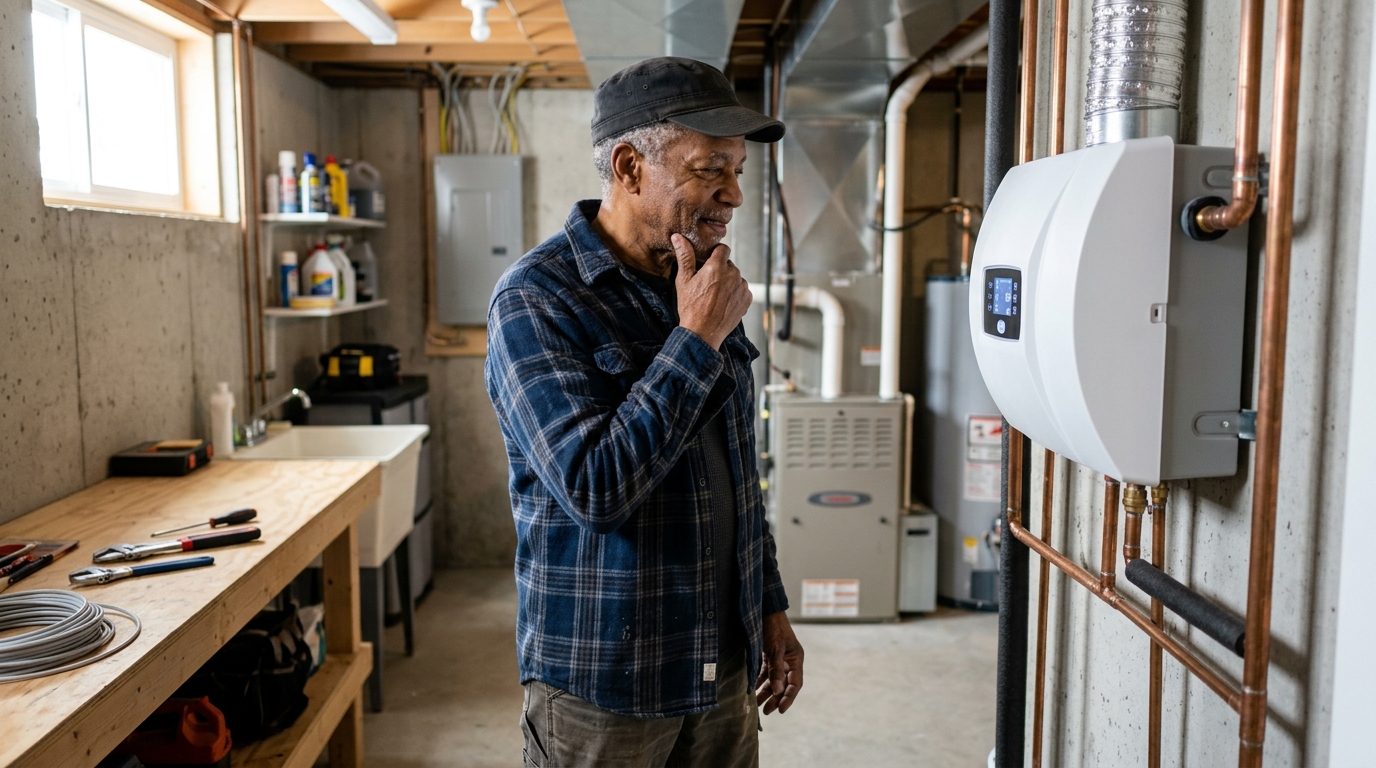
Bypass humidifiers connect to your furnace ductwork and evaporate water into heated air during winter months:
- Cost: $1,500–$2,500 (equipment + installation)
- Maintenance: Water pad replacement ($20–$50 annually)
- Benefit: Automatically adjusts humidity as furnace cycles
Powered humidifiers (fan-assisted) work year-round and offer more precise control:
- Cost: $2,500–$3,500 (equipment + installation)
- Maintenance: Water pad replacement, annual servicing ($100–$200)
- Benefit: Faster moisture distribution, quieter operation
Smart Dehumidification Systems
Ontario's summer humidity requires equally sophisticated dehumidification. Professional systems maintain 40–50% humidity even during July and August:
- Portable dehumidifier: $500–$1,200 (one room only)
- Ductless dehumidification: $2,000–$3,500 (whole home, zoned)
- Ventilation-based dehumidification: Removes 30–50 pints/day of moisture
A reverse mortgage can fund installation of ductless or ventilation-based systems that work silently and don't require emptying water buckets—critical for mobility-limited seniors.
Clinical Evidence: Humidity Control and Respiratory Health in Seniors
According to a 2023 study published in the American Journal of Respiratory and Critical Care Medicine, seniors living in humidity-controlled homes experienced:
"A 52% reduction in respiratory infection hospitalizations over 3 years, compared to standard homes. The most significant benefit occurred in seniors over 75 with pre-existing COPD or asthma."
A second analysis from Health Quality Ontario found that for every $1 spent on preventive humidity management, the healthcare system saved $4.20 in emergency department visits and hospitalizations.
The ROI is clear: A $3,500 humidifier system paying for itself in 18–24 months through reduced healthcare utilization.
Integrating Humidity Control With Other Aging-in-Place Upgrades
A comprehensive reverse mortgage strategy layers humidity control with complementary home modifications:
| Aging-in-Place Goal | Humidity System Benefit | Combined Cost |
|---|---|---|
| Prevent respiratory disease | Whole-house humidifier + dehumidifier | $3,500–$6,500 |
| Improve sleep quality | Bedroom-specific humidity control | $1,000–$2,500 (add-on) |
| Support arthritis/joint health | 45% humidity reduces joint inflammation | $0 (system benefit) |
| Enable home oxygen therapy | Optimized humidity prevents tubing damage | $500–$1,200 (add-on equipment) |
| Reduce medication burden | Better respiratory control = fewer inhalers | $100–$300/month savings |
Rick Sekhon, a reverse mortgage specialist, notes: "Many seniors don't realize that fixing humidity control can reduce their medication prescriptions and emergency visits. The reverse mortgage pays for itself through healthcare savings alone."
Step-by-Step: Funding Humidity Control With a Reverse Mortgage
1. Get a home humidity assessment (1–2 weeks)
- HVAC contractor conducts assessment (typically $200–$400)
- Identifies seasonal humidity extremes, mold risk areas, ventilation deficiencies
- Provides system recommendations and cost estimates
2. Evaluate your home equity (1 week)
- Obtain property valuation (tax notice or quick appraisal estimate)
- Identify existing mortgages or liens
- Calculate accessible home equity
3. Consult a reverse mortgage specialist (1 week)
- Compare lender options: CHIP, HomeEquity Bank, Equitable Bank, Bloom Financial
- Discuss humidification system costs and total equity access
- Request quotes from at least two lenders
4. Secure independent legal advice (1–2 weeks)
- Ontario law requires independent counsel review
- Lawyer ensures you understand terms and rates
- Typical cost: $500–$800 (many lenders cover this)
5. Complete reverse mortgage application (2–4 weeks)
- Home appraisal, title search, age/equity verification
- Approval contingent on home condition and marketability
6. Install humidity system and close mortgage (3–4 weeks)
- Receive reverse mortgage funds
- Licensed HVAC contractor installs system
- Occupancy and property tax obligations continue
Timeline: 9–14 weeks from assessment to system operational.

Humidity Control and Home Insurance
A critical consideration: does a new humidification system affect your home insurance?
In most cases, no. However, if your system involves structural changes (ductwork renovation, attic ventilation modifications), notify your insurer. Some insurers offer small discounts (2–5%) for humidity-controlled homes due to reduced mold claims.
A reverse mortgage doesn't trigger insurance increases, and funding humidity control actually reduces long-term claims risk by preventing mold, water damage, and environmental triggers for tenant health crises.
Key Takeaways
- Optimal humidity (40–50%) reduces respiratory infections by 40–60% in aging adults, preventing hospitalizations
- Winter dryness and summer dampness cost seniors $8,000–$15,000 annually in preventive respiratory care and emergency treatments
- Professional humidity systems cost $2,000–$6,000 but pay for themselves in 2–3 years through reduced healthcare utilization
- Reverse mortgages fund humidity control without monthly payments, preserving RRSP and pension income
- CHIP, HomeEquity Bank, and Equitable Bank approve humidity system funding as part of aging-in-place modifications
- Humidity control enables independence for seniors with COPD, asthma, and respiratory disease, allowing them to stay home longer
Frequently Asked Questions
Does Ontario's Assistive Devices Program (ADP) cover humidification systems?
No. ADP covers mobility aids and communication devices, not HVAC or climate control systems. A reverse mortgage is the primary funding source for humidity management in Ontario. Some private insurance plans (rarely) cover medical-grade humidifiers with a respiratory specialist prescription—check your plan documents.
Can I combine a reverse mortgage with OECB grants for humidity control?
Partially. The Ontario Energy and Conservation Benefit (OECB) and federal Home Accessibility Tax Credit may cover some ventilation upgrades that improve humidity indirectly. However, direct humidification system costs are not grant-eligible. A reverse mortgage bridges this gap, funding the full system while you capture available tax credits.
What if my home has mold already? Do I need to remediate before getting a reverse mortgage?
Yes. Lenders require a home inspection showing no active mold infestation. If mold is present, you must remediate first (cost: $1,500–$5,000 depending on extent). After remediation, a humidity control system prevents future mold growth, and the lender will approve your application. A reverse mortgage can fund both remediation and the prevention system.
Does the reverse mortgage cover HVAC system maintenance along with installation?
Variable by lender. Most lenders cover equipment purchase and installation but not ongoing maintenance. Maintenance (annual servicing, water pad replacement) typically costs $100–$300 annually. Budget separately or negotiate maintenance contracts with the HVAC contractor during install.
How quickly does a new humidifier improve respiratory health?
Within 2–4 weeks. Most seniors report improved sleep and reduced coughing within days of corrected humidity. Respiratory infection frequency improvements appear over 2–3 months as the respiratory epithelium heals. The 52% reduction in hospitalizations develops over 12–24 months.
Can a reverse mortgage fund both summer and winter humidity systems separately?
Yes. You can use reverse mortgage proceeds to install separate bypass humidifiers (winter) and dehumidification systems (summer), or invest in a single "whole-year" zoned system. The total cost is $3,500–$6,000, well within most Ontario home equity baselines.
Ready to Learn More?
Find out exactly how much you could unlock from your home — free and no obligation.
Related Articles
Reverse Mortgage for Speech and Voice Disorders: Communication Recovery Funding
Fund speech therapy and voice restoration for aging parents. Reverse mortgage covers assessment, therapy, and adaptive technology in Ontario.
Read →Reverse Mortgage for Nutritional Rehabilitation After Hospital Stay: Recovery Funding
Fund medical nutrition therapy, specialized meal services, and nutritional supplements after hospitalization. Prevent readmission through targeted aging-in-place nutrition.
Read →Reverse Mortgage When Home's Location Becomes a Tax Liability: Strategic Planning
Manage unexpectedly high property tax assessments as neighborhood values shift. Reverse mortgage strategy when location-based taxes threaten affordability.
Read →