
Reverse Mortgage Before Industrial Rezoning: Securing Equity When Your Neighborhood Changes
Protect your home equity with a reverse mortgage before industrial rezoning or commercial development reduces your property value in Ontario.
What happens to your home's value when your quiet residential street gets rezoned for industrial or commercial use? It can drop 15–40% within 18 months—but a reverse mortgage applied before the rezoning announcement lets you capture your equity at current market rates, not reduced post-announcement values.
Rezoning happens faster than many homeowners expect. Municipal councils sometimes approve rezoning applications in a single meeting, and by the time longtime residents learn about the change, appraisers are already downvaluing the neighborhood. A reverse mortgage, obtained strategically, protects you.
How Industrial Rezoning Affects Home Values in Ontario
Industrial or commercial rezoning transforms a residential area into a different use category. This includes:
- Manufacturing facilities (automotive, food processing, chemical)
- Logistics hubs and distribution centers (truck traffic, 24-hour operations)
- Waste processing or recycling plants (odor, noise, environmental concerns)
- Large retail or commercial zones (asphalt, traffic, loss of residential character)
The impact on property value is immediate and severe. Appraisers re-evaluate homes based on proximity to industrial activity. Banks reduce lending multiples. Buyers disappear.
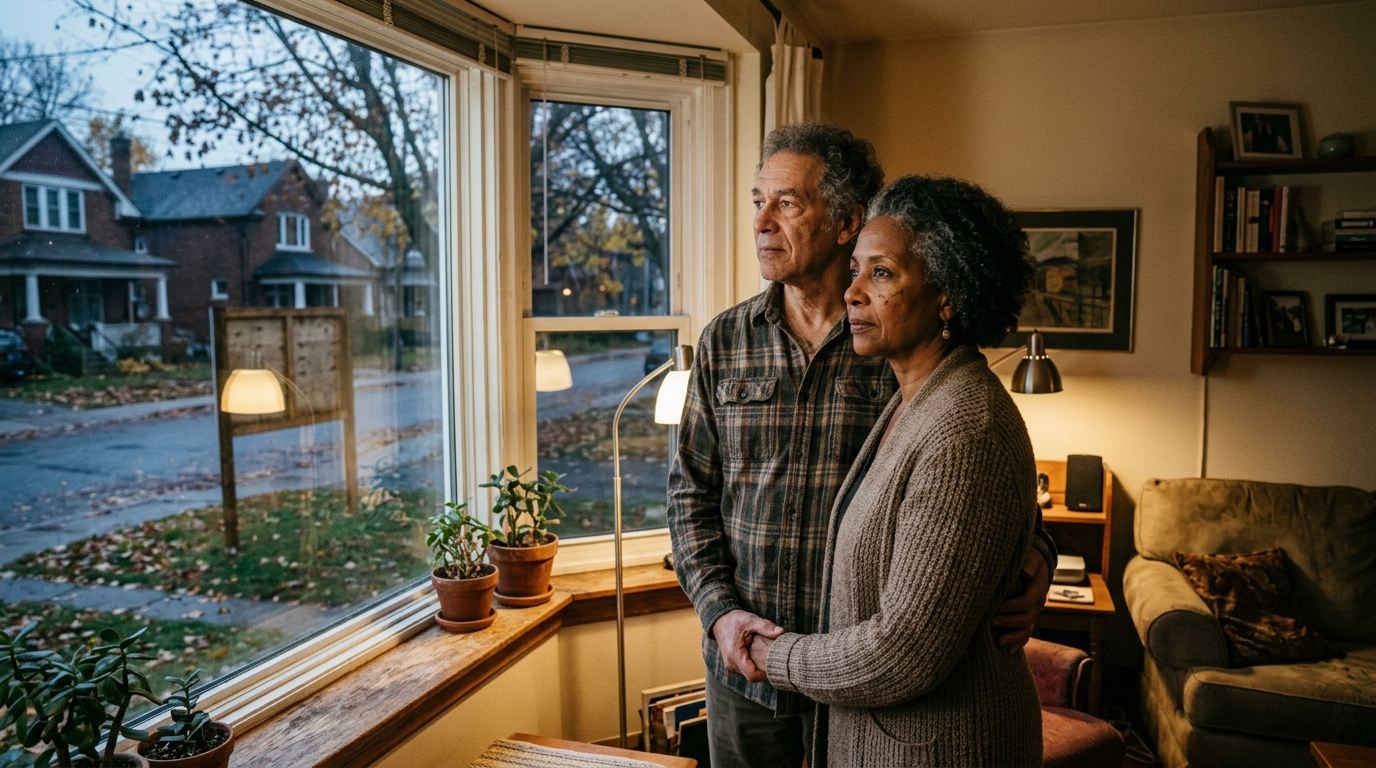
According to Statistics Canada housing data, residential properties within 500 meters of newly-zoned industrial facilities experience average value declines of 18–25% in the first year, with further deterioration if heavy traffic or emissions occur.
Real Ontario Example: Mississauga Industrial Expansion (2020–2022)
A neighborhood of 1950s bungalows near Hurontario and the Gardiner Expressway in Mississauga saw municipal approval for industrial rezoning in early 2021. Homes valued at $620,000 in December 2020 dropped to:
- $475,000–$510,000 by June 2021 (after rezoning announcement)
- $420,000–$460,000 by late 2022 (after first facility opened)
Loss per homeowner: $150,000–$200,000 in equity vanished in under 24 months.
Why Reverse Mortgages Protect You Before Rezoning
When industrial rezoning is announced (or even rumored), three things happen simultaneously:
- Appraisals drop — Your home's assessed value falls, reducing available reverse mortgage amounts
- Lender interest tightens — CHIP, HomeEquity Bank, and Equitable Bank may decline applications for properties in rezoning zones (lenders view them as higher risk)
- Your time window closes — Once rezoning is official, obtaining a reverse mortgage becomes difficult or impossible
The solution: Apply for a reverse mortgage before rezoning becomes public or certain.
Reverse Mortgage Timing and Value Protection
| Timeline Stage | Home Value | Reverse Mortgage Available | Risk Level | Action |
|---|---|---|---|---|
| Pre-rezoning (rumors/speculative) | $650,000 | Yes, full capacity (45% LTV ≈ $292,500) | Low | APPLY NOW |
| Rezoning announced (council vote) | $600,000 | Limited; some lenders restrict | Medium | Quick application; expect delays |
| Rezoning approved, facilities planned | $500,000 | Difficult; lenders may decline | High | Cannot obtain reverse mortgage |
| Industrial facility operational | $420,000 | Unavailable | Very High | Stranded equity |
The key insight: a reverse mortgage locked in at $650,000 home value captures your equity at the peak. Even if your home later declines to $420,000, you've preserved approximately $292,500 in accessible funds.

According to FCAC (Financial Consumer Agency of Canada), homeowners in declining neighborhoods are at higher risk of negative equity if they took variable-rate or short-term mortgages. Reverse mortgages, by contrast, lock your borrowing capacity at application, protecting you from subsequent value losses.
How to Position Yourself Before Rezoning
Step 1: Monitor Your Area's Official Plan and Zoning Proposals
Ontario municipalities post zoning change applications on public websites and in municipal council agendas. Signs are:
- Local "in-camera" council meetings discussing area planning
- Applications filed by developers for rezoning (searchable on municipal websites)
- Public notices in local papers (often small, easy to miss)
- Rumors from long-time neighbors or community associations
Action: Subscribe to your municipality's notice system (most offer email alerts for rezoning applications in your ward).
Step 2: Get Pre-Approved for a Reverse Mortgage Immediately
Once you detect even a possibility of rezoning in your area, contact reverse mortgage lenders:
- CHIP
- HomeEquity Bank
- Equitable Bank
- Bloom Financial
- Home Trust
Request a pre-approval or estimate letter. This locks your borrowing capacity at your current home value, even if rezoning is later announced.
Step 3: Access Funds While Appraisals Are High
Pre-approval means you can close quickly once rezoning becomes public, capturing equity before appraisals adjust. Many lenders can close within 2–4 weeks if pre-approved.
Step 4: Deploy Funds for Aging-in-Place Priorities
Once you've secured your equity via reverse mortgage, use funds for:
- Home modifications (renovations unaffected by neighborhood decline)
- Healthcare costs and long-term care planning
- Living Legacy gifts to adult children (while equity is accessible)
- Debt elimination (paid before neighborhood value drops)
Real Scenario: North Oshawa Rezoning, 2023
Homeowner: Sandra, age 68, widowed, lived in her Oshawa bungalow 35 years. Home valued $580,000 in late 2022.
In January 2023, municipal notices appeared: neighboring industrial zone expanding into her street (approved for logistics hub).
Sandra's options:
- Wait and hope the facility never opens (risky—it did open in early 2024, home dropped to $420,000)
- Sell immediately at $580,000 (but where to move at 68, in same market?)
- Obtain reverse mortgage at $580,000 value (pre-announcement)
Sandra chose reverse mortgage: Locked in $261,000 accessible equity (45% LTV at $580,000 value). Even though home later declined to $420,000, she retained the full $261,000 in funds, which she deployed for renovations, healthcare prep, and gifting to her adult child for down payment.
Without the reverse mortgage: Sandra would have trapped equity. At $420,000 current value, a reverse mortgage would only offer ~$189,000—a $72,000 loss.
Key Takeaways
- Rezoning can drop home values 15–40% in under 24 months; waiting to see if it happens is risky—by then, reverse mortgage lenders may decline.
- Reverse mortgages lock your borrowing capacity at application, protecting you from subsequent appraisal declines if rezoning is announced later.
- Ontario municipalities post rezoning applications publicly on council agendas and zoning websites; proactive monitoring gives you months of advance warning.
- Pre-approval letters from CHIP, HomeEquity Bank, Equitable Bank, or Bloom Financial can be obtained quickly, positioning you to close before appraisals adjust.
- Funds accessed via reverse mortgage can fund aging-in-place renovations and debt elimination, which retain their value even if neighborhood property values decline.
- OSFI regulations limit reverse mortgage lending in declining markets, so lenders become restrictive after rezoning is announced; apply before that moment.
Frequently Asked Questions
How do I know if my area is at risk of rezoning?
Check your municipality's official plan and zoning bylaw (available online). Look for adjacent properties zoned industrial or commercial. Attend ward council meetings or subscribe to municipal notice systems. If your neighborhood is on the edge of an industrial zone, it's at risk within 5–10 years.
Can I get a reverse mortgage on a property where rezoning is already approved?
Possibly, but with significant limitations. Lenders will require a new appraisal reflecting rezoning risk. Some lenders may decline entirely. If rezoning is already council-approved, you've missed the window—act before approval.
If I get a reverse mortgage before rezoning, can my lender take it back if the neighborhood declines?
No. A reverse mortgage is your loan, not your lender's. They cannot call it due based on neighborhood changes. Your obligation is only due when you sell, move to long-term care, or pass away. The loan amount remains fixed regardless of subsequent property value changes.
What if industrial rezoning never happens—am I stuck with an unnecessary reverse mortgage?
No. A reverse mortgage is optional. If rezoning doesn't occur and your property retains value, you can simply not draw funds or keep the line of credit intact. Many homeowners use reverse mortgages as a financial safety net, drawing only if needed. There's no penalty for having access you don't use.
Does FSRAO or FCAC provide guidance on this scenario?
FCAC warns homeowners about "predatory lending" in declining neighborhoods, where some lenders push aggressive borrowing terms. Stick to regulated lenders (CHIP, HomeEquity Bank, Equitable Bank, Bloom Financial, Home Trust) which are FSRAO-supervised and offer consumer protections.
Should I consult Rick Sekhon or a reverse mortgage specialist before rezoning?
Yes. A reverse mortgage broker can assess your neighborhood's zoning risk, timing for rezoning applications, and your optimal borrowing strategy. Rick Sekhon Reverse Mortgages offers free consultations to homeowners concerned about neighborhood changes.
Take Action Now
If you live on the edge of an industrial or commercial zone in Ontario, rezoning may arrive sooner than you expect. A proactive reverse mortgage application, obtained now, locks your equity at today's value.
Don't wait for the rezoning announcement. By then, it's too late.
Contact Rick Sekhon, CHIP, HomeEquity Bank, or Equitable Bank for a free pre-approval estimate. Secure your equity while your neighborhood's value is intact.
Your home's future depends on the decision you make today.
Ready to Learn More?
Find out exactly how much you could unlock from your home — free and no obligation.
Related Articles
Reverse Mortgage for Aging Parent's Water Quality and Medication-Nutrient Interaction Management
Fund water quality testing, medication-nutrient interaction assessment, and specialized supplementation for aging parents in Ontario.
Read →Reverse Mortgage for Multilingual Household Caregiving: Language Support and Cognitive Decline Management
Fund bilingual caregivers, professional interpreters, and language-specific cognitive assessment for aging parents in Ontario multilingual homes.
Read →Reverse Mortgage for Mandatory Utility Infrastructure Upgrades: Electrical, Water, and Gas Code Compliance
Fund mandatory home utility infrastructure upgrades—electrical panels, water systems, gas lines—to maintain code compliance and aging in place in Ontario.
Read →