
Reverse Mortgage for Aging Parent's Hidden Property Tax Arrears: Emergency Tax Debt Recovery
Discover your aging parent's underpaid property taxes and resolve arrears before foreclosure using a reverse mortgage in Ontario.
What happens when you discover your aging parent has underpaid property taxes for years without telling you? It's a financial crisis hiding in plain sight: arrears accumulate rapidly with interest and penalties, leading to municipal tax sale and home loss—but a reverse mortgage provides emergency funds to settle arrears before foreclosure procedures begin.
Many adult children discover this crisis only after their aging parent passes away, or when a routine municipal letter arrives. By then, accumulated interest and penalties have transformed a $5,000 tax shortfall into a $20,000+ debt. A reverse mortgage, obtained urgently, prevents foreclosure and home loss.
Why Aging Parents Underpay Property Taxes: Common Scenarios
Underpayment happens for several reasons:
Scenario 1: Cognitive Decline (Undiagnosed)
Your aging parent has been undergoing early cognitive decline for years—undiagnosed. They forget to pay property taxes, or pay inconsistently. By the time dementia is diagnosed formally, tax arrears have accumulated to $10,000–$15,000.
Scenario 2: Financial Abuse / Caregiver Exploitation
An exploitative caregiver or adult child convinces your aging parent to sign over property tax payment authority, then deliberately underpays to extract equity or control. Tax arrears become a mechanism of financial abuse.
Scenario 3: Property Tax Assessment Error
Your aging parent disputes a property tax assessment increase and stops paying as a protest. Years pass. The municipality doesn't enforce payment (while waiting for legal resolution), but interest and penalties accrue. When the dispute resolves, the arrears bill shocks your parent.
Scenario 4: Extreme Financial Hardship
Your aging parent lives on CPP/OAS only ($20,000–$25,000/year). Property taxes consume 15–20% of income. Over years, they underpay intentionally, rationing income across medications, food, and utilities. By age 80, arrears accumulate silently.
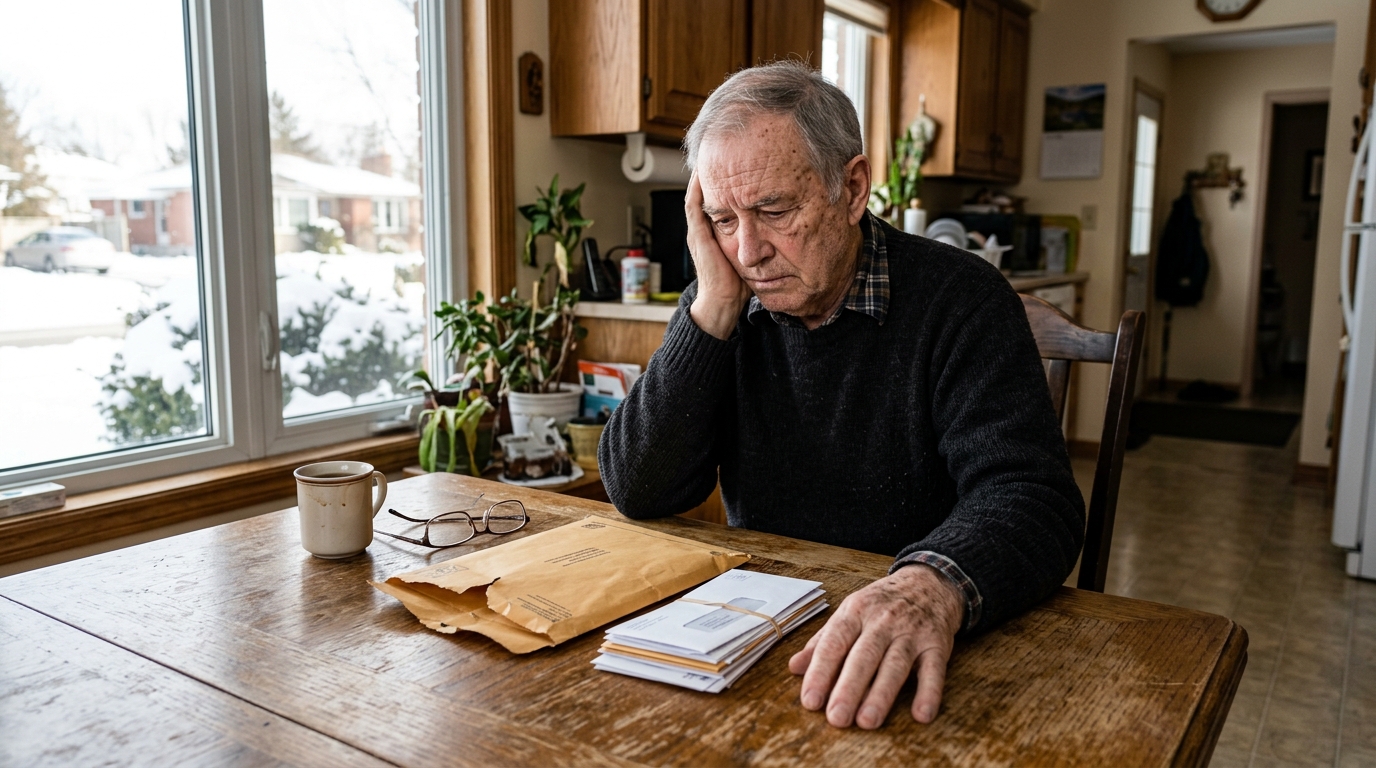
According to Statistics Canada and Ontario Municipal Association, property tax arrears affect approximately 1–2% of Ontario homeowners. However, among seniors 75+, the rate rises to 3–4%, suggesting cognitive decline and financial vulnerability are significant factors.
How Property Tax Arrears Escalate: Interest, Penalties, and Foreclosure Risk
Ontario property tax arrears follow a strict municipal enforcement timeline:
| Year | Tax Owed | Interest Rate | Penalty | Cumulative Debt | Foreclosure Risk |
|---|---|---|---|---|---|
| Year 1 | $5,000 | — | 0% | $5,000 | Reminder notice |
| Year 2 | $5,000 (current) + prior | 8–10%/year | +$400–$500 | $10,900 | Caution letter |
| Year 3 | $5,000 (current) + prior interest | 8–10%/year | +$400 | $16,700 | Enforcement notice |
| Year 4+ | $5,000 (current) + compounding | 8–10%/year | +$400 | $22,000+ | Tax sale application |
After 3 years of non-payment, Ontario municipalities can proceed with tax sale proceedings, potentially forcing sale of your parent's home to recover arrears.
The crisis escalates quickly. What starts as a $5,000 oversight becomes a $22,000+ crisis within 4 years—and your parent risks losing their home entirely.
Real Scenario: Mississauga Parent, Tax Arrears Discovery
Aging parent: Patricia, age 81, widow, lives in $650,000 home (Mississauga), primary income CPP/OAS (~$22,000/year).
Situation: Patricia's cognitive decline was undiagnosed until age 79 (early-stage memory loss). Adult children took over finances at age 80, discovering she'd missed property tax payments for 4 years.
Tax arrears breakdown:
- Year 1 unpaid: $4,800
- Year 2 unpaid: $4,800 + interest (8% = $384) = $5,184
- Year 3 unpaid: $4,800 + compounding interest = $5,600
- Year 4 unpaid: $4,800 + compounding interest + penalties = $5,800
- Total arrears: $21,584 (interest + penalties added)
- Municipal status: Tax sale application filed; 30-day notice to pay or proceed with forced sale
Patricia's options:
- Liquidate investments: $21,584 from retirement portfolio (but Patricia had minimal savings; CPP/OAS only)
- Sell home: Market value $650,000; but tax sale proceeds would go to municipality first, reducing estate
- Personal loan: $21,584 at 12%+ APR (predatory lender); $215/month payments (40% of Patricia's income)
- Reverse mortgage
Patricia's adult children chose reverse mortgage:
- Home value: $650,000
- Available reverse mortgage: ~$292,500 (45% LTV)
- Borrowed: $21,584 (lump sum to settle arrears)
- Rate: 6.99% (Equitable Bank, 2026)
- Municipal tax sale application withdrawn immediately upon payment
- Monthly payment: $0 (interest accrues; due at sale/passing)
Outcome: Patricia retained her home. Tax arrears settled. No forced sale. Adult children implemented property tax payment plan (automatic municipal debit) to prevent future arrears. Patricia's home remained in her estate; property taxes paid current going forward.
If Patricia had not obtained reverse mortgage: Tax sale would have proceeded. Home sold to recovery investor at fraction of market value. Patricia would lose $400,000+ in equity. She'd need to relocate (crisis for 81-year-old) or move to low-cost assisted living funded by reduced estate proceeds.
According to FSRAO, tax arrears are a leading cause of forced home sales among Ontario seniors. Early intervention (within 12 months of non-payment) can prevent escalation to tax sale proceedings. A reverse mortgage obtained within this 12-month window is preventive; after 12 months, options narrow dramatically.
Property Tax Arrears by Ontario Municipality: Variations and Foreclosure Risk
Different municipalities enforce tax collection differently:
| Municipality | Interest Rate on Arrears | Timeline to Tax Sale | Penalty Frequency | Comment |
|---|---|---|---|---|
| Toronto | 8% | 3 years | Annual penalty | Largest tax base; slower enforcement |
| Ontario (most municipalities) | 8–10% | 2–3 years | Semi-annual/annual | Standard provincial rate |
| Rural/smaller municipalities | 10–12% | 18–24 months | Quarterly penalty | More aggressive enforcement |
| Regional governments | 9% | 2–2.5 years | Semi-annual penalty | Varies by region |
Action: Contact your municipality's tax office to confirm your parent's current tax status. Request a letter showing all years' arrears, interest, and penalties. This letter is required for reverse mortgage underwriting.
Preventing Future Arrears: Post-Reverse Mortgage Setup
After settling arrears with reverse mortgage funds, implement these protections:
- Automatic municipal debit — Set property taxes to automatic withdrawal from parent's bank account (eliminates non-payment risk)
- Adult child co-signer on tax account — Adds adult child as account holder; municipality sends duplicate notices to child
- Financial power of attorney — Formalize adult child's authority to manage aging parent's finances (prevents future fraud)
- Annual tax bill review — Adult child reviews property tax bill annually; flags assessment changes or arrears immediately
- Alert service — Some municipalities offer email alerts for overdue payment; enable it
These steps cost $0–$200 but prevent $20,000+ arrears crises.

Key Takeaways
- Property tax arrears grow rapidly (8–10% annual interest + compounding penalties); a $5,000 2-year underpayment becomes $16,000+ by year 4 without intervention.
- Municipalities can initiate tax sale proceedings within 2–3 years of non-payment; seniors risk losing homes to foreclosure if arrears aren't settled urgently.
- A reverse mortgage provides emergency funds within 2–4 weeks, faster than liquidating investments or taking out high-interest personal loans.
- Cognitive decline in aging parents often causes accidental non-payment; adult children should audit parents' tax-payment history immediately at age 75+.
- FSRAO-regulated reverse mortgage lenders (CHIP, HomeEquity Bank, Equitable Bank) understand tax arrears crises and can approve quickly for settlement.
- After settling arrears, implement automatic municipal debit and adult child co-signer status to prevent recurrence.
Frequently Asked Questions
Can I negotiate property tax arrears with my municipality directly?
Some municipalities offer hardship relief or payment plans, but it depends on the reason for non-payment. Cognitive decline (aging parent unable to manage finances) sometimes qualifies for partial forgiveness or extended payment plans. Contact your municipality's tax office and explain the situation; they may negotiate before proceeding with tax sale.
Does settling arrears with a reverse mortgage affect my aging parent's government benefits (OAS, GIS, CPP)?
No. Reverse mortgage proceeds are non-taxable loans, not income. They won't trigger CRA income reporting or affect benefit calculations. However, if your parent receives GIS (Guaranteed Income Supplement), consult a tax accountant; asset limits may apply if reverse mortgage funds are held in savings rather than deployed immediately.
What if my aging parent has already been notified of tax sale proceedings?
Act immediately. Once tax sale is filed, the timeline compresses to 30–60 days. A reverse mortgage can close within 2–4 weeks if you have:
- Current home appraisal
- Title search (no liens)
- Proof of arrears amount from municipality
Contact lenders immediately; some offer "fast-track" processing for tax sale emergencies.
Can I protect against future arrears using a reverse mortgage line of credit?
Yes, strategically. Some parents set up a reverse mortgage line of credit at age 70–75 (while cognitive decline is minimal), then use it as a safety net for unpaid taxes or emergencies. If arrears occur, they draw from the line immediately rather than discovering months later.
Does the CRA have any involvement in property tax arrears?
No. Property taxes are a municipal responsibility; CRA doesn't collect or enforce them. However, unpaid property taxes can eventually trigger property claims (tax sale), which does affect your estate—so settlement via reverse mortgage protects your inheritance.
Should I consult Rick Sekhon or a financial advisor before settling tax arrears via reverse mortgage?
Yes. A reverse mortgage specialist can confirm you're getting the best rate (6.5%–7.5% vs. predatory lenders at 12%+) and can help coordinate with your municipality on payment arrangements. Some lenders have relationships with municipalities and can expedite tax sale withdrawal.
Act Now to Protect Your Aging Parent's Home
Property tax arrears are a silent crisis for aging parents with cognitive decline or financial hardship. By the time adult children discover the problem, the municipality is already proceeding toward tax sale and home loss.
Don't wait for the crisis letter. Audit your aging parent's property tax payment history today. If arrears exist, contact Rick Sekhon Reverse Mortgages, CHIP, HomeEquity Bank, or Equitable Bank for emergency settlement options.
Your parent's home—and their dignity—depends on swift action.
Ready to Learn More?
Find out exactly how much you could unlock from your home — free and no obligation.
Related Articles
Reverse Mortgage When Adult Child's Spousal Immigration Status Is Revoked: Emergency Family Support
Fund urgent legal defense and family restructuring when your adult child's spouse faces deportation due to immigration status revocation in Ontario.
Read →Reverse Mortgage to Fund Adult Child's Full-Time Executive MBA: Career Acceleration Without Debt
Use a reverse mortgage to fund your adult child's full-time MBA living costs, preventing student debt while they accelerate their career in Ontario.
Read →Professional Association Memberships Draining Your Retirement: A Reverse Mortgage Solution for Ontario Professionals
Aging professionals paying hundreds monthly for association dues they no longer need. A reverse mortgage can eliminate this expense once and for all.
Read →