
Reverse Mortgage for Transition to Active Adult 55+ Community: Complete Move Costs
Fund your move to an active adult 55+ retirement community in Ontario. Reverse mortgage covers transition costs, entrance fees, and home modifications.
Ready to move to a vibrant active adult community but worried about the transition costs? Ontario has dozens of thriving 55+ communities—from golf communities in Muskoka to urban condominiums in Toronto—but moving into these communities requires upfront capital that many retirees don't have readily available. A reverse mortgage can fund the entire transition, from entrance fees to renovations, without forcing you to sell your current home immediately.
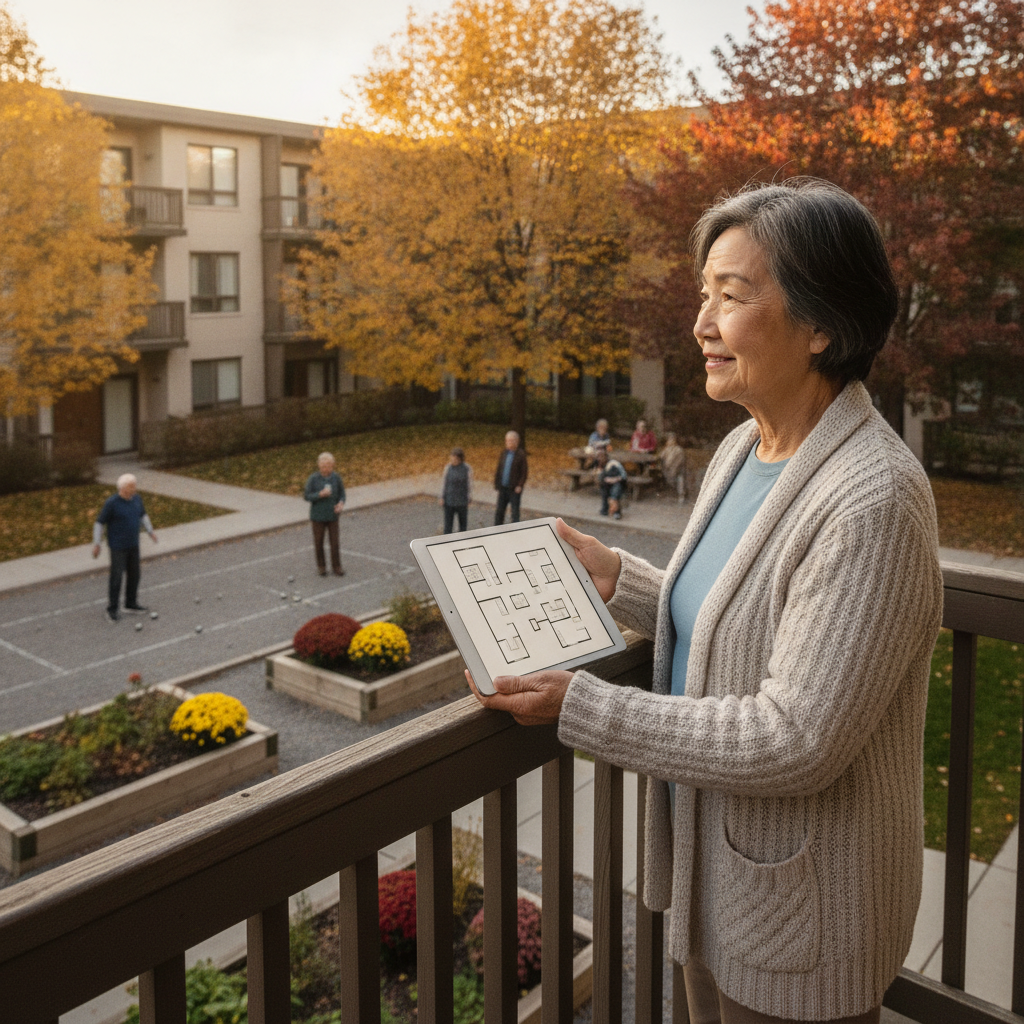
What Active Adult 55+ Communities Offer
Active adult communities are purpose-built residential neighborhoods designed specifically for people 55 and older. An active adult community is a residential development where residents are age 55 or older, with amenities, activities, and services tailored to this demographic—including fitness centers, social clubs, organized activities, and often supportive services available on-site or nearby.
These communities range from:
- Golf communities (Aggregate, Highlands Golf Club communities)
- Urban retirement condominiums (downtown Toronto, Ottawa, Mississauga)
- Cottage-country developments (Muskoka, Grey County, Kawartha Lakes)
- Master-planned communities (extensive amenities, security, maintenance)
- Co-housing and intentional communities (shared values, cooperative living)
The appeal is obvious: no home maintenance responsibilities, planned social activities, built-in friendships, and immediate access to age-appropriate services. But the financial barrier is real.
The True Costs of Moving to a 55+ Community
Most retirees underestimate the total cost of transition:
| Cost Category | Typical Range |
|---|---|
| Entrance fee (first-time purchase into community) | $100,000–$500,000+ |
| Down payment on new unit (20%) | $50,000–$200,000 |
| New mortgage (if needed) | $300,000–$1,200,000+ |
| Closing costs (legal, inspections, appraisals) | $5,000–$15,000 |
| Renovations/personalization | $20,000–$100,000 |
| Furnishings (downsize from larger home) | $10,000–$40,000 |
| Moving costs | $5,000–$15,000 |
| TOTAL TRANSITION COST | $190,000–$875,000+ |
Many active adult communities require entrance fees in addition to mortgage/purchase price. These fees cover amenities, common area maintenance, and community management—a model popular in age-restricted developments.
How a Reverse Mortgage Funds the Move
A reverse mortgage allows you to tap home equity now and use the funds for transition costs, without selling your current home immediately. Here's how:
Scenario 1: Fund the Entrance Fee Only
If your current home is worth $700,000 and you have $250,000 in equity, a reverse mortgage could provide $120,000-$150,000 for entrance fees, closing costs, and move expenses. You sell your current home later, repaying the reverse mortgage from sale proceeds.
Scenario 2: Bridge the Down Payment Gap
If you want to buy into the 55+ community but can't access enough liquid capital for a 20% down payment, a reverse mortgage provides the gap. You maintain ownership of your current home while securing financing for the new unit.
Scenario 3: Fund Renovations and Furnishings
Many active adult units are sold unfurnished or require extensive customization. A reverse mortgage can fund design consultation, renovations, and furnishings—costs often overlooked in initial budget estimates.
Step-by-Step: Reverse Mortgage for 55+ Community Move
| Phase | Action | Reverse Mortgage Role |
|---|---|---|
| Explore | Visit communities, request entrance fee schedules, understand age/income restrictions | Understand total costs; determine RM funding need |
| Apply for RM | Contact CHIP, Equitable Bank, or Bloom Financial; provide home appraisal | Access equity; receive quote on borrowing capacity |
| Secure RM Funding | Close reverse mortgage; receive lump sum or line of credit | Funds available for entrance fee or down payment |
| Purchase/Move | Secure unit in 55+ community; execute purchase or rental agreement | Use RM proceeds for costs |
| Sell Current Home | List and sell primary residence (can happen months or years later) | Use sale proceeds to repay reverse mortgage |
Key Advantages
✓ No pressure to sell immediately — You can stay in your current home while securing the new community unit
✓ Entrance fees covered — Many communities require substantial up-front fees; reverse mortgage funds these
✓ Flexibility in timing — You can move at your pace, not the market's pace
✓ Preserve liquidity — Access equity without cashing out investments, RRSPs, or TFSAs
✓ Immediate active lifestyle — Start enjoying the community sooner, rather than waiting to save for years
✓ Professional support included — Rick Sekhon and reverse mortgage specialists can help you coordinate timing and costs
Important Considerations
✗ Reverse mortgage interest accrues — The longer you carry the loan, the more interest compounds
✗ Dual housing costs — While you own both homes, you'll pay property taxes and maintenance on both
✗ Market risk — If your current home's value drops, the reverse mortgage balance may exceed equity available from sale
✗ Community entrance fees may be non-refundable — Some 55+ communities refund 50-90% of entrance fees if you leave; others don't refund
✗ Lifestyle commitment — Active adult communities may require long-term leases or buy-in commitments
Reverse Mortgage vs. Home Equity Line of Credit (HELOC)
| Feature | Reverse Mortgage | HELOC |
|---|---|---|
| Monthly payments required | No | Yes |
| Age requirement | 55+ | Any age (if homeowner) |
| Credit/income check | Minimal | Required |
| Best for | Retirees with stable assets, variable spending | Borrowers with ongoing income |
| Interest rate (2026) | 7.0–8.5% | 7.2–8.0% |
| Flexibility | High — line of credit option available | High — draw/repay freely |
Both products work for 55+ community transitions, but reverse mortgages suit retirees better because they eliminate monthly payment pressure.
Real Ontario Example
Margaret, 68, in Greater Toronto Area:
- Current home value: $850,000
- Available equity: $350,000
- Desired entrance fee (Port Credit active adult community): $180,000
- New unit down payment: $100,000
- Closing & moving costs: $25,000
- Total needed: $305,000
Margaret applies for a reverse mortgage and is approved for $250,000 (Conservative lender lending = 70% of available equity). She uses:
- $180,000 for entrance fee
- $50,000 for down payment
- $20,000 for closing/moving costs
She still has $0 in monthly payments. She moves into the 55+ community, enjoys it for 3 years, then sells her current home for $900,000. After real estate costs, she clears $750,000 net proceeds—more than enough to repay the reverse mortgage ($250,000 + accrued interest, ~$310,000 total) and walk away with $440,000+ in new assets.
Ontario's Best Active Adult Communities
GTA:
- Port Credit (on Lake Ontario, extensive amenities)
- Vaughan (master-planned communities with golf/recreation)
- Mississauga (urban 55+ condominiums)
Central Ontario:
- Muskoka (golf communities, cottage-country lifestyle)
- Kawartha Lakes (water, outdoor recreation)
Eastern Ontario:
- Kingston (university town, cultural activities)
- Ottawa (urban and suburban options)
Many of these communities have entrance fees starting at $100,000-$150,000, with total costs often exceeding $400,000-$600,000 when including the unit purchase.
Tax and Estate Implications
According to the CRA, funds from a reverse mortgage are loan proceeds, not income, so they don't affect your OAS or GIS eligibility. However, any investment income you shift into the new community (e.g., selling investments to pay off the RM) may have tax consequences.
According to FSRAO guidance, when moving to a retirement community with entrance fees, ensure all terms are in writing and clearly explain refund policies if you leave. This protects your investment and prevents disputes with the community down the road.
Estate planning note: Your reverse mortgage debt becomes a claim against your estate. If you plan to leave the new 55+ unit to heirs, ensure the estate has sufficient liquidity to repay the reverse mortgage, or heirs will need to sell the unit to clear the debt.
Questions to Ask Community and Rick Sekhon
Community Questions:
- What is the entrance fee, and what percentage is refundable if I leave?
- What are the annual fees/condo fees, and how often do they increase?
- Are there income restrictions or net worth requirements?
- What healthcare services are available on-site or nearby?
- What happens if I need to move to a care facility while still owning my unit?
Reverse Mortgage Questions (Rick Sekhon):
- How much can I borrow against my current home?
- What's the interest rate, and how does it compare to a HELOC?
- Can I draw funds in phases (e.g., entrance fee now, renovations later)?
- What penalties apply if I repay early when my current home sells?
Key Takeaways
- Active adult 55+ communities in Ontario range from $190,000–$875,000+ in total transition costs
- Reverse mortgages funded by CHIP, Equitable Bank, and Home Trust can cover entrance fees, down payments, and moving costs
- You can access equity now and sell your current home later—no pressure to rush the sale
- Monthly payments are not required, making reverse mortgages ideal for retirees on fixed incomes
- Carefully review entrance fee refund policies and annual fee schedules before committing
- Work with Rick Sekhon Reverse Mortgages to coordinate timing and maximize your financial position
Frequently Asked Questions
Can I get a reverse mortgage to buy into an active adult community while keeping my current home?
Yes. You can access reverse mortgage funds for the entrance fee and down payment on the new unit while maintaining ownership of your current home. Eventually, you'll need to sell the current home to repay the reverse mortgage, but this typically happens 2-5 years after the move, giving you time to ensure you love the new community.
Are entrance fees refundable in Ontario active adult communities?
It depends on the community. Some communities refund 50-90% of entrance fees if you move out. Others have non-refundable fees. Always read the fine print and ask the community directly—this can significantly affect your long-term costs and exit strategy.
What if I move to a 55+ community but later need long-term care or assisted living?
Many active adult communities offer affiliated or nearby assisted living and memory care facilities. If you need to move out, some entrance fees are partially refunded. However, you'll need to have a plan to repay the reverse mortgage—either from the refunded entrance fee or from selling your current home.
Can I rent a unit in a 55+ community instead of buying?
Yes. Some active adult communities offer rental units. Rental costs are typically lower than purchase costs, but you won't build equity. If you want to use a reverse mortgage to rent, the funds can cover first/last month's rent and deposits. Discuss this with Rick Sekhon to determine if a reverse mortgage makes sense for rental moves.
What if my income from CPP/OAS isn't enough to cover community fees plus my reverse mortgage interest?
Reverse mortgages don't require monthly payments, so the interest accrues and compounds. However, you need to cover the community's annual fees (typically $15,000–$40,000/year) from CPP/OAS or other income. If your income is too low, you may not qualify for the community or may struggle with affordability.
Can I move back to my original home if I dislike the 55+ community?
If you still own your original home (haven't sold it yet), you can return. However, if you've already sold it, you'll need to purchase a different home or move to a rental situation. This is why timing the sale of your current home is important—give yourself time to confirm the 55+ community lifestyle is right for you.
Ready to Learn More?
Find out exactly how much you could unlock from your home — free and no obligation.
Related Articles
Reverse Mortgage for Retirement Community Independent Living: Not Nursing Care
Fund a move to a retirement community with independent living services without selling your home—use a reverse mortgage to access equity for the transition costs.
Read →Reverse Mortgage to Downsize Primary Home While Keeping Cottage Access in Retirement
Downsize your Toronto condo to cottage country but maintain cottage access seasonally. Reverse mortgage bridges the cost gap while preserving your summer lifestyle in Ontario.
Read →Reverse Mortgage to Fund Your Retirement Relocation: Real Estate Costs & Moving Expenses
Fund your retirement move with a reverse mortgage. Cover closing costs, real estate commissions, and relocation expenses without depleting savings.
Read →