
Reverse Mortgage for Home Environmental Modifications: Managing Respiratory Hypersensitivity in Aging
Fund specialized HVAC, air quality, and ventilation systems when aging parent has respiratory sensitivity. Reverse mortgage for environmental health in Ontario.
Does your aging parent have respiratory hypersensitivity—triggered by air quality, mold, humidity, or indoor pollutants—making standard home living difficult and aging in place seemingly impossible? Respiratory hypersensitivity in older adults encompasses multiple conditions: severe asthma, reactive airway dysfunction syndrome (RADS), multiple chemical sensitivity (MCS), mold reactivity, and post-viral lung dysfunction. These conditions require specialized home environmental modifications far beyond standard accessible renovations—and these specialized systems are expensive. A reverse mortgage can provide funding for the sophisticated ventilation, filtration, humidity control, and chemical-free renovations needed to create a truly breathable aging-in-place home.
Respiratory Hypersensitivity in Aging: Scope and Impact
Respiratory hypersensitivity affects 15-20% of older adults, with prevalence increasing dramatically post-COVID. Triggers include:
- Indoor air pollutants (VOCs from paints, cleaning products, off-gassing materials)
- Mold and mildew (especially in basements and bathrooms)
- Dust mites and allergens
- Humidity extremes (too dry: 20-30%; too damp: >60%)
- Outdoor pollution (traffic, pollen) entering through standard windows/HVAC
- Strong fragrances (perfumes, air fresheners, cleaning products)
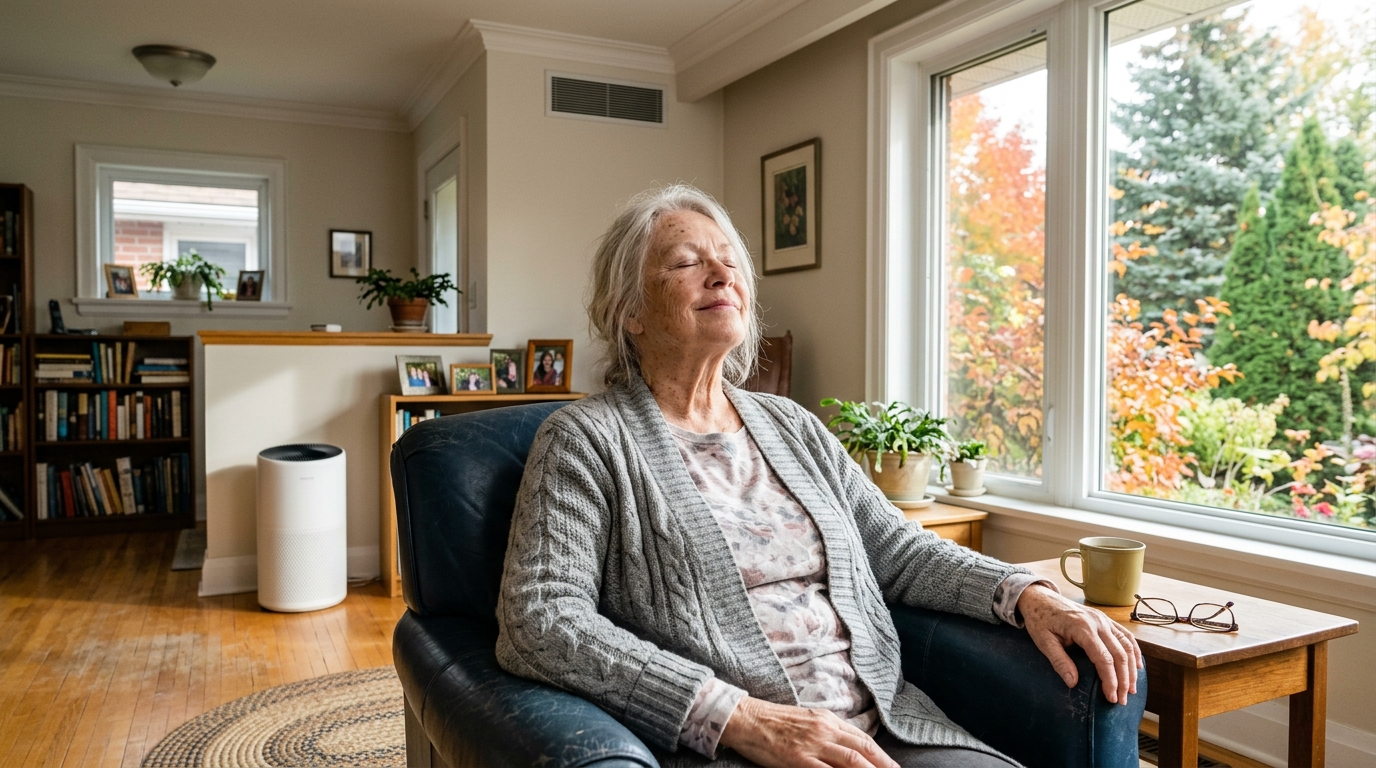
For seniors with respiratory hypersensitivity, poor indoor air quality triggers:
- Asthma exacerbations: Wheezing, shortness of breath, nighttime coughing
- Reactive symptoms: Eyes watering, throat irritation, headaches
- Sleep disruption: Air quality directly impairs sleep quality
- Reduced mobility: Seniors avoid leaving their room/home due to air quality concerns
- Social isolation: Inability to visit others' homes (unknown air quality) limits relationships
According to the Canadian Lung Association, poor indoor air quality in aging homes contributes to 40% of winter respiratory hospitalizations for seniors.
Typical Respiratory-Focused Home Modifications
Standard aging-in-place renovations don't address respiratory needs. Specialized modifications include:
| Modification | Purpose | Typical Cost | Impact on Respiratory Health |
|---|---|---|---|
| HEPA whole-home filtration | Remove dust, pollen, allergens | $1,500–$4,000 | Moderate improvement (64-95% particle removal) |
| ERV/HRV ventilation system | Fresh air exchange; humidity control | $3,000–$8,000 | High (constant fresh air; controls humidity) |
| HVAC duct cleaning & sealing | Remove mold, improve efficiency | $800–$2,000 | Moderate (eliminates duct mold/dust) |
| Mold remediation (if present) | Remove structural mold/moisture | $1,500–$8,000 | High (eliminates mold trigger) |
| Bathroom/kitchen exhaust upgrades | Prevent humidity and mold growth | $1,000–$3,000 | Moderate to high (humidity control) |
| Dehumidification system | Maintain 40-60% humidity | $1,200–$3,500 | High (optimal humidity prevents mold) |
| Chemical-free paint + flooring | Eliminate VOC off-gassing | $3,000–$10,000 | Moderate (ongoing benefit over 6+ months) |
| Sealed windows/doors + weatherstripping | Reduce outdoor pollution infiltration | $2,000–$6,000 | Moderate (blocks external triggers) |
| HVAC system replacement (high-efficiency) | Modern systems with better filtration | $4,000–$8,000 | Moderate to high (new tech more efficient) |
| Indoor air quality monitoring system | Real-time air quality tracking | $500–$1,500 | Informational (guides interventions) |
Total comprehensive respiratory-focused home modification: $15,000–$50,000+ (depending on baseline conditions and existing HVAC infrastructure).
How a Reverse Mortgage Funds Respiratory Home Health
A reverse mortgage line of credit allows phased funding of respiratory modifications:
Phase 1: Assessment and Planning (Weeks 1–4)
- Indoor air quality assessment: Professional evaluation ($400–$800)
- HVAC system audit: Contractor inspection of existing system ($300–$600)
- Mold and humidity assessment: Specialized inspector ($400–$800)
- Environmental health consultation: Occupational therapist or environmental health specialist ($300–$500)
Total: $1,400–$2,700 for comprehensive baseline understanding.
Phase 2: Priority Interventions (Months 1–3)
Based on assessment, implement high-impact, cost-efficient modifications:
- If mold detected: Immediate mold remediation ($2,000–$5,000)
- If humidity issues: Dehumidification system installation ($1,500–$3,500)
- If HVAC issues: HVAC cleaning and sealing ($1,000–$2,500)
- ERV/HRV ventilation system (highest priority for ongoing air quality): $3,000–$8,000
Total Phase 2: $7,500–$19,000
Phase 3: Enhancement and Optimization (Months 3–6)
- Chemical-free renovation (painting, new flooring with low-VOC materials)
- Window and door upgrades
- Air quality monitoring systems
- Ongoing humidity and temperature optimization
Total Phase 3: $5,000–$15,000
Real-Life Scenario: Creating a Breathable Home
Patricia's Story: Patricia, 71, developed severe asthma and multiple chemical sensitivity after a COVID-19 infection. Previously active and traveling, she found herself unable to leave home—outdoor air and friends' homes triggered severe symptoms. Inside her 40-year-old home, she struggled with:
- Basement mold (humid Ontario climate) triggering nightly coughing
- Aging HVAC system with minimal filtration
- Off-gassing from old carpeting and paint
- Bathroom mold from poor ventilation
Patricia considered moving to institutional housing (expensive and emotionally devastating) but first consulted a reverse mortgage advisor.
Reverse mortgage-funded solution:
| Intervention | Cost | Timeline | Impact |
|---|---|---|---|
| Mold assessment & remediation | $3,200 | Week 1–2 | Eliminated basement trigger |
| HVAC cleaning & duct sealing | $1,500 | Week 2–3 | Removed mold from ducts |
| ERV ventilation system installation | $5,800 | Week 4–5 | Fresh air circulation; humidity control |
| Dehumidification system | $2,100 | Week 6 | Maintains 45-50% humidity year-round |
| Low-VOC paint + new flooring | $6,000 | Week 7–10 | Eliminates off-gassing triggers |
| Air quality monitoring system | $900 | Week 10 | Real-time tracking; optimization |
| Total RM draw | $19,500 | 10 weeks | Dramatic respiratory improvement |
Outcome (6 months later):
- Patricia's asthma episodes reduced from 8-10/week to 1-2/week
- Sleep quality dramatically improved (no nightly coughing)
- She regained ability to leave home for short outings (outdoor air no longer triggered symptoms as severely)
- Her social participation increased (visiting friends again possible)
- She remained in her own home (avoiding institutional placement)
Cost-benefit analysis: The reverse mortgage cost (~$1,500/year in interest on declining $19,500 balance) was far less than:
- Assisted living ($60,000–$80,000/year)
- ER visits if respiratory exacerbations continued ($800–$2,000 each × 8-10/year = $6,400–$20,000/year)
- Caregiver support she'd eventually need if confined to home
Coordinating Multiple Systems: HVAC Strategy
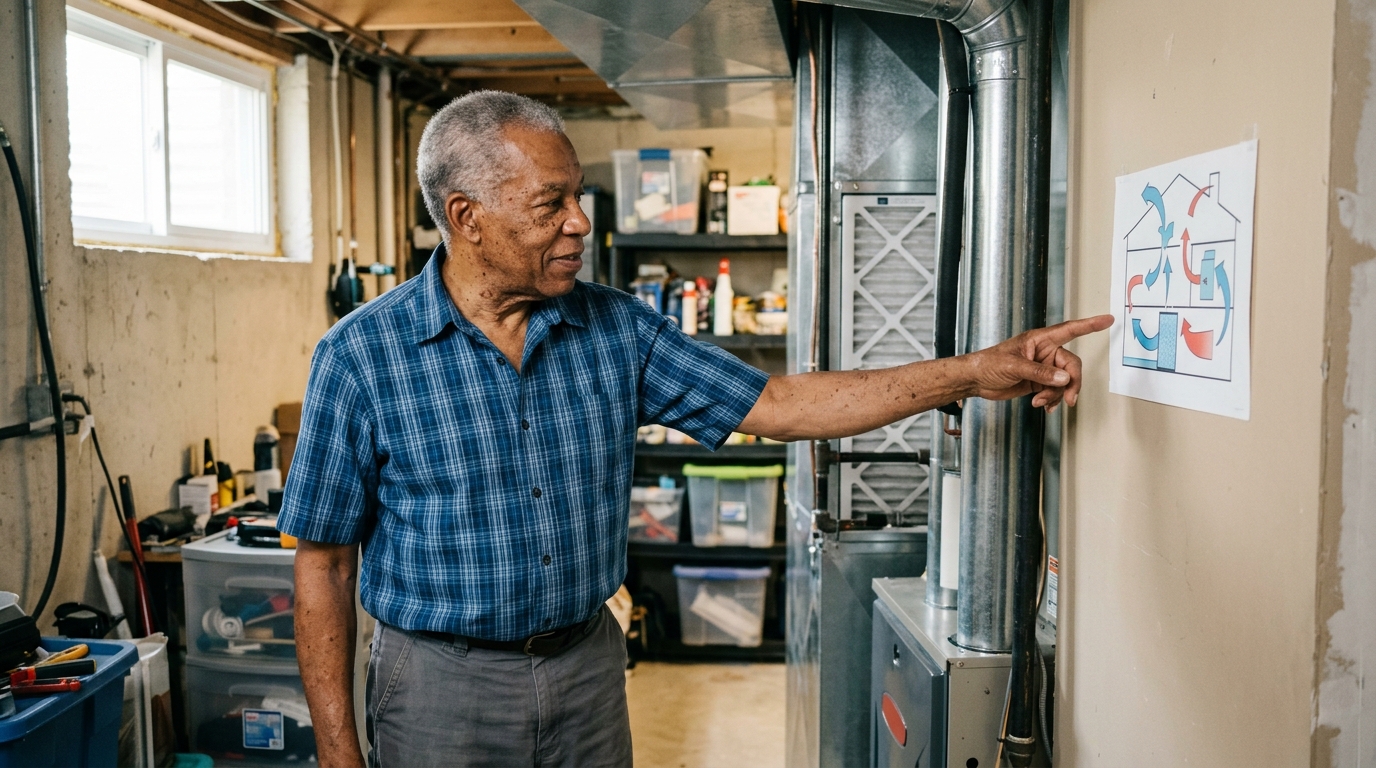
The most impactful respiratory intervention is a modern ERV/HRV (Energy Recovery Ventilation / Heat Recovery Ventilation) system combined with HEPA filtration:
- ERV: Brings in fresh outdoor air while exhausting stale indoor air; recovers heat/cooling energy (efficiency: 70-90%)
- HRV: Similar to ERV but optimized for cold climates (Ontario winter); captures up to 90% of heat energy
- HEPA filtration: Filters incoming air to remove particles, pollen, mold spores
According to the Government of Canada's Indoor Air Quality guidance, homes with ERV/HRV systems maintain 20-30% better air quality than homes relying on open windows or standard HVAC alone.
Cost for integrated system: $5,000–$8,000 (installation included).
Long-Term Maintenance and Monitoring
Respiratory-focused homes require ongoing maintenance:
| System | Maintenance Frequency | Cost/Interval | Reverse Mortgage Strategy |
|---|---|---|---|
| HEPA filter replacement | Every 6–12 months | $100–$300 | Budget in ongoing RM draw |
| ERV/HRV filter maintenance | Every 6 months | $50–$150 | Budget in ongoing RM draw |
| Humidifier/dehumidifier servicing | Annually | $100–$200 | Budget in ongoing RM draw |
| HVAC system servicing | Annually | $200–$400 | Budget in ongoing RM draw |
| Mold inspection (prevention) | Annually | $300–$600 | Budget in ongoing RM draw |
Total annual maintenance: $750–$1,650.
A reverse mortgage line of credit can budget for ongoing maintenance costs, ensuring your aging parent doesn't compromise air quality to save money on filters or servicing.
Key Takeaways
- Respiratory hypersensitivity affects 15-20% of older adults; prevalence increasing post-COVID
- Standard aging-in-place renovations don't address air quality; specialized systems essential
- Comprehensive respiratory home modifications cost $15,000–$50,000+
- ERV/HRV ventilation systems provide highest impact ($5,000–$8,000) for ongoing air quality
- Phased approach (assessment → mold remediation → ventilation → optimization) maximizes impact
- Reverse mortgage line of credit funds both initial modifications and ongoing maintenance
- Properly modified respiratory homes prevent ER visits, hospitalizations, and unnecessary institutional placement
- Long-term cost-benefit strongly favors environmental modification over alternative housing
Frequently Asked Questions
Does a reverse mortgage cover the cost of ongoing air filter replacements and system maintenance?
Yes. If structured as a line of credit, you can budget $100–$200/month for routine maintenance (filter replacements, humidifier servicing, annual HVAC inspections). This is part of ongoing home care expenses.
If my aging parent's respiratory symptoms improve significantly, can they move to a standard home later?
Possibly, but unlikely. Respiratory hypersensitivity is usually permanent; returning to a non-optimized home typically triggers symptom recurrence. The modified home becomes essential for quality of life. Plan these modifications as permanent if respiratory issues are chronic.
Can the reverse mortgage fund both respiratory modifications AND other aging-in-place renovations (accessibility, safety)?
Yes. A line of credit can prioritize respiratory modifications (highest impact on quality of life) while funding other necessary renovations (grab bars, ramps, bathroom safety) over 6-12 months.
What if the ERV/HRV system installation requires significant ductwork renovation?
This can increase costs substantially ($8,000–$12,000+ if major ductwork renovation needed). Get a professional HVAC assessment before committing to budget. Sometimes retrofitting an ERV is less costly than expected; sometimes it requires alternative solutions (smaller local systems, room-based units).
Are there government grants for home environmental health modifications?
Some provinces offer grants for HVAC upgrades (energy efficiency), but respiratory-specific modifications aren't typically covered. The Green Home Grant (federal) can partially fund heat pump and ventilation upgrades. Combine available grants with reverse mortgage to minimize total draw.
Can air quality improvements help other respiratory conditions like COPD or severe asthma?
Absolutely. Any senior with chronic respiratory disease benefits from ERV/HRV systems, HEPA filtration, humidity control, and mold removal. Ask your parent's respirologist for specific recommendations.
Creating a truly breathable, respiratory-health-optimized home is transformative for seniors with air quality sensitivity. A reverse mortgage can fund the specialized systems needed to maintain independence, quality of life, and aging in place when standard homes would trigger constant health crises.
Ready to Learn More?
Find out exactly how much you could unlock from your home — free and no obligation.
Related Articles
Reverse Mortgage When Aging Homeowner Discovers Hidden Defects: Seller Non-Disclosure Remediation
Fund major repairs when aging homeowner discovers undisclosed property defects. Reverse mortgage for remediation costs in Ontario.
Read →Reverse Mortgage When Longtime Live-In Caregiver Retires or Becomes Ill: Care Restructuring
Emergency financial strategy when aging parent's live-in caregiver must leave. Reverse mortgage for sudden care system overhaul in Ontario.
Read →Reverse Mortgage for Managing Escalating Prescription Drug Costs: Polypharmacy in Aging
Learn how a reverse mortgage can fund rising medication costs when aging parents on multiple drugs face affordability crises in Ontario healthcare.
Read →