
Reverse Mortgage to Downsize Primary Home While Keeping Cottage Access in Retirement
Downsize your Toronto condo to cottage country but maintain cottage access seasonally. Reverse mortgage bridges the cost gap while preserving your summer lifestyle in Ontario.
You love your cottage but maintaining an expensive urban primary residence alongside it is unsustainable. A reverse mortgage can fund a strategic downsize: sell your primary home, use equity to purchase accessible cottage-country property, while preserving seasonal cottage access.
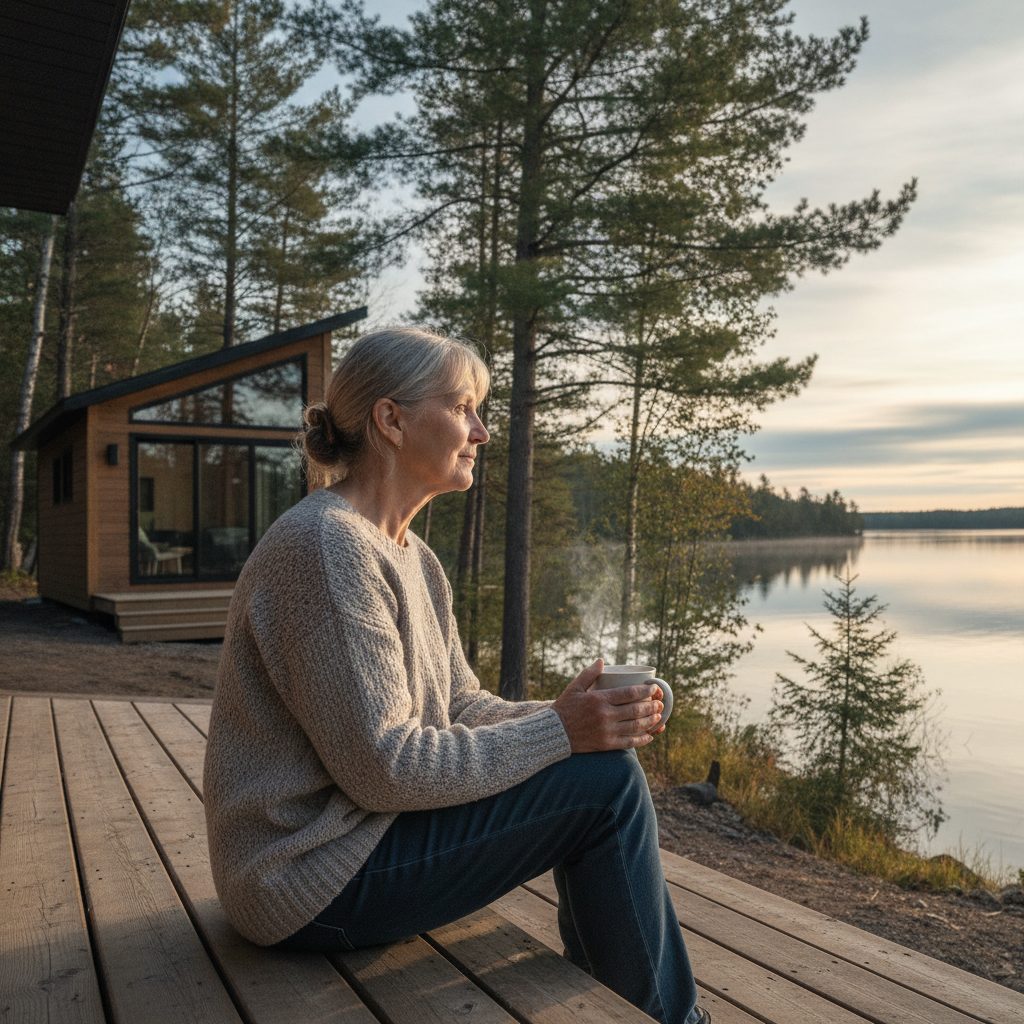
This scenario is growing in Ontario: retirees holding $1.2 million property (urban home + cottage), paying $15,000–$20,000/year in property taxes, property maintenance, and utilities on two properties. A reverse mortgage can fund a transition to a single, lower-maintenance, more affordable property in cottage country while preserving access to seasonal cottage life.
The Two-Property Cost Burden
Many Ontario couples maintain two properties into retirement — one urban, one cottage:
| Property | Annual Costs | Examples |
|---|---|---|
| Urban home (GTA) | $25,000–$40,000/year | Toronto condo $800,000; property tax $8,000, maintenance $5,000, utilities $3,500, insurance $3,000, HOA/condo fees $5,000+ |
| Cottage (Muskoka/Haliburton) | $8,000–$15,000/year | Cottage $500,000; property tax $3,000, seasonal utilities $2,000, maintenance $3,000, insurance $1,500 |
| TOTAL TWO-PROPERTY BURDEN | $33,000–$55,000/year | On $50,000–$80,000 fixed retirement income, this is 40–110% of income |
Result: Many retirees keep two properties out of inertia, not because they can afford them. They sacrifice other retirement needs to maintain the properties.
According to Statistics Canada, 15% of Ontario seniors 65+ own second properties (cottages, vacation homes). Most report the cost burden is higher than expected.

The Strategic Downsize + Reverse Mortgage Model
Instead of maintaining two properties, restructure:
BEFORE (Two properties):
- Urban home: $900,000 (worth $10,000–$12,000/year to maintain)
- Cottage: $500,000 (worth $8,000–$10,000/year to maintain)
- Total value: $1,400,000
- Annual costs: $40,000+
AFTER (One property, strategic downsizing):
- Sell urban home: $900,000 (sells for $900,000)
- Sell cottage: $500,000 (sells for $500,000)
- Total proceeds: $1,400,000
- Purchase primary residence in cottage country: $700,000 (accessible, year-round, lower taxes)
- Remaining funds: $700,000
- Use reverse mortgage on new $700,000 home: access $350,000–$400,000 (50–55% LTV)
- Total liquid equity: $700,000 (sale proceeds) + borrowed capacity = $1,050,000–$1,100,000
New situation:
- One primary residence in cottage country ($700,000)
- Annual costs: $15,000–$18,000 (property tax $3,500, maintenance $3,000, utilities $2,000, insurance $1,500)
- Seasonal cottage access via:
- Rental cottages (rent seasonally as needed: $3,000–$5,000/month = $15,000–$20,000/season)
- OR sharing cottage with family member (cooperative ownership, cost-split)
- OR purchasing fractional cottage ownership ($150,000–$250,000 for seasonal access only)
Annual savings: $20,000–$40,000/year 20-year savings: $400,000–$800,000
Why This Works for Retirees
Scenario 1: Couple, Both 70, Want Simplicity + Cottage Access
- Current: $800,000 Toronto condo + $400,000 Muskoka cottage = $1,200,000 combined
- Annual costs: $38,000/year
- Fixed retirement income: $60,000/year
- Math doesn't work: 63% of income goes to properties
Solution:
- Sell both properties; net proceeds: $1,200,000
- Buy accessible cottage-country home: $600,000
- Remaining capital: $600,000
- Reverse mortgage on new home: access $300,000–$330,000 (50–55% LTV)
- New annual costs: $16,000/year
- Remaining liquid capital: $600,000 (invest for retirement income + emergency reserve)
- Rental cottage access: $15,000–$20,000/season (optional, supplemented by sale proceeds or investment income)
Result: Properties are affordable. Retirement feels sustainable. Cottage access maintained.
Scenario 2: Widow, Age 75, Wants to Stay Active but Simplify
- Current: $950,000 Ottawa home + $350,000 Haliburton cottage = $1,300,000
- Annual costs: $42,000/year
- Fixed income (CPP/OAS): $28,000/year + modest RRIF withdrawals
- She's using capital each year to cover property costs
Solution:
- Sell both; proceeds: $1,300,000
- Buy modern, fully accessible cottage-country home: $550,000 (in Haliburton, lower property tax)
- Remaining capital: $750,000
- Reverse mortgage on new home: access $275,000–$300,000 (50–55% LTV)
- New annual costs: $14,000/year
- Total liquid capital for retirement: $750,000 + potential drawdowns = sustainable
- Can afford occasional cottage rentals or family cottage sharing
Result: Widow's retirement is financially stable. She's in cottage country full-time (her preferred lifestyle). Cottage access maintained via rentals or family arrangements. Much less stress.
Cottage Access Options After Downsizing
Once you've sold both properties and moved to one cottage-country home:
| Option | Cost | Best For |
|---|---|---|
| Seasonal cottage rental | $3,000–$5,000/month (6–8 months/year) = $18,000–$40,000/year | Want variety; don't want ownership responsibility; want flexibility |
| Fractional cottage ownership | $150,000–$250,000 purchase + $3,000–$5,000/year HOA | Want assured seasonal access; want some ownership; prefer predictable costs |
| Family cottage sharing | Cost-split with siblings (varies) | Have family cottage available; want to preserve family property; willing to coordinate schedules |
| Luxury cottage hotel memberships | $50,000–$100,000 initiation + $10,000–$15,000/year | Want high-end seasonal access; don't want management responsibilities |
| Co-ownership with adult children | Varies; could gift cottage down payment to child | Adult child owns cottage; you visit seasonally; maintains family property legacy |
Reverse Mortgage Role in the Transition
A reverse mortgage is useful for:
- Bridge financing during transition — if you sell properties before buying new home, reverse mortgage provides interim liquidity
- Funding renovation costs — if new cottage-country home needs accessibility updates ($10,000–$30,000), reverse mortgage covers without dipping into capital
- Unexpected costs during move — real estate legal fees, appraisals, inspections, moving costs (~$5,000–$15,000 total)
- Emergency reserve after move — maintains liquid equity if unexpected costs arise in first year
Key insight: You're likely NOT using reverse mortgage as primary funding (you have $600,000–$1,200,000 from property sales). Rather, reverse mortgage provides flexibility and peace of mind during the transition and after.
Lender Considerations for Cottage-Country Properties
| Lender | Cottage Country Properties | Comments |
|---|---|---|
| Equitable Bank | Good lending in major centers; more cautious in remote areas | Best in Muskoka, Haliburton if near towns |
| HomeEquity Bank (CHIP) | Consistent statewide approach | Works well for cottage-country homes |
| Bloom Financial | Good in most Ontario areas | Flexible; good alternative |
| Home Trust | Growing presence; check availability | Check if they serve your specific area |
Tip: Get appraisal and reverse mortgage approval after you've identified the cottage-country property. Property-specific factors (location, condition, accessibility) affect borrowing capacity.
Frequently Asked Questions
Will selling both properties and moving create a tax burden?
Potentially. If your primary residence is principal residence (exempt from capital gains tax), you won't owe tax on that sale. The cottage, however, may be subject to capital gains tax (50% of gains are taxable). Consult a tax accountant to understand your specific situation before proceeding.
Can I use RRIF or TFSA withdrawals to fund the purchase instead of relying on reverse mortgage?
Absolutely, and it may be better. If you have liquid RRIFs, TFSAs, or savings, use those first. A reverse mortgage is a backup, not the primary funding source. Use reverse mortgage only for transition costs, unexpected expenses, or ongoing income if needed.
What if I get nostalgic about my old urban neighborhood?
That's normal. Consider a year or two of trial: rent in cottage country before permanently moving. Or plan to spend 3–4 months/year in urban rental during winter if you miss the city. A reverse mortgage line of credit gives you flexibility to adjust as you transition.
Can I maintain the old cottage while downsizing the primary residence?
Yes, but less effective. You'd sell the urban home, keep the cottage, and move to a modest cottage-country primary. You still have two properties, just different sizes. The real savings come from eliminating the expensive urban property, so the cottage becomes more affordable to maintain. This hybrid approach requires more careful financial planning.
What if my adult children want the cottage preserved as family property?
Possible. You could:
- Sell urban home; use proceeds to help adult child purchase cottage (or co-own)
- You maintain a modest primary residence in cottage country
- Children manage family cottage; you visit seasonally
- This preserves the cottage as legacy while simplifying your own finances
Requires clear family agreements and legal structures (trust, co-ownership, etc.).
How do seasonal cottage rentals work logistically?
Online platforms: Airbnb, Vrbo, or local cottage rental services let you search available cottages (June–August typically). Booking 3–6 months ahead ensures access to good properties. Some families book the same cottage year after year, creating consistency.
Key Takeaways
- Two-property maintenance costs $35,000–$55,000/year, often unsustainable on fixed retirement income
- Strategic downsize can save $20,000–$40,000/year while preserving cottage access
- Sale of both properties typically generates $1,000,000–$1,500,000 in capital
- Cottage-country primary residence costs only $15,000–$18,000/year to maintain
- Remaining capital from sales provides long-term retirement security plus reverse mortgage backup
- Reverse mortgage is supplement, not primary funding — used for transition costs and flexibility
- Cottage access maintained via rentals, fractional ownership, or family sharing after sale
- Tax implications require accountant consultation — principal residence exemption applies to primary home only
Next Steps
- Calculate your current two-property cost burden — is it sustainable on retirement income?
- Research cottage-country communities — where would you like to live year-round?
- Get appraisals of both properties to understand total sale proceeds
- Consult a tax accountant about capital gains implications
- Contact Rick Sekhon for reverse mortgage pre-approval in your target cottage-country area
- Plan your transition timeline — when would you like to sell? Move?
This article is for educational purposes only and does not constitute financial or real estate advice.
Consult with a real estate professional, tax accountant, and mortgage professional. Independent legal advice is required before closing a reverse mortgage in Ontario.
Ready to simplify your property portfolio while maintaining cottage access? Contact Rick Sekhon for reverse mortgage support during your strategic downsize.
Also read:
- Managing multiple properties: cottage plus primary home
- Reverse mortgage on a cottage or vacation property in Ontario
- Reverse mortgage for downsizing from farm to town
This content is for illustrative purposes only. Rates may vary. Call Rick Sekhon for the best rates and more information.
Ready to Learn More?
Find out exactly how much you could unlock from your home — free and no obligation.
Related Articles
Reverse Mortgage & Farm to Town Downsizing Ontario
Ontario farm owners: reverse mortgage vs selling farmland and downsizing to town. CRA rules, capital gains, principal residence exemption, and worked examples.
Read →Reverse Mortgage on a Cottage or Vacation Property in Ontario (2026)
Can you get a reverse mortgage on a cottage in Ontario? Learn why vacation properties don't qualify, plus strategies to unlock equity using your primary home.
Read →Reverse Mortgage for Aging in Place With Fibromyalgia: Home Modifications for Invisible Illness
Fund home modifications for aging with fibromyalgia. Reverse mortgage enables accessible design for pain management, energy conservation, and quality of life.
Read →