
Reverse Mortgage for Professional Home Accessibility Audit Before Renovations
Fund a professional accessibility audit to identify all home modifications needed. Avoid costly renovation mistakes with expert assessment before breaking ground in Ontario.
Before you spend $20,000 renovating your bathroom for accessibility, hire a professional to assess your entire home. A reverse mortgage can fund a $1,500–$3,000 accessibility audit that prevents $5,000–$15,000 in renovation mistakes.
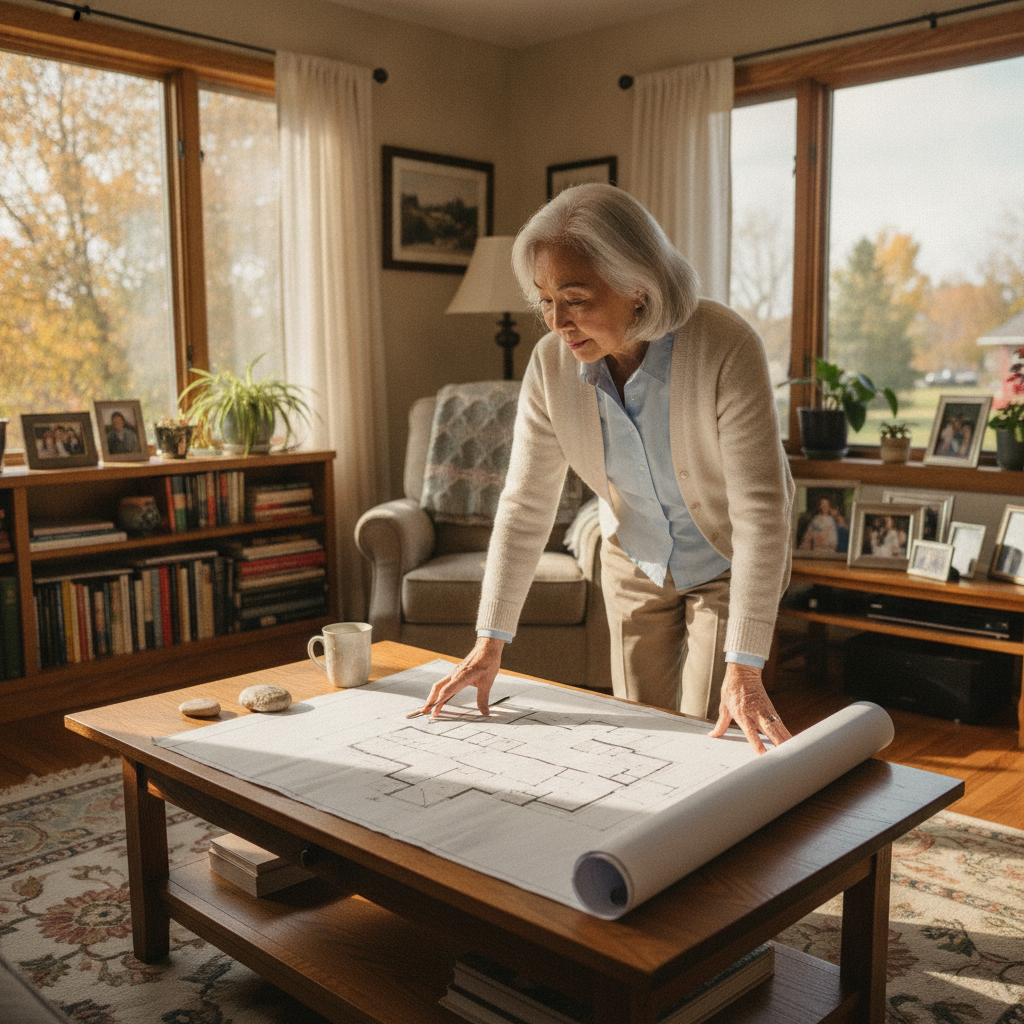
Most seniors jump straight to fixing the obvious problem: "I need grab bars in the bathroom." They spend $15,000 renovating the bathroom, only to realize later that the hallway is too narrow for a walker, the kitchen cabinets are unreachable, or the bedroom door is too narrow for a wheelchair. A comprehensive accessibility audit identifies all the problems at once.
Why a Professional Accessibility Audit Matters
An accessibility audit isn't cosmetic consultation — it's a safety assessment that identifies barriers you don't yet know exist.
Common audit findings:
| Finding | Renovation Cost to Fix | Cost of Delay/Falls |
|---|---|---|
| Bathroom grab bars in wrong location | $800–$1,500 | Fall requiring ER visit: $2,000–$5,000 |
| Hallway too narrow for walker (needs widening) | $3,000–$8,000 | Fall, broken hip: $15,000–$50,000 hospitalization |
| Kitchen cabinets out of reach | $2,000–$5,000 | Malnutrition, safety risk if climbing stool |
| Bedroom doorway too narrow for wheelchair access | $1,500–$4,000 | Forced bedroom relocation or early care home placement |
| Lighting inadequate (shadows, dark corners) | $800–$2,000 | Fall from poor visibility |
| Flooring slippery (tile, hardwood without texture) | $3,000–$8,000 | Repeat falls, injury |
| Stairs without handrails (even 2–3 steps) | $600–$2,000 | Fall on stairs; high injury risk |
| No accessible entry (steps, no ramp) | $2,000–$6,000 | Unable to safely exit home; emergency risk |
Total accessible home renovation without audit: $30,000–$50,000 and missed problems Total with professional audit first: $20,000–$35,000 (smaller projects, right priorities)
A $2,000 audit saves you $10,000–$15,000 in unnecessary or redundant renovations.
What a Professional Accessibility Audit Includes
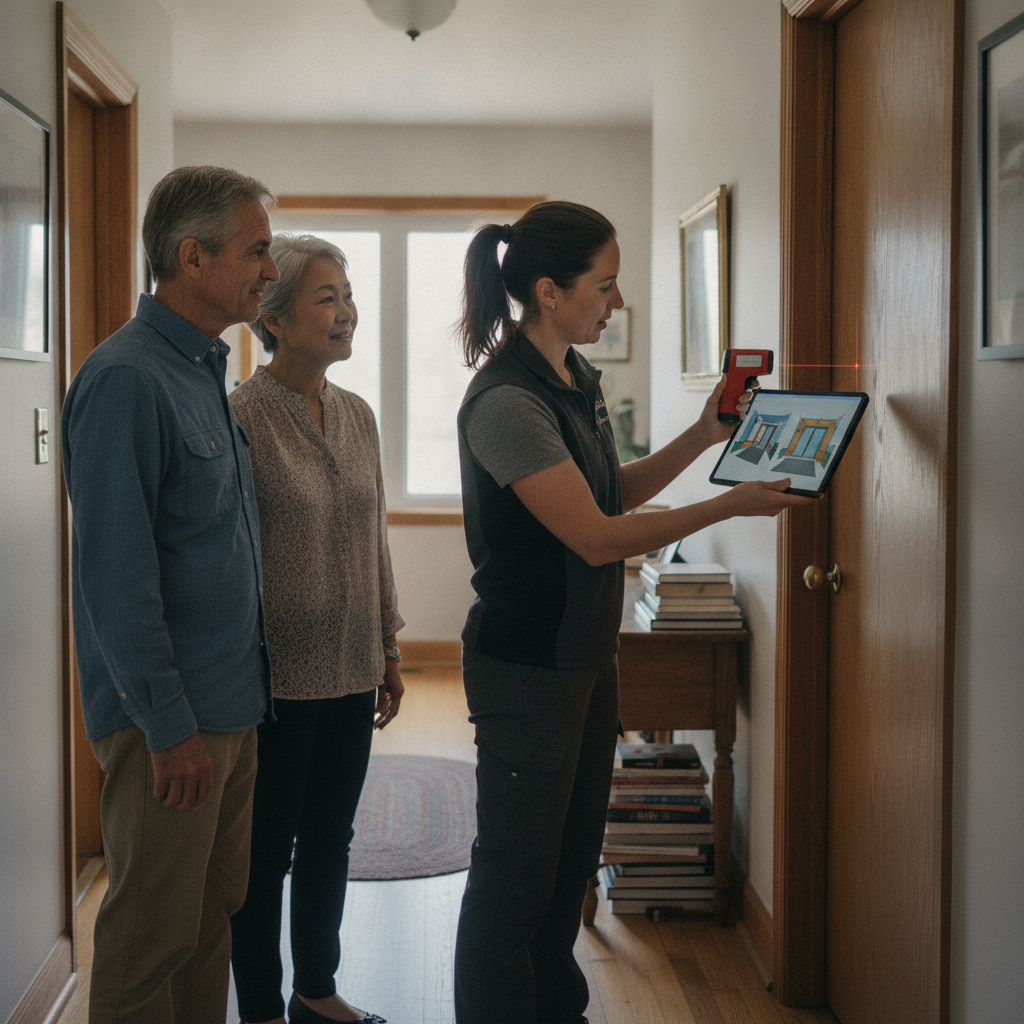
1. Physical Home Assessment (2–3 hours on-site)
- Entrance assessment: Steps, ramps, doors, lighting, ground stability
- Main floor assessment: Bathroom, kitchen, bedroom, living areas — doorway widths, flooring types, lighting
- Stairs & transitions: Safety of stairs, handrails, landings; ramp needs
- Overall layout: Can you move safely through your home with mobility aids (walker, wheelchair)?
2. Functional Assessment (Interview)
- Current mobility: Do you use a cane? Walker? Wheelchair? Expected future mobility?
- Vision & hearing: Any sensory limitations affecting home navigation?
- Cognitive status: Any memory loss affecting safety (stove left on, medication confusion)?
- Family situation: Who assists you? Do caregivers need space for equipment?
3. Personalized Accessibility Plan
- Priority modifications: What must be fixed first for safety?
- Phased approach: What can be done in phases over 12–24 months?
- Cost estimates: Professional recommendations for each modification
- Contractor referrals: Names of accessible home contractors who understand aging in place design
4. Written Report & Recommendations
- Detailed photos of current conditions
- Annotated floor plans showing problem areas
- Written descriptions of recommended modifications
- Cost estimates (typically within $500–$1,000 accuracy)
- Contractor recommendations
Types of Professional Accessibility Auditors
| Professional | Cost | Focus | Best For |
|---|---|---|---|
| Occupational Therapist (OT) specializing in accessibility | $150–$250/hour (2–3 hours = $300–$750) | Medical/functional needs | Health-focused modifications; adaptive equipment |
| Certified Aging in Place specialist (CAPS) | $150–$200/hour (3–4 hours = $450–$800) | Home design & universal design | Whole-home accessibility design |
| Interior designer specializing in accessibility | $150–$300/hour (4–5 hours = $600–$1,500) | Aesthetics + accessibility | Want modifications to look good, not "medical" |
| Architect specializing in universal design | $200–$350/hour (4–5 hours = $800–$1,750) | Structural & major renovation planning | Major renovations; whole-home redesign |
| Comprehensive Home Accessibility Audit Program | $1,500–$3,000 flat fee | Everything above in one package | Most cost-effective; thorough |
Recommendation: Start with a certified CAPS (Certified Aging in Place Specialist) or OT. They provide medical insight + design expertise at reasonable cost ($300–$800).
Where to Find Professional Auditors in Ontario
- Occupational Therapy Association of Ontario (OTAO) — referral directory for OT accessibility specialists
- National Association of Home Builders (NAHB) CAPS directory — certified aging in place specialists
- Local home care agencies — often partner with or recommend accessibility auditors
- University of Waterloo Engineering Department — accessibility research programs with professional recommendations
- Ontario Home Builders' Association — universal design specialists
Budget: $1,500–$3,000 for comprehensive audit from certified professional
How Reverse Mortgage Funds Your Accessibility Audit
A reverse mortgage makes it easy to fund an audit without drawing from retirement savings:
Step 1: Get home appraised (required for reverse mortgage anyway)
- Establishes your home value: $300,000–$800,000 (typical Ontario)
- Determines your borrowing capacity
Step 2: Borrow funds for audit (small draw)
- Audit cost: $2,000–$3,000
- Available borrowing capacity: $150,000–$400,000
- You're using only 1–2% of available capacity
Step 3: Complete the audit (2–4 weeks)
- Professional provides detailed accessibility plan
- Cost estimates for all modifications
- Prioritized approach to renovations
Step 4: Plan renovations (4–8 weeks)
- Based on audit recommendations
- Get contractor quotes for phased work
- Determine renovation budget vs. available reverse mortgage capacity
Step 5: Execute renovations (as funds allow)
- If audit recommends $25,000 in modifications, you may borrow $25,000–$30,000 from reverse mortgage
- Complete renovations in phases based on priority
- Remaining reverse mortgage capacity available for other needs
Lender Options for Audit Funding
| Lender | How It Works | Best For Audit Funding |
|---|---|---|
| Equitable Bank | Line of credit; draw what you need | Highest flexibility; ideal for audit + future renovations |
| HomeEquity Bank (CHIP) | Line of credit or fixed draws | Good for phased approach |
| Bloom Financial | Flexible draws | Good for small initial audit draw |
| Home Trust | Monthly draws or lump sum | Standard approach |
Rick Sekhon's typical recommendation: Equitable Bank line of credit structure. You draw $2,500 for the audit, then when renovations are planned, you draw the full renovation amount. Interest accrues only on amounts drawn.
Frequently Asked Questions
Can I get an accessibility audit covered by provincial programs?
Sometimes, partially. AODA (Accessibility for Ontarians with Disabilities Act) funding, government accessibility grants, and some home care programs cover part of audit costs. A professional auditor can help you access these grants, which often pay $500–$1,500 of the total cost. The reverse mortgage funds the gap.
How long before I should do an accessibility audit — age 55, 60, 70?
Ideal timing: Age 55–60, before you need modifications. You have time to plan and execute renovations in phases. If you wait until you're already struggling with safety (age 75–80), you're in crisis mode and forced to rush renovations. Early audit = calm planning; late audit = emergency decisions.
What if the audit recommends renovations I don't think I need yet?
That's valuable information. An auditor might recommend bathroom accessibility modifications now, even though you're currently safe. As you age, your needs will change. The audit gives you a roadmap so you can plan ahead rather than react to a fall or crisis.
Does the accessibility audit recommendation require me to do renovations?
No. The audit is a recommendation. You can follow it completely, partially, or not at all. The value is having professional guidance so you make informed decisions, not guesses.
Can the audit recommendation support insurance claims or accessibility tax credits?
Yes. If the audit identifies health-related accessibility needs, the professional report can support:
- AADL (Accessibility for Ontarians with Disabilities Act) grants — some retrofit funding
- Disability tax credit (DTC) — if renovations are recommended for certified disability
- Home accessibility trusts or grants — some municipalities offer retrofit incentives
The professional report is official documentation that lenders and tax authorities recognize.
What if my home is old or heritage-listed and standard modifications won't work?
That's exactly why you need a professional audit. Heritage homes and older properties often require creative, specialized solutions. An architect or OT specializing in heritage accessibility can identify modifications that preserve your home's character while improving safety. Worth the extra cost ($2,500–$4,000 for heritage specialist).
Key Takeaways
- Professional accessibility audits cost $1,500–$3,000 and prevent $10,000–$15,000 in renovation mistakes
- Audits identify problems you don't yet know exist — hallway width, kitchen reach, lighting, flooring hazards
- Certified professionals (OT, CAPS, architects) provide written plans you can use for contractor quotes and prioritization
- Best timing is age 55–60, before modifications become urgent
- Reverse mortgage makes funding easy — small draw for audit, larger draw for phased renovations later
- Some audit costs may be covered by provincial accessibility grants — professional can help identify funding
- Audit report supports accessibility tax credits and government programs — documentation is valuable long-term
Next Steps
- Schedule a consultation with a certified OT or CAPS for an accessibility assessment quote
- Understand your current barriers — what makes you feel unsafe at home now?
- Get a reverse mortgage quote from Rick Sekhon for audit funding
- Complete the professional audit (2–4 weeks)
- Develop a renovation plan based on audit recommendations, prioritized and phased
- Access additional renovations funds from your reverse mortgage line of credit as needed
This article is for educational purposes only and does not constitute medical or design advice.
Consult with a healthcare provider about functional needs and an accessibility professional about home modifications. Independent legal advice is required before closing a reverse mortgage in Ontario.
Ready to plan your accessible home strategically? Contact Rick Sekhon for reverse mortgage funding for professional accessibility audits.
Also read:
- Reverse mortgage for aging in place home modifications
- Reverse mortgage for professional home accessibility design consultation
- Reverse mortgage for home maintenance planning strategy
This content is for illustrative purposes only. Rates may vary. Call Rick Sekhon for the best rates and more information.
Ready to Learn More?
Find out exactly how much you could unlock from your home — free and no obligation.
Related Articles
Reverse Mortgage for Professional Home Accessibility Design Consultation: Getting It Right
Hire professional home modification designers to create a comprehensive, coordinated accessibility plan—preventing expensive mistakes and ensuring your aging-in-place home works perfectly.
Read →Reverse Mortgage and Home Maintenance Planning: Stay Ahead of Major Repairs
Ontario seniors can use reverse mortgage funds for proactive home maintenance planning. Learn how to budget for repairs, prevent costly emergencies, and keep your home safe while aging in place.
Read →Fund Home Modifications to Age in Place: Ontario Guide
Discover how a reverse mortgage can finance accessibility upgrades, care services, and renovations to stay safely in your Ontario home as you age.
Read →