
Reverse Mortgage for Professional Home Accessibility Design Consultation: Getting It Right
Hire professional home modification designers to create a comprehensive, coordinated accessibility plan—preventing expensive mistakes and ensuring your aging-in-place home works perfectly.
The Hidden Cost of DIY Home Modifications: Why Professional Design Matters
You're 68 years old, and your mobility is declining. You decide to make your home more accessible: install grab bars in the bathroom, widen doorways, add a ramp to the front entrance. You look up hardware stores, watch YouTube videos, and hire a contractor who seems competent.
Six months later, you realize the problems:
- The grab bars are installed in places you don't actually need them; the places you do need them weren't addressed
- The ramp is 3 inches too steep for comfortable wheelchair use and unsafe in winter ice
- Your bedroom doorway is now 36 inches wide—wheelchair-accessible on paper, but the spacing to the door handle makes actual access awkward
- The bathroom modification is done, but the floor is slippery when wet; you almost fell yesterday
- You spent $18,000 on modifications that don't actually solve your mobility problems and created new inefficiencies
This is the DIY modification trap: Without professional design assessment, modifications either solve the wrong problems or create new ones. You end up spending more money for less functionality.
Professional home accessibility designers (occupational therapists, universal design specialists, certified aging-in-place specialists) prevent these expensive mistakes by creating a comprehensive plan that addresses your ACTUAL needs, not guessed problems.
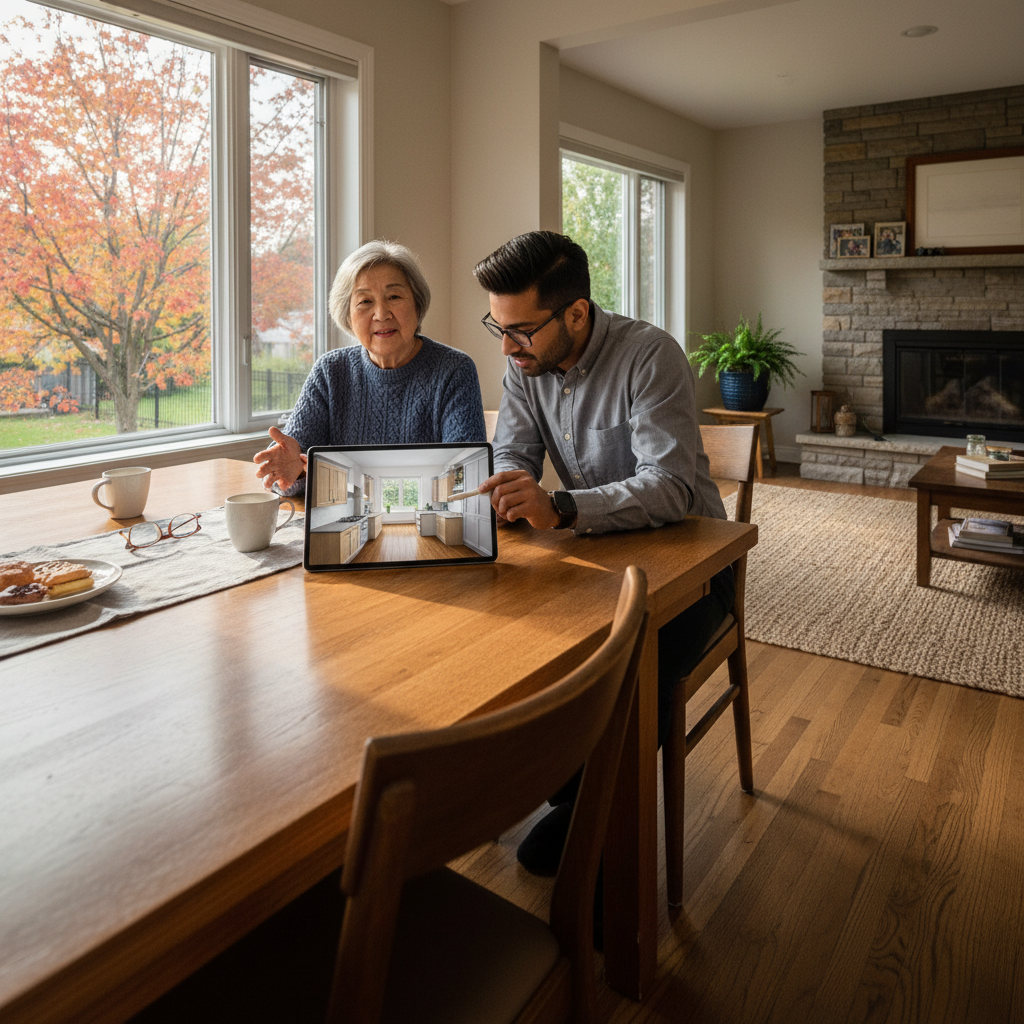
What Professional Home Design Actually Costs
Initial Consultation and Assessment
| Service | Cost | What's Included |
|---|---|---|
| Occupational therapist home assessment (1–2 visits) | $300–$600 | Detailed evaluation of your mobility, safety, and functional needs |
| Certified aging-in-place specialist assessment | $400–$800 | Design assessment with comprehensive aging-in-place recommendations |
| Universal design consultant (architect-level) | $600–$1,200 | Comprehensive design plan treating your whole home as system |
| Multi-specialist team assessment | $1,200–$2,000 | OT, designer, structural engineer, accessibility specialist |
Design Plan Development
| Service | Cost | Deliverables |
|---|---|---|
| Basic accessibility plan (2D drawings, recommendations) | $1,500–$3,000 | Floor plans showing grab bar locations, doorway widths, pathway clearances |
| Detailed design plan with specifications | $3,000–$6,000 | Comprehensive specifications, material recommendations, contractor guidance |
| 3D visualization and mockup | $2,000–$4,000 | Virtual walkthrough showing modifications before construction |
| Phased modification plan (priority staging) | $2,500–$5,000 | Prioritizes modifications by urgency; optimizes budget and timeline |
| Full architectural design (for major renovations) | $5,000–$12,000 | Complete architectural drawings for contractor bidding |
Project Management and Oversight
| Service | Cost | Purpose |
|---|---|---|
| Project coordination (overseeing contractor work) | $2,000–$5,000 | Ensures design is implemented correctly; prevents costly contractor mistakes |
| Regular site visits during construction | $1,000–$3,000 | Quality assurance; catches problems in real-time |
| Final inspection and functional assessment | $500–$1,000 | Verifies modifications work as designed; identifies adjustments needed |
Total Professional Design Investment
For comprehensive home accessibility planning:
- Basic assessment + design plan: $3,000–$6,000 (most common)
- Mid-level (with 3D visualization and project coordination): $6,000–$12,000
- Comprehensive (full architectural, complex needs): $10,000–$20,000
This seems expensive until you realize:
- Average DIY modification mistake cost: $8,000–$15,000 (fixing wrong design, redoing work)
- Professional design prevents these mistakes
- Professional plan ensures first-time success
- Professional project management saves 15–25% on construction costs (prevents contractor upsells and errors)
NET RESULT: Professional design often SAVES money while delivering better results.
Scenario: Patricia, 71, Bathroom Redesign Done Right vs. Wrong
The DIY Mistake
Patricia hired a contractor to "make the bathroom more accessible" without professional design input. The contractor installed:
- Grab bars in standard locations (beside toilet, in shower)
- Widened the doorway to 36 inches
- Installed a single-handle faucet
- Non-slip flooring
- Cost: $12,000
Problems discovered:
- Patricia's main challenge is balance when stepping down into the bathtub (a 7-inch height change). The grab bars don't address this.
- The 36-inch doorway is adequate width but the door swing angle makes entering with a walker awkward—requires two maneuvers instead of one smooth entry
- The non-slip flooring is effective but looks institutional; Patricia hates it
- A roll-in shower would have solved her bathtub problem better than the grab bars she got
What Patricia should have had: Professional assessment identifying her actual functional barrier (tub step-down) and design solving it properly (walk-in shower or step-down modification, grab bar placement for her actual balance needs, etc.)
The Professional Design Approach
Patricia's occupational therapist does a comprehensive assessment:
- Observes Patricia's actual movement patterns in her bathroom
- Assesses her balance, strength, and specific mobility challenges
- Identifies her actual functional barriers (tub access, not general "accessibility")
- Recommends a shower modification addressing her specific needs
- Provides detailed specifications for contractor
- Oversees installation to ensure design implementation
- Professional cost: $6,500
- Construction cost: $14,000 (different scope than DIY, focuses on her actual needs)
- Total: $20,500
Outcome: Patricia's bathroom is perfectly designed for her function, is beautiful, increases her home value, and solves her actual problems.
The professional option cost more in this case, but:
- It solved the RIGHT problems (not just generic accessibility)
- It increased her satisfaction and confidence
- It increased her home value (DIY modifications often decrease value)
- It's sustainable for her long-term aging (adaptable as her needs change)
What Professional Designers Assess
Functional Assessment
Professional designers evaluate:
- Mobility pattern: How you actually move (not theoretical ideal)
- Balance and proprioception: Where you need support
- Strength and endurance: How far you can safely move
- Vision and hearing: How your senses affect navigation
- Cognitive function: Do you need simple systems or can you manage complex setup?
- Fatigue patterns: When during the day do you struggle most?
Environmental Assessment
- Layout efficiency: Can you accomplish daily tasks with minimal distance and barriers?
- Light and contrast: Can you see obstacles and navigate safely?
- Temperature and air quality: Does environment support your health?
- Noise levels: Do acoustics support your hearing?
- Flooring and surfaces: Are they safe and supportive for your movement?
Safety Assessment
- Fall risk: Where do falls most likely occur?
- Friction and slip hazards: Which surfaces are risky?
- Heights and reach: Can you safely access items you need?
- Emergency egress: Can you safely exit if needed?
- Medication and health management: Does layout support independent medication management, wound care, etc.?
Future-Proofing Assessment
- Anticipated changes: How will your needs likely evolve?
- Equipment accommodation: Can you accommodate future walkers, wheelchairs, hospital beds?
- Caregiver access: If you need care help later, can they navigate safely?
- Structural limitations: Are there modifications you can make now that prevent expensive future rebuilding?
Types of Professional Designers and When to Use Each
Occupational Therapist (OT)
Best for: Understanding your specific functional needs and how your home can support independence
- Assesses how your physical/cognitive abilities interact with your home environment
- Recommends modifications focused on your actual functional barriers
- Often can bill to insurance if referred by physician
- May provide follow-up as your needs change
- Cost: $300–$600 for assessment; can be partially covered by insurance
- Ideal for: Most aging-in-place situations; start here
Certified Aging-in-Place Specialist (CAPS)
Best for: Comprehensive accessibility planning with aging-specific expertise
- Combines building knowledge with aging expertise
- Understands how aging affects function and what modifications prevent future problems
- Provides detailed specifications for contractors
- Often coordinates with multiple trades (plumbing, electrical, structural)
- Cost: $400–$1,000 for assessment and plan
- Ideal for: Comprehensive home modifications; major renovations
Universal Design Consultant/Architect
Best for: Major renovations or complex design challenges
- Designs homes that work for people of all ages and abilities (not just "accessibility")
- Creates beautiful, functional spaces (not institutional-looking)
- Can manage large-scale projects and coordinate multiple contractors
- Often has design and construction expertise
- Cost: $600–$2,000 for consultation; full architectural services $5,000–$15,000+
- Ideal for: Major renovations; homes with complex layout or structural issues
Multi-Disciplinary Team
Best for: Complex cases or comprehensive aging planning
- Occupational therapist (functional assessment)
- Certified aging specialist (design expertise)
- Structural engineer or architect (structural/design feasibility)
- Builder or contractor (construction realism)
- Sometimes includes PT, social worker, or other specialists
- Cost: $2,000–$5,000 for comprehensive team assessment
- Ideal for: Complex medical needs, major modifications, uncertainty about priorities
The Reverse Mortgage Advantage for Professional Design
Why Use a Reverse Mortgage for Professional Design?
Most Ontario seniors don't budget for professional assessment:
- "I'll figure it out myself" (leads to expensive DIY mistakes)
- "I can't afford a consultant" (but can't afford mistakes either)
- "A contractor can tell me what to do" (contractors are builders, not designers; conflicts of interest)
A reverse mortgage lets you:
- Invest in professional design upfront (prevents expensive mistakes)
- Avoid budget constraints affecting design quality
- Get the right solution, not the cheapest solution
- Plan comprehensively rather than bandaid approach
- Future-proof your home as your needs change
Recommended Reverse Mortgage Approach
Structure: Front-load professional design, then fund modifications
- Get reverse mortgage line of credit ($10,000–$50,000 available)
- Immediately invest in professional assessment: $3,000–$8,000
- Get detailed design plan with prioritized recommendations
- Use remaining reverse mortgage credit to fund modifications phase-by-phase
- Modify as recommended by professional (not guesswork)
- Preserve remaining credit for future modifications as needs change
Benefit: Professional guidance ensures every dollar spent on modifications solves a real problem.
Finding Professional Home Designers in Ontario
Where to Find Professionals
- Occupational Therapy Ontario: Search OT registry; look for aging-in-place experience
- Certified Aging-in-Place Specialists: National Association of Home Builders (NAHB) keeps registry
- Universal Designers: Search architecture directories for "universal design" or "accessibility"
- Home modification companies: Some larger home reno companies have accessibility specialists
- Your local occupational therapist: Best referral source; knows quality professionals locally
Questions to Ask When Hiring
- "What's your experience with aging-in-place modifications?" (for people 65+)
- "Can you provide references from clients with similar needs to mine?"
- "How do you assess functional needs versus just architectural needs?"
- "Do you provide 2D/3D drawings so I can visualize the design?"
- "Will you oversee contractor work to ensure design is implemented correctly?"
- "How do you prioritize modifications if budget is limited?"
- "Can you work with insurance coverage or government programs (ADP) if available?"
- "What's your process if I need modifications after the initial design?"
Integrating Professional Design With Government Support
Assistive Devices Program (ADP)
Ontario's ADP can fund up to 75% of approved assistive devices/modifications:
- Professional assessment: Often required to qualify for ADP funding
- Your cost: Design + 25% of modification cost
- Reverse mortgage covers: Design fees + 25% out-of-pocket cost while ADP funds 75%
Professional design often makes your modifications ADP-eligible, recouping part of the design cost through government funding.
Tax Deductions
- Professional design fees may be deductible as medical expenses if prescribed by doctor
- Home modifications may be deductible through Disability Tax Credit
- Consult accountant about deductions in your situation
Success Metrics: How to Know Your Design Worked
After professional modifications, you should notice:
- Increased independence: Tasks you struggled with are now easy
- Reduced fear: You move confidently without anxiety about falling
- Increased participation: You can do activities you previously avoided
- Improved safety: Fewer near-misses or actual falls
- Better aesthetics: Your home looks good, not institutional
- Family confidence: Your children are less worried about your safety
- Future flexibility: Design accommodates your needs as they evolve
If you don't see these results after 3 months, the design didn't address your actual functional barriers. Good professionals will adjust and iterate until modifications work for you.
Key Takeaways
- Professional accessibility assessments typically cost $300–$2,000, while a full design plan with specifications ranges from $1,500–$12,000 depending on complexity.
- DIY modification mistakes average $8,000–$15,000 to fix, often exceeding the cost of hiring a professional designer in the first place.
- Occupational therapists ($300–$600 per assessment) are the recommended starting point for most aging-in-place situations.
- A reverse mortgage line of credit of $10,000–$50,000 can fund both professional design fees and phased modifications without monthly payments.
- Ontario's Assistive Devices Program can fund up to 75% of approved modifications, often requiring a professional assessment to qualify.
- Professional project management and site oversight can save 15–25% on construction costs by preventing contractor errors and upsells.
Frequently Asked Questions
How much does a professional accessibility assessment cost in Ontario?
An occupational therapist home assessment typically costs $300–$600 for one to two visits, while a certified aging-in-place specialist assessment runs $400–$800. Multi-specialist team assessments for complex cases can reach $1,200–$2,000.
Can a reverse mortgage pay for both the design consultation and the construction?
Yes. A reverse mortgage line of credit lets you draw funds for the professional assessment and design plan first, then use the remaining credit to fund modifications in phases as the professional recommends, all without monthly payments.
Is professional design really worth the extra cost compared to hiring a contractor directly?
In most cases, yes. Average DIY modification mistakes cost $8,000–$15,000 to correct, and professional design plus project management can save 15–25% on construction costs by preventing contractor errors, meaning the upfront design fee is often recovered.
What is the difference between an occupational therapist and a Certified Aging-in-Place Specialist?
An occupational therapist assesses your specific physical and cognitive functional needs and how your home environment supports or hinders them, often at a lower cost of $300–$600. A Certified Aging-in-Place Specialist combines building knowledge with aging expertise and typically provides more detailed construction specifications for $400–$1,000.
Will the Assistive Devices Program cover my home modifications?
Ontario's Assistive Devices Program can fund up to 75% of approved assistive devices and modifications, but a professional assessment is often required to qualify. A reverse mortgage can cover the design fee plus your 25% out-of-pocket share while ADP funds the rest.
How do I know if a professional design actually worked?
Within about three months you should notice increased independence with previously difficult tasks, reduced fear of falling, and fewer near-misses. If these improvements aren't evident, a good professional will reassess and adjust the design until it addresses your actual functional barriers.
Next Steps: Professional Design Planning
- Get a referral from your occupational therapist, family doctor, or local aging services
- Schedule initial consultation with professional designer ($300–$600)
- Discuss your functional challenges, not just architectural needs
- Get a written assessment and design plan (don't settle for verbal recommendations)
- Review 2D or 3D drawings so you understand proposed modifications
- Get cost estimates from designer and your preferred contractors
- Get reverse mortgage pre-qualification to understand available equity
- Fund professional design through reverse mortgage
- Phase modifications based on priorities identified by professional
- Have designer oversee implementation to ensure quality
Professional home design isn't a luxury. It's the foundation of successful aging-in-place. Your reverse mortgage makes it affordable.
Get it right the first time.
Ready to Learn More?
Find out exactly how much you could unlock from your home — free and no obligation.
Related Articles
Reverse Mortgage for DEI Consulting Practice: Launching Diversity, Equity, and Inclusion Consulting in Retirement
Start a diversity and inclusion consulting practice. Help corporations and nonprofits build equitable cultures; reverse mortgage funds training, business setup, and market entry.
Read →Reverse Mortgage for Archival and Digital Preservation Consulting: Preserving Institutional History and Heritage
Launch archival consulting practice preserving records for institutions. Help libraries, archives, nonprofits; reverse mortgage funds training, tools, and market entry.
Read →Reverse Mortgage for Climate Adaptation Consulting: Launching a Green Business in Retirement
Start a climate adaptation consulting practice in retirement. Help businesses adapt to climate risks; reverse mortgage funds business setup and income bridge.
Read →