
Reverse Mortgage for Home Modifications When Adult Child Has POTS
How to fund specialized home modifications for postural orthostatic tachycardia syndrome (POTS). Reverse mortgage guide for invisible disability accessibility needs.
Does your adult child have postural orthostatic tachycardia syndrome (POTS) and struggle with the cost of specialized home modifications? POTS is a complex autonomic nervous system disorder affecting millions of Canadians, yet it's often invisible—causing severe fatigue, heart palpitations, and blood pressure crashes when standing. Unlike mobility disabilities with obvious accommodation needs, POTS requires subtle but critical home modifications that standard accessibility consultants often miss. A reverse mortgage can fund these essential modifications without burdening your adult child financially.
Understanding POTS and Its Hidden Home Modification Needs
POTS (Postural Orthostatic Tachycardia Syndrome) is a dysfunction of the autonomic nervous system that causes:
- Heart rate acceleration of 30+ beats per minute upon standing
- Blood pressure instability and sudden drops
- Extreme fatigue and brain fog
- Temperature regulation failure
- Neurological symptoms (numbness, tingling, tremors)
Unlike cerebral palsy or spinal cord injury, POTS symptoms fluctuate dramatically. Your adult child might walk across the room on a good day but need to crawl on a bad day. This unpredictability means home modifications must be flexible—not just accessible.
Standard accessibility modifications (wheelchair ramps, grab bars) don't address POTS needs. Instead, the home must be designed around energy conservation, lying-down positions, rapid temperature control, and minimal standing effort.
Critical Home Modifications for POTS
The most effective modifications for POTS adults require investment that most families cannot afford:
| Modification | Purpose | Estimated Cost |
|---|---|---|
| Horizontal lazy-boy/recline chair with full arm mobility | Allow resting with legs elevated during bad days | $2,500-5,000 |
| Automated bed frame (adjustable height, head/foot raise) | Reduce blood pooling; aid sleep positioning | $3,000-8,000 |
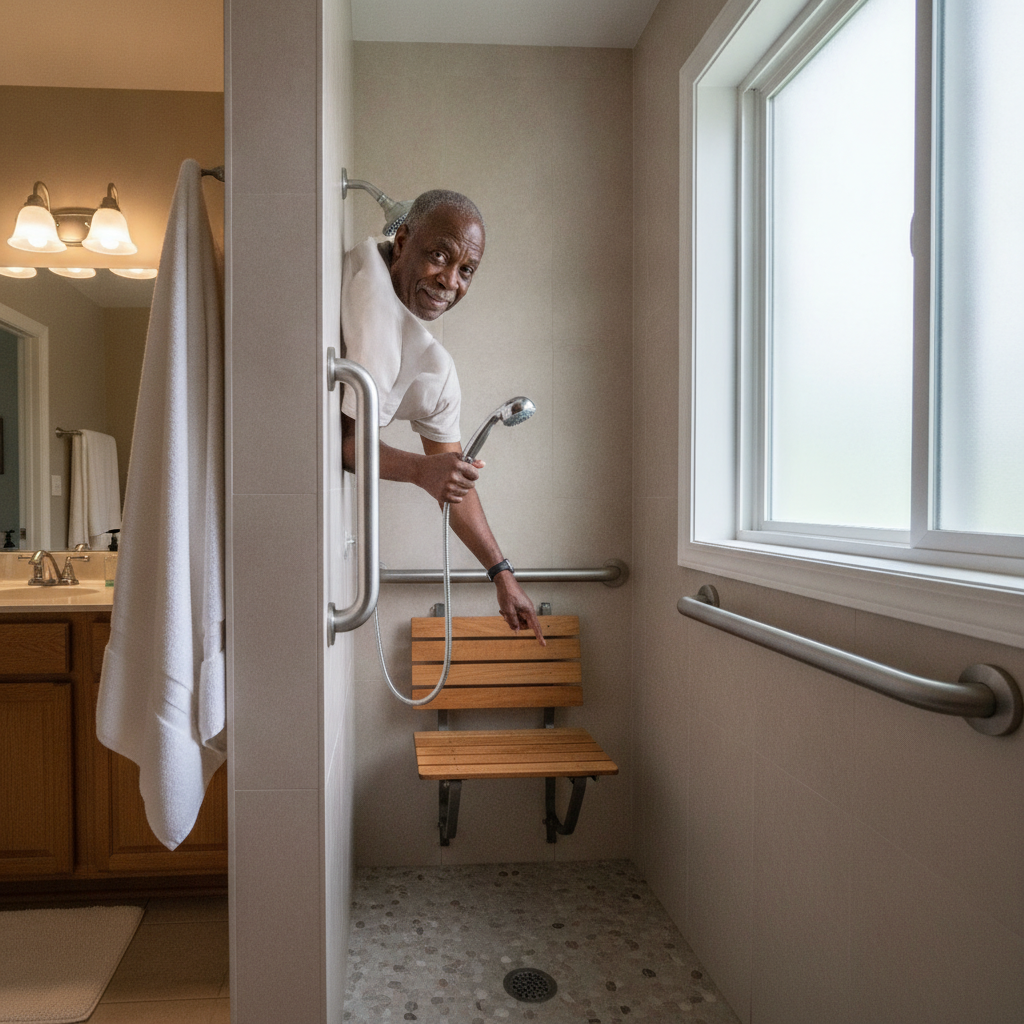
| Bathroom safety modifications (shower chair, handheld sprayer, non-slip flooring) | Prevent fainting during hygiene routines | $3,500-6,000 |
| Bedroom proximity to bathroom | Reduce walking distance during bad days | Renovation: $8,000-15,000 |
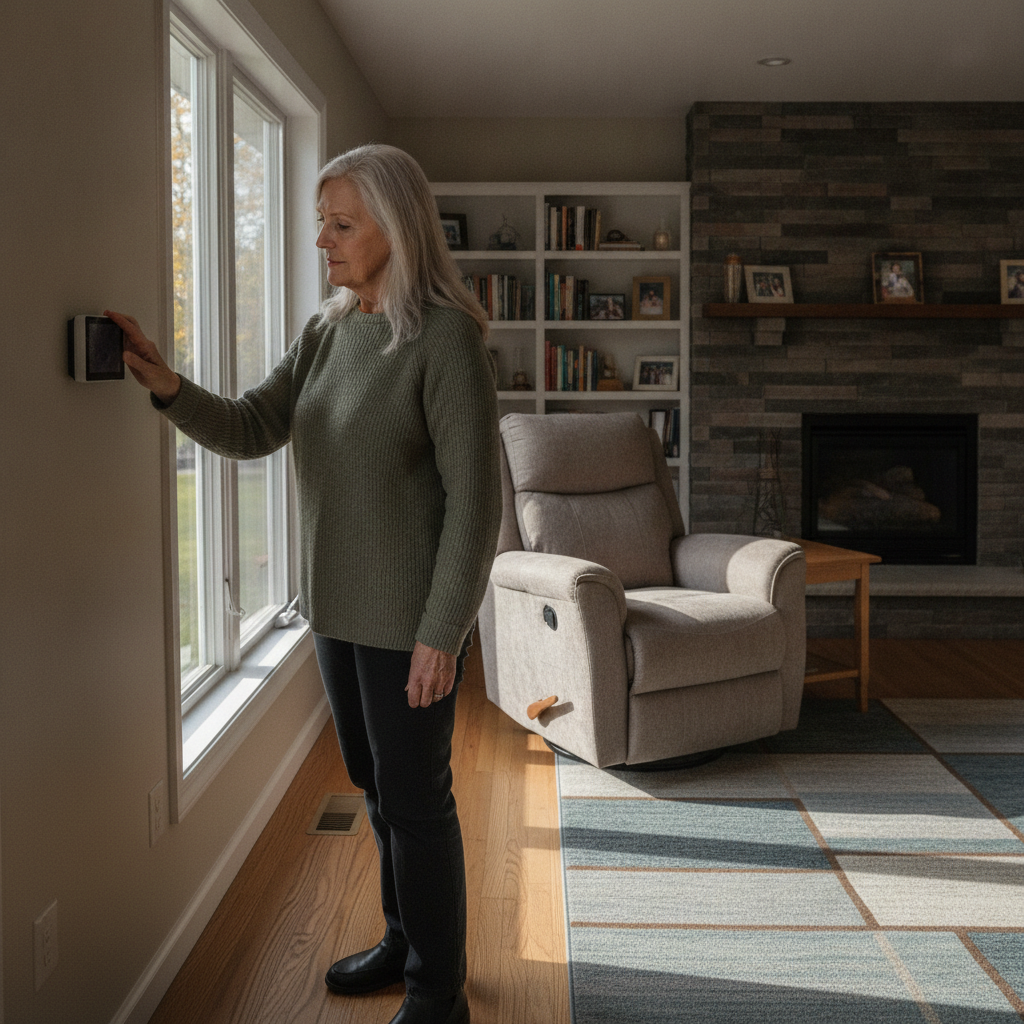
| Climate control system (HVAC zoning/smart thermostat) | Manage temperature sensitivity and regulate blood flow | $4,000-7,000 |
| Kitchen modifications (lowered counters, seated prep area, pull-out shelving) | Enable cooking from seated position | $5,000-12,000 |
| Lighting system with dimming/color control | Manage migraine/sensory triggers | $2,000-4,000 |
| Water pressure regulators and temperature controls | Prevent sudden temperature shock during showers | $800-1,500 |
| Flooring upgrades (non-slip, cushioned surfaces) | Prevent falls during dizzy spells | $4,000-10,000 depending on area |
Total realistic investment for comprehensive POTS home: $30,000-$60,000
Most adult children with POTS earn irregular income due to disability-related work limitations. They cannot fund these modifications independently. The burden typically falls on aging parents—often already stretched by retirement costs.
Real-World Scenario: Emma's Journey
Emma, 28, developed POTS after a viral infection five years ago. On good days, she works remotely as a writer. On bad days (often 4-5 per week), she's housebound with severe fatigue and brain fog.
When she moved back home to her parents' house in Oakville, Ontario—her childhood bedroom offered no POTS-friendly modifications. The bathroom was upstairs, forcing her to climb stairs during flare-ups. The kitchen required standing. The bedroom had no place to safely lie with legs elevated.
Her parents, both working until age 65, felt financially trapped. Emma was 28 but dependent on accessible housing. A small renovation here, a special chair there—each cost $1,000-5,000, and the total accumulated to nearly $40,000 in fragmented spending with no coherent design.
Solution: At age 63, Emma's mother obtained a reverse mortgage for $45,000, designed a comprehensive POTS home renovation:
- Added a second bathroom on the main floor near Emma's new bedroom
- Installed adjustable bed frame with temperature control
- Created a seated kitchen prep area with pull-out shelving
- Upgraded HVAC system with zoning
- Installed anti-fatigue flooring throughout main areas
Outcome:
- Emma's "good days" increased from 1-2 per week to 3-4 per week due to reduced walking distance and effort
- She could shower safely without risk of fainting
- She began taking on more writing projects (increased household income by $800/month)
- Parents had single, professional renovation (not ongoing ad-hoc purchases)
Why Standard Accessibility Consultants Miss POTS Needs
Most accessibility consultants are trained for mobility disabilities—wheelchair ramps, grab bars, accessible parking. POTS is neurological and invisible. Your consultant might not ask:
- ✗ "How far is the bathroom from the bedroom during bad days?"
- ✗ "Can your client cook while seated?"
- ✗ "Does the client need to lie down mid-activity?"
- ✗ "What triggers heat or cold sensitivity?"
- ✗ "Is the home designed to minimize standing duration?"
Better approach: Hire a consultant specializing in invisible disabilities or autonomic disorders. These specialists cost $150-300/hour (vs. $100-150 for standard accessibility), but they design homes around POTS-specific needs.
Funding POTS Home Modifications with a Reverse Mortgage
A reverse mortgage provides several advantages for this scenario:
1. Lump-sum access — Unlike HELOC or refinancing, you get the full amount at once, not line-by-line draws. This allows professional renovation firms to complete the work efficiently.
2. No income requirements — Your adult child's disability status and irregular income don't affect your reverse mortgage approval.
3. No monthly payments — The reverse mortgage is repaid only when you move or pass away. Your household cash flow isn't further strained.
4. Accessible timing — Once approved, funds arrive in 10-15 business days—faster than traditional renovations planning cycles.
5. Estate consideration — Unlike gifts, a reverse mortgage generates no tax consequences and can be framed as borrowing against your home (you retain full ownership).
Tax and Benefits Implications
According to the Canada Revenue Agency (CRA), home modifications for disability purposes may qualify for the Accessible Housing Tax Credit in Ontario—a non-refundable credit worth 15% of eligible expenses up to $2,000/year.
Eligible expenses include:
- ✓ Bathroom renovations (grab bars, accessible showers, toilet modifications)
- ✓ Bedroom modifications (doors, flooring, bedroom repositioning)
- ✓ Kitchen modifications (lowered counters, accessible appliances)
- ✗ Furniture and loose equipment (chairs, beds, thermostats not built-in)
Combined strategy: Use the reverse mortgage to cover total costs ($40,000-60,000), then claim eligible renovation costs ($3,000-8,000) on your tax return. The tax credit offsets some of the reverse mortgage interest cost.
For your adult child, if they receive Registered Disability Savings Plan (RDSP) grants or contributions, ensure the reverse mortgage doesn't affect their RDSP eligibility. According to Service Canada, borrowed funds are not counted as income for RDSP purposes—so no impact.
Budgeting the Reverse Mortgage for POTS Modifications
| Cost Category | Budget | Notes |
|---|---|---|
| Consultant assessment | $1,500-2,500 | Invisible disability specialist |
| Renovation materials and labor | $25,000-45,000 | Professional firm (not DIY) |
| Specialized furniture | $8,000-12,000 | Medical-grade recliners, adjustable beds |
| HVAC/climate control upgrades | $4,000-7,000 | Zoning and smart controls |
| Contingency (10% of total) | $3,000-6,000 | Budget overruns are common in renovations |
| Total RM Amount to Access | $40,000-70,000 | Covers full project without household strain |
According to the Financial Consumer Agency of Canada (FCAC), homeowners should only borrow what they can afford to service through interest. With a reverse mortgage at approximately 6-7% interest, accessing $50,000 costs roughly $3,000/year in interest—significant but manageable when it eliminates monthly payments.
Frequently Asked Questions
Will a POTS home modification increase my home's resale value?
Partially. Modifications specific to POTS (recessed seating areas, low-height kitchen counters) appeal mainly to disabled buyers. Standard upgrades (bathroom additions, HVAC improvements) add value broadly. Expect 40-60% of renovation costs to return in home value—the remaining 40-60% is accessibility investment, not financial return. However, your adult child's quality of life is the primary benefit.
Can my adult child contribute to the reverse mortgage payments?
Yes. While reverse mortgages are non-recourse (no required monthly payments during your lifetime), if your adult child has any income, they can choose to make voluntary payments to reduce interest accumulation. This is entirely optional and reduces their obligation after you pass.
What if my adult child's POTS worsens and they need additional modifications?
Reverse mortgages can be extended (additional borrowing) as long as your home equity supports it. However, start with a comprehensive assessment to anticipate future needs. A POTS-specialist consultant can project likely progression and recommend pre-emptive modifications.
Should I modify just the adult child's room or the entire main floor?
If your adult child is mobile 3-4 days per week, full main-floor modifications are worth it. They can participate in family dinners, use the kitchen independently, and access the bathroom without help. This improves both independence and household connection.
Are there grants or programs to help fund POTS home modifications?
Provincial and federal accessibility grants exist, but eligibility is restrictive. Ontario offers the Accessibility Fund (for workplaces) and the Home Accessibility Tax Credit (non-refundable, max $300/year). Neither covers renovation costs comprehensively. A reverse mortgage is typically the most efficient funding source.
Moving Forward
If your adult child has POTS and your home needs comprehensive modifications:
-
Consult a POTS-specialist accessibility consultant. Ask for a detailed assessment and renovation proposal. Cost: $1,500-2,500, but essential for proper planning.
-
Get reverse mortgage pre-qualification. Contact Rick Sekhon Reverse Mortgages to understand how much you can safely borrow.
-
Develop a timeline. POTS can progress. Act within 12-18 months if modifications are needed—waiting increases renovation costs and reduces your adult child's quality of life during that window.
-
Plan tax benefits. Work with an accountant to maximize the Accessible Housing Tax Credit alongside your reverse mortgage.
The Bottom Line
POTS is an invisible disability with very real home modification needs. Standard accessibility upgrades don't address it; specialized renovations cost $40,000-70,000. Most adult children with POTS cannot fund this independently. A reverse mortgage provides the lump-sum capital to create a genuinely POTS-friendly home—improving your adult child's quality of life and family connection without burdening their already-limited income.
Ready to Learn More?
Find out exactly how much you could unlock from your home — free and no obligation.
Related Articles
Reverse Mortgage for Home Modifications for Invisible Disabilities: Beyond Visible Accessibility
How Ontario seniors with invisible disabilities like fibromyalgia, ME/CFS, and autoimmune conditions can use a reverse mortgage to fund home modifications that support daily living beyond typical accessibility features.
Read →Aging in Place with a Reverse Mortgage: Home Modification Guide
How Ontario seniors can fund aging-in-place home modifications with a reverse mortgage — costs, top modifications, grants, and a complete planning guide.
Read →Reverse Mortgage for Aging in Place With Fibromyalgia: Home Modifications for Invisible Illness
Fund home modifications for aging with fibromyalgia. Reverse mortgage enables accessible design for pain management, energy conservation, and quality of life.
Read →