
Reverse Mortgage for Managing Escalating Prescription Drug Costs: Polypharmacy in Aging
Learn how a reverse mortgage can fund rising medication costs when aging parents on multiple drugs face affordability crises in Ontario healthcare.
Does your aging parent take five or more medications daily, and you're watching their prescription costs climb year over year? Polypharmacy—the use of multiple medications simultaneously—is one of the fastest-growing healthcare costs for Ontario seniors, and for many families, medication expenses become an affordability crisis that forces impossible choices: medications or groceries, refills or utilities. A reverse mortgage can provide immediate relief from prescription drug cost burden while ensuring your parent maintains the medications they need to stay healthy.
The Polypharmacy Cost Crisis in Ontario
Polypharmacy (5+ concurrent medications) affects approximately 35-40% of Canadians over 65, with costs that can exceed $300-500 per month for seniors on fixed incomes. Each medication adds not only the drug cost itself but also specialist consultation fees, pharmacist counseling, lab monitoring (blood work to assess drug interactions), and potential ER visits if interactions cause adverse events.

According to Statistics Canada's latest prescription drug cost analysis, medication expenses for seniors have increased 4-6% annually over the past five years—double the rate of general inflation. Ontario's public drug coverage (through ODB, Ontario Drug Benefit) covers many seniors' costs, but significant coverage gaps remain:
- Complex or newer medications not on the ODB formulary
- Brand-name drugs when generic alternatives aren't covered
- Medications for chronic conditions like ADHD, neuropathic pain, or rare diseases
- Specialty medications requiring mail-order or hospital distribution
Typical Medication Cost Scenarios for Ontario Seniors
| Condition Cluster | Common Medications | Monthly Cost Range | Annual Cost |
|---|---|---|---|
| Heart disease + diabetes + hypertension | ACE inhibitor, statin, beta-blocker, metformin, diuretic, anticoagulant | $80–$200 | $960–$2,400 |
| COPD + heart disease + osteoporosis | Inhaled steroids, bronchodilators, cardiac meds, bisphosphonates, pain relief | $120–$300 | $1,440–$3,600 |
| Parkinson's + cognitive decline + depression | Levodopa, dopamine agonist, SSRI, cholinesterase inhibitor, sleep aids | $150–$350 | $1,800–$4,200 |
| Chronic pain + depression + anxiety + insomnia | Neuropathic pain meds, antidepressants, anxiolytics, sleep aids, muscle relaxants | $100–$280 | $1,200–$3,360 |
| Advanced cancer treatment (palliative) | Specialty oncology meds, pain management, anti-nausea, supportive care | $200–$500+ | $2,400–$6,000+ |
Beyond medication costs, polypharmacy creates secondary expenses:
- Pharmacist consultations ($50–$150 per session) to manage interactions
- Lab work and monitoring ($300–$1,000/year) to check kidney function, INR levels, or blood glucose
- ER visits due to drug interactions or adverse effects (average $800–$2,000 per visit)
- Medication adjustments and specialist follow-ups ($100–$300 per appointment)
Total annual medication-related healthcare spending for a senior on complex polypharmacy: $3,500–$8,000+
How a Reverse Mortgage Addresses Medication Affordability
A reverse mortgage can be structured to cover prescription costs through several approaches:
Direct Medication Cost Coverage
Access reverse mortgage funds as an ongoing line of credit specifically for prescription expenses. This is particularly effective for:
- Newer medications not yet on ODB formulary: Often $150–$300/month, with ODB coverage delayed by 12–24 months
- Non-covered specialty drugs: Drugs for rare conditions, complex pain management, or cognitive support
- Brand-name alternatives: When a patient can't tolerate a generic formulation
- Dosage adjustments: When a medication needs to be increased to therapeutic levels
- Supplemental medications: Vitamins, supplements, or supportive care medications that enhance efficacy of primary drugs
Secondary Cost Management
Beyond medication itself, a reverse mortgage can fund:
- Pharmacist-led medication reviews ($100–$300): Professional assessment of interactions, duplications, and deprescribing opportunities
- Specialized pharmacy services: Medication therapy management (MTM) programs that optimize regimens
- Lab monitoring and testing: Blood work to ensure safe drug levels and catch early kidney or liver dysfunction
- Telehealth medication consultations: Virtual visits with specialists to adjust complex regimens without travel costs
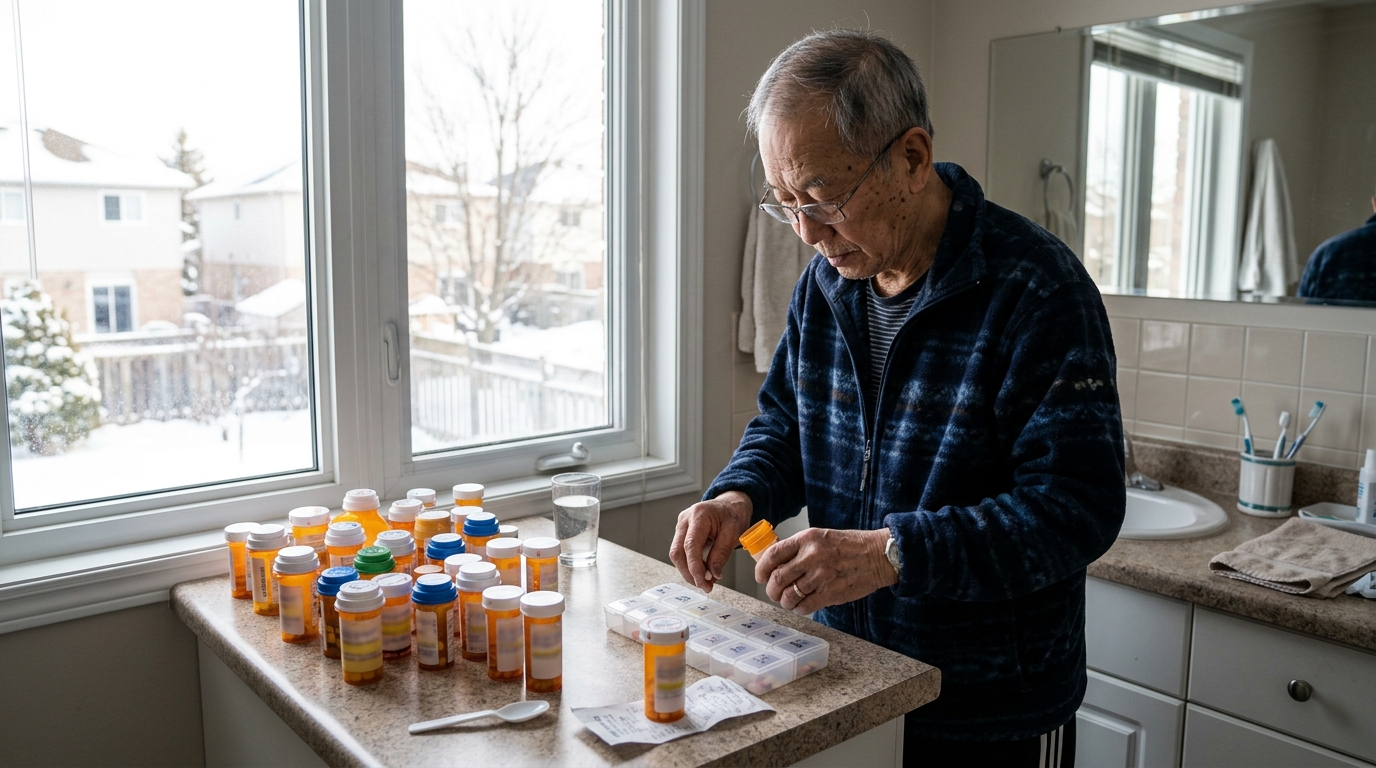
Real-Life Scenario: Preventing Catastrophic Healthcare Costs
James's Story: James, 74, was on 8 medications for heart disease, type 2 diabetes, COPD, and depression. His monthly ODB coverage covered approximately $120 of his medication costs, but his actual out-of-pocket spending was $280/month—$1,920/year beyond his fixed pension income.
The situation worsened when his diabetes medication (metformin) began causing kidney function changes, requiring a switch to a newer, non-formulary SGLT2 inhibitor ($180/month). Simultaneously, his cardiologist added a new anticoagulant variant not yet on ODB ($120/month). James faced a decision: cut medications (risking cardiovascular event), cut food spending, or apply for his adult daughter's financial help.
James's daughter helped him secure a reverse mortgage line of credit ($120,000 available). The lender structured it so James could:
- Draw monthly for medication costs: $350/month specifically for prescription coverage gaps
- Access larger amounts for medication changes: When dosages shifted or new drugs were needed, additional funds covered the transition
- Fund pharmacist consultations: One annual medication review ($250) to identify deprescribing opportunities
| Year | Medication Costs | Reverse Mortgage Draw | James's Own Spending |
|---|---|---|---|
| Year 1 (before RM) | $3,360/year | $0 | $1,920/year |
| Year 2 (with RM) | $3,900/year | $2,300/year | $1,600/year |
| Year 3 (optimized) | $3,500/year | $2,100/year | $1,400/year |
By year 3, James's pharmacist had identified a medication he could safely discontinue (an older pain medication no longer needed), reducing his complexity from 8 to 7 medications and saving $40/month. The reverse mortgage enabled this optimization by funding the consultations and transition period when he most needed medication flexibility.
Coordinating Reverse Mortgage with Government Drug Assistance
Ontario offers several programs to reduce medication costs; a reverse mortgage works alongside these:
According to Ontario's Ministry of Health, seniors age 65+ with income below $19,850 may qualify for the Trillium Drug Program (subsidized medications), and those on social assistance access ODB free or at minimal cost. For those above income thresholds, reverse mortgage funding bridges the gap between ODB coverage and actual medication costs.
Strategic approach: First, ensure your aging parent is enrolled in all available assistance programs (ODB, Trillium Drug Program, pharmaceutical manufacturer assistance programs). Then, structure the reverse mortgage to cover the remaining gap.
| Program | Eligibility | Coverage | Gap That RM Fills |
|---|---|---|---|
| ODB (Ontario Drug Benefit) | Age 65+ on public benefits | Covered drugs, modest copay | Non-formulary drugs; newer medications |
| Trillium Drug Program | Net income <$19,850/year | 25% copay on most drugs | Out-of-pocket after copay |
| Manufacturer Patient Assistance | Varies; often free drugs for uninsured | Full medication cost if income-qualified | Gap during approval wait (30–60 days) |
| Private Insurance (if available) | Through employer pension or purchased | Varies widely (50–100% coverage) | Coverage gaps and deductibles |
| Reverse Mortgage (targeted) | Homeowner age 55+ | Flexible funds for medication gaps | All non-covered costs |
Addressing Polypharmacy Through Deprescribing
An often-overlooked strategy: many seniors are on medications they no longer need. A reverse mortgage can fund the professional assessment and medication adjustment process:
According to the Canadian Deprescribing Network, 20–30% of seniors' medications could safely be discontinued or reduced, yet this deprescribing process requires specialist time and careful monitoring. Your reverse mortgage can fund:
- Geriatric pharmacist consultations ($200–$400 per comprehensive review)
- Medication adjustment monitoring ($100–$150 per follow-up visit for 2–3 months)
- Specialist coordination: Communication between cardiologist, endocrinologist, and neurologist to safely reduce redundant medications
A successful deprescribing project (8 medications → 5–6 medications) can reduce annual medication costs by 20–40% ($600–$1,600/year savings) while simultaneously improving adherence, reducing side effects, and lowering ER visit risk.

Structuring the Reverse Mortgage for Long-Term Medication Management
Most seniors benefit from a line of credit structure rather than a lump-sum payout when managing medication costs:
- Access medication funds monthly: Draw what you need for prescriptions, when you need it
- Manage medication changes: Extra capacity available when new drugs are needed or dosages adjusted
- Pay down between expensive periods: If medication costs fluctuate seasonally, draw less in low-cost months
- Avoid overpaying interest: You only pay interest on amounts actually drawn, not the full available credit
Products like CHIP Reverse Mortgage and HomeEquity Bank's Reverse Mortgage both offer line-of-credit options. FSRAO oversight ensures transparent disclosure of all fees and interest rates.
Key Takeaways
- Polypharmacy (5+ medications) affects 35-40% of Ontario seniors, with annual costs of $3,500–$8,000+
- ODB and Trillium Drug Program coverage leaves significant gaps for newer or specialty medications
- A reverse mortgage line of credit provides flexible, ongoing funding for medication affordability
- Secondary benefits: funding pharmacist consultations, deprescribing optimization, and medication monitoring
- Coordinating with existing government programs maximizes coverage and minimizes reverse mortgage draw
- Long-term strategy can reduce medication costs through evidence-based deprescribing while maintaining health
Frequently Asked Questions
Can pharmacist consultations and medication reviews be funded directly from the reverse mortgage?
Yes. These services are medical expenses and can be included in reverse mortgage fund draws. Keep receipts documenting the consultation as a healthcare expense for tax and record-keeping purposes. Some seniors find this improves accountability and ensures the consultation happens.
If my parent's medication costs decrease over time, can I reduce the reverse mortgage line of credit?
Yes, through refinancing or restructuring at renewal. If medication needs decrease (due to deprescribing or health improvement), your lender can reduce the available credit limit, which may slightly lower your overall interest costs. Discuss this at renewal with your reverse mortgage advisor.
Will the reverse mortgage funds I access for medications affect my parent's OAS or GIS benefits?
No. Reverse mortgage proceeds are loan funds (not income), so they don't trigger income tax or benefit clawbacks. However, timing matters if you're accessing large lump sums that might affect asset tests. A line of credit (drawing small amounts monthly) avoids this issue entirely.
What if my parent's medication regimen changes dramatically—new diagnosis, new expensive drug?
A line of credit structure handles this perfectly. If a new medication costs $300/month instead of $80/month, you can increase your monthly draw to accommodate. The available credit provides flexibility for life changes without requiring refinancing.
Are there prescription drug programs specifically for seniors that I'm missing?
Yes. Beyond ODB and Trillium: (1) Pharmaceutical manufacturer patient assistance programs (often free medications for uninsured patients), (2) pharmacy discount programs (Costco, Shoppers Drug Mart, etc.), (3) chronic disease management programs through your family doctor, and (4) some employers' retiree benefits. Rick Sekhon Reverse Mortgages can connect you with a benefits advisor to audit all available programs before drawing on the reverse mortgage.
If medication costs become unaffordable and my parent stops taking drugs, could this trigger a health crisis requiring ER visits?
Absolutely. This is the hidden cost of medication non-adherence: seniors who skip doses due to cost often end up in ER with acute cardiac events, uncontrolled diabetes, or stroke—costing $2,000–$10,000+ per visit. A reverse mortgage preventing medication non-adherence actually saves the healthcare system money while protecting your parent's health.
Managing polypharmacy affordability is both a personal health priority and a family financial strategy. A reverse mortgage can ensure your aging parent never has to choose between medications and groceries—and can even fund the professional optimization needed to reduce medication burden over time.
Ready to Learn More?
Find out exactly how much you could unlock from your home — free and no obligation.
Related Articles
Reverse Mortgage When Aging Homeowner Discovers Hidden Defects: Seller Non-Disclosure Remediation
Fund major repairs when aging homeowner discovers undisclosed property defects. Reverse mortgage for remediation costs in Ontario.
Read →Reverse Mortgage When Longtime Live-In Caregiver Retires or Becomes Ill: Care Restructuring
Emergency financial strategy when aging parent's live-in caregiver must leave. Reverse mortgage for sudden care system overhaul in Ontario.
Read →Reverse Mortgage for Home Environmental Modifications: Managing Respiratory Hypersensitivity in Aging
Fund specialized HVAC, air quality, and ventilation systems when aging parent has respiratory sensitivity. Reverse mortgage for environmental health in Ontario.
Read →