
Home Inspection Disaster: Reverse Mortgage for Unpermitted Renovations and Code Violations
Your home inspection revealed illegal renovations and building code violations. Reverse mortgage can fund corrections before sale or face forced title clearance costs.
The home inspector just discovered that your basement renovation—the one you paid $40K for 12 years ago—was never permitted. Now your property title is clouded, your sale is stalled, and the municipality is threatening a compliance order. A reverse mortgage can fund the emergency permits, corrections, or title clearance costs that your retirement savings can't absorb.
The Hidden Cost of Unpermitted Work in Ontario Homes
Tens of thousands of Ontario homeowners face this nightmare: a renovation done by a previous owner (or even your own trusted contractor) was never properly permitted. The work might be structurally sound, but it's legally non-compliant.
Common violations:
- Basement bedrooms added without egress windows (fire code violation)
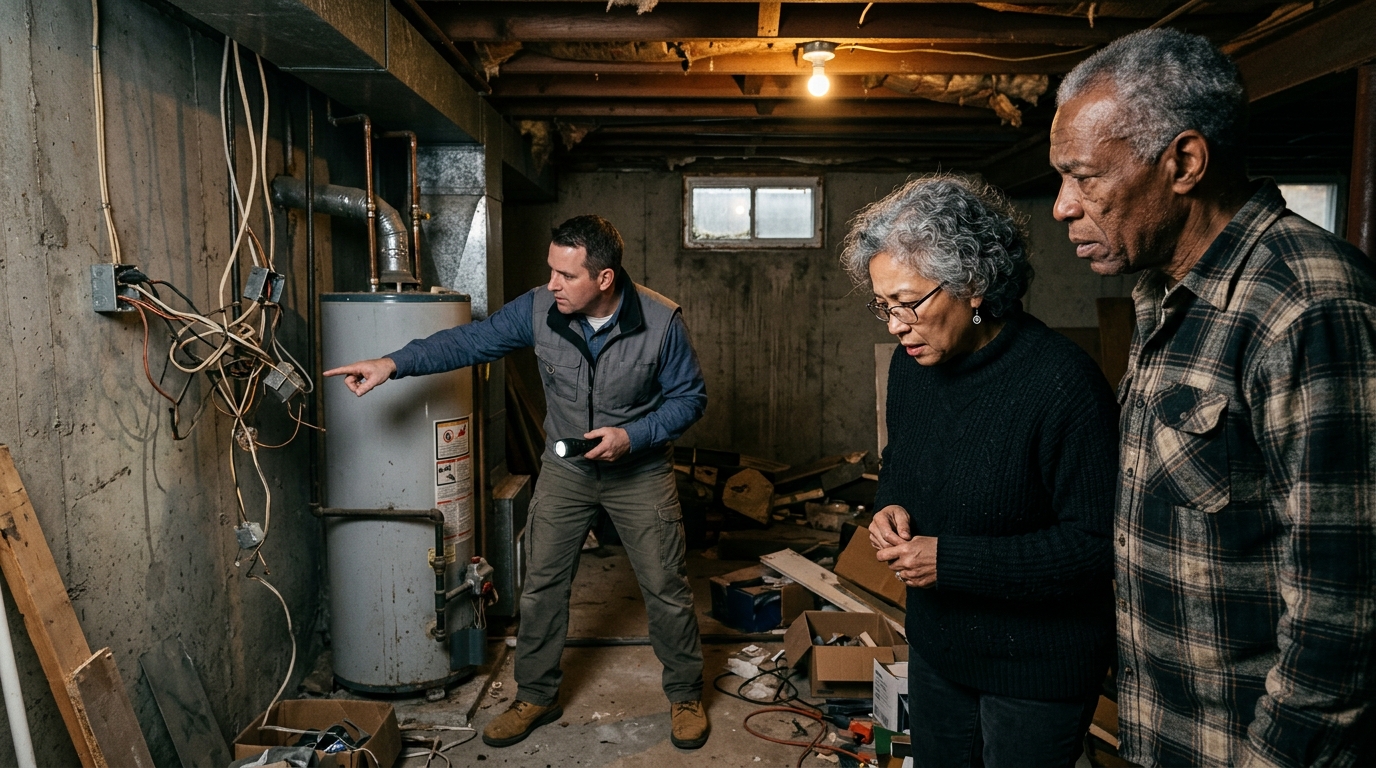
- Electrical work done without licensed electricians (safety hazard)
- Structural walls removed without proper permits or engineer approval
- HVAC systems upgraded without ventilation permits
- Plumbing work not certified by licensed plumbers
- Additions that violate setback or zoning requirements
The consequences:
When you try to sell, the home inspector flags it. The buyer's mortgage lender pulls the title report and sees non-compliant work registered. The lender won't finance the purchase. Your sale collapses.
Your options then become expensive:
- Remediate (fix) the work — hire licensed contractors, pull permits retroactively, ensure compliance. Cost: $8K–$50K+ depending on severity.
- Get a title insurance exception — have the title company insure the issue away, allowing buyers to purchase despite the violation. Cost: $500–$3K one-time, but raises future liability questions.
- Leave the home unsold — accept that your home has reduced value and stay until you pass it to heirs.
None of these are cheap. And if you're 70+ and trying to downsize or access home equity, they're catastrophic.
Why This Happens—And Why It's Your Problem Now
The pattern: Someone (previous owner, unlicensed contractor, "a guy who knew a guy") did work 10–20 years ago. Permits weren't pulled. Nobody died. The work held up. Then you bought the house and ignored the small signs (no building permit documents in your file, contractor who can't be reached, sketchy electrical work that "works fine").
Now, on the verge of sale or facing a municipal compliance order, you discover the liability is yours.
According to Ontario Building Officials Association (OBOA), 12–15% of residential homes have at least one unpermitted renovation. In older neighborhoods (built 1960–1990), the rate climbs to 25%+. Most homeowners don't know until they sell.
What the Municipality Can Demand
If the city or township discovers code violations, they can issue a Compliance Order requiring you to:
- Bring the work into compliance (hire licensed contractors to redo/verify work)
- Demolish the non-compliant addition/renovation
- Pay fines ($500–$5,000 per violation, sometimes more)
They can also place a Lien on your property, blocking sale until the order is resolved.

Cost Comparison: Fixing vs. Title Insurance vs. Reverse Mortgage
Here's what you're realistically facing:
| Issue | Remediation Cost | Title Insurance Cost | Buyer Impact | Reverse RM Solution |
|---|---|---|---|---|
| Unpermitted basement room | $8–15K (permits, egress window) | $1–2K | Buyer pays insurance premium, lender may refuse | RM covers remediation |
| Electrical work, unlicensed | $5–12K (rewire, inspection) | $800–1.5K | High risk; many lenders refuse | RM covers certified rewiring |
| Structural wall removal | $15–30K (engineer, rebuild wall) | $2–3K | Deal-breaker for most lenders | RM covers structural work |
| HVAC system, no permit | $4–8K (recertification, compliance) | $500–$1K | Minor impact, usually accepted with insurance | RM covers certification |
| Multiple violations (2+ issues) | $25–60K | $3–5K per violation | Likely deal-breaker | RM covers all corrections |
The reverse mortgage advantage: You access the funds quickly (usually 5–10 business days), hire licensed contractors immediately, and can remediate before your sale falls apart.
Title insurance helps with future sales, but it doesn't fix today's compliance order. It doesn't prevent the city from fining you. And it adds cost to every future buyer's transaction.
Key Takeaways
- Unpermitted renovations affect 12–25% of Ontario homes, often undiscovered until sale
- Remediation (bringing work into code compliance) typically costs $8K–$60K depending on the violation
- A reverse mortgage can fund remediation without forcing a rushed sale or bankruptcy of your retirement funds
- Title insurance is cheaper upfront but creates ongoing complications for future buyers and doesn't prevent municipal compliance orders
- Many home buyers will walk away from properties with code violations, even with title insurance—remediation is the only true solution
Real Story: Ellen's Basement Crisis
Ellen, 72, Mississauga
Ellen bought her 1987 bungalow in 2005 for $315K. In 2008, the previous owner's son had finished the basement — a full second bedroom, bathroom, and rec room. The work looked solid. Ellen never questioned it.
In 2023, Ellen wanted to downsize. Her home appraised at $680K. She hired a home inspector and listed the house.
The discovery: The basement had no egress window in the bedroom (fire code violation). The electrical work was done by an unlicensed contractor. The bathroom plumbing had no licensed inspection.
The buyer's response: The lender's inspector flagged the violations. The mortgage lender refused to finance the purchase pending remediation. The buyer walked away.
Ellen's costs:
- Egress window installation: $4,500
- Licensed electrician to inspect and re-certify: $2,200
- Licensed plumber to inspect and re-certify: $1,800
- Municipal permits and inspections: $1,200
- Lost sale and re-listing costs: $8,000
Total: $17,700
Ellen's retirement savings were $150K. She could afford this, but barely. And she'd have to delay her move by 4–6 months for the work and re-sale.
The reverse mortgage solution: Ellen could have taken a $20K lump sum from a reverse mortgage (her home equity was $300K+), paid the remediation immediately, and sold the now-compliant home within 2 months.
Cost comparison: $17,700 out of retirement savings + 6-month delay vs. $20K reverse mortgage that leaves most of her equity intact and accelerates the sale by 4 months. The reverse mortgage would have been the better financial move.

Prevention and Discovery: Steps to Take Now
If you're thinking of selling in the next 5 years:
- Search your municipal records — Does your home have registered building permits for all major work (HVAC, electrical, additions, bathrooms)? Missing permits are a red flag.
- Hire a pre-inspection — Before listing, pay $400–$600 for a professional home inspection to identify violations BEFORE buyers do.
- Consult a real estate lawyer — ($500–$1,500) for a title review and discussion of remediation vs. title insurance.
- Get quotes from licensed contractors — If violations exist, understanding the cost to fix them helps you decide: remediate now or discount the sale price.
Frequently Asked Questions
Can I sell my home "as-is" without fixing the code violations?
You can list and sell as-is, but most mortgage lenders will require remediation or title insurance before financing the buyer. Cash buyers (rare) might accept the home with violations. But this dramatically limits your buyer pool and typically reduces the sale price by 5–15%, negating any savings from skipping remediation.
If I get title insurance, am I protected from the city fining me for code violations?
No. Title insurance protects against ownership disputes and defects of title. It does NOT protect you from municipal compliance orders or fines. If the city discovers a code violation, they can still issue a compliance order and fine you, even with title insurance. The insurance just helps future buyers accept the risk.
How long do I have to fix code violations if the city issues a Compliance Order?
Typically, 30–90 days, depending on the municipality and severity of the violation. Some violations are considered immediate safety hazards (electrical fire risk) and demand faster correction. Check your specific municipality's building standards.
Will a reverse mortgage lender care about code violations on my home?
No. The lender is assessing your home value and equity, not code compliance status. Your home's market value is what matters. If your home has $300K equity despite code violations, you can access that equity via reverse mortgage. The violations don't prevent the loan approval—they're a separate liability you own.
Can I get a reverse mortgage, do the remediation, and then sell the home immediately?
Yes. There's no restriction on using reverse mortgage proceeds for remediation and then selling shortly after. However, be aware: the reverse mortgage is due when you sell the home, so the sale proceeds will be used to repay the loan. Calculate carefully to ensure the remediated home's sale price exceeds the reverse mortgage balance + other costs.
What if the unpermitted work is from 20+ years ago and nobody has complained?
The past compliance doesn't protect you going forward. Many violations stay hidden until a sale or insurance claim occurs. Statute of limitations doesn't typically apply to building code violations—the city can issue a compliance order at any time. If discovered, you're responsible for remediation regardless of how long the violation has existed.
Moving Forward: Remediation as Prevention
If you're facing unpermitted renovations and a stalled sale, a reverse mortgage can prevent a disaster from becoming a financial catastrophe.
Speak with:
- A real estate lawyer about title implications ($500–$1,500)
- Licensed contractors for remediation quotes ($0, usually free)
- A reverse mortgage specialist (like Rick Sekhon Reverse Mortgages) to understand your funding options
Your home's value is real. The equity you've built is yours. Code violations shouldn't trap you in a home you want to leave or force a fire-sale price. Remediation is the honest path forward — and a reverse mortgage can make it affordable.
Ready to Learn More?
Find out exactly how much you could unlock from your home — free and no obligation.
Related Articles
Reverse Mortgage When Aging Homeowner Discovers Hidden Defects: Seller Non-Disclosure Remediation
Fund major repairs when aging homeowner discovers undisclosed property defects. Reverse mortgage for remediation costs in Ontario.
Read →Reverse Mortgage When Home Condition Deteriorates Faster Than Expected: Funding Urgent Escalation
Aging parents face unexpected home repairs. Learn how a reverse mortgage funds urgent home preservation when deterioration accelerates.
Read →Reverse Mortgage When Aging Parent's Home Develops Subsurface Issues Like Sinkholes or Soil Failure
Underground hazards threaten home stability and property value. Reverse mortgage funds geological assessment, stabilization, and remediation for subsurface crisis.
Read →