
Reverse Mortgage for Home Accessibility Compliance: Ontario Building Codes 2026
Fund Ontario building code-compliant accessibility upgrades with reverse mortgages. Meet safety standards while aging in place.
Are your home modifications compliant with Ontario's current building codes? Many seniors discover mid-renovation that their accessibility upgrades don't meet updated safety standards—forcing costly rework. A reverse mortgage can ensure your aging-in-place modifications are built right the first time, meeting all 2026 Ontario accessibility requirements.
Understanding Ontario Building Code Accessibility Requirements
Ontario's building code requirements for residential aging-in-place modifications have evolved significantly. The 2020 Ontario Building Code (OBC) and 2026 updates now mandate specific technical standards for accessibility features to protect seniors' safety and independence. These aren't optional upgrades—they're legal requirements when making structural changes to your home.
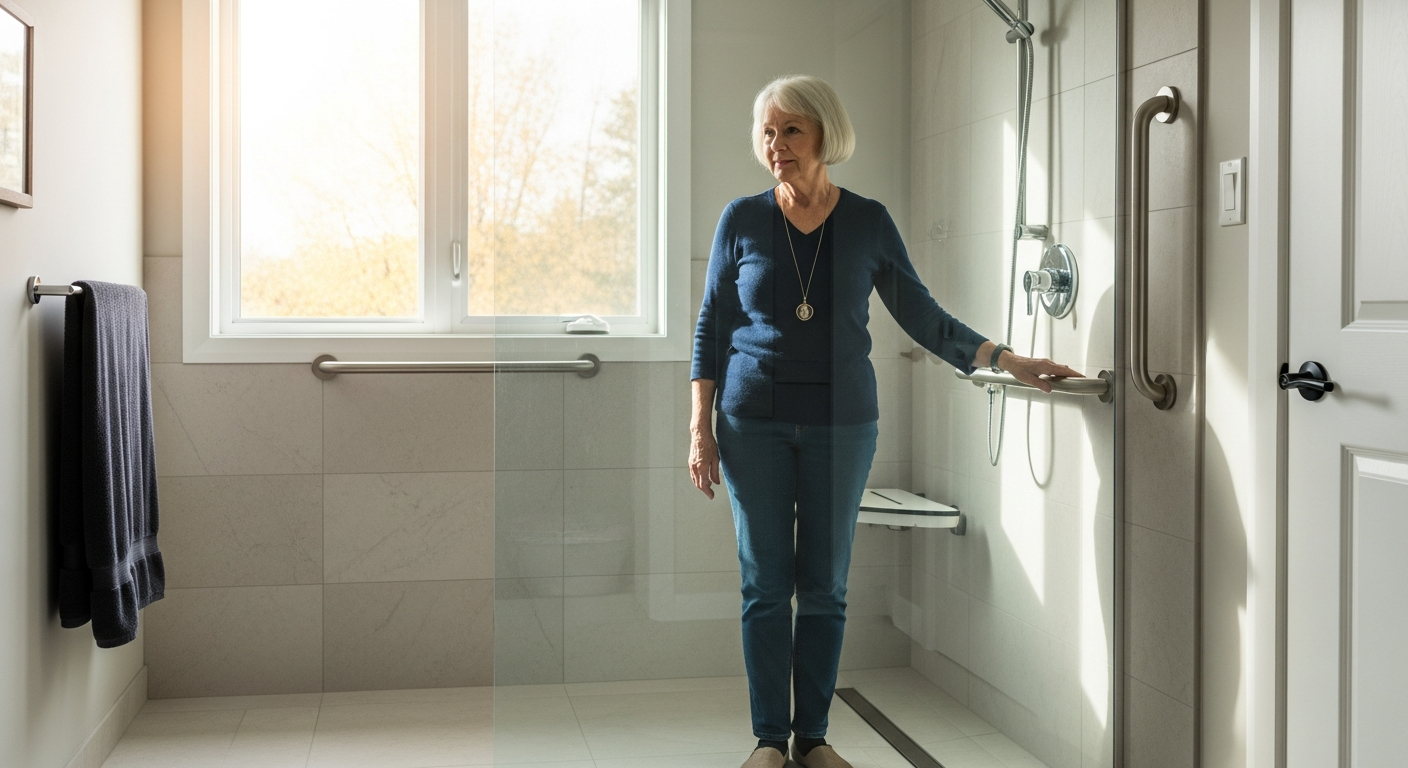
The OBC accessibility requirements cover door widths, ramp slopes, bathroom grab bar placement, lighting standards, electrical outlet heights, and pathway clearances. Non-compliant modifications can create liability issues, affect home resale value, and—most critically—fail to protect you from falls or mobility hazards.
According to the Accessibility for Ontarians with Disabilities Act (AODA), residential modifications must meet minimum accessibility standards to ensure safe aging in place. Seniors who retrofit homes without proper code compliance face safety risks and potential insurance gaps.
Why Code Compliance Matters for Aging in Place
Building code compliance isn't bureaucratic red tape—it's the difference between modifications that work and modifications that fail when you need them most. A grab bar installed at the wrong height won't support your weight. A bathroom doorway that's 6 inches too narrow defeats a mobility-assist renovation. Ramps with the wrong slope can be slipping hazards for walkers.
The 2026 Ontario Accessibility Code Updates
Ontario updated its building codes in 2026 to reflect evolving accessibility science and aging-in-place best practices:
| Code Requirement | 2020 Standard | 2026 Update | Compliance Cost Impact |
|---|---|---|---|
| Bathroom door width | 32 inches minimum | 36 inches preferred | +$800–$2,500 for widening |
| Grab bar placement | 33–36 inches from floor | 24–36 inches with reinforcement | +$400–$1,200 per bar |
| Ramp slope ratio | 1:12 maximum | 1:12 maintained, but landing rules stricter | +$500–$2,000 if extending landing |
| Stairwell lighting | 50 lux minimum | 100 lux minimum in 2026 | +$300–$800 for upgrades |
| Electrical outlets | 48 inches maximum height | 30–48 inches adjusted height | +$200–$600 per room |
| Toilet seat height | Standard 15 inches | 17–19 inches comfort height | +$600–$1,500 for raised toilets |

Funding Code-Compliant Retrofits With a Reverse Mortgage
When accessibility modifications must meet Ontario's updated building codes, renovation budgets often exceed initial expectations. A reverse mortgage solves this problem by providing immediate access to your home equity—without monthly payments during your lifetime.
Why reverse mortgages are ideal for code-compliant aging-in-place projects:
✓ No income or credit check requirements ✓ Tax-free funds for modifications totaling $15,000–$100,000+ ✓ Flexible access (lump sum or line of credit) to fund staged renovations ✓ No forced sale requirement—you keep living in your home ✓ Funds can cover both modifications AND professional code inspections ✓ Works alongside grants like the Ontario AoO Accessibility Tax Credit (double your funding)
Lenders Supporting Code-Compliant Renovations
CHIP, Equitable Bank, HomeEquity Bank, Bloom Financial, and Home Trust all provide reverse mortgages that explicitly fund accessibility modifications. Each evaluates your home's post-modification value (after code-compliant upgrades), not just the as-is value—meaning your renovation investment protects your equity.
According to FSRAO (Financial Services Regulatory Authority of Ontario), reverse mortgage lenders must disclose all renovation-related fees upfront. When planning code-compliant work, request a detailed fee schedule before committing.
Real-World Scenario: Bathroom Retrofit to 2026 Code
Sarah, 68, lived alone in her Toronto bungalow. Her bathroom needed accessibility upgrades to prevent falls—but when her contractor evaluated the space against 2026 code standards, the project scope expanded:
- Widen doorway from 32" to 36": $2,200
- Reinstall grab bars at new 24–36" height range: $1,800
- Upgrade lighting to 100 lux minimum: $650
- Raise toilet seat to 17–19" height: $1,200
- Add non-slip flooring to meet safety codes: $2,100
Total compliance cost: $8,000 (vs. $4,000 for non-compliant basic modifications).
Sarah obtained a reverse mortgage line of credit for $100,000. She funded the bathroom retrofit ($8,000), then reserved funds for future kitchen upgrades and potential care equipment. Her home's accessibility value increased, and she paid no monthly payments.
| Funding Approach | Upfront Cost | Monthly Payment | Total Interest (10 years) |
|---|---|---|---|
| Reverse mortgage (LoC) | $0 | $0 | ~$8,500 at 5.8% |
| Home equity line of credit (HELOC) | $0 | ~$45/month | ~$5,400 |
| Personal loan | Immediate | ~$150/month | ~$18,000 |
| Credit card | Immediate | Variable 19.99%+ | Unaffordable |
The reverse mortgage was ideal because Sarah had no monthly income pressure and valued the flexibility to access funds as future needs emerged.
Steps to Fund Code-Compliant Accessibility Modifications
1. Get a Professional Accessibility Audit
Before applying for a reverse mortgage, hire a certified occupational therapist or accessibility consultant (covered by reverse mortgage funds). They'll evaluate your home against 2026 Ontario Building Code standards and create a compliance roadmap.
Expected cost: $300–$600 (often recovered in renovation efficiency).
2. Obtain Contractor Quotes (Code-Compliant)
Don't hire the cheapest contractor. Specify "2026 Ontario Building Code compliant" in your RFQ. Get three quotes that explicitly address:
- Door widths and hardware
- Grab bar placement and reinforcement
- Ramp slope and landing dimensions
- Lighting upgrades to 100 lux
- Non-slip flooring standards
3. Apply for Reverse Mortgage
Contact Rick Sekhon Reverse Mortgages or a licensed specialist. Mention your accessibility project—lenders evaluate post-renovation home value (including the value added by code-compliant safety upgrades).
4. Fund Modifications and Inspections
Draw funds as work completes. Ontario requires third-party inspections for structural modifications. Budget $500–$1,200 for compliance inspections.
5. Document Everything
Keep receipts, contractor invoices, and inspection reports. They prove code compliance to future buyers and protect your resale value.
How Code Compliance Protects Your Home Equity
Non-compliant modifications reduce your home's resale value and create liability. When you sell, buyers' home inspectors will flag code violations, and appraisers will reduce the home's value accordingly. Code-compliant upgrades, by contrast, increase appraisal value—a win for both aging in place and future inheritance.
Reverse mortgage lenders factor post-renovation value into their approval. A $20,000 code-compliant bathroom renovation increases your home's appraised value by $15,000–$25,000, strengthening your reverse mortgage application.
Key Takeaways
- Ontario's 2026 building codes require minimum standards for accessibility—grab bar placement, lighting (100 lux), door widths (36"), and ramp slopes aren't optional.
- Code-compliant modifications cost 15–50% more than basic upgrades but protect your safety and home equity.
- Reverse mortgages provide flexible, interest-only funding for code-compliant retrofits without monthly payments.
- Post-renovation home value increases justify larger reverse mortgage amounts—lenders evaluate future value, not just current equity.
- CHIP, Equitable Bank, HomeEquity Bank, Bloom Financial, and Home Trust all fund accessibility projects explicitly.
- Double your funding by combining reverse mortgage proceeds with Ontario AoO Accessibility Tax Credit grants.
Frequently Asked Questions
What happens if my existing modifications don't meet 2026 code?
Non-compliant modifications must be corrected before resale or to satisfy insurance requirements. A reverse mortgage can fund upgrades to bring your home into compliance—protecting both your safety and your home's market value.
Does a reverse mortgage require a home inspection?
Yes. All reverse mortgage lenders require an appraisal. The appraisal evaluates your home's current condition. Code-compliant accessibility upgrades can increase appraised value by $10,000–$50,000, strengthening your application.
Can I use reverse mortgage funds for accessibility inspections?
Yes. Reverse mortgage proceeds are tax-free and flexible. You can budget for occupational therapy assessments, contractor quotes, and compliance inspections—all part of your renovation planning.
How much does code-compliant accessibility cost in Ontario?
Full-home retrofits range $15,000–$80,000. Single-room projects (bathroom, bedroom, entryway) typically cost $5,000–$25,000 when code-compliant. Reverse mortgage amounts often match or exceed these costs.
What's the difference between AODA and Ontario Building Code requirements?
The AODA (Accessibility for Ontarians with Disabilities Act) covers public and commercial spaces. The OBC (Ontario Building Code) governs residential construction standards. Your home renovations must meet OBC standards.
Does aging in place reduce my home's resale value?
No—code-compliant accessibility upgrades increase resale value by making your home attractive to aging families, downsizers, and mobility-conscious buyers. Non-compliant modifications, by contrast, reduce value.
Ready to fund code-compliant accessibility upgrades? Get your free Ontario Reverse Mortgage Guide →
Ready to Learn More?
Find out exactly how much you could unlock from your home — free and no obligation.
Related Articles
Reverse Mortgage for Home Accessibility: Supporting Adult Child's Spouse with Mobility Disability
Fund home accessibility modifications for your adult child's spouse with mobility disability. Create wheelchair-accessible spaces and assistive features in Ontario homes with a reverse mortgage.
Read →Fund Home Modifications to Age in Place: Ontario Guide
Discover how a reverse mortgage can finance accessibility upgrades, care services, and renovations to stay safely in your Ontario home as you age.
Read →Aging in Place with a Reverse Mortgage: Home Modification Guide
How Ontario seniors can fund aging-in-place home modifications with a reverse mortgage — costs, top modifications, grants, and a complete planning guide.
Read →