
Reverse Mortgage for Residential Sustainability Auditing Practice: Certifying Aging in Place
Launch a professional home energy and sustainability auditing business. Help Ontario homeowners certify efficiency; reverse mortgage funds training, tools, and market entry.
Ontario homeowners desperately want to know: Is my home energy-efficient? What upgrades are worth the cost? Will I stay comfortable as I age? Professional home energy auditors and sustainability assessors charge $300–$600 per audit. If you have a background in engineering, building trades, environmental science, or home renovation, a residential sustainability auditing practice can generate $40,000–$80,000 annually. A reverse mortgage funds the professional certifications, specialized equipment, and business launch while your audit fees build rapidly.
Exploding Demand for Residential Energy and Sustainability Audits in Ontario
Ontario homeowners face three converging pressures driving audit demand:
-
Rising utility costs: Natural gas, electricity, and heating costs have doubled in some regions. Homeowners need audit data to justify $10,000–$50,000 energy upgrades.
-
Climate adaptation urgency: Flooding, extreme heat, and extreme cold events make homeowners anxious about home resilience. They want professional assessment of their home's climate vulnerability.
-
Regulatory and incentive programs: Ontario, federal, and municipal programs offer grants and tax credits for energy upgrades—but only after a professional audit.
According to CMHC residential energy research, "Home energy audits result in recommended upgrades averaging $12,000–$28,000 per home, with payback periods of 5–12 years through energy savings. Demand for professional auditors exceeds supply in Ontario."
Homeowners cannot claim energy efficiency grants without professional audit documentation. Your audit becomes the gateway for their $5,000–$15,000 in available rebates.
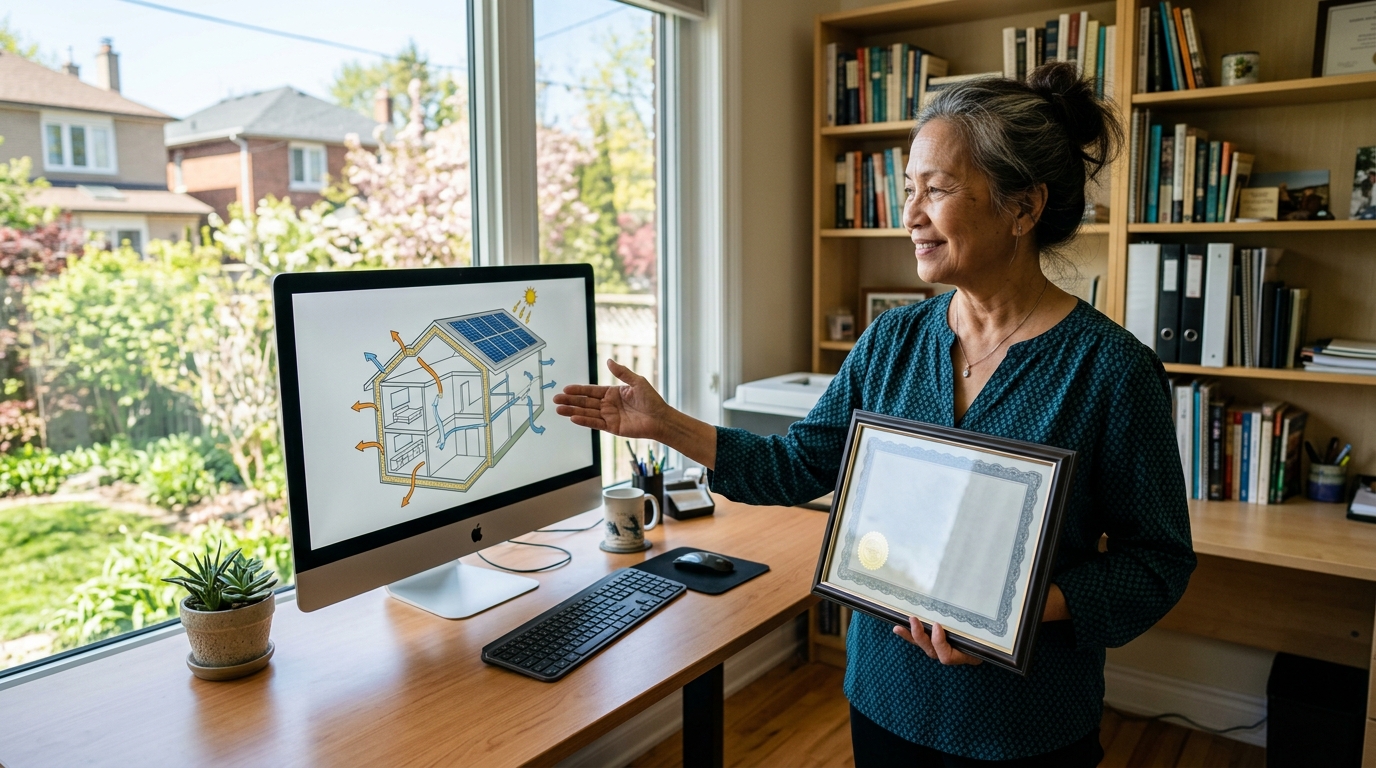
Residential Audit Services and Revenue Models
Professional home auditors offer multiple complementary services, creating diverse revenue streams:
| Audit Service | Typical Fee (Ontario) | Time Required | Market Demand |
|---|---|---|---|
| Basic energy audit (heating, cooling, insulation, air tightness) | $300–$500 | 3–4 hours | Very high |
| Advanced blower door testing (air leakage assessment) | $150–$300 additional | 2–3 hours | High |
| Thermal imaging (heat loss visualization) | $100–$200 additional | 1–2 hours | High |
| Climate resilience assessment (flood, heat, cold, water) | $250–$500 | 3–4 hours | Growing |
| Post-upgrade verification audit | $200–$400 | 2–3 hours | High (follows renovations) |
| Sustainability certification audit | $400–$800 | 4–5 hours | Emerging |
| Average auditor revenue per client | $400–$700 | Per engagement | Multiple referrals per client |
Most auditors complete 2–3 audits per week, generating $800–$2,100 weekly revenue (or $41,600–$109,200 annually at full utilization). Even at 50% utilization, residential auditing is highly profitable.
Certifications and Credentials for Professional Auditors
Ontario recognizes several professional audit credentials:
| Certification | Issuing Body | Training Cost | Time to Complete | Market Value |
|---|---|---|---|---|
| Certified Energy Advisor (CEA) | Natural Resources Canada | $2,000–$3,500 | 40–80 hours online + exam | High; required for many provincial programs |
| Certified HVAC Technician | Trades certification bodies | $3,000–$5,000 | 6–12 months | Very high; enables HVAC-specific audits |
| Blower Door Technician | Training providers (TEC, EnerTech) | $800–$2,000 | 2–5 days intensive | Essential for competitive auditing |
| Thermal Imaging Specialist | FLIR, manufacturer training | $500–$1,500 | 1–3 days | Valuable differentiator |
| Climate Resilience Assessor | Emerging credentials (Natural Resources Canada) | $1,500–$3,000 | 20–40 hours | Growing market demand |
| Total credential investment | $5,000–$12,000 | 3–12 months | Enables $40,000–$80,000+ annual income |
A reverse mortgage funds these credentials without depleting retirement savings. Within 12 months, client revenue easily covers reverse mortgage interest.
Startup Investment for Residential Auditing Practice
Beyond certifications, launching a professional auditing business requires tools and market entry.
| Cost Category | Investment | Rationale |
|---|---|---|
| Professional certifications (above) | $5,000–$12,000 | Required credentials |
| Specialized equipment (blower door, thermal camera) | $3,000–$8,000 | Essential tools for competitive audits |
| Data collection and reporting software | $1,000–$3,000 | Professional reports, client management |
| Vehicle signage, branding, website | $2,000–$5,000 | Professional appearance and online presence |
| Insurance and licensing | $1,500–$3,000 | Professional liability, vehicle, business registration |
| Initial marketing (local directories, digital ads) | $2,000–$5,000 | Build client pipeline |
| Total Startup Investment | $14,500–$36,000 | Typical Ontario auditing startup |
A reverse mortgage of $25,000–$40,000 funds complete business setup and provides working capital for the first 4–6 months.
How Reverse Mortgage Accelerates Your Auditing Business
A reverse mortgage removes three startup barriers:
1. Credential and equipment investment. Specialized thermal cameras ($2,000–$4,000) and blower door equipment ($1,500–$3,000) are essential for competitive auditing. Certifications ($5,000–$12,000) signal professional competence. A reverse mortgage funds these investments, which begin generating immediate client revenue.
2. Professional infrastructure. A website, reporting software, and branding ($3,000–$8,000) position you as a professional service provider, not a hobbyist. Homeowners expect polished audit reports and professional communication. A reverse mortgage funds the infrastructure that attracts clients willing to pay $400–$700 per audit.
3. Marketing and client pipeline. Your first month is critical. Initial marketing—local business directories, digital advertising, municipal contractor registrations—requires $2,000–$5,000. A reverse mortgage funds this pipeline-building before client revenue arrives.
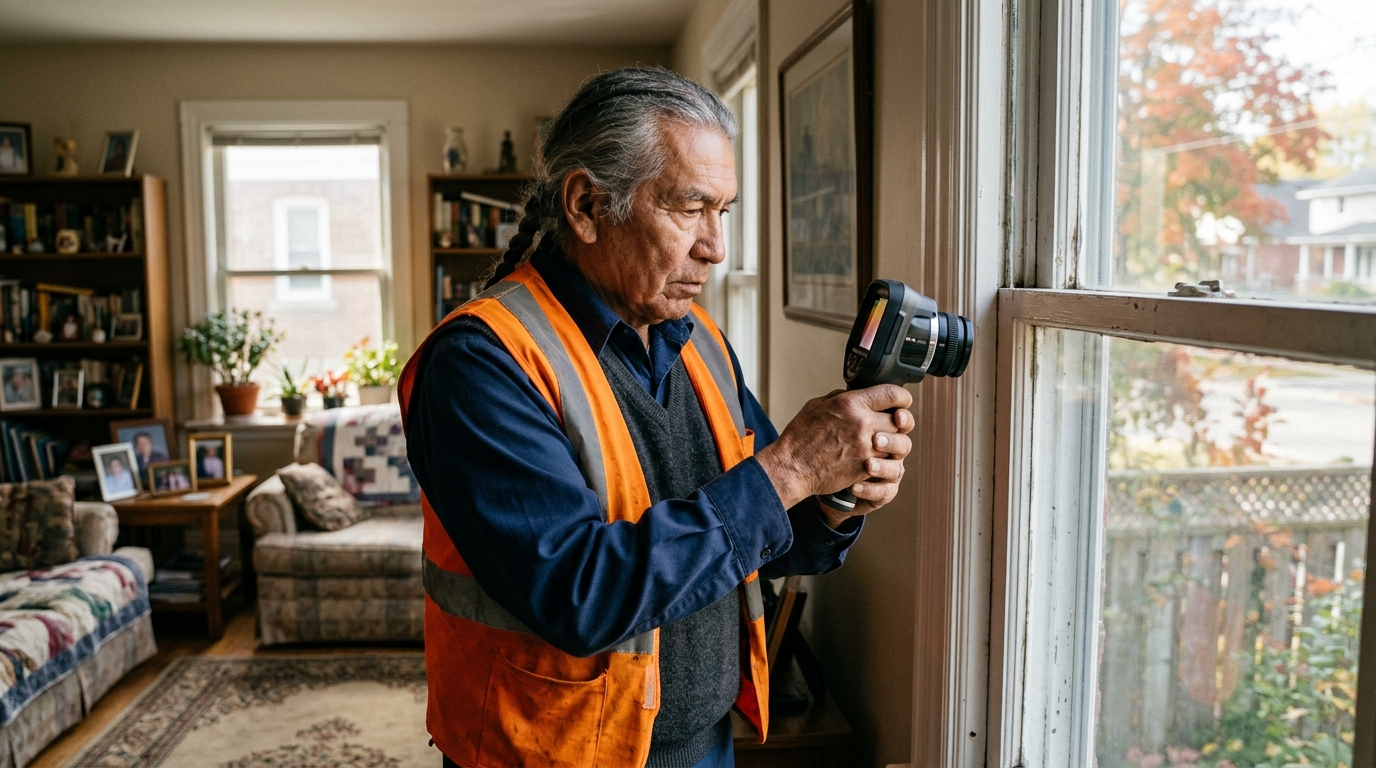
According to FCAC guidance on small business financing for retirees: "Home equity financing allows aging professionals to launch service businesses with immediate revenue potential, recovering investment within 12–24 months through client fees."
Real Scenario: Patricia's Transition to Energy Auditing Entrepreneur
Patricia, a retired HVAC technician with 32 years installing and maintaining heating systems, had $520,000 home equity. She transitioned to residential energy auditing at age 65.
Reverse mortgage: $35,000 (line of credit, 5.2% rate) Used for:
- Certified Energy Advisor (CEA) training and exam ($3,200)
- Blower door and thermal imaging equipment ($4,800)
- Data analysis and reporting software ($2,100)
- Professional website and branding ($3,500)
- Vehicle signage and marketing ($4,000)
- Working capital for first 5 months ($17,400)
Results:
- Month 1: 1 audit ($500 revenue)
- Month 2-3: 4 audits each ($2,000 monthly)
- Month 4+: 6–8 audits weekly (3,000–$4,200 monthly)
Within 12 months, Patricia completed 180 audits, generating $67,000 in revenue. She repaid $32,000 of reverse mortgage principal from audit fees. Her practice now operates at full capacity with a waitlist of 3–4 weeks, generating $4,500+ monthly.
HVAC expertise proved invaluable—homeowners with complex heating/cooling questions preferred Patricia's audits. Her technical background added credibility that first-time auditors struggle to establish.
Building Your Client Pipeline
Residential auditors find clients through:
-
Municipal retrofit programs: Ontario municipalities run energy rebate programs. Register as an approved auditor to receive referrals (often 2–5 clients monthly).
-
Utility companies: Natural gas and electricity providers distribute approved auditor lists. Homeowners applying for rebates are directed to approved professionals.
-
Real estate agents: Agents list homes with energy certifications at premium prices. Audits before sale are valuable marketing tools.
-
HVAC contractors and roofers: HVAC technicians and roofing companies refer homeowners for pre-upgrade audits. Cross-referral partnerships are lucrative.
-
Property management companies: Landlords conducting energy efficiency upgrades need audits before and after renovations.
-
Direct consumer marketing: Google Local Services Ads, Angie's List, and local directories drive high-intent consumer searches for "home energy audit near me."
Tax and Operational Considerations
Self-employment as a residential auditor involves:
- Quarterly tax installments on self-employment income exceeding $3,000 first year
- GST/HST registration required once income exceeds $30,000 annually
- Vehicle and mileage deductions for home-to-client travel
- Home office deduction for business administration
- Equipment depreciation on blower doors, thermal cameras, vehicles
- Professional liability insurance required for audit credibility
An accountant familiar with home-based service businesses can optimize your structure. A reverse mortgage can fund professional accounting setup ($2,000–$4,000 first year).

Key Takeaways
- Residential energy audits are in high demand: Ontario homeowners facing rising utility costs and climate concerns actively seek professional audits ($400–$700 per engagement).
- Credentials unlock market access: Certified Energy Advisor (CEA) and Blower Door Technician certifications ($5,000–$12,000) are investments that directly generate client revenue.
- Equipment investment is modest but essential: Thermal cameras and blower doors ($3,000–$8,000) are professional differentiators that justify premium audit fees.
- Revenue ramps quickly: Most auditors reach 3–4 audits weekly (generating $1,200–$2,800 weekly) within 6 months of launch.
- Multiple revenue streams exist: Basic audits, advanced testing, climate resilience assessment, and post-upgrade verification create diverse client relationships.
- Reverse mortgage structures work perfectly: CHIP Income Advantage, HomeEquity Bank line of credit, and Equitable Bank all suit auditing businesses with flexible revenue timing.
Frequently Asked Questions
Do I need a background in HVAC or building trades to become a residential auditor?
Not exclusively, but it helps. Energy management, environmental science, building inspection, or home renovation backgrounds all translate well. Your background provides credibility and technical foundation. Certifications (CEA, Blower Door Technician) teach the specific audit methodologies. A reverse mortgage funds the credential investment that bridges any background gaps.
How do I get approved by Ontario's energy rebate programs?
Contact your municipal energy office and local utility company. Most Ontario municipalities and utilities maintain approved auditor lists. Registration is straightforward—you provide your certifications (CEA, insurance, references) and join their approved network. Approved auditors receive direct client referrals from homeowners applying for rebates. Rick Sekhon Reverse Mortgages has worked with several auditors navigating municipal registration while ramping their practices.
Can I do audits part-time while establishing the business?
Yes, many auditors start part-time. Early audits can happen evenings and weekends (audits typically take 3–4 hours). As your client pipeline grows and audit fees exceed part-time income, you transition to full-time. A reverse mortgage provides flexibility—you're not forced to immediately go full-time or deplete retirement savings during ramp-up.
What is the difference between my audit and utility company audits?
Utility audits are often free but basic; professional audits are comprehensive and actionable. Utility audits identify obvious opportunities (better insulation, HVAC efficiency) but don't quantify costs/benefits or provide specific recommendations. Professional audits (with blower door, thermal imaging, and data analysis) deliver detailed reports with ROI calculations on specific upgrades. Homeowners willing to invest $10,000–$30,000 on energy upgrades want professional audits, not utility screening.
Will auditing income affect my government benefits?
Yes, self-employment income above threshold triggers OAS clawback and may affect asset-based benefits. Tax planning is essential. Structure your business to optimize income timing and deductions. An accountant can design your auditing business to maximize net income while managing benefit impacts. A reverse mortgage can fund professional tax planning ($2,000–$3,000 first year).
How long before auditing becomes self-sustaining income?
Most auditors reach positive cash flow (covering operating expenses) within 3–4 months. Client referral pipelines from municipal programs and utilities generate steady demand. A reverse mortgage line of credit bridges the initial months before audit fees fully replace the borrowed funds. Within 12 months, successful practices generate $40,000–$80,000+ annually and repay a significant portion of reverse mortgage principal.
Ready to Learn More?
Find out exactly how much you could unlock from your home — free and no obligation.
Related Articles
Reverse Mortgage for DEI Consulting Practice: Launching Diversity, Equity, and Inclusion Consulting in Retirement
Start a diversity and inclusion consulting practice. Help corporations and nonprofits build equitable cultures; reverse mortgage funds training, business setup, and market entry.
Read →Reverse Mortgage for Archival and Digital Preservation Consulting: Preserving Institutional History and Heritage
Launch archival consulting practice preserving records for institutions. Help libraries, archives, nonprofits; reverse mortgage funds training, tools, and market entry.
Read →Reverse Mortgage for Climate Adaptation Consulting: Launching a Green Business in Retirement
Start a climate adaptation consulting practice in retirement. Help businesses adapt to climate risks; reverse mortgage funds business setup and income bridge.
Read →