
Reverse Mortgage for Home Accessibility: Supporting Adult Child's Spouse with Mobility Disability
Fund home accessibility modifications for your adult child's spouse with mobility disability. Create wheelchair-accessible spaces and assistive features in Ontario homes with a reverse mortgage.
Did your adult child's spouse develop a spinal cord injury, arthritis, or mobility disability requiring your home to be completely reimagined—widened doorways, ramps, accessible bathrooms, lifts—at costs exceeding $30,000? A reverse mortgage funds comprehensive home accessibility modifications, allowing your adult child's spouse to maintain independence and dignity while living with your family.
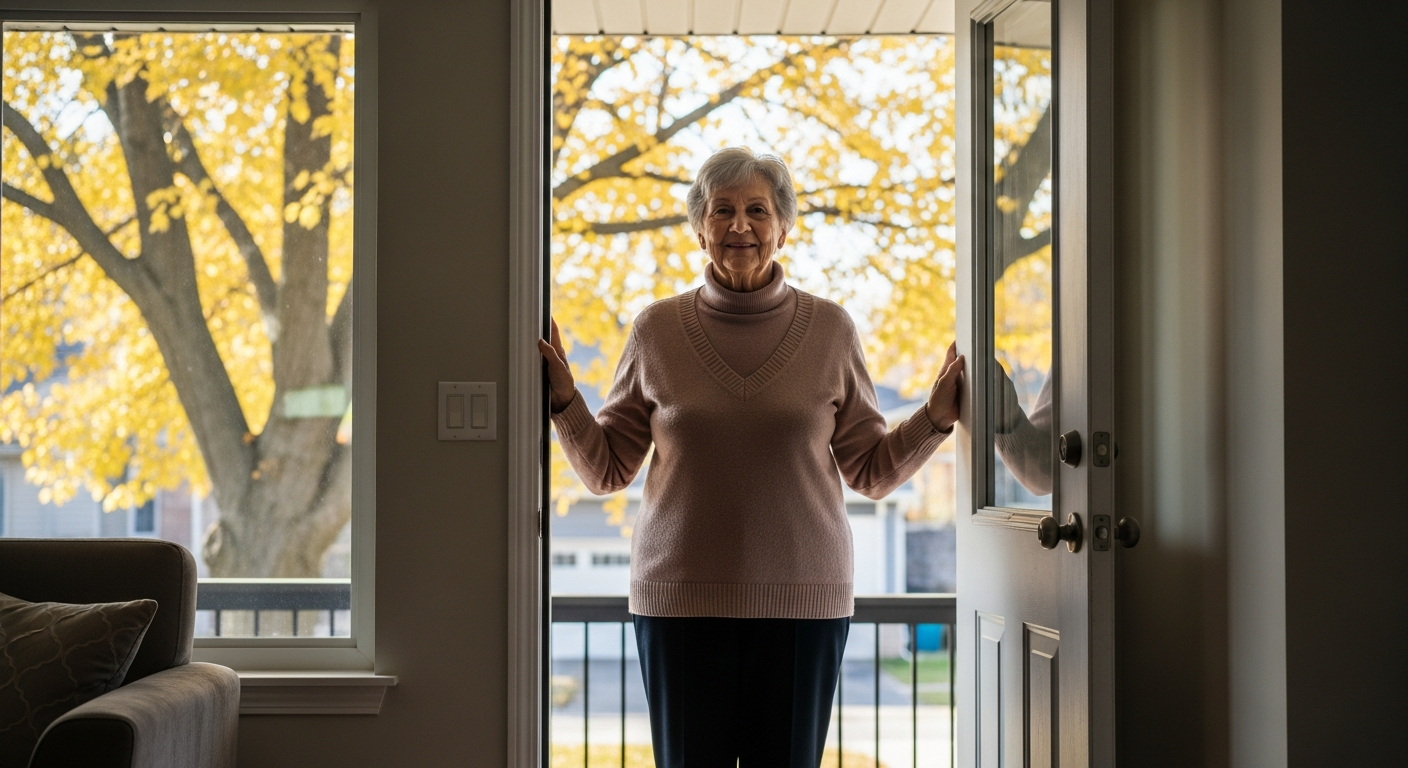
Supporting an adult child through their spouse's disability is an act of profound compassion. Yet most Ontario families have no financial plan for the home renovations required. A typical accessible renovation (ramps, widened doorways, accessible kitchen, modified bathrooms) costs $30,000–$60,000. Few families have this in emergency savings.
When your adult child's spouse becomes disabled and moves in with you (or you take on renovation costs to help their household stay functional), a reverse mortgage transforms an impossible financial burden into a manageable family investment.
Understanding Mobility Disability Home Modification Needs
Mobility disabilities requiring home modification include:
| Condition | Typical Causes | Home Modification Needs | Severity |
|---|---|---|---|
| Spinal cord injury (SCI) | Accident, sports, falls | Full wheelchair access, accessible bathroom, kitchen, zero-step entry | Severe |
| Multiple sclerosis (MS) | Neurological disease | Progressive modifications: grab bars → ramps → accessible bathroom → mobility aids | Progressive |
| Stroke with hemiplegia | Blood clot, bleeding, age | Accessible entry, bathroom support, kitchen modifications, possibly lift installation | Moderate–Severe |
| Rheumatoid arthritis (severe) | Autoimmune disease | Joint-friendly features: lever handles, lower cabinets, accessible bathroom, modified kitchen | Moderate |
| Cerebral palsy (acquired) | Infection, trauma | Walking aids, grab bars, ramp, accessible bathroom, space for mobility equipment | Moderate |
| Amputation | Diabetes, cancer, trauma | Ramps, accessible entry, modified bathroom, prosthetic accommodation space | Moderate–Severe |
Each condition requires different modifications, but all require substantial renovation capital.
According to the Canadian Paraplegic Association, the average cost to make a home wheelchair-accessible is $35,000–$60,000 in Ontario, with SCI patients requiring the most extensive modifications.
Most mobility-disabled individuals are shocked at how expensive accessibility is. Many cannot afford it, forcing them into institutions or living situations that compromise independence.
Actual Costs of Home Accessibility Renovation in Ontario
Parents often ask: "Can we just add a ramp for $3,000?" The answer is no. Comprehensive accessibility requires multiple, expensive modifications:
| Modification | Typical Cost | Why It Costs | Impact |
|---|---|---|---|
| Exterior ramp (wheelchair accessible, 1:12 slope) | $2,500–$6,000 | Proper slope, handrails, landing areas, structural support | Entry access |
| Widened doorways (standard → 36" minimum) | $1,500–$4,000 per doorway | Framing removal, door replacement, hardware, finishing | Interior mobility |
| Accessible bathroom renovation | $8,000–$18,000 | Walk-in shower (vs. tub), grab bars, accessible toilet, non-slip flooring | Hygiene, independence |
| Elevator/lift installation | $5,000–$15,000 | Small residential lift or chair lift, structural work | Multi-level access |
| Accessible kitchen modification | $5,000–$15,000 | Lower counters, pull-down cabinets, accessible sink, open space for wheelchair | Meal preparation |
| Accessible bedroom design | $3,000–$10,000 | Height-appropriate bed, accessible closet, clear floor space, accessible lighting | Sleep, dressing |
| Flooring replacement (level, non-slip) | $2,000–$8,000 | Remove carpet, install tile or vinyl, ensure level surfaces, door thresholds | Safety, mobility |
| Structural/foundation work (if needed) | $5,000–$25,000 | Ramp support, level entry, drainage, foundation work | Fundamental access |
| HVAC/temperature control modifications | $1,500–$4,000 | Lower thermostats, accessible controls, improved ventilation | Climate control |
| Exterior lighting, railings, hand supports | $1,000–$3,000 | Safety features for mobility, visibility for fall prevention | Safety |
| Professional accessibility assessment | $500–$2,000 | Occupational therapist evaluation, recommendations, design | Planning |
| Permit, inspection, engineering costs | $800–$3,000 | City permits, structural engineers, inspection fees | Compliance |
| TOTAL COMPREHENSIVE RENOVATION | $36,800–$113,000 | All modifications combined | Full accessibility |
Most families can't afford this upfront. They piece modifications together over years, meanwhile their disabled family member struggles with an inaccessible home.
A reverse mortgage allows you to fund comprehensive, upfront accessibility—transforming a fragmented, painful process into a single, dignified renovation.
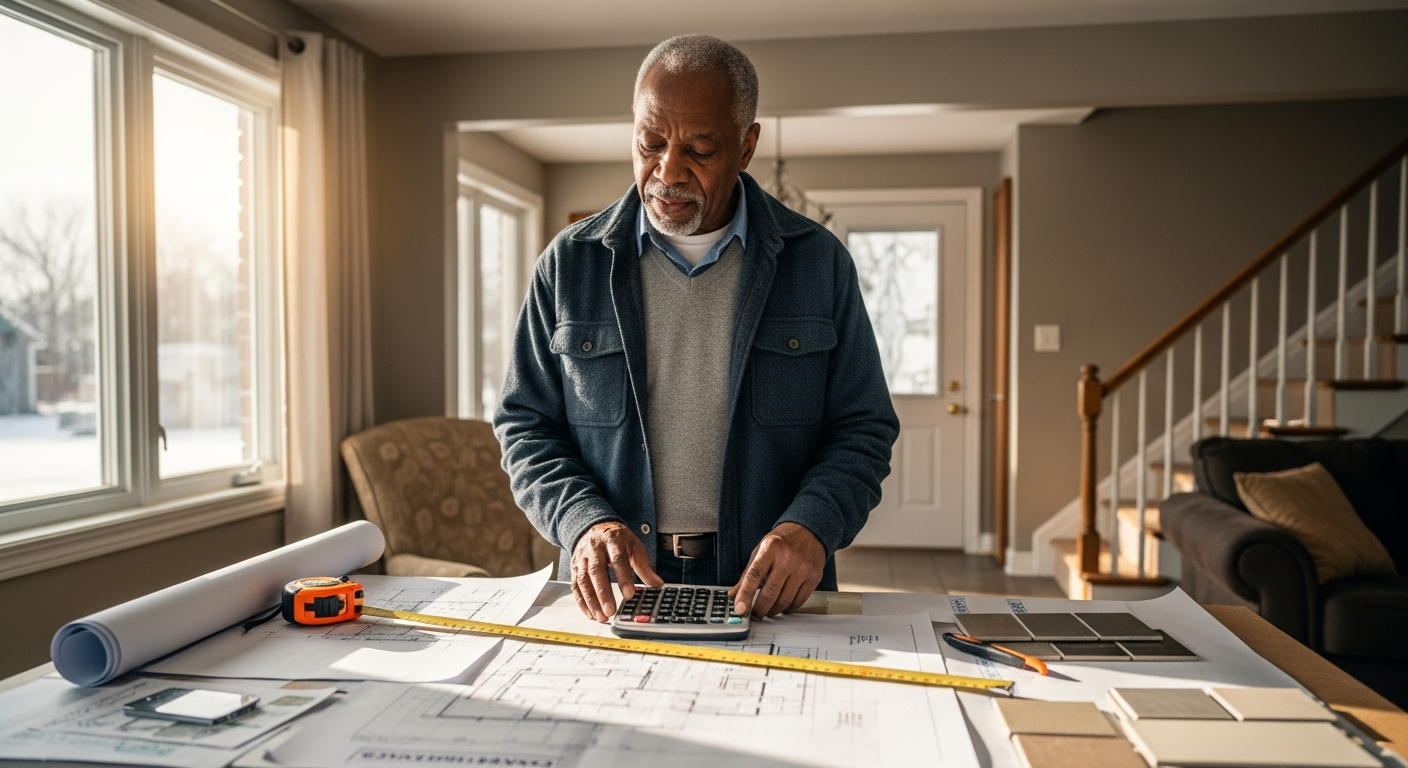
Why Accessibility Matters Beyond Mechanics
Supporting your adult child's spouse through mobility disability is not just about physical access—it's about dignity, independence, and family preservation:
Independence prevents depression: Adults with mobility disabilities who can access bathrooms, kitchens, and bedrooms independently have dramatically better mental health outcomes than those dependent on others. A $50,000 accessibility investment can prevent psychiatric crisis and preserve quality of life.
Caregiving burden reduction: Your adult child becomes the primary caregiver for their disabled spouse. If the home is inaccessible, your adult child is constantly helping with toileting, bathing, meal preparation—physically and emotionally exhausting work. Accessibility modifications reduce this burden by 60–80%, preserving your adult child's own health and your marriage's stability.
Marriage preservation: Spouses of mobility-disabled individuals face extraordinary stress. Couples where one member becomes disabled have 35% higher divorce rates. Proper home accessibility—allowing mutual respect and independence—significantly improves marital outcomes.
Family cohesion: When your adult child's spouse is inaccessible and struggling, family meals are difficult, family gatherings are avoided, and relationships strain. Accessibility renovation can transform isolated struggle into integrated family life.
These are not financial calculations—they're human outcomes that justify a $40,000–$60,000 reverse mortgage investment.
Types of Accessibility Modifications and When to Prioritize
You don't have to do everything at once. Prioritization helps manage reverse mortgage draws:
Phase 1 (Critical, immediate): $10,000–$15,000
- Ramp or step-free entry
- Accessible bathroom (walk-in shower, grab bars, accessible toilet)
- Widened doorways to bedroom and bathroom
Phase 2 (High-priority, 6–12 months): $8,000–$15,000
- Accessible kitchen (lower counters, open space, accessible sink)
- Accessible bedroom design (appropriate bed height, closet modification)
- Flooring upgrades (level, non-slip)
Phase 3 (Quality-of-life improvements): $8,000–$15,000
- Elevator or lift installation (if multi-level)
- Advanced accessibility features (smart home controls, automated doors)
- Exterior safety features (lighting, railings, accessible pathways)
A reverse mortgage line of credit allows this phased approach: fund Phase 1 immediately, then draws Phases 2 and 3 as your adult child's spouse adapts and additional needs emerge.
| Accessibility Priority | Timeline | Cost | Impact |
|---|---|---|---|
| Emergency access (ramp, bathroom) | Immediate | $8,000–$12,000 | Life-changing |
| Core functionality (kitchen, bedroom) | 6–12 months | $10,000–$18,000 | Independence enabling |
| Quality-of-life features | 12–24 months | $8,000–$15,000 | Dignity, autonomy |
| Advanced technology (smart home, automation) | 24+ months | $5,000–$15,000 | Future-proofing |
How a Reverse Mortgage Funds Accessibility
Direct payment to contractors: Most accessibility contractors accept direct payment from third parties (including reverse mortgage lenders). You coordinate the renovation phases, and the reverse mortgage funds each phase as work begins.
Phased draws match construction timeline: Unlike a lump-sum loan (which you must repay immediately), a reverse mortgage line of credit allows:
- Phase 1 draw: $12,000 (ramp + bathroom)
- Phase 2 draw (6 months later): $12,000 (kitchen + bedroom)
- Phase 3 draw (12 months later): $12,000 (elevator/features)
You minimize total outstanding balance by drawing only as needed.
No mandatory monthly payments: Your retirement cash flow is unchanged. You're not straining fixed income with $400–$500 monthly loan payments while construction unfolds.
Tax-free capital: Reverse mortgage proceeds are loan advances (not income), so they don't affect CPP, OAS, GIS, or ODSP eligibility—critical if your adult child's spouse receives disability benefits.
Equity appreciation potential: Accessibility modifications often add significant home value. A $50,000 renovation might increase home value by $35,000–$45,000 (70–90% cost recovery), partially offsetting the reverse mortgage expense.
Living with Your Adult Child's Disabled Spouse: Family Dynamics
Taking on accessibility renovation for your adult child's spouse is generous, but understand the family dynamics:
Your adult child is stressed: They're managing their spouse's disability, your financial support, family expectations, and their own emotional toll. Clear communication reduces their stress significantly.
Your spouse may have mixed feelings: Some partners feel their retirement is being sacrificed; others embrace family support. Discuss expectations explicitly.
Your adult child's spouse may feel guilty: Many disabled individuals feel they're burdening family. Framing accessibility as "enabling independence, not creating burden" is emotionally important.
Estate implications: Consider whether accessibility renovation increases home value for your children's inheritance, or reduces it (if mortgage balance grows significantly). Clarity prevents conflict.
Have this conversation: "We're investing in accessibility modifications because we value your independence and your presence in our family. This is a family investment, not a loan. Here's how we're funding it and what the timeline looks like..."
Key Takeaways
✓ Comprehensive home accessibility costs $36,000–$113,000 for full renovation, including ramps, accessible bathrooms, widened doorways, kitchen modifications, and structural work.
✓ A reverse mortgage provides phased funding across 12–24 months without monthly payments, allowing staged renovation that matches construction timelines and budget.
✓ Accessibility enables independence and preserves dignity for mobility-disabled family members, preventing depression, caregiver burnout, and relationship strain.
✓ Phased approach allows prioritization: Critical access first (ramp, bathroom) → functional improvements (kitchen, bedroom) → quality-of-life features (lifts, smart technology).
✓ Equity appreciation often recovers 70–90% of accessibility renovation costs, partially offsetting the reverse mortgage expense through increased home value.
✓ Lenders like CHIP and Equitable Bank view accessibility renovation as a legitimate, socially valuable reverse mortgage purpose and can structure phased draws.
Frequently Asked Questions
Does Ontario have grants or subsidies for home accessibility modifications?
Yes, but they're limited. Ontario offers:
- Accessibility for Ontarians with Disabilities Act (AODA) tax credits: Small tax deductions, not grants
- Canada Housing and Mortgage Corporation (CMHC) grants: Very limited, $2,500–$5,000 maximum
- Some disability programs offer small equipment budgets, not construction funding
Most families cannot rely on grants for full renovation costs. A reverse mortgage fills this gap.
Will accessibility modifications affect my home's resale value?
Positively. Ramps, accessible bathrooms, widened doorways, and quality renovations appeal to aging buyers and disabled homebuyers. Most accessibility modifications increase home value by 70–90% of renovation cost.
Can my adult child's spouse contribute to accessibility modifications if they receive disability benefits?
Disability benefits (CPP-D, ODSP) have asset limits, but they typically don't restrict spending on home modifications. Discuss with their disability caseworker, but generally: home improvements funded by you (not gifted directly to them) don't count as their assets.
Should I include my adult child's spouse on the reverse mortgage?
Generally no. Keep the reverse mortgage in your name (or jointly with your spouse). This protects the accessibility space as part of your estate, rather than becoming a contested asset if the marriage ends or circumstances change.
Is a reverse mortgage or traditional HELOC better for accessibility modifications?
For retirees, reverse mortgage is superior because it has zero monthly payments. HELOC requires ongoing payments ($250–$400/month), straining fixed retirement income during multi-year renovation. Compare rates from CHIP and Equitable Bank to confirm.
What if my adult child's spouse's disability improves or they move out? Can I recoup the renovation cost?
No. Home modifications are typically permanent improvements, not recoverable. However, they increase home value for your children's inheritance and preserve dignity during the time your adult child's spouse lives with you—both worthwhile outcomes.
Get Your Free Ontario Reverse Mortgage Guide
Supporting your adult child's spouse through mobility disability? Discover how a reverse mortgage can fund comprehensive home accessibility modifications, preserving dignity and family cohesion while protecting your retirement.
Ready to Learn More?
Find out exactly how much you could unlock from your home — free and no obligation.
Related Articles
Reverse Mortgage for Accessible Bedroom Design: Sleep and Comfort in Aging
How Ontario seniors can use a reverse mortgage to redesign bedrooms for accessibility, comfort, and quality sleep that supports health and independence in aging.
Read →Fund Home Accessibility With a Reverse Mortgage
Use a reverse mortgage to fund wheelchair ramps, stairlifts, walk-in tubs, and accessible bathrooms. Costs, grants, tax credits, and a worked example for Ontario.
Read →Aging in Place with a Reverse Mortgage: Home Modification Guide
How Ontario seniors can fund aging-in-place home modifications with a reverse mortgage — costs, top modifications, grants, and a complete planning guide.
Read →