
Emergency Relocation: Reverse Mortgage When Your Neighborhood Becomes Unsafe for Aging
Crime, violence, or community deterioration is making your home unsafe. Reverse mortgage funds emergency relocation to a safe neighborhood in Ontario for aging in place.
Your safe neighborhood just became dangerous. Drug trafficking, gang activity, or violent crime has escalated suddenly. You're afraid to go to the mailbox after dark. Your adult children are urging you to move. But selling and relocating costs $40K–$80K, and you don't have it on a fixed income. A reverse mortgage can fund emergency relocation without selling your current home quickly or at a loss.
Neighborhood Safety Collapse: When Your Home Becomes a Liability
Unlike the slow gentrification many aging homeowners face, neighborhood safety collapse happens suddenly. A new gang presence, a major crime, open drug use, and rising incidents within months.
Common triggers:
- Organized crime or gang activity moving into the area (drug trafficking, territorial conflicts)
- Public safety failures (police withdrawal, inadequate response to crimes)
- Closure of a major institution (factory, school, senior center) reducing community presence
- Rapid population change with insufficient social integration
- Loss of lighting, street maintenance, or community surveillance due to municipal budget cuts
- A single traumatic incident (violent assault, murder) creating lasting fear
The consequence: You're now afraid in your own neighborhood. You avoid walking. Your physical and mental health decline. Your adult children pressure you to leave. But you can't afford relocation.
According to Statistics Canada's Canadian Victimization Survey, 23% of Canadian seniors report feeling unsafe in their neighborhoods. For seniors in rapidly declining areas, this rises to 45%+. Fear of crime directly correlates with isolation, depression, and faster health decline.
The irony: The home you've lived in for 30–40 years, which was supposed to be your safe harbor in retirement, has become a liability.
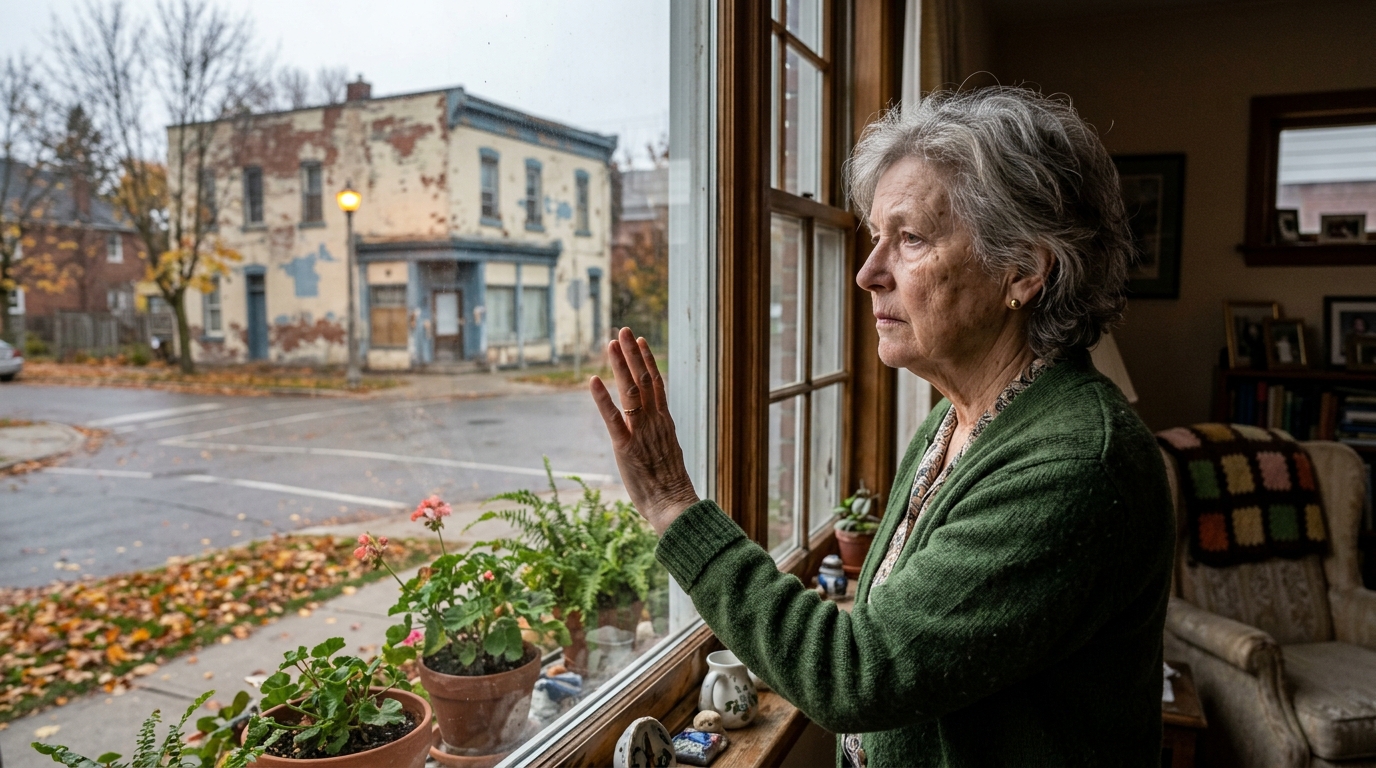
Why Relocation is Expensive (And Why Most Seniors Get Stuck)
Real costs of relocation:
| Item | Low Estimate | Mid Estimate | High Estimate |
|---|---|---|---|
| Real estate commission (5–6%) | $15,000 (on $300K home) | $25,000 (on $450K) | $40,000 (on $700K+) |
| Home repairs for sale (inspections) | $3,000 | $8,000 | $15,000+ |
| Inspection and legal fees | $2,000 | $3,500 | $5,000 |
| Moving costs (professional movers) | $4,000 | $8,000 | $15,000 |
| New home down payment/deposits | $20,000 | $40,000 | $80,000+ |
| Property taxes, first payment | $2,000 | $4,000 | $8,000 |
| TOTAL | $46,000 | $88,500 | $163,000+ |
For a senior on a $28,000 CPP + $15,000 OAS income ($43,000/year total), relocating costs 1–3 years of retirement income.
Most seniors simply stay, accepting fear and isolation rather than depleting their savings.
A reverse mortgage solves this: Access home equity for relocation costs while staying in your current home until a buyer is found.
Key Takeaways
- Neighborhood safety collapse affects 3–5% of Canadian seniors; it can happen suddenly
- Relocation costs $40K–$160K depending on home value and destination
- Most seniors stay in unsafe neighborhoods because relocation costs exceed available savings
- A reverse mortgage can fund relocation costs without forced home sale under time pressure
- Moving to a safer neighborhood correlates with improved mental health, physical activity, and longevity in aging adults
- Unlike a HELOC or home equity loan, you don't need to qualify based on income (which is fixed and low in retirement)
Real Story: Dorothy's Neighborhood in Crisis
Dorothy, 79, Hamilton
Dorothy's neighborhood (East Hamilton) was stable for 35 years. Families, seniors, working people. She knew every neighbor on her street.
In 2022, organized crime presence increased. Drug dealers worked open-air markets on corner lots. By 2023, violent incidents (shooting, stabbing) happened within 2 blocks of her home.
Dorothy stopped going out after 6 PM. Her granddaughter refused to visit alone. Her only son urged her to move.
The problem: Dorothy's home was worth $385K. Selling costs would be:
- Real estate commission: $23,100 (6%)
- Home inspection/legal: $3,500
- Moving: $6,000
- New home down payment: $40,000
Total relocation cost: ~$72,600
Dorothy's savings: $42,000.
She'd need to sell her home to relocate, but real estate sales take 2–4 months. In the meantime, she'd live in a neighborhood she was afraid of, with the stress of selling adding to her anxiety.
The reverse mortgage solution: Dorothy accessed $75,000 lump sum on a reverse mortgage against her $385K home.
With that funding:
- She hired a real estate agent and listed her home (normal timeline, no panic)
- She purchased a smaller, safe condo in a nearby neighborhood ($320K, with $40K down payment)
- She covered relocation, inspections, and legal costs
Her home sold 3 months later for $395K (good price, because there was no time pressure). The sale proceeds repaid her reverse mortgage ($75K owed + interest ~$4,200 at 5.2% for 3 months).
Outcome: Dorothy relocated to a safe neighborhood without financial panic, without depleting her life savings, without living in fear for months while selling.
More importantly: Her health improved. She resumed walking in her new neighborhood. She reconnected with her granddaughter. She reduced her anxiety medications. At 81, she's more active than she was at 78 in the unsafe area.
The reverse mortgage wasn't permanent — it was a bridge that prevented her from being trapped by neighborhood decline.
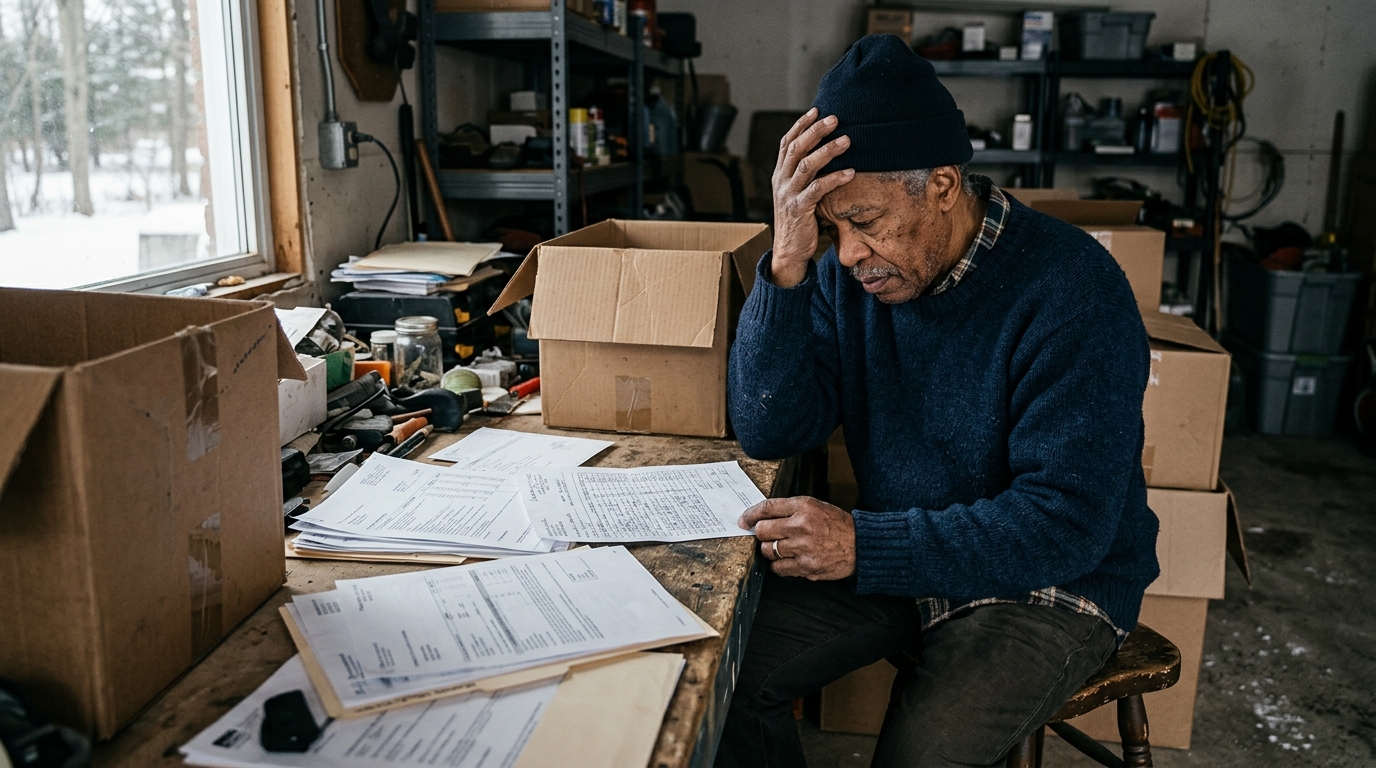
How to Know It's Time to Leave
Not every neighborhood change requires relocation. Some decline is temporary. But certain signs suggest your safety is genuinely at risk:
| Warning Sign | Severity | Action |
|---|---|---|
| Occasional property crime (theft from yards) | Low | Increase security; stay put |
| Drug use/needles visible in public spaces | Moderate | Plan relocation within 12 months |
| Violent crime within 1 block (assault, stabbing) | High | Relocate within 3–6 months |
| Multiple shootings in the area | Very High | Relocate immediately |
| Personal victimization or threat to you | Extreme | Relocate immediately, regardless of cost |
| Adult children refusing to visit your home | Moderate–High | Serious sign; their fear is valid |
If you're checking multiple boxes in the "Moderate" to "Very High" range, relocation is worth serious consideration.
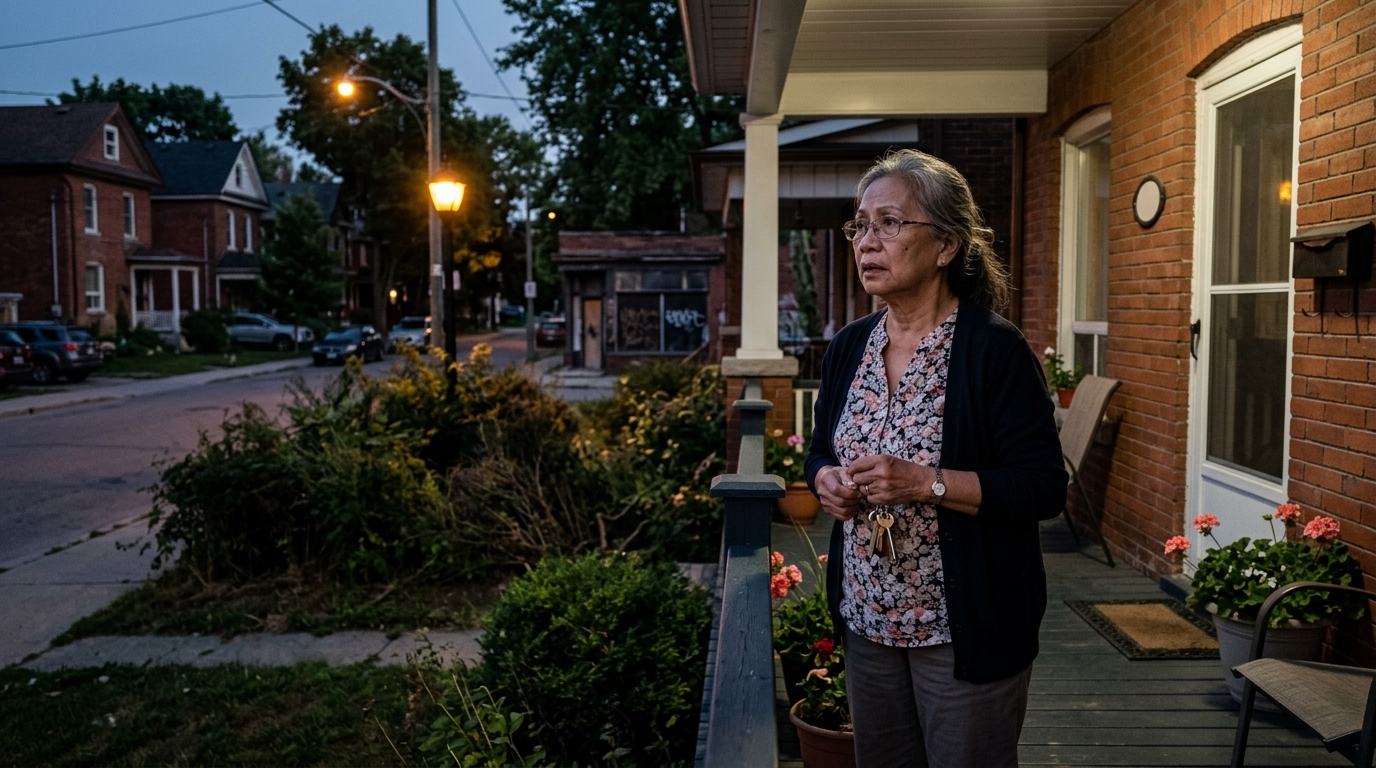
Choosing a New Neighborhood: Safety Planning
When relocating, consider:
- Police presence and response times: Contact local police non-emergency line; ask about crime stats and response times in potential neighborhoods.
- Lighting and visibility: Walk the neighborhood after dark. Are streets lit? Can you see from your home to the street?
- Community engagement: Are there neighborhood associations, watch programs, or active community connections?
- Proximity to family: If possible, relocate near an adult child or trusted family. This adds social safety.
- Transit and services: Can you access grocery stores, pharmacies, hospitals without a car?
- Age-friendly infrastructure: Are sidewalks maintained? Are there ramps, crossings, and accessible entries?
Frequently Asked Questions
If I relocate due to neighborhood safety, does that affect my ability to prove I'm an Ontario resident for benefits?
No. Your residency is based on your provincial registration (health card, driver's license). Relocating within Ontario doesn't affect residency status, OAS, or provincial benefits. Update your address with government offices (Service Ontario, CRA, OAS), and you're covered.
Can I take a reverse mortgage to fund relocation and then immediately sell my home?
Yes. Some homeowners use a reverse mortgage to facilitate relocation when the timing is urgent (safety threat) versus the market-driven timing of the sale. You pay back the reverse mortgage when the home sells, with accumulated interest from the advance. Do the math carefully: ensure the sale price will exceed the reverse mortgage balance plus interest and selling costs.
What if I relocate but later regret leaving my long-term home?
This is emotionally real but usually temporary. Studies show that seniors relocating due to safety fears experience improved mental health and physical activity within 6–12 months. Regret typically fades as new neighborhood connections form. However, ensure you're relocating to a community with activities, services, and social opportunities — not just "a safe place."
If my neighborhood is declining, shouldn't home value drop? Will a reverse mortgage lender approve?
This is a concern but manageable. Home values in declining neighborhoods can dip 5–15%, but they rarely collapse entirely. Most homes retain 70–85% of previous value even in distressed areas. Lenders will appraise your home at current market value (declining or not) and approve based on that. You might qualify for less equity access than before, but you'll still qualify.
Can I get a reverse mortgage to fund relocation if I'm renting, not owning?
No. Reverse mortgages are only for homeowners. If you're renting and your neighborhood becomes unsafe, you'd need to move to a new rental (just changing addresses, no equity access). If you own and rent is your option, you'd need to save or borrow through other means.
If I take a reverse mortgage to relocate and my home eventually sells for less than the reverse mortgage balance, who pays the difference?
The "No Negative Equity Guarantee" protects you. If your home sells for less than owed on a reverse mortgage, you (or your estate) are not liable for the difference. The lender absorbs the loss. This is a unique protection of reverse mortgages compared to traditional home equity loans. It's why lenders are careful about appraising and advance amounts — they protect themselves by being conservative.
Making the Relocation Decision
Neighborhood safety is not a small concern. It directly affects your health, longevity, and quality of life.
If your neighborhood has become unsafe:
- Document the problem. Keep records of incidents, police reports, personal observations.
- Talk to your family. Share your fear and concerns with adult children. Their perspective matters.
- Research safe neighborhoods. Visit potential areas, talk to residents, check crime statistics online.
- Speak with a reverse mortgage specialist. Understand how much equity you can access and what monthly/lump-sum payments might look like.
- Make a decision timeline. Relocation doesn't have to happen tomorrow, but it shouldn't be indefinitely delayed if safety is compromised.
Your home was supposed to be your safe place. If it isn't anymore, your well-being comes first.
A reverse mortgage can make relocation possible without sacrificing your financial security. Your neighborhood shouldn't be a trap.
Ready to Learn More?
Find out exactly how much you could unlock from your home — free and no obligation.
Related Articles
Reverse Mortgage for Professional Home Safety Retrofit: Smaller Projects, Bigger Impact
Major renovations aren't always necessary. Strategic small-scale safety retrofits keep aging seniors independent. Learn how reverse mortgages fund targeted improvements.
Read →Reverse Mortgage for Fall Prevention and Home Safety When Aging Parent Has Balance Disorders
Falls are the leading cause of injury-related death in seniors. Specialized home modifications for balance disorders prevent catastrophic injuries and hospitalizations.
Read →Critical Home System Repairs: When Your Reverse Mortgage Funds Structural Safety
Reverse mortgages fund urgent structural and safety repairs—foundation, electrical, plumbing, HVAC. Learn when and how to prioritize critical home systems.
Read →