
After Your Partner's Death: Reverse Mortgage for Grief, Housing, and Financial Transition
When your long-term same-sex or common-law partner dies, your home may be your only security. Reverse mortgage options for grief and housing stability in Ontario.
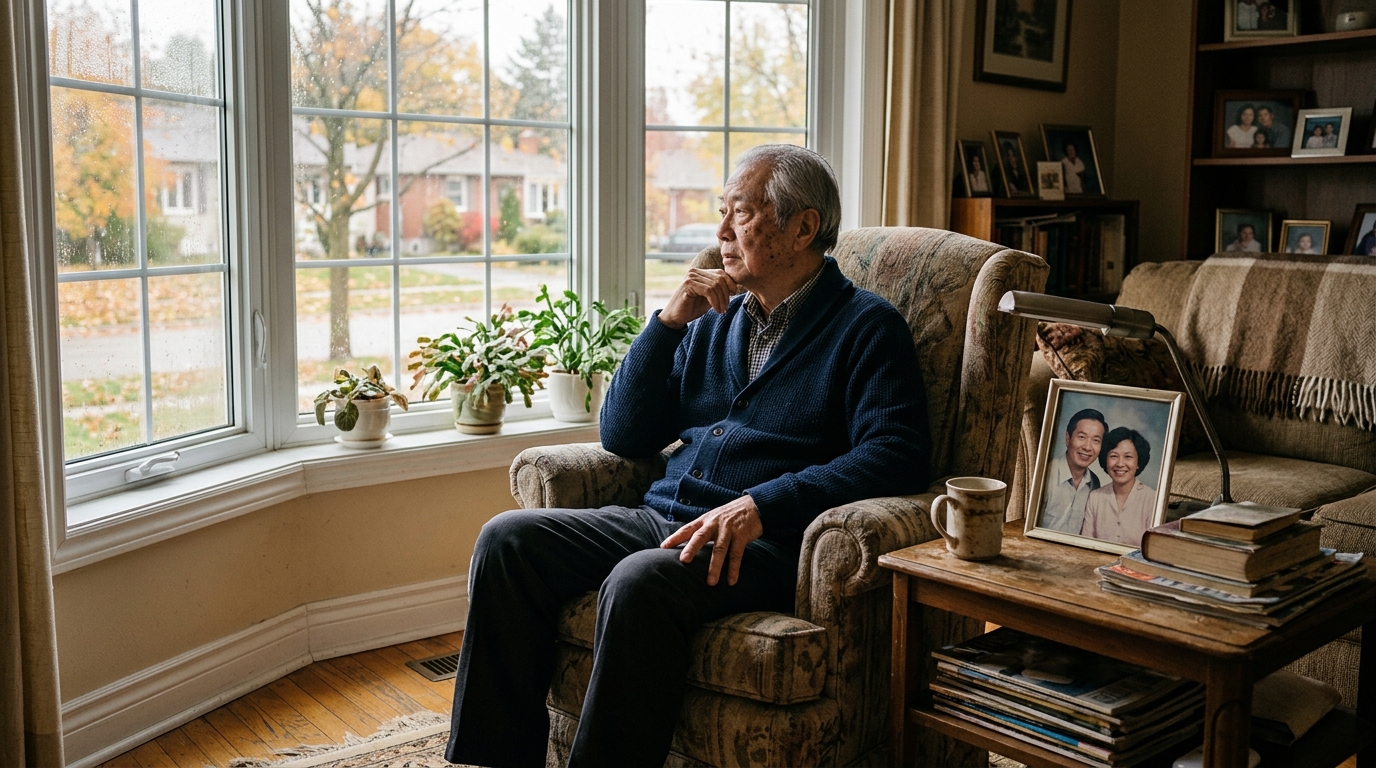
Your partner of 30 years just died. The house you built together is now silence, debt, and overwhelming decisions. If your partner wasn't a legal spouse (or if the estate is complicated), your housing security and grief recovery might both be at risk. A reverse mortgage can stabilize your home while you process loss.
When Same-Sex or Common-Law Partner Death Creates Housing Crisis
Legal marriage provides automatic protections: spousal CPP benefits, automatic inheritance, clear succession. But many long-term same-sex couples, especially those who partnered before 2005 (when marriage equality arrived in Ontario), weren't legally married. Some common-law couples never formalized their status.
When the non-legal partner dies:
- Inheritance is NOT automatic — it goes to their legal heirs (estranged family, ex-spouses) unless a will exists
- Spousal CPP survivor benefits don't apply automatically
- Pension benefits may not transfer
- Joint mortgages or home equity lines of credit can be called by the deceased partner's estate
- Grief is compounded by financial uncertainty and potential housing loss
The solution: A reverse mortgage can provide immediate liquidity to stabilize your home while you navigate estate complications.
The Specific Risks for Same-Sex and Common-Law Couples
Estate Entanglement: If your partner's will left their share of the home to their parents or a previous partner, you could face a forced sale of the family home you've lived in for 20+ years.
Pension Loss: Private pensions often require legal marriage or registered domestic partnership to provide survivor benefits. Common-law partners are frequently excluded.
Mortgage Liability: Joint mortgages or home equity lines sometimes contain clauses that allow the lender to call the full balance upon the death of either borrower. This can force a sale even if the surviving partner has income to support payments.
Tax Complications: Principal residence exemption rules have changed in recent years. If your home was held jointly and your partner had claimed alternative principal residence exemptions, you could face unexpected capital gains tax on sale.
According to FSRAO (Financial Services Regulatory Authority of Ontario), same-sex and common-law couples have higher rates of unplanned estate complications. Early planning and legal clarity protect both partners and surviving partners.
A reverse mortgage, taken in YOUR name only (not joint), gives you undisputed access to your home equity and protects your housing security if the estate becomes contested.
Key Takeaways
- A reverse mortgage can provide $500–$2,500/month to stabilize housing and cover grief-related expenses
- The reverse mortgage is in YOUR name only — it's not part of the estate entanglement
- This gives you time to navigate legal and estate complications without pressure to sell
- Unlike a HELOC or home equity loan, you won't face monthly debt service payments, allowing you to focus on grief and healing
- Reverse mortgage proceeds are not counted as taxable income (per CRA), so they won't trigger clawbacks of GIS or other benefits
Real Story: David and Michael's House
David, 72, and Michael, 70, Toronto
David and Michael partnered in 1994 — before same-sex marriage was legal in Ontario. They bought their home together in 1998 and built a life. They updated their wills in 2010 to leave everything to each other, but they never legally married (stubbornness, some legal complexity, and the belief that their wills were "enough").
Michael died suddenly in early 2024 from a stroke.
The crisis: Michael's will left everything to David — BUT Michael's health insurance hadn't updated his beneficiary designations. His $180K group life insurance paid his estate, not David. Michael's pension (from his former employer) had a clause requiring legal marriage for survivor benefits — David got nothing.
More critically: The home was held jointly, and David's name was listed as executor. But Michael's parents contested the will, claiming Michael's share of the home was promised to them. Legal fees to defend the estate: $35K and climbing.
David was 72, grieving, exhausted, and potentially facing loss of his family home.
The solution: A reverse mortgage for $120K lump sum allowed David to:
- Pay his legal fees ($35K) without depleting retirement savings
- Create a 18-month cash runway while the estate was settled
- Stay in his home without panic-selling or facing pressure from Michael's parents
- Access funds for grief counseling (which he desperately needed)
The reverse mortgage interest (at ~5.1% in 2024) accrued while David handled the estate. By the time the will was settled and Michael's parents agreed to a buyout, David had clarity, healing time, and a plan.

Navigating Grief + Finance + Legal Complications Simultaneously
When partner death is compounded by legal uncertainty, your brain simply cannot process everything at once:
| Immediate Task | Typical Timeline | Cost Range | Emotional Difficulty |
|---|---|---|---|
| Funeral and estate administration | 2–4 weeks | $5–15K | Extreme |
| Notify banks, insurers, government | 2–8 weeks | $0 (your time) | Moderate–High |
| Hire estate lawyer to clarify will | 4–12 weeks | $3–10K | Moderate |
| Defend will if contested | 3–24 months | $15–50K | Extreme |
| Manage pension/benefit claims | 4–16 weeks | $0–2K | Moderate |
| Decide housing future | 6–18 months | $0 | High |
A reverse mortgage doesn't eliminate any of these tasks — but it removes the financial panic so you can focus on the actual grief and legal work.
LGBTQ+ Seniors and Housing Security
Canada's legal marriage equality is young (2005 in Canada, with provincial variations). Many long-term same-sex couples spent 20–40 years together without legal marriage recognition. This creates specific vulnerabilities:
- Pension records may not recognize the partner
- Insurance beneficiaries may be outdated
- Estate law is still catching up to blended families and non-married partnerships
- Financial institutions sometimes resist recognizing same-sex partners as primary beneficiaries
A reverse mortgage, clearly titled in YOUR name with YOU as the borrower, sidesteps these institutional biases. Your home equity is yours, and a reverse mortgage accesses your equity — not subject to the estate complications of a deceased partner.
Frequently Asked Questions
If my partner's will left me the house but their family is contesting it, can I get a reverse mortgage while the lawsuit is pending?
Technically, yes — if the home is in your name (joint or solely). However, lenders will want clarity on the ownership dispute. If the title is contested, some lenders will ask you to resolve it first. Others will work with an escrow arrangement. Speak honestly with a lender (CHIP or Equitable Bank) about the situation; many have experience with contested estates.
Will a reverse mortgage protect my house if my partner's family wins the lawsuit?
No. A reverse mortgage secures your debt against the home, but it doesn't protect ownership. If you lose the lawsuit, the home is sold, and the reverse mortgage is repaid from the sale proceeds. However, the reverse mortgage gives you time and financial runway to fight the legal battle properly, rather than being forced to sell quickly.
What if we held the house as "joint tenants with right of survivorship"? Does that protect me from my partner's estate?
Yes — joint tenancy with right of survivorship means the house automatically passed to you at your partner's death, outside the estate. The house is yours. However, you should still verify the title is updated with your partner's death certificate. Speak with a real estate lawyer ($500–$1,500 fee) to ensure the title reflects your sole ownership.
Am I responsible for my partner's debts if we held the home jointly?
Only for debts specifically tied to the home (mortgage, home equity line of credit) or that you co-signed. Medical bills, personal debts, or credit card debt belonging solely to your partner do NOT transfer to you unless you co-signed them. However, lenders might argue that joint home ownership creates liability for joint debts. Get legal advice.
Does grief counseling count as a medical deductible? Can a reverse mortgage help me afford it?
Yes — therapy and grief counseling are tax-deductible medical expenses in Canada. A reverse mortgage lump sum can absolutely fund counseling ($100–$200/hour, often 8–20 sessions for acute grief). This is a wise use of reverse mortgage proceeds. Your mental health recovery is as important as housing stability.
What if my partner and I held the home in a trust?
If the home was held in a trust and you're the trustee, you have clear authority to stay in the home and access equity. However, trust structures vary. Speak with an estate lawyer ($500–$1,500) to clarify your powers as trustee before approaching a lender. This prevents later complications.
Protecting Your Future: Legal Steps to Take Now
If you're in a same-sex or common-law partnership, consider these protections TODAY (before crisis):
- Update all beneficiary designations — pensions, life insurance, bank accounts. Use legal name clearly.
- Create a will — explicit about your partner's inheritance.
- Register your partnership — if your province allows, legal registration provides automatic protections.
- Document shared property — photographs, receipts, evidence of joint contributions to the home.
- Speak with an estate lawyer — $1,500–$3,000 for comprehensive planning is an investment in your partner's security.
And remember: A reverse mortgage is available to you at any age 55+. You don't have to wait for crisis to explore it. Understanding your options — especially if housing security is a concern — is wise planning, not doom-seeking.
Your partnership mattered. Your home is yours. A reverse mortgage can protect both.
Ready to Learn More?
Find out exactly how much you could unlock from your home — free and no obligation.
Related Articles
Reverse Mortgage When Adult Child Transitions Gender: Affirming Home Design and Financial Independence Support
Support adult child's gender transition with safe, affirming housing and financial stability. Reverse mortgage for healthcare costs and home modifications.
Read →Reverse Mortgage for Multiple Family Funerals in One Year: Managing Bereavement Costs
Fund multiple family funerals and bereavement support with a reverse mortgage. Cover sudden losses in Ontario when families face two or three major funerals within one year.
Read →Reverse Mortgage to Support Adult Child's Gender Transition: Legal and Life Costs
Fund your adult child's gender identity recognition, legal name changes, and related costs with a reverse mortgage.
Read →