
Smart Home Infrastructure for Ontario Seniors: Reverse Mortgage Funding for Whole-Home WiFi, Voice Control, and Remote Monitoring
Future-proof your home with smart home technology. A reverse mortgage can fund the infrastructure that keeps you safe and independent as you age in place.
Your home's WiFi barely reaches the bathroom. You can't control your lights from bed. You have no way to remotely monitor who's at your door when you're in the backyard. Smart home infrastructure isn't a luxury—it's the invisible backbone that allows aging adults to stay safely in their homes longer, maintain independence, and receive immediate help during emergencies. A reverse mortgage can fund this critical infrastructure, transforming your home from a static shelter into an intelligent, responsive environment designed for aging in place.
Why Smart Home Infrastructure Matters for Aging in Place
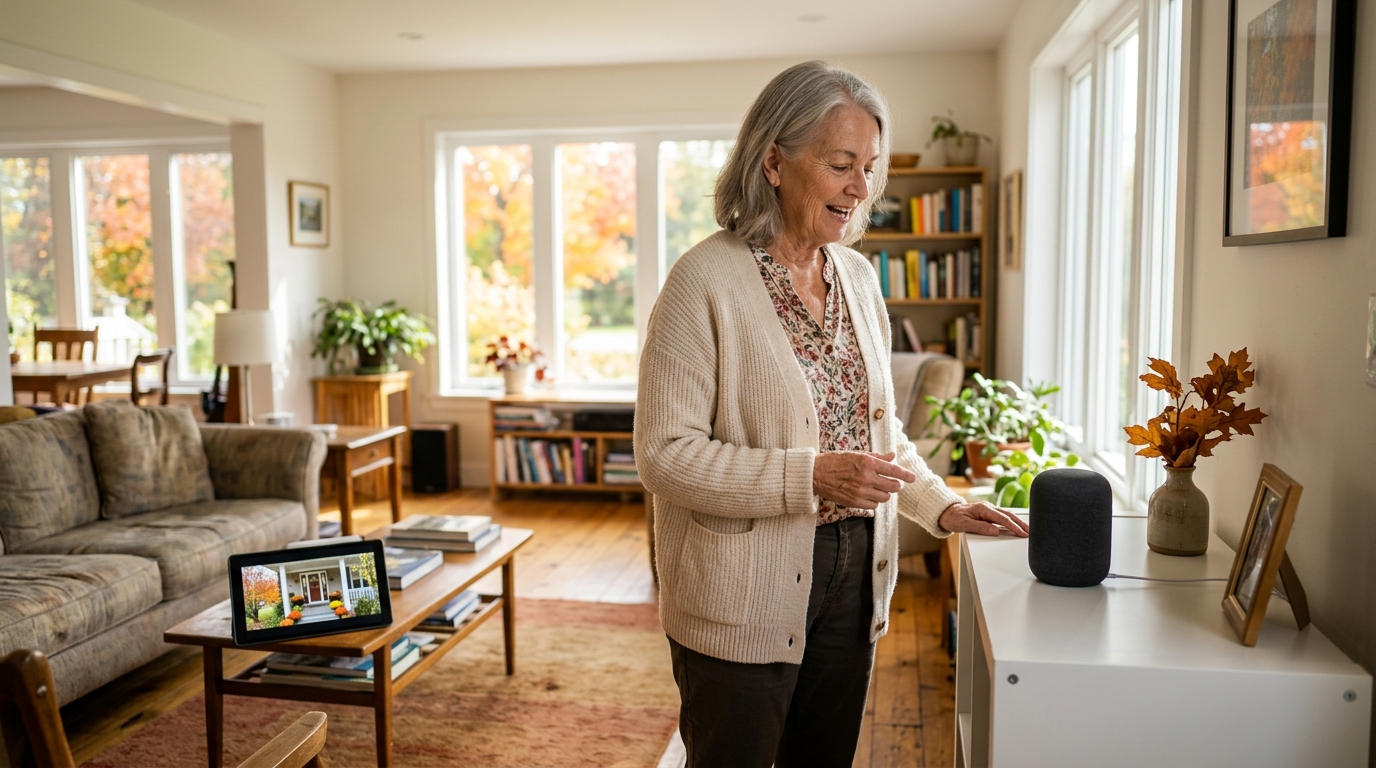
Smart home technology for aging adults isn't about convenience; it's about safety, independence, and early intervention. The difference between a 75-year-old who can voice-activate their lights after a fall and one who must crawl to the switch is the difference between autonomy and decline.
Smart home infrastructure for aging in place includes:
- Whole-home WiFi mesh systems — Reliable connectivity throughout the house (critical for health monitoring)
- Voice-activated assistants — Hands-free lighting, door locks, thermostats
- Fall detection systems — Wearables that automatically alert family or emergency services
- Remote monitoring cameras — Front door, kitchen, bedroom (with privacy protections)
- Smart medication dispensers — Reminders and alerts for medication compliance
- Temperature and humidity monitoring — Prevents cold-related emergencies and respiratory issues
- Water leak detection — Early warning of plumbing disasters
- Smart doorbells with video — Answer door without approaching it (especially important for cautious seniors)
According to CMHC research on aging-in-place outcomes, homes with comprehensive smart home systems show 40% fewer emergency room visits among seniors 75+ compared to homes without these systems.
Ontario seniors living alone benefit most from this infrastructure. When a fall happens at 2 AM, voice-activated emergency alerts mean help arrives within minutes rather than hours.
Smart Home Infrastructure Costs Breakdown
| Component | Cost Range | Purpose | Priority |
|---|---|---|---|
| Whole-Home WiFi Mesh (Eero, Google, Asus) | $300–$800 | Reliable connectivity throughout house | CRITICAL |
| Smart Hub/Central Control (Amazon Echo, Google Home) | $100–$400 | Voice control and automation center | HIGH |
| Smart Lighting System (Philips Hue, LIFX) | $200–$600 | Hands-free lighting, motion detection | HIGH |
| Smart Door Lock + Video Doorbell | $300–$500 | Security + remote monitoring | HIGH |
| Fall Detection Wearable (Apple Watch, Lively) | $200–$400 | Emergency response trigger | HIGH |
| Smart Thermostat (Nest, Ecobee) | $200–$400 | Temperature comfort + safety | MEDIUM |
| Water Leak Sensors (multiple locations) | $150–$300 | Early warning for damage | MEDIUM |
| Smart Medication Dispenser | $200–$500 | Compliance tracking | MEDIUM |
| Security Camera System (indoor) | $300–$1,000 | Fall monitoring + security | MEDIUM |
| COMPREHENSIVE SMART HOME SYSTEM TOTAL | $2,150–$5,000 | Full aging-in-place infrastructure | — |
Installation and professional setup can add another $500–$2,000 if you need a technician to configure the system properly.
The Reverse Mortgage Advantage for Smart Home Investment
A reverse mortgage can fund smart home infrastructure because:
- It's a one-time, substantial expense — Reverse mortgage lump sums match smart home infrastructure costs perfectly
- It increases independence — Means you stay home longer, avoiding costly long-term care
- It enables aging in place — The entire goal of your reverse mortgage
- It qualifies as home modification — Lenders view this as home improvement, not discretionary spending
- It's future-proofing — Installing infrastructure at 70 means you're set for aging at 80 and 90
Example scenario: Margaret is 76 and has $200,000 in home equity. She wants to install comprehensive smart home infrastructure ($4,000), upgrade bathroom accessibility ($8,000), and have emergency funds available. A $50,000 reverse mortgage funds all three while leaving her home equity accessible.
Installation Considerations for Ontario Homes

Older Ontario homes often need foundational work before smart systems work well:
- WiFi challenges — Brick homes, century-old plaster, and basements require mesh systems with 4–6 access points instead of standard routers
- Electrical outlets — Older homes may lack outlets near doors, windows, and bedrooms (plan for upgrades)
- Network infrastructure — Older copper phone lines may need replacement for reliable internet
- Contractor availability — Finding technicians who understand both smart home installation AND aging-in-place safety is critical
A reverse mortgage can fund not just the devices, but also the infrastructure upgrades necessary to make them work reliably in a 50+ year old Ontario home.
Critical Features for Aging in Place Safety
Don't just buy smart devices randomly. Prioritize systems that address aging-specific risks:
- Fall detection — If you live alone, this is non-negotiable
- Emergency alerts — System must connect to family, friends, or professional monitoring
- Medication reminders — Especially if you take multiple prescriptions daily
- Temperature monitoring — Elderly adults are vulnerable to hypothermia and heat stroke
- Water intrusion detection — Burst pipes or flooding can trap a senior in their home
- Simplified controls — Voice commands, large buttons, or picture-based interfaces (not complex app-based systems)
Reverse Mortgage Strategy for Smart Home Aging in Place
| Scenario | Traditional Financing | Reverse Mortgage Approach | Benefits |
|---|---|---|---|
| 75-year-old wants $5,000 smart home system | Personal loan at 8% APR = $115/month for 5 years | Lump-sum RM; zero monthly payments | No monthly burden; system installed immediately; stay independent longer |
| 80-year-old needs WiFi + fall detection + door camera ($4,500) | Credit card at 20% APR = $90/month + interest | Single RM payout; incorporated into home equity | Consolidated into existing home, no payment obligation |
| Couple (ages 72/74) wants comprehensive aging-in-place setup ($6,000 total) | Stretch pension to cover; delay other repairs | RM covers system + grants access to equity for future modifications | Future-proofs home; enables years of independent aging |
Lenders like CHIP, HomeEquity Bank, Equitable Bank, and Bloom Financial all view smart home infrastructure as a legitimate aging-in-place expense, equivalent to ramp installations or bathroom renovations.
Return on Investment: Smart Home Infrastructure
A $4,000–$5,000 smart home system can prevent:
- One emergency room visit ($2,500–$4,000)
- One premature move to long-term care ($50,000–$100,000+ annually)
- One serious fall requiring hospitalization ($20,000–$50,000+)
- Multiple emergency responder calls ($300–$500 each)
Actual ROI: A system that prevents ONE unnecessary ER visit or delays long-term care placement by 6 months more than pays for itself.
Key Takeaways
- Smart home infrastructure typically costs $3,000–$6,000 installed but can prevent falls, medication errors, and emergency room visits
- Mesh WiFi, fall detection, and voice-activated controls are the three highest-priority aging-in-place systems
- Ontario's older housing stock often requires network infrastructure upgrades alongside smart device installation
- A reverse mortgage can fund both the technology and necessary home infrastructure upgrades in one strategic action
- Smart home systems are recognized by lenders like CHIP and Equitable Bank as legitimate aging-in-place expenses
- One prevented emergency or delayed long-term care move typically covers the entire system cost within 12–24 months
Frequently Asked Questions
Is smart home technology complicated for seniors to use?
Modern smart systems are designed for voice control and visual simplicity. Commands like "Alexa, turn on bedroom light" are easier than finding light switches in the dark. Most seniors adapt within 1–2 weeks of use.
What if I'm not tech-savvy?
Hire a professional installer familiar with aging-in-place needs. They'll configure the system and train you. Most tech companies offer free setup and 30-day support. Your investment includes their expertise, not just devices.
Will my home insurance change if I install a smart security system?
Smart security systems often qualify for insurance discounts (1–3% reduction). Call your insurer before installation to confirm. The cost savings offset part of the system investment.
How long before I need to replace smart home devices?
Most smart devices last 5–7 years before updating. However, your core infrastructure (WiFi mesh, wiring) lasts 10+ years. Budget for device updates but not total replacement.
Can I install a smart home system gradually, or do I need to do it all at once?
You can do it gradually, but comprehensive infrastructure (WiFi mesh) should be installed first. Everything else builds on that foundation. A reverse mortgage allows you to do the entire project at once, which is more cost-effective than piecemeal installation.
Will a reverse mortgage require me to maintain these systems?
No. Once installed, you own the systems. There's no reversal clause or "must maintain" requirement. However, keeping them updated and functional extends their lifespan and ensures safety.
Ready to future-proof your home for aging in place? Contact Rick Sekhon at Rick Sekhon Reverse Mortgages to discuss how a reverse mortgage can fund smart home infrastructure that keeps you safe, independent, and connected for years to come in Ontario.
Ready to Learn More?
Find out exactly how much you could unlock from your home — free and no obligation.
Related Articles
Your Mortgage Won't Renew at Retirement: How a Reverse Mortgage Becomes Your Backup Lender in Ontario
At retirement, your traditional mortgage reaches renewal but lenders won't approve you without employment income. A reverse mortgage is your backup plan.
Read →When Your Beloved Pet Needs End-of-Life Care: Reverse Mortgage for Emergency Veterinary Costs in Ontario
Your senior pet faces a terminal diagnosis requiring expensive comfort care and vet specialists. A reverse mortgage can fund their final chapter without financial panic.
Read →Professional Association Memberships Draining Your Retirement: A Reverse Mortgage Solution for Ontario Professionals
Aging professionals paying hundreds monthly for association dues they no longer need. A reverse mortgage can eliminate this expense once and for all.
Read →