
Reverse Mortgage for Adult Child's Veterinary Technology Program and Career Support
Fund your adult child's veterinary technician or vet assistant certification program. Support their healthcare career without student loans or personal debt.
Can you fund your adult child's veterinary technology certification without burdening them with student debt? Yes—a reverse mortgage can cover tuition, licensure exams, equipment, and living expenses during a 2-year veterinary technician program, setting them up for a stable $40,000–$55,000/year career in animal healthcare without personal debt.
Veterinary technology is a growing healthcare profession with strong job security and modest credential costs. Unlike 4-year university programs, vet tech certification takes 2 years, costs $15,000–$35,000, and leads to immediate employment. Your home equity can fund this entire pathway.
Why Veterinary Technology Is a Smart Career Choice
Credential advantages:
- 2-year community college program vs. 4-year university = faster entry to workforce
- Licensed Veterinary Technician (LVT) credentials are portable across provinces
- Job growth: 12% annually (higher than average according to Statistics Canada)
- Starting salary: $35,000–$42,000/year; experienced techs earn $45,000–$60,000
Employment stability:
- Veterinary clinics exist in every community
- Minimal risk of automation (hands-on animal care remains human-centered)
- Work-from-home options and flexible scheduling available at many clinics
- Opportunities for specialization (surgical support, exotic animals, rehabilitation)
Career advancement:
- Vet techs often transition to clinic management, education, or specialty practices
- Some pursue veterinary medicine after establishing vet tech credentials
Investing in vet tech education pays off in 3–4 years of post-graduation income.
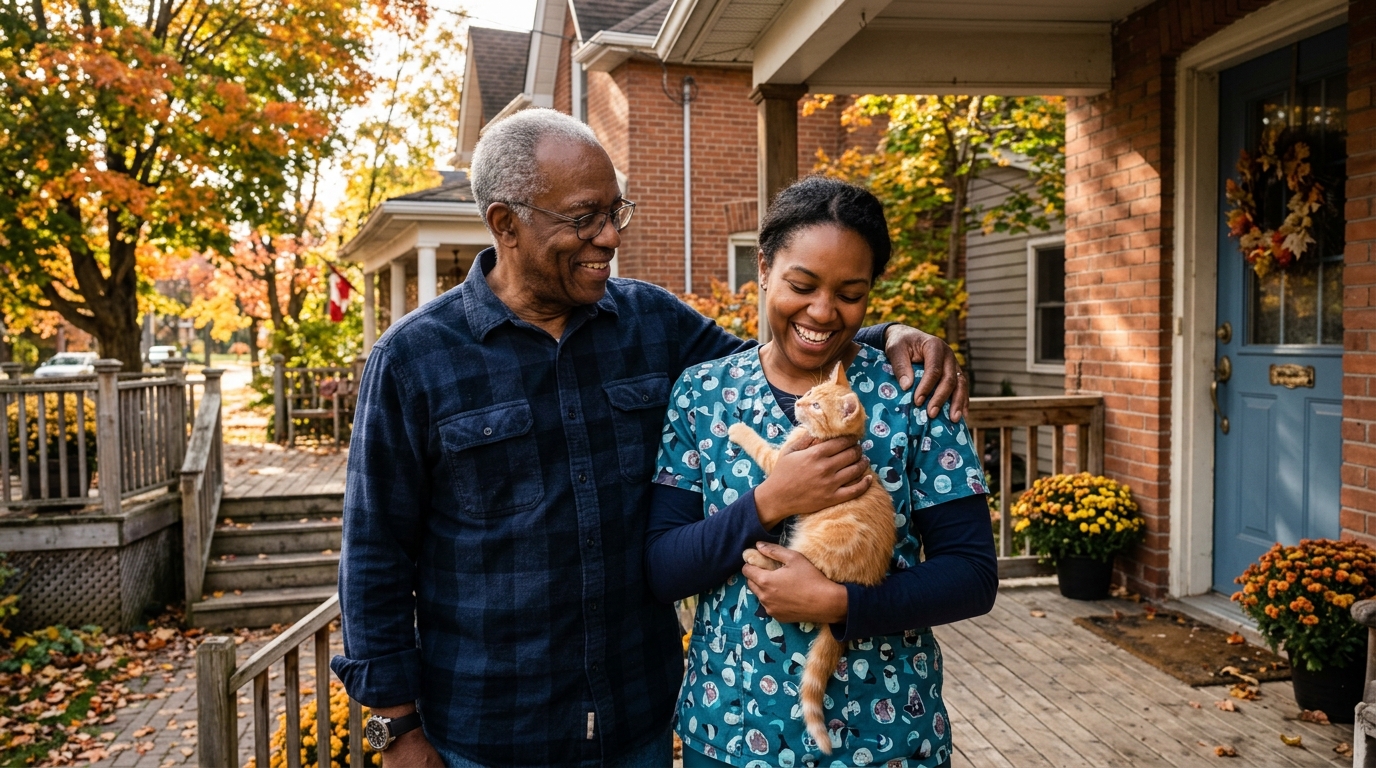
Veterinary Technology Education Costs in Ontario
| Education Cost | Range | Notes |
|---|---|---|
| Tuition (2 years, public college) | $12,000–$18,000 | Varies by college; some offer payment plans |
| Tuition (2 years, private school) | $18,000–$35,000 | Higher cost but sometimes flexible scheduling |
| Licensure exam (VTNE) | $500–$800 | Veterinary Technician National Exam, one-time |
| Equipment & supplies | $1,500–$3,000 | Stethoscope, logbook, clinical supplies |
| Living expenses (2 years, if not at home) | $8,000–$16,000 | If on-campus or renting near campus |
| Continuing education first year | $1,000–$2,000 | Professional development and mentoring |
| Total (if living at home): $15,000–$22,000 | Most affordable scenario | |
| Total (if independent housing): $23,000–$38,000 | Includes rent/utilities during study |
Reverse Mortgage Strategy for Vet Tech Education
Scenario 1: Child lives at home during program
- Approve $20,000–$25,000 reverse mortgage
- Draw tuition annually: $7,000/year (year 1), $6,000/year (year 2)
- Draw exam/licensing costs: $800 upon completion
- Total draws: ~$20,000
- No monthly payments; your retirement income unaffected
- Child completes with zero education debt
Scenario 2: Child lives independently during program
- Approve $35,000–$40,000 reverse mortgage
- Draw tuition: $8,000/year
- Draw living expenses: $6,000–$8,000/year (rent, food, transportation)
- Draw upon graduation for employment transition costs: $2,000–$3,000
- Total draws: ~$35,000
- Child graduates debt-free and ready for work
Lender options: CHIP, HomeEquity Bank, Equitable Bank, and Bloom Financial all offer education-focused draw schedules.
Reverse Mortgage vs. Student Loans for Vet Tech Programs
| Funding Method | Total Cost (with interest) | Repayment Timeline | Your Child's Debt Burden | Your Retirement Impact |
|---|---|---|---|---|
| Reverse Mortgage from parent | $20,000–$25,000 (5.50–6.50% on balance) | No fixed timeline; parent's responsibility | Zero—parent owes, not child | None until home sale/death |
| Federal/Provincial Student Loans | $20,000–$25,000 + $3,000–$5,000 interest | 6-month grace, then 120+ months payments | Full responsibility; ~$250–$350/month | None—parent uninvolved |
| Private Education Loan (parent co-signs) | $20,000–$25,000 + $4,000–$6,000 interest | 10-year amortization | Shared liability; parent guarantor | Co-signer obligation affects parent's credit |
| Bank Line of Credit (student-owned) | $20,000–$25,000 + $2,000–$3,000 interest | Variable; ~$300/month minimum | Student solely responsible | None to parent |
Why reverse mortgage wins: Your child graduates debt-free, you have no monthly payment obligation, and if they struggle early in their career, there's no pressure to repay immediately.
Case Study: Vet Tech Certification Without Student Debt
Patricia, 69, Ontario homeowner; adult daughter Tara pursued vet tech
Patricia's daughter Tara had always loved animals and wanted to become a veterinary technician. She had a high school diploma but no university degree path. A 2-year community college program in Mississauga (Sheridan College) was perfect, but tuition was $16,000 total, plus living expenses.
Tara could live at home, reducing costs. Patricia had $280,000 home equity and a $2,200/month pension—enough to support herself but not enough to gift $20,000 in cash.
Patricia's reverse mortgage approach:
- Applied for $25,000 reverse mortgage line of credit with CHIP at 5.85%
- Year 1: Drew $8,500 (tuition $8,000 + exam prep $500)
- Year 2: Drew $8,200 (tuition $8,000 + licensing exam fee $200)
- Total draws: $16,700
Tara's outcomes:
- Completed 2-year vet tech program with zero education debt
- Passed VTNE (Veterinary Technician National Exam) on first attempt
- Hired by a mixed-animal clinic 2 weeks after graduation at $38,500/year
- Year 1 employment: Earned $38,500; lived at home; saved $8,000
Patricia's outcome:
- Reverse mortgage balance: $16,700 at 5.85%
- Monthly interest cost: ~$82 (no monthly payment required)
- By Year 2 of Tara's work, Tara began paying $300/month toward repayment (voluntary, from savings)
- By Year 5, Tara had repaid $18,000 total, exceeding the original borrowing
Estate outcome: When Patricia eventually passes, the remaining RM balance is paid from her estate, and Tara inherits the home with substantially more equity.
Employment Pathway and Income Growth
Vet tech careers offer clear income progression and specialization opportunities:
| Career Stage | Years Experience | Annual Salary (Ontario) | Specialization Opportunity |
|---|---|---|---|
| Entry-level vet tech | 0–1 | $35,000–$40,000 | General small-animal clinic |
| Mid-level vet tech | 2–5 | $40,000–$50,000 | Surgical support, anesthesia monitoring |
| Senior vet tech | 5–10 | $48,000–$58,000 | Clinic management, specialty practice |
| Specialty vet tech | 5+ | $52,000–$65,000 | Emergency medicine, orthopedic surgery, rehabilitation |
Your child's degree is complete in 2 years, and income-building begins immediately.
Supporting Your Child Beyond Tuition
A reverse mortgage line of credit can also fund post-graduation support:
First job transition ($2,000–$3,000):
- Professional clothing (clinic-appropriate scrubs and shoes)
- Stethoscope and initial equipment upgrades
- Transportation to new job location
- Temporary housing if job requires relocation
Continuing education ($1,000–$2,000/year):
- Professional certification courses (surgical tech, anesthesia tech, ultrasound)
- Conference attendance
- Mentorship and professional development programs
According to FCAC guidance, funding education without creating dependent debt patterns teaches your child financial responsibility. They see you invested in their success without personal payment burden.
Tax Implications for Family Education Funding
Reverse mortgage proceeds are not taxable income: The $20,000–$25,000 you borrow is a loan, not income. Your CPP and OAS remain unaffected.
No tuition credits transfer to you: Your child claims education tax credits (federal and provincial) when filing their taxes, not you. This is appropriate—they're the ones claiming the education and receiving the lifetime learning benefit.
Repayments from your child are not income: If Tara repays you $300/month from her vet tech salary, that's not taxable income to you—it's a personal loan repayment.
Key Takeaways
- Vet tech is a 2-year, $15,000–$35,000 credential: Shorter and cheaper than most university degrees, with immediate employment at $35,000+/year.
- Reverse mortgage covers full cost without monthly payment pressure: Approve $20,000–$40,000, draw as tuition is due, make zero payments until your home is sold.
- Your child graduates debt-free: Unlike student loans, they don't carry $20,000 in repayment obligations, allowing them to build savings and financial confidence.
- Job security and growth are strong: Veterinary technician is a stable, recession-resistant profession with 12% job growth and clear income progression.
- Professional guidance aligns with child's milestones: Have honest conversations about expected repayment and career expectations before drawing funds.
Frequently Asked Questions
Can I set a repayment expectation with my child even though there's no legal obligation?
Absolutely. Write a simple family agreement (not legally binding but emotionally binding) stating: "I'm funding your vet tech education via reverse mortgage. Once you're employed, I'd appreciate if you repay $300/month if your salary supports it." Most children in this scenario willingly repay because they understand the sacrifice.
What if my child decides vet tech isn't for them after one year?
You've funded one year ($8,000–$9,000) and learned that. You can pause further draws and discuss options: Does your child want to switch programs? Gain work experience before returning? You retain control as the RM holder and can limit future draws.
Does my child's education affect her CPP or future government benefits?
No. Education funding is not income. When Tara earns $38,500 as a vet tech, that's her income and determines her future CPP contributions. The reverse mortgage you borrowed doesn't affect her benefits eligibility.
Can my child take a student loan for part and I cover the rest with reverse mortgage?
Yes. Many families blend sources: student loans for tuition ($10,000), reverse mortgage for living expenses ($8,000–$10,000). This minimizes your child's long-term debt while you support their transition period.
What happens to my reverse mortgage if I die while my child is still in school?
Your estate must repay the RM balance from available assets (typically the home sale). If education draws are ongoing, your child may need to pause until you pass and the estate is settled. Plan for this by front-loading draws in the first year if possible, or by having a family agreement about completion timelines.
After graduation, can my child co-sign a mortgage if I owe on a reverse mortgage?
Not easily. The RM is a debt against your home. Your child's ability to co-sign or obtain their own mortgage depends on their own credit and employment history, not on your RM status. However, lenders will see your RM as a lien and may factor it into their assessment of your child's creditworthiness relative to family assets.
Ready to fund your adult child's veterinary technology career? Contact Rick Sekhon Reverse Mortgages for a consultation on education-focused draws and phased funding strategies.
Ready to Learn More?
Find out exactly how much you could unlock from your home — free and no obligation.
Related Articles
Reverse Mortgage for Adult Child's Renewable Energy and Solar Technician Certification
Fund your adult child's solar and renewable energy technician certification. Support a green careers transition without personal student debt. Fast-growing, high-earning field.
Read →Reverse Mortgage for Aging Parent's Home-Based Pottery and Ceramic Art Studio Business
Launch a home-based pottery business in retirement. Fund kiln, wheel, supplies, and studio setup with reverse mortgage. Create art, income, and community in your home.
Read →Reverse Mortgage for Aging Parent's Farmers Market Business: Artisan Food Production
Retire with purpose: Fund your artisan jam, preserve, or baked goods business with reverse mortgage equity. Create income and legacy through farmers market entrepreneurship.
Read →