
Reverse Mortgage for Aging Parent's Farmers Market Business: Artisan Food Production
Retire with purpose: Fund your artisan jam, preserve, or baked goods business with reverse mortgage equity. Create income and legacy through farmers market entrepreneurship.
Is starting an artisan food business in retirement a realistic income source, or a costly hobby? With proper planning and low-cost home-based production, an artisan jam, preserve, or baked goods business can generate $800–$2,000/month in farmers market income while giving your retirement meaning and purpose.
Many Ontario retirees are discovering that farmers market artisan food sales combine financial benefit with community connection. A reverse mortgage can fund the startup costs—licensed commercial kitchen access, production equipment, packaging, permits—without forcing you back into traditional employment.
Why Artisan Food Businesses Thrive in Ontario
Ontario has 150+ year-round and seasonal farmers markets. Consumer demand for local, handmade foods continues rising. Artisan jams, jellies, preserves, herb blends, baked goods, and specialty sauces command premium pricing ($8–$20 per unit vs. $2–$3 for mass-produced alternatives).
Market advantages:
- Low startup costs compared to retail food businesses
- Home-based production with shared commercial kitchen access
- Repeat customers at weekly farmers markets
- Strong local/artisanal branding
- Flexible hours (perfect for aging in place)
- Potential for online sales and gift box subscriptions
Unlike full-scale food manufacturing, artisan production uses small-batch techniques in licensed shared kitchens, keeping costs manageable.
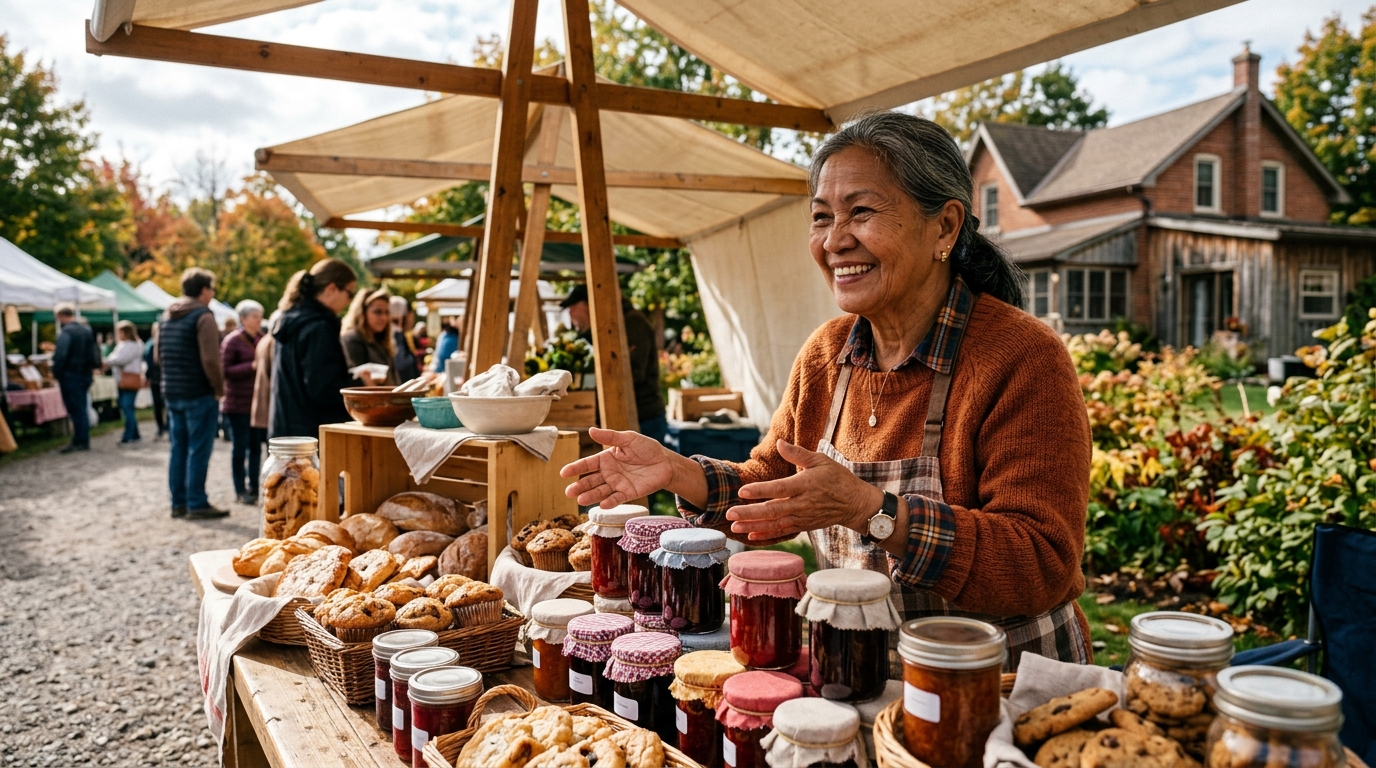
Startup Costs for Artisan Food Production
| Product Category | Equipment Needs | First-Year Startup | Annual Operating | Monthly Revenue Potential |
|---|---|---|---|---|
| Jams & Preserves | Kettles, jars, labels | $3,000–$6,000 | $2,000–$4,000 | $600–$1,200 |
| Baked Goods | Mixers, scales, baking supplies | $4,000–$8,000 | $2,500–$5,000 | $800–$1,500 |
| Herb Blends & Spices | Grinder, packaging, labels | $2,000–$4,000 | $1,500–$3,000 | $500–$1,000 |
| Specialty Sauces | Kettles, bottles, labels | $3,500–$7,000 | $2,000–$4,500 | $700–$1,300 |
| Combination (Multi-Product) | Full kitchen access | $6,000–$12,000 | $4,000–$7,000 | $1,200–$2,000 |
Reverse Mortgage Strategy for Food Business Startup
A reverse mortgage line of credit is ideal for artisan food businesses because:
- Draw as you grow: Access funds monthly as you scale production. Don't need the full amount upfront.
- Zero monthly payments: All funds go toward inventory, supplies, and marketing—not loan payments.
- Interest only on amounts used: If approved for $20,000 but only use $8,000, you pay interest only on $8,000.
- Perfect for seasonal businesses: Farmers market season peaks in spring/summer; draw funds in January–March to build inventory for April opening.
Sample funding structure:
- Approve $15,000–$25,000 reverse mortgage line of credit
- January: Draw $2,500 for equipment and permits
- February: Draw $3,000 for packaging and labels
- March: Draw $4,000 for ingredients and first month's shared kitchen rental
- April–September: Weekly farmers market sales generate $800–$1,500/month
- October–December: Reduced draws ($500/month) to cover holiday gift boxes
By Year 2, farmers market revenue covers ongoing costs, and you're drawing less from the reverse mortgage—or even starting to repay from profits.
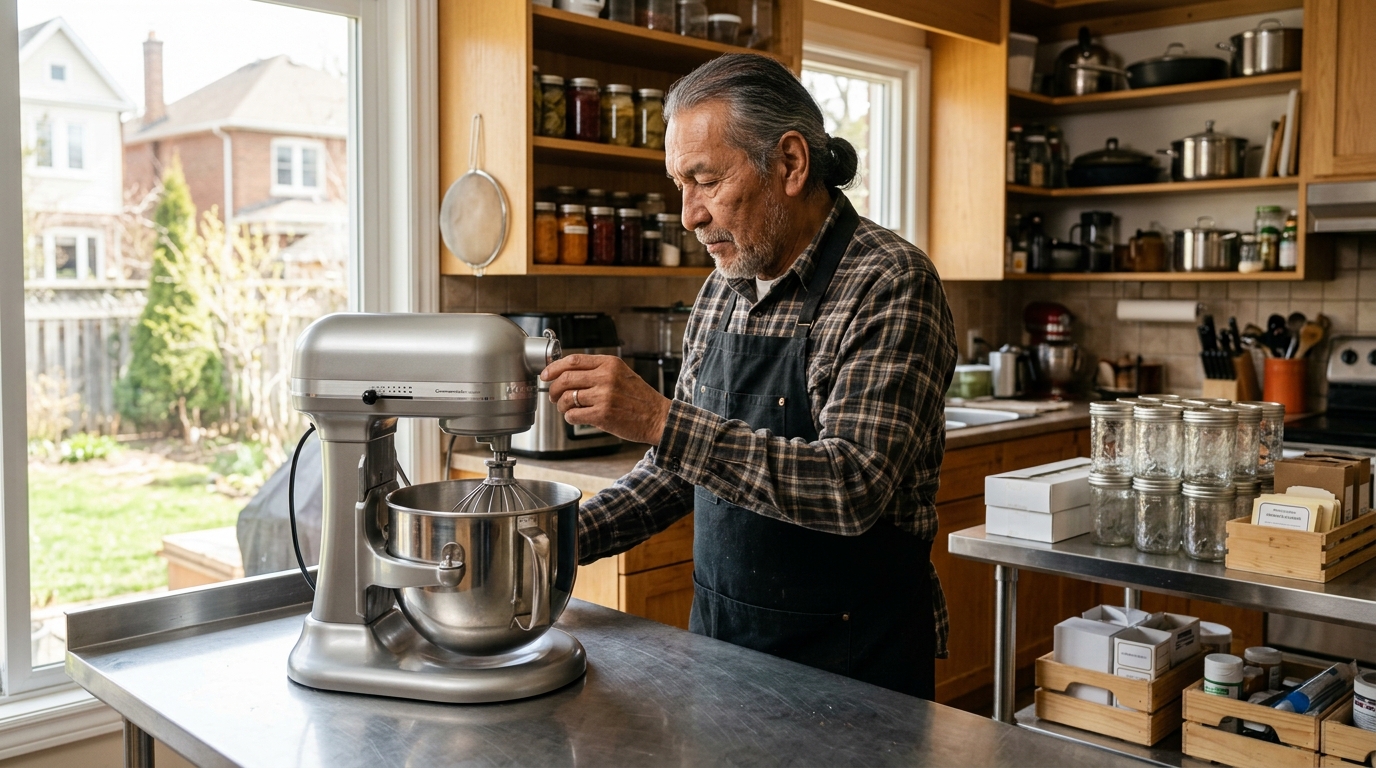
Regulatory Requirements in Ontario
Good news: Ontario's Regulation 493/17 allows home-based food production for certain low-risk foods (jams, preserves, baked goods, herb blends) without a commercial kitchen license—as long as you use an approved home kitchen or shared commercial kitchen.
Requirements:
- Register with Ontario's Health Unit (free or $50–$200 depending on region)
- Use a licensed commercial kitchen for production (shared kitchens cost $15–$25/hour)
- Get basic food safety training (ServSafe certification, $150–$200)
- Proper labeling with ingredients, allergen warnings, production date
- Liability insurance ($300–$800/year)
According to Ontario Public Health standards, the startup investment is minimal—your reverse mortgage covers it entirely in one draw.
Case Study: From Hobby to Farmers Market Success
Patricia, 72, retired teacher, Ontario homeowner
Patricia had spent 20 years perfecting heirloom jam recipes—strawberry-rhubarb, blackberry-lavender, cherry-almond. She had a passionate following of friends who'd been asking to buy her products. Retirement felt purposeless; she wanted to turn passion into modest income.
Patricia's startup plan: produce jams for the Ottawa farmers market, starting with 5 varieties, 100 jars/week.
Investment needed:
- Shared commercial kitchen access: $1,200/year ($100/month)
- Canning equipment, thermometers, funnels: $1,500
- Jars, lids, labels, packaging: $2,000
- Health unit registration and food safety training: $300
- Liability insurance: $600
- Marketing (signs, farmer's market booth): $800
- Total: $6,400
Patricia had $240,000 home equity. She secured a $20,000 reverse mortgage line of credit with CHIP at 5.85%.
Year 1 performance:
- Drew $6,400 for startup (40% of approved amount)
- Started selling at Ottawa farmers market April 2024
- Weekly sales: 80–120 jars/week at $12/jar average = $960–$1,440/week
- May–October revenue: $6,400 × 26 weeks = $166,400 gross
- After ingredients, rent, supplies: $8,200 net profit
Patricia's result:
- Repaid $3,200 of the reverse mortgage from Year 1 profits
- Used remaining profits for holiday gift boxes (fall revenue)
- No monthly payment pressure; her CPP remained her primary income
- Added life purpose and community connection through weekly farmers market relationships
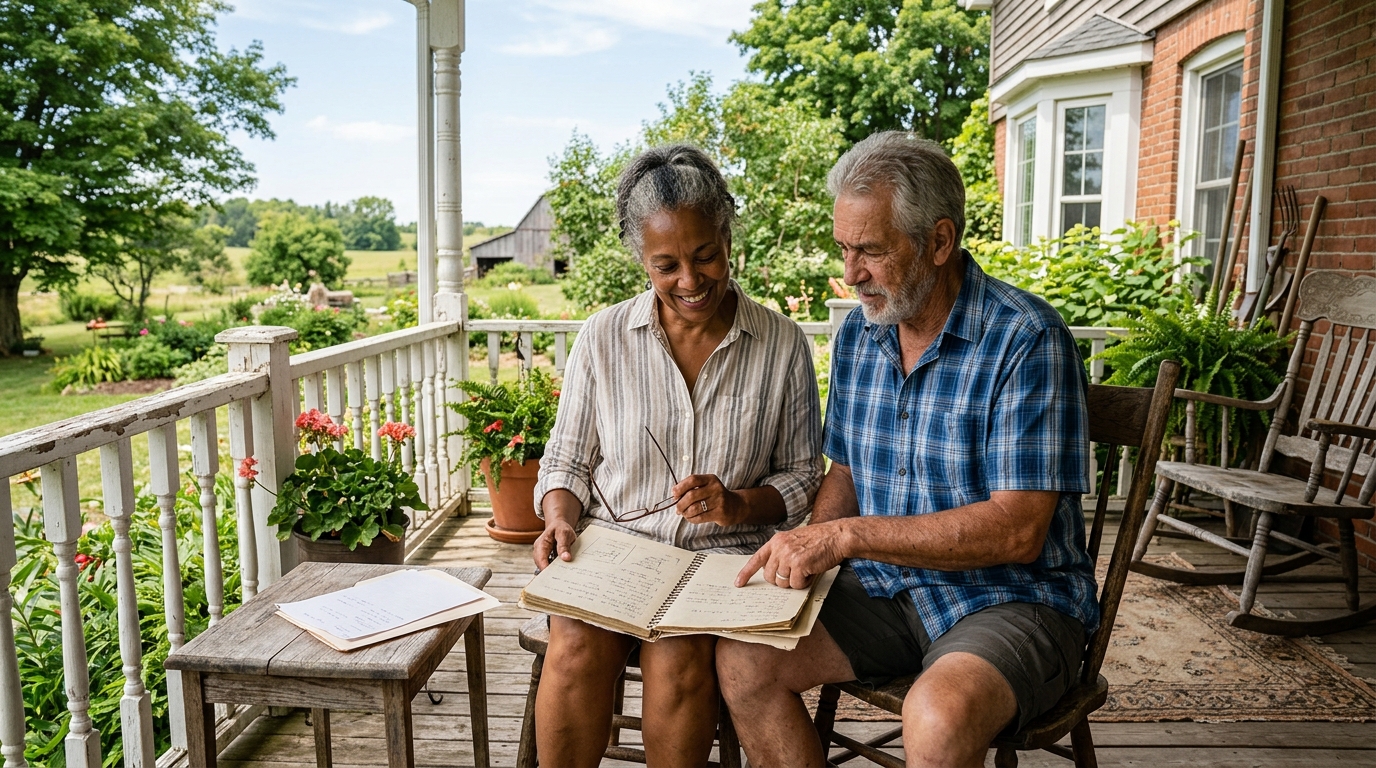
Scaling Without Overextending
According to Ontario Agriculture sector data, 60% of new food producers scale too quickly and become overwhelmed. Rick Sekhon recommends: "Start small, prove the business at farmers markets for one full season, then expand based on customer demand. Don't borrow beyond what one farmers market location can support."
Safe scaling approach:
- Year 1: One product, one farmers market location
- Year 2: Add second product or second location (if first is profitable)
- Year 3+: Consider wholesale (restaurants, gift shops) or online sales if you want to grow
Warning signs to pause expansion:
- Revenue flatlines despite consistent booth presence
- Customers repeatedly ask for products you don't make (they're shopping elsewhere)
- Weekly production time exceeds 15–20 hours (too demanding for aging in place)
- Profit margins drop below 50% (unsustainable)
Tax Implications and Government Benefits
Business income is taxable: If you earn $8,200 profit from jam sales, you must report this on your tax return. However, food business deductions include ingredients, packaging, shared kitchen rent, insurance, and marketing—significantly reducing taxable income.
OAS and GIS impact: Business income may affect GIS eligibility if you're on it, but OAS is unaffected. Consult FCAC if you're receiving GIS—there's an earnings exemption ($3,500–$4,500/year depending on province), so modest farmers market income may not reduce benefits.
Reverse mortgage proceeds are not income: The $20,000 you borrow is a loan, not taxable income. Your age and income sources remain unchanged for benefit purposes.
Key Takeaways
- Artisan food businesses have low startup costs: $5,000–$12,000 covers equipment, licensing, and initial ingredients for jams, baked goods, or specialty sauces.
- Farmers market demand is strong in Ontario: 150+ markets exist; customers pay premium prices for handmade, local products.
- Zero monthly payments protect your retirement: Unlike traditional business loans, a reverse mortgage line of credit has no payment obligation.
- Revenue can reach $1,000–$2,000/month: Conservative farmers market sales generate meaningful supplemental income with 15–20 hours/week effort.
- One farmers market season tests viability: Start small, prove the business over 6 months, then scale based on demand.
- Proper licensing is simple and inexpensive: Ontario allows home-based food production with basic health unit registration and shared kitchen access.
Frequently Asked Questions
Do I need a commercial kitchen or can I use my home kitchen?
For low-risk foods (jams, baked goods, preserves), Ontario allows licensed home kitchens. However, many producers prefer shared commercial kitchens ($15–$25/hour, $100–$150/month part-time) for hygiene, liability, and separating business from home life. Both options are viable.
What if my farmers market sales are disappointing?
You've lost your startup investment but nothing more. Your reverse mortgage debt remains manageable because you borrowed only what you needed (not a $50,000 lump sum). Many producers pivot to online sales, farmers' markets in adjacent towns, or holiday gift box subscriptions if one location underperforms.
Will business income affect my CPP or OAS?
Business income doesn't affect CPP or OAS eligibility. However, if you're on GIS (Guaranteed Income Supplement), there's an earnings exemption ($3,500–$4,500/year depending on province) before benefits reduce. Modest farmers market income likely stays within the exemption. Check with FCAC.
Can I deduct all my startup costs from Year 1 taxes?
No. Capital equipment (kitchen access, tools, scales) is typically amortized over 3–5 years as depreciation. Consumables (ingredients, packaging, jars) are fully deductible the year purchased. A CPA can structure your first-year deductions to minimize taxable income.
What if I want to expand to wholesale sales or online ordering?
Great—that's the natural progression. But start with farmers markets first to test product-market fit. Once you've proven demand and refined your recipes, wholesale and online are easier. Your initial reverse mortgage covers the farmers market phase; wholesale expansion can be funded from profits or a second draw.
Am I liable if someone gets sick from my food?
Yes, which is why liability insurance ($300–$800/year) is essential. Your insurance covers food safety incidents. Proper labeling (allergen warnings, production date) and food safety training (ServSafe certification) minimize risk. Ontario's health unit oversight ensures compliance.
Ready to launch your artisan food business in retirement? Contact Rick Sekhon Reverse Mortgages for a free consultation on funding farmers market entrepreneurship through home equity.
Ready to Learn More?
Find out exactly how much you could unlock from your home — free and no obligation.
Related Articles
Reverse Mortgage for Aging Parent's Woodworking and Furniture Making Business
Turn your woodworking hobby into a retirement business. Fund tools, workshop setup, and inventory with reverse mortgage. Create custom furniture for $1,000-$5,000/month income.
Read →Reverse Mortgage for Adult Child's Veterinary Technology Program and Career Support
Fund your adult child's veterinary technician or vet assistant certification program. Support their healthcare career without student loans or personal debt.
Read →Reverse Mortgage for Adult Child's Renewable Energy and Solar Technician Certification
Fund your adult child's solar and renewable energy technician certification. Support a green careers transition without personal student debt. Fast-growing, high-earning field.
Read →