
Reverse Mortgage for Aging Parent's Home-Based Pottery and Ceramic Art Studio Business
Launch a home-based pottery business in retirement. Fund kiln, wheel, supplies, and studio setup with reverse mortgage. Create art, income, and community in your home.
Can you turn your pottery hobby into a meaningful retirement business that generates income while keeping you engaged and social? Yes—a home-based pottery studio funded by a reverse mortgage can produce $800–$2,000/month in sales through galleries, craft fairs, and online platforms while providing daily creative fulfillment and community connection.
Many Ontario retirees are discovering pottery as a post-career passion that combines artistry, physical activity, and financial return. A reverse mortgage lets you invest in professional equipment and studio setup without disrupting your retirement income.
Why Pottery and Ceramics Are Ideal Retirement Businesses
Creative satisfaction:
- Meditative, hands-on work that engages mind and body
- Clear progression from beginner to advanced artist
- Ownership over finished product design and quality
- Gallery and collector community provides social connection and recognition
Market demand:
- Handmade ceramics command premium pricing ($25–$150 per piece vs. $5–$15 for mass-produced)
- Consistent buyer interest at Ontario craft fairs, farmers markets, and holiday markets
- Online platforms (Etsy, Shopify) enable direct-to-consumer sales
- Corporate bulk orders (office décor, gifts) provide steady wholesale income
Flexible income model:
- Part-time production schedule (10–15 hours/week)
- Seasonal peaks (summer fairs, holiday gift season) allow income concentration
- Wholesale, retail, and commission work diversify revenue streams
- Can scale up or down based on energy and demand
Aging in place advantage:
- Home-based studio eliminates commute and workplace stress
- Physical activity (hand-building, wheeling, loading kilns) maintains fitness and joint flexibility
- Community engagement through markets and galleries combats social isolation
- Creative identity strengthens sense of purpose in retirement
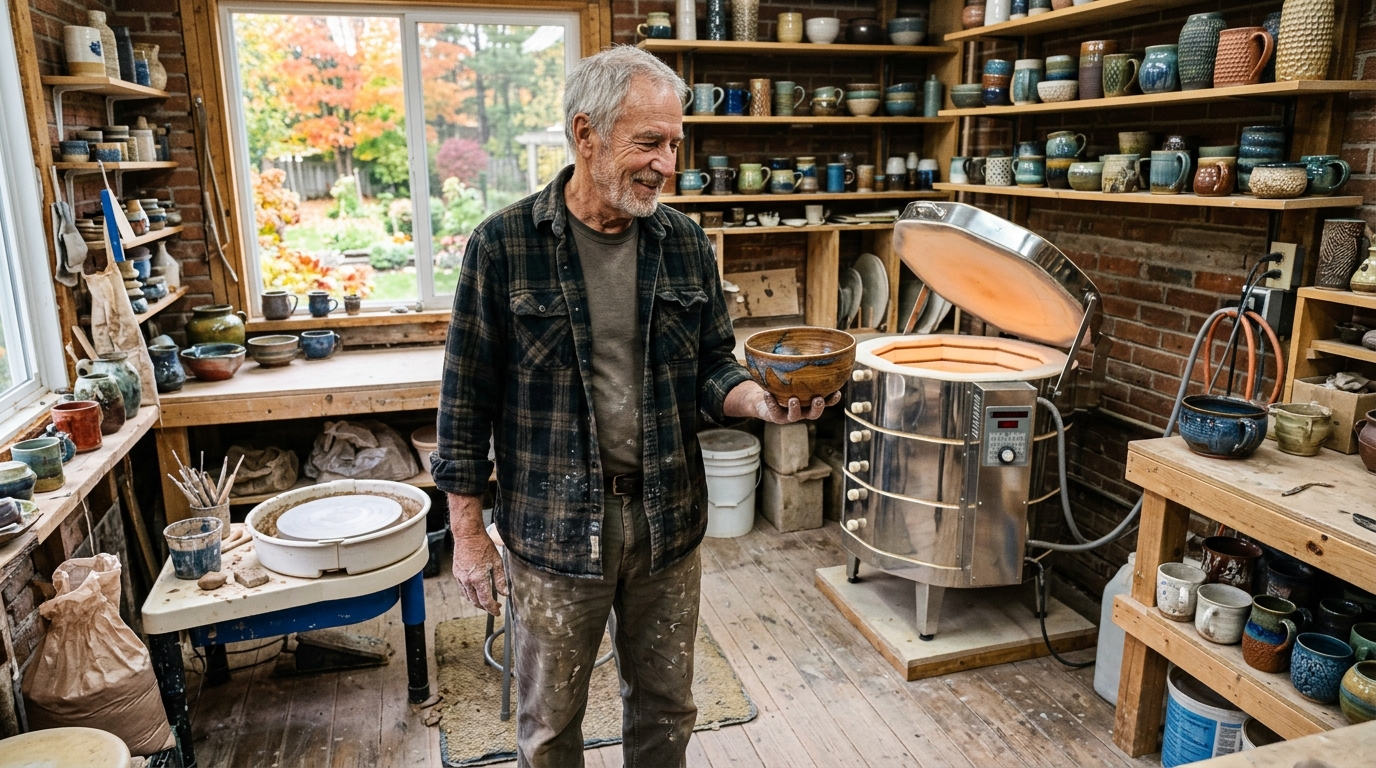
Pottery Studio Startup and Equipment Costs
| Equipment/Setup | Cost | Notes |
|---|---|---|
| Pottery Wheel (electric tabletop) | $500–$1,500 | Entry-level: Speedball, Shimpo; lasts 20+ years |
| Kiln (electric, home-size) | $2,000–$5,000 | Cone 10 reduction; can fit in garage or basement |
| Hand-building Tools & Supplies | $500–$1,000 | Trimming tools, sponges, calipers, wire, wedging table |
| Clay & Glazes (initial stock) | $400–$800 | Cone 10 stoneware, earthenware; 200–300 lbs initial supply |
| Studio Shelving & Storage | $800–$1,500 | Metal shelving for drying, firing, finished pieces |
| Work Tables & Benches | $400–$800 | Wheeled work surfaces, clean-up station |
| Electrical Upgrades (if needed) | $1,500–$3,000 | 220V kiln outlet; consult electrician |
| Total Startup (minimal setup) | $6,600–$13,600 | Home-based studio, garage or basement location |
| Professional Setup (dedicated space) | $10,000–$20,000 | Includes climate control, better lighting, multiple kilns |
Most retirees start with $8,000–$12,000 total investment for a functional home-based studio.
Reverse Mortgage Funding Strategy for Pottery Studio
Phased approach:
- Month 1: Draw $2,000–$3,000 for pottery wheel and basic hand-building tools
- Month 2: Draw $3,000–$4,000 for home kiln and clay/glaze supplies
- Month 3: Draw $2,000–$3,000 for shelving, work tables, electrical upgrade (if needed)
- Months 4–6: Draw $500–$1,000/month for ongoing clay, glazes, and studio maintenance
- Total initial draw: $8,500–$11,000
Lender options: CHIP, HomeEquity Bank, and Equitable Bank all approve pottery and creative business draws.
Interest cost: At $10,000 drawn at 5.85%, monthly interest = ~$49 (no monthly payment required). Once pottery sales begin ($200–$400/month, months 4–6 onward), you can voluntarily apply profits to reduce the RM balance.
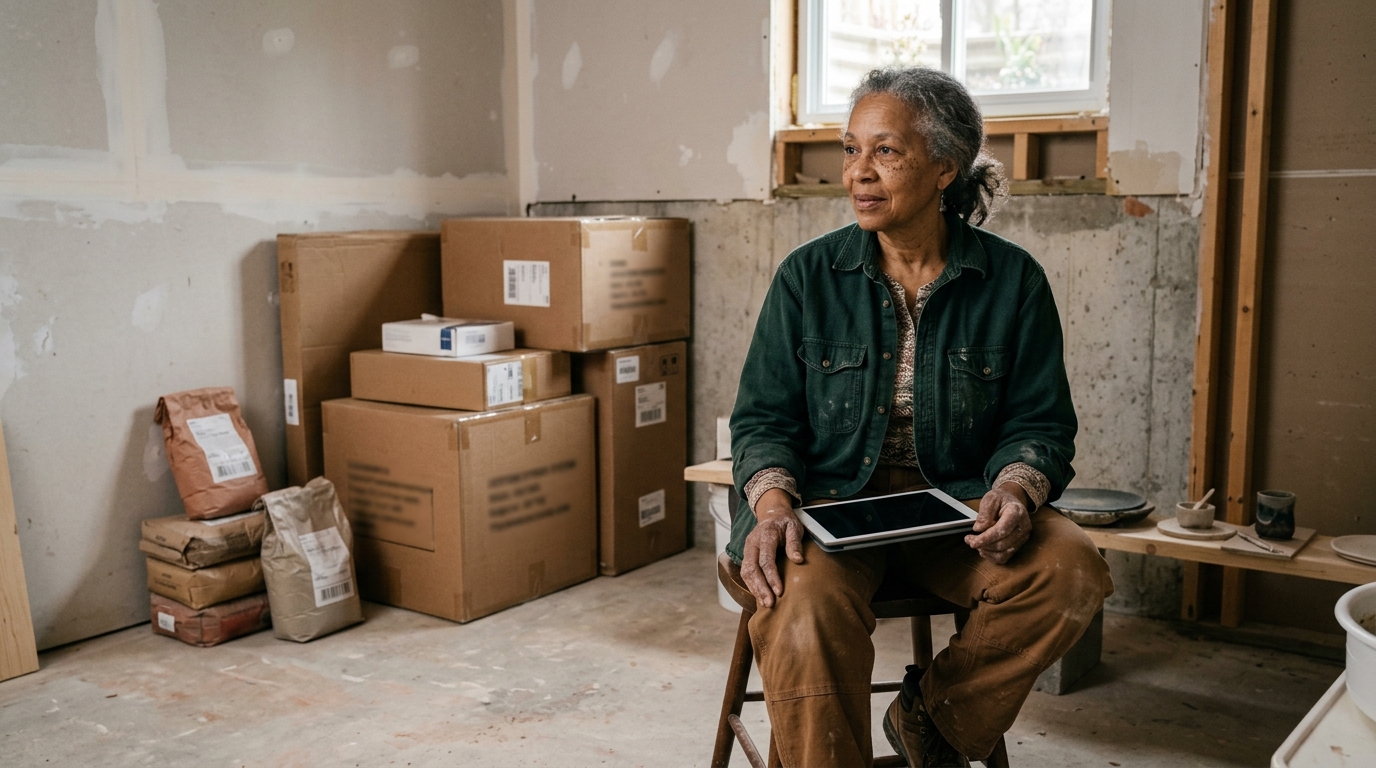
Revenue Streams for Home-Based Pottery
| Sales Channel | Typical Price Per Item | Volume Potential | Annual Revenue |
|---|---|---|---|
| Farmers Markets (Weekly booth) | $30–$80 | 15–20 pieces/week | $8,000–$15,000 |
| Holiday Craft Fairs (4–6 shows/year) | $25–$100 | 50–100 pieces/show | $5,000–$12,000 |
| Online Etsy Shop | $35–$150 | 5–15 pieces/month | $4,000–$10,000 |
| Gallery Consignment (60–40 split) | $40–$200 | 10–20 pieces/month | $3,000–$8,000 |
| Wholesale (bulk corporate orders) | $15–$50 (wholesale) | 50–200 pieces/order | $3,000–$10,000 |
| Custom Commissions | $100–$500 | 2–4 custom pieces/month | $3,000–$8,000 |
| Realistic Combined (Part-Time) | Mixed | Diversified | $12,000–$25,000/year |
Most home-based potters generate $800–$2,000/month through a combination of these channels.
Case Study: Pottery Studio Launch in Retirement
Catherine, 68, retired graphic designer, Ontario homeowner
Catherine had taken pottery classes as a hobby for 10 years but never pursued it professionally. In retirement, she wanted to deepen her practice and generate modest supplemental income ($500–$800/month). She had $260,000 home equity and significant studio space in her basement.
Studio plan:
- Create a professional home studio (pottery wheel, electric kiln, work surfaces)
- Produce functional pottery (mugs, bowls, vases) and decorative pieces
- Sell via farmers markets, holiday craft fairs, and an Etsy shop
- Target: $800–$1,200/month income through Year 2
Catherine's reverse mortgage strategy:
- Applied for $15,000 reverse mortgage line of credit with CHIP at 5.85%
- Drew $2,500 for pottery wheel and hand tools
- Drew $3,500 for electric kiln and kiln shelf supplies
- Drew $2,000 for work tables, shelving, and storage
- Drew $1,500 for initial clay and glazes (200 lbs clay, 15 glaze colors)
- Drew $500 for Etsy shop setup and branding
- Total: $10,000
Catherine's Year 1 results:
- Joined two local farmers markets (monthly and weekly)
- Launched Etsy shop April 2025 with 30 pieces
- Produced ~400 pieces/year (mix of functional and decorative)
- Month 3–6 average sales: $200/month (early audience building)
- Month 7–12 average sales: $600/month (holiday season boost, Etsy pickup)
- Year 1 total revenue: $5,200; production cost: $1,800 (clay, glaze, firing); net: $3,400
Catherine's outcome:
- Paid down $1,200 of the RM from Year 1 profits
- Outstanding balance: $8,800 at 5.85%
- No monthly payment pressure; CPP and other retirement income untouched
- Significant daily purpose and community engagement (farmers market friendships, collector relationships)
Projected Year 2:
- Established presence at markets and Etsy
- Target: $1,000–$1,200/month sales
- Annual revenue: $12,000–$14,000
- Projected RM repayment: $2,000–$3,000 from Year 2 profits
- Break-even timeline: 3–4 years (entire RM paid from pottery business profits)
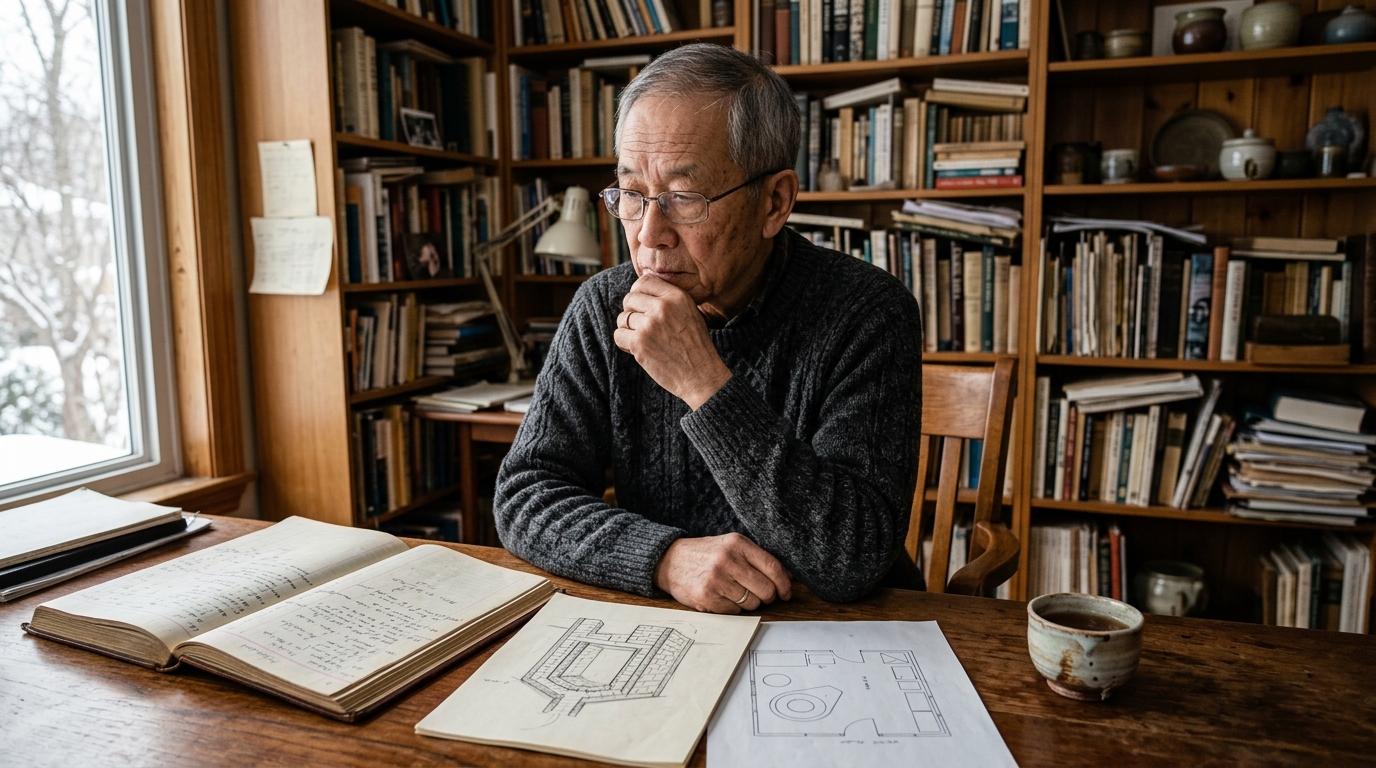
Growing the Business Without Overextending
According to the Ontario Craft Council, 73% of successful retiree craft businesses maintain part-time production (10–15 hours/week) indefinitely. Scaling to full-time work often reduces satisfaction and increases burnout.
Sustainable growth model:
- Years 1–2: Establish production routine, build market presence, generate modest income
- Year 3+: If demand exceeds capacity, selectively increase production or prices rather than hours
- Alternative scaling: Add a niche (custom commissions, specialty glazes, teaching) rather than producing more volume
- Never exceed: 15–20 hours/week production if the goal is retirement engagement, not full-time business
Warning signs to pause growth:
- Production time exceeds 20 hours/week (lifestyle inflation)
- Quality drops due to rushed production
- Joint pain or fatigue from repetitive work
- Markets no longer feel enjoyable (becoming obligatory)
The goal is sustainable retirement income, not aggressive scaling.
Tax and Benefit Implications
Reverse mortgage proceeds are not income: The $10,000 you borrow is a loan, not taxable.
Pottery business income is taxable: When Catherine earns $5,200 in Year 1 pottery sales, she must report this as self-employment income. However, she can deduct all business expenses (clay $1,200, glaze $400, kiln electricity $150, booth fees $250, packaging $200, etc.), reducing taxable income to roughly $3,000–$4,000.
CPP and OAS impact: Self-employment income may trigger CPP contributions if Catherine is under age 70, but OAS is unaffected. If Catherine is on GIS, modest craft business income (~$5,000/year) is likely under the earnings exemption ($3,500–$4,500).
Home office deduction: Consult a CPA about deducting a portion of home utility costs, property tax, and maintenance as business expenses (typically 10–20% of your home's operating costs if your studio occupies 10–20% of square footage).
Key Takeaways
- Home-based pottery requires $8,000–$12,000 startup investment: Pottery wheel, kiln, supplies, and studio setup are manageable costs via reverse mortgage.
- Multiple revenue streams diversify income: Farmers markets, craft fairs, Etsy, consignment, and wholesale orders reduce dependence on any single channel.
- Part-time production (10–15 hours/week) is sustainable in retirement: Full-time scaling often reduces satisfaction; maintain creative joy by limiting output.
- Break-even occurs in 2–3 years: Most pottery businesses generate enough profit to begin repaying the RM by Year 3.
- Pottery builds community and purpose: Social engagement through markets and collector relationships combats retirement isolation.
- Zero monthly payments protect retirement income: Unlike traditional business loans, RM has no payment obligation, preserving your CPP and pension.
Frequently Asked Questions
Do I need prior pottery experience to start a home business?
No, but 1–2 years of serious hobby practice (not casual classes) helps. Most successful retiree potters had 5+ years of hobby experience before launching. If you're new to pottery, take a year of intensive classes first, then invest in the home studio.
Can I set up a pottery studio in my basement without major renovation?
Yes. Basements work well (climate-controlled, separate from living space). Ensure electrical capacity for the kiln (220V outlet, electrician consultation). Proper ventilation is critical for kiln off-gassing; a window or exhaust fan in the kiln area is essential for safety.
What if I sell pieces but it's not profitable?
You've lost $5,000–$8,000 on the initial studio setup, but the RM debt remains manageable. Many potters view the studio as a capital investment in their retirement lifestyle, not purely financial. If you decide to stop selling and just create for personal use, that's valid—the studio still adds home value.
Can my grandchildren help with the pottery business?
Absolutely. Having grandchildren visit the studio, throw pottery, glaze pieces creates multigenerational bonding. Some retirees develop "pottery teaching" as a revenue stream (birthday parties, children's workshops, $50–$100/session).
Will pottery sales disqualify me from any government benefits?
Unlikely. Modest craft income ($5,000–$10,000/year) is generally below income thresholds that affect CPP or OAS. If you're on GIS, check with FCAC about the earnings exemption (usually $3,500–$4,500/year). Consult before launching if benefits are critical to your finances.
Can I write off the home studio as a home business on my taxes?
Consult a CPA. You can typically deduct a portion of home utilities, property tax, and maintenance (10–20% of total if your studio is 10–20% of home square footage). Some accountants recommend tracking business expenses separately: clay, glaze, kiln electricity, booth fees, packaging, shipping. These are absolutely deductible.
Ready to launch your pottery studio in retirement? Contact Rick Sekhon Reverse Mortgages for a consultation on funding creative business setup with zero-payment home equity access.
Ready to Learn More?
Find out exactly how much you could unlock from your home — free and no obligation.
Related Articles
Reverse Mortgage for Aging Parent's Woodworking and Furniture Making Business
Turn your woodworking hobby into a retirement business. Fund tools, workshop setup, and inventory with reverse mortgage. Create custom furniture for $1,000-$5,000/month income.
Read →Reverse Mortgage for Adult Child's Veterinary Technology Program and Career Support
Fund your adult child's veterinary technician or vet assistant certification program. Support their healthcare career without student loans or personal debt.
Read →Reverse Mortgage for Adult Child's Renewable Energy and Solar Technician Certification
Fund your adult child's solar and renewable energy technician certification. Support a green careers transition without personal student debt. Fast-growing, high-earning field.
Read →