
Reverse Mortgage for Vestibular Disorder Home Modifications: Balance and Dizziness Management
Vestibular disorders (BPPV, Meniere's disease, labyrinthitis) require specific home modifications. Fund safety adaptations with reverse mortgages.
What home modifications prevent falls when your inner ear disorder makes balance unpredictable? Vestibular disorders—benign paroxysmal positional vertigo (BPPV), Meniere's disease, labyrinthitis, vestibular migraines—create disorientation, dizziness, and spatial confusion that standard home accessibility solutions don't address. You need specialized modifications beyond standard grab bars: visual markers, specific lighting, texture changes, and spatial awareness design. A reverse mortgage can fund these targeted adaptations that prevent the falls that vestibular sufferers experience disproportionately.
Understanding Vestibular Disorders and Fall Risk
The vestibular system (inner ear) helps you maintain balance, spatial awareness, and coordination. When it's damaged or dysfunctional, your brain receives contradictory information about position and motion, leading to:
- Vertigo and spinning sensations that appear suddenly
- Nausea and vomiting triggered by head movement or position changes
- Loss of spatial awareness—difficulty judging distance and depth
- Unsteady gait due to conflicting balance signals
- Visual dizziness—surroundings seem to move or tilt
Falls are the leading cause of injury in vestibular patients. Unlike simple falls from weakness, vestibular falls often happen without warning and can be more severe because the person is disoriented during the fall itself, unable to brace or correct mid-fall.
Vestibular-Specific Home Modifications vs. Standard Accessibility
| Standard Grab Bar Installation | Vestibular-Specific Modification | Why Different |
|---|---|---|
| Horizontal bar in bathroom | Horizontal bars PLUS contrasting color markers on floor | Vestibular patients need spatial reference points to judge room layout |
| Soft LED ambient lighting | Bright, consistent, flicker-free lighting with high contrast | Flickering lights trigger vertigo; low contrast causes disorientation |
| Carpet (standard safety flooring) | Carpet WITH textured tactile markers at stairs, transitions | Tactile cues help brain compensate when vision/balance fail |
| Banister on one side of staircase | Continuous banisters on BOTH sides | Vestibular patients need bilateral reference during vertigo episodes |
| Minimal furniture (open floor plan) | Intentional placement of stable furniture as "anchor points" | Patients need reference objects to regain spatial awareness during episodes |
Standard accessibility solutions (grab bars, ramps, wide doorways) are still important, but they don't address the core vestibular challenge: spatial disorientation and loss of equilibrium reference.
Vestibular-Friendly Modification Budget

Comprehensive vestibular modifications require more specific design than typical aging-in-place renovations:
| Modification | Standard Cost | Vestibular-Specific Enhancement | Total Cost |
|---|---|---|---|
| Lighting upgrades | $2,000–$3,500 (LED, brightness) | + flicker-free ballasts, color temperature control | $3,000–$5,000 |
| Floor marking and texturing | $500–$1,000 (paint, tape) | + tactile warning strips, high-contrast markers | $1,500–$2,500 |
| Bathroom retrofit (grab bars, safety) | $3,000–$5,000 | + balance bars, visual reference markers, mirror placement | $4,500–$7,000 |
| Staircase modifications | $2,000–$4,000 (banister, lighting) | + dual banisters, edge lighting, high-contrast treads | $4,000–$7,000 |
| Hallway and pathway safety | $1,000–$2,000 (widening, clearing) | + strategic furniture anchors, wall-to-ceiling guide rails | $2,500–$4,500 |
| Occupational therapy assessment (vital for vestibular) | — | $500–$1,200 for OT specializing in vestibular | $500–$1,200 |
| TOTAL | $8,500–$15,500 | $16,000–$27,200 | VESTIBULAR-SPECIFIC TOTAL |
The difference is significant because vestibular-specific modifications require specialized assessment, materials, and contractor knowledge. Many standard contractors don't understand vestibular needs—you need occupational therapists and architects familiar with balance disorder design.
Finding Vestibular-Informed Professionals
Not all occupational therapists specialize in vestibular disorders. Look for:
- OTs certified in vestibular rehabilitation (VRT)
- Balance or fall-prevention specialists (often at physical therapy clinics)
- Aging-in-place architects or designers with vestibular experience
- Contractors experienced with disability design (not just standard ramps/bars)
Many are in Toronto, Ottawa, and larger Ontario cities but may be harder to find in rural areas. Reverse mortgage funds can cover:
- Travel costs to consult specialists
- Virtual assessment fees (many specialists offer telehealth)
- Premium materials for specialized modifications
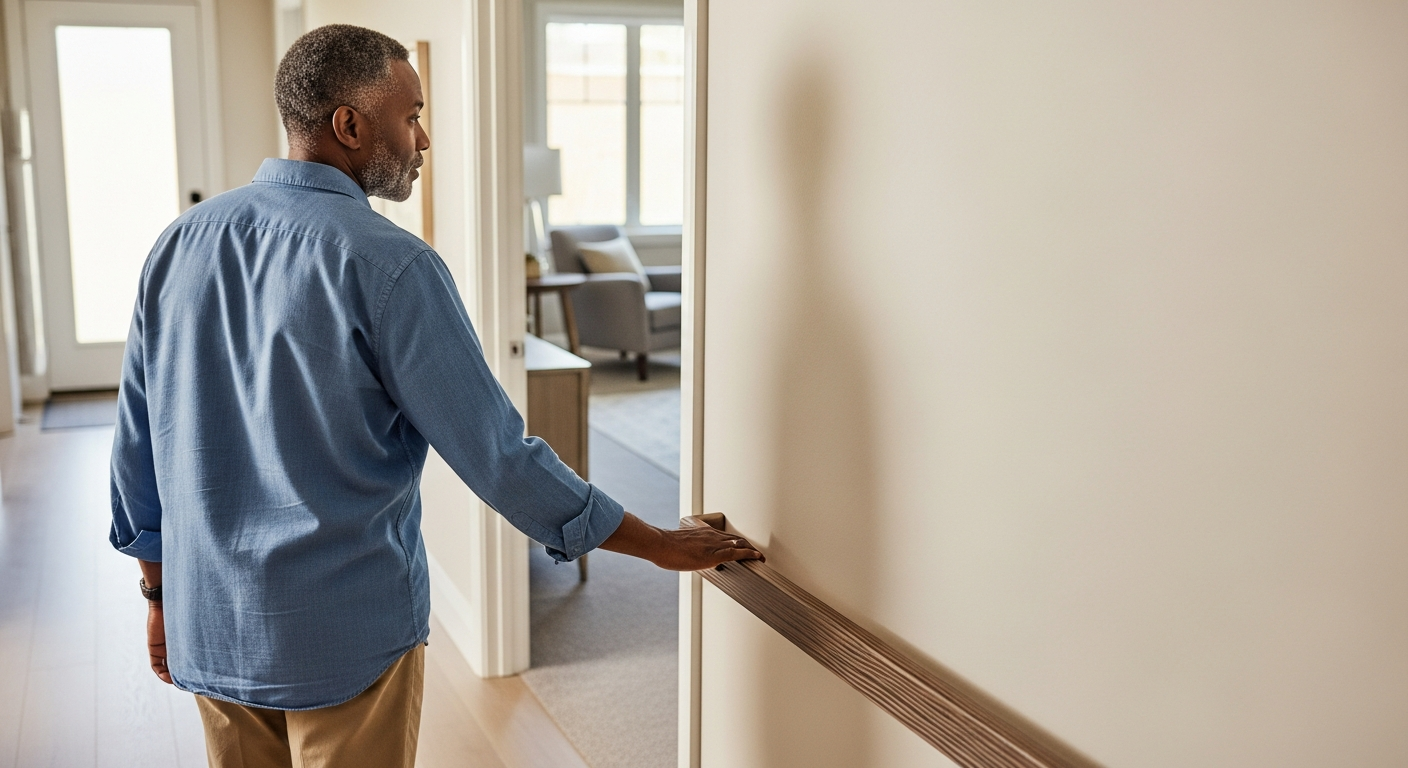
Real Example: Vestibular Home Transformation
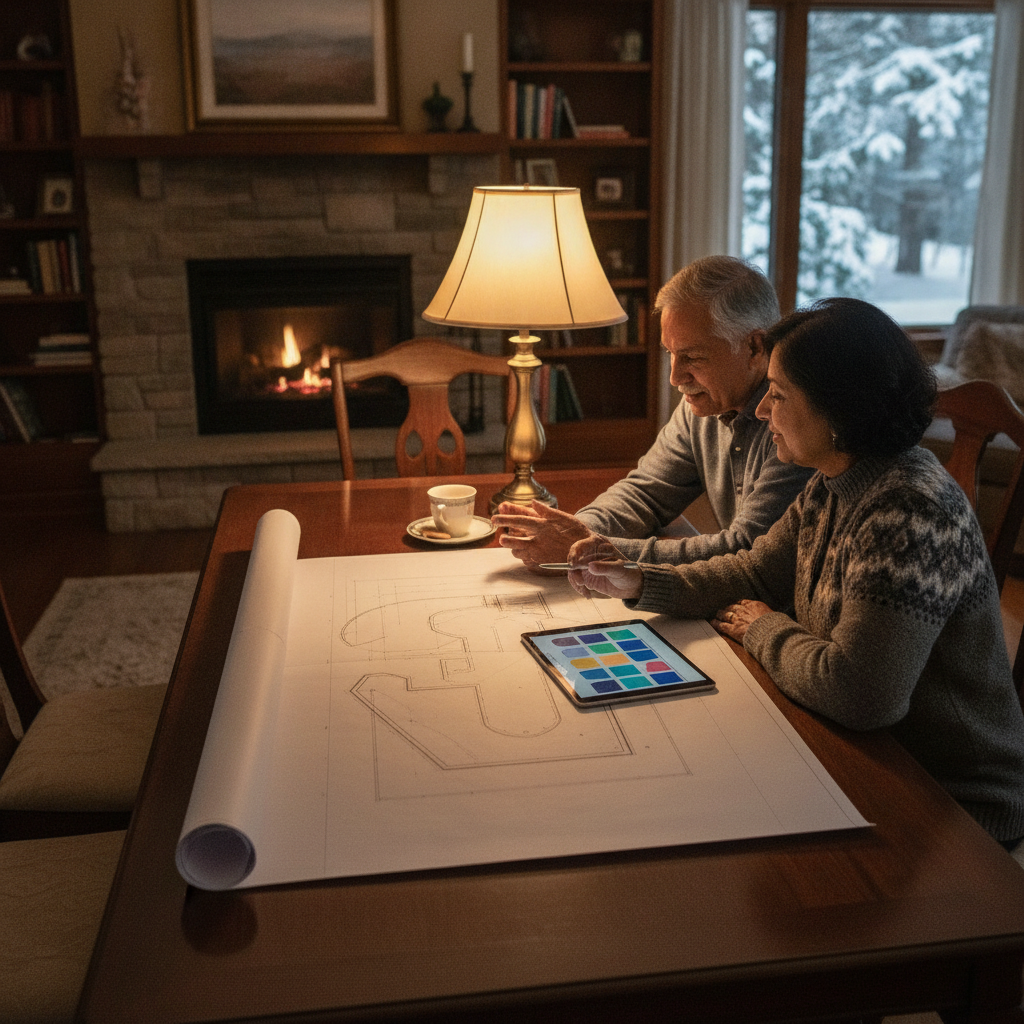
Meet Henry, 68, diagnosed with chronic BPPV (benign paroxysmal positional vertigo) three years ago. Initial episodes have resolved, but he experiences residual dizziness when turning in bed, standing quickly, or walking in dim lighting. He's already fallen twice—once in his kitchen, once on his stairs—and is terrified of a serious fall.
Before Vestibular-Specific Modifications:
- Standard grab bars installed in bathroom (helps, but not enough)
- Scattered furniture creates navigation challenges during dizzy spells
- Dim overhead lighting triggers dizziness
- Carpet on stairs (no contrast, no edge markers)
- No professional vestibular assessment
After Reverse Mortgage Funding Vestibular Modifications ($22,000):
- OT vestibular assessment identifies his specific spatial disorientation patterns
- Lighting upgrades throughout home: bright, flicker-free, consistent
- High-contrast markers on all stairs, floor transitions, bathroom layout
- Bathroom retrofit with balance bars (not just grab bars), visual markers
- Textured strips on stairs' edge treads for tactile reference
- Strategic furniture placement creates "anchor points" for spatial re-orientation
- Henry learns specific movement patterns to prevent vertigo triggers
Outcome: 18 months later, Henry has had no falls. He's more confident moving through his home, even during episodes, because environmental design compensates for his vestibular dysfunction.
Reverse mortgage cost: $22,000 (additional OT sessions, specialized design, premium materials) Inherited equity: Home worth $600,000 with ~$22,000–$28,000 in RM debt = $572,000–$578,000 net equity for heirs
Key Takeaways
- Vestibular disorders create unique fall risk requiring specialized, not just standard, home modifications
- Vestibular-specific modifications cost $16,000–$27,000, significantly more than standard accessibility
- Occupational therapist assessment is vital—standard contractors often don't understand vestibular needs
- Lighting, visual markers, and spatial design matter more than grab bars alone
- FSRAO and CMHC recognize vestibular accommodations as legitimate accessibility funding
- Rick Sekhon Reverse Mortgages can structure funding to cover specialized professionals and materials
Frequently Asked Questions
Are vestibular modifications covered by accessibility grants or insurance?
Partially. Ontario's Accessible Home Ontario Grant (AHOG) covers some renovations, but vestibular-specific design may exceed typical grant amounts. Home insurance rarely covers preventive modifications. Reverse mortgages fill gaps that grants and insurance don't cover.
What's the difference between a vestibular-informed OT and a general accessibility consultant?
A general accessibility consultant focuses on mobility barriers: stairs, doorways, grab bars. A vestibular-informed OT understands how lighting, spatial markers, contrast, and environmental design compensate for balance dysfunction. You need someone with vestibular training. Check Vestibular Canada or provincial OT associations for specialists.
Can I start with standard modifications and upgrade to vestibular-specific ones later?
Yes, but inefficiently. Standard grab bars may need to be repositioned or supplemented with vestibular-specific balance bars. Lighting may need to be replaced with flicker-free systems. It's usually cheaper to assess and design vestibular-specific modifications all at once. Get the OT assessment first, then modify.
Which conditions benefit most from vestibular-specific modifications?
- BPPV (benign paroxysmal positional vertigo)
- Meniere's disease (vertigo, hearing loss, tinnitus)
- Labyrinthitis or vestibulitis (inner ear inflammation)
- Vestibular neuritis (nerve inflammation)
- Persistent postural perceptual dizziness (PPPD)
- Concussion-related vestibular symptoms
If you have any condition with chronic dizziness or balance problems, vestibular-informed design helps.
How long do vestibular modifications take to install?
Typically 4–8 weeks, depending on scope. Lighting might be 1–2 weeks; floor modifications and bathroom retrofits 3–4 weeks. Custom design and material ordering can extend timelines. Plan accordingly and ensure your reverse mortgage funds are available before starting.
Can modifications help with other balance conditions (Parkinson's, cerebellar ataxia)?
Yes, partially. Vestibular-specific design (lighting, spatial markers, visual contrast) helps with many balance conditions, not just vestibular disorders. Work with an OT to assess your specific needs.
Are vestibular symptoms limiting your home safety and independence? Contact Rick Sekhon Reverse Mortgages. We'll help fund a comprehensive assessment by a vestibular-informed occupational therapist, design specialized modifications, and secure the funding to make your home a safe haven rather than a fall risk zone. Free consultation—call today.
Ready to Learn More?
Find out exactly how much you could unlock from your home — free and no obligation.
Related Articles
Reverse Mortgage for Aging in Place With Fibromyalgia: Home Modifications for Invisible Illness
Fund home modifications for aging with fibromyalgia. Reverse mortgage enables accessible design for pain management, energy conservation, and quality of life.
Read →Reverse Mortgage for Accessible Community Kitchen: Culinary Training and Aging in Place
Convert your home kitchen into an accessible commercial culinary training space. Reverse mortgage funds renovation while creating community impact.
Read →Reverse Mortgage for Managing Late-Stage Lyme Disease: Complex Chronic Illness Costs and Home Adaptation
Reverse mortgage for aging with late-stage Lyme disease. Managing treatment costs, home modifications, and specialized care. Ontario chronic illness strategy.
Read →