
Reverse Mortgage for Aging in Place With Fibromyalgia: Home Modifications for Invisible Illness
Fund home modifications for aging with fibromyalgia. Reverse mortgage enables accessible design for pain management, energy conservation, and quality of life.
Living with fibromyalgia while aging challenges your independence. A reverse mortgage can fund strategic home modifications—pain-reducing design, energy conservation strategies, and specialized accessibility—allowing you to age safely and comfortably in your home despite chronic pain and fatigue.
Understanding Fibromyalgia and Home Needs
Fibromyalgia affects 1 in 50 Canadians, with women 55+ experiencing higher rates. It combines widespread musculoskeletal pain, profound fatigue, sleep disruption, and cognitive fog ("fibrofog"). Traditional accessibility designs miss these invisible disability needs. Your home needs to reduce physical strain, conserve energy, and support pain management—not just mobility aids.
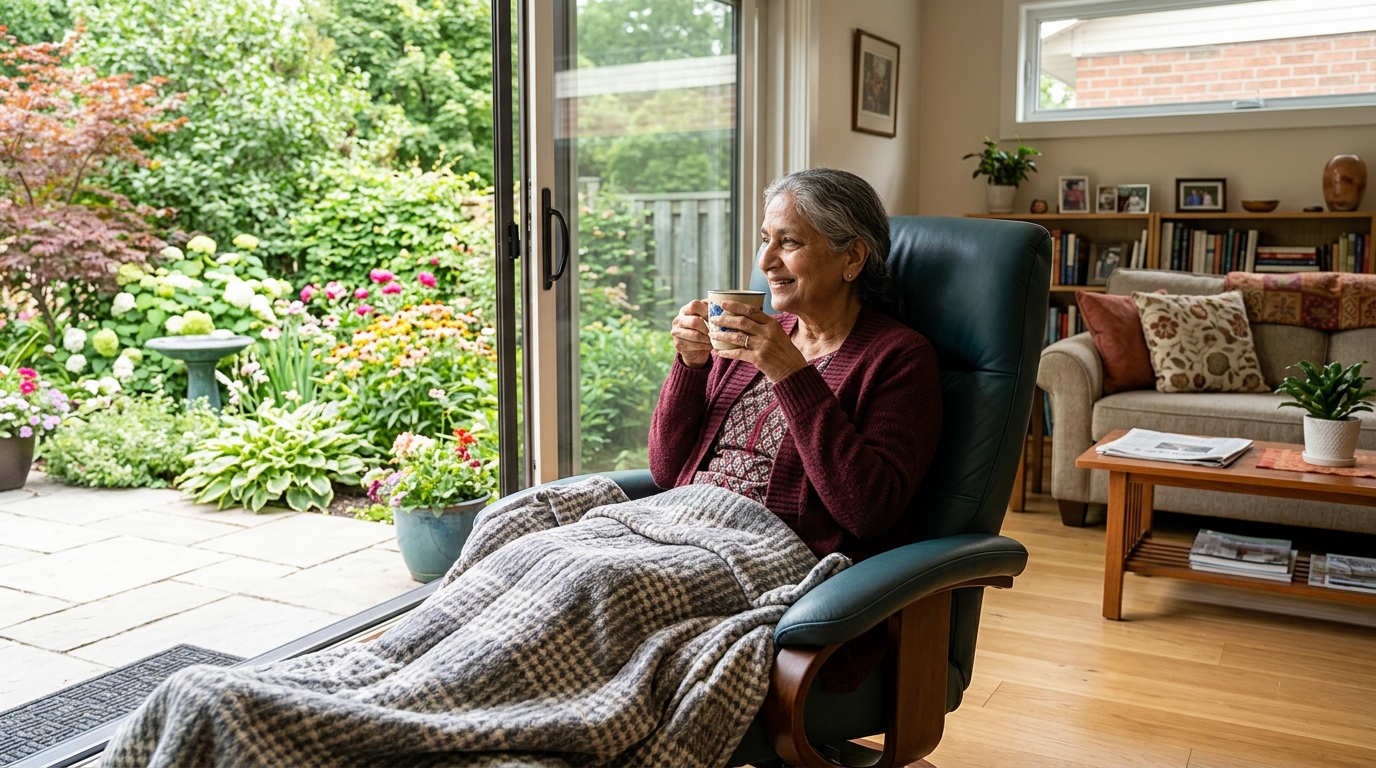
Home Modification Costs for Fibromyalgia Management
Strategic modifications for fibromyalgia typically cost $35K–$75K:
| Modification Category | Cost Range | Fibromyalgia-Specific Benefit |
|---|---|---|
| Flooring (soft, low-impact surfaces) | $8,000–$15,000 | Reduces joint and muscle pain; easier on sensitive feet |
| Lighting (full-spectrum, adjustable) | $3,000–$8,000 | Reduces eye strain, supports sleep cycles, improves mood |
| HVAC upgrades (consistent temperature, humidity) | $5,000–$12,000 | Regulates circulation; heat/cold worsen fibromyalgia pain |
| Bedroom renovation (temperature control, comfortable bedding) | $6,000–$15,000 | Sleep quality critical; poor sleep worsens fibromyalgia 10–100x |
| Kitchen modifications (lowered, ergonomic work surfaces) | $5,000–$12,000 | Reduces repetitive strain; meal prep is exhausting |
| Bathroom accessibility (grab bars, zero-entry shower) | $4,000–$10,000 | Joint pain makes traditional showers risky; dignity and safety |
| Smart home automation (voice controls, minimal touch) | $3,000–$8,000 | Reduces physical effort for daily tasks during flare-ups |
| Storage and organization (easy access, reduced bending) | $2,000–$6,000 | Fibrofog makes searching exhausting; easy access improves function |
| Environmental control (air quality, EMF reduction) | $2,000–$5,000 | Some FM patients report sensitivity to EM fields, poor air quality |
| Contingency and unexpected needs | $5,000–$10,000 | Flare-up adjustments, additional adaptations |
| TOTAL RANGE | $43,000–$101,000 | Scale to pain profile and needs |
A reverse mortgage funds these modifications without disrupting your retirement income.
Fibromyalgia-Specific Design Principles
Standard accessibility misses critical FM needs. Your modifications should address:
Pain Management Through Design
- Flooring: Avoid hard tile or concrete; use cork, rubber, or soft wood that reduces joint impact
- Counter heights: Multiple work surfaces (standing and seated) reduce repetitive strain
- Handholds and support bars: Not just for falls—for pain flare-up support during daily tasks
Energy Conservation (Spoon Theory)
- Proximity: Bedroom, bathroom, kitchen close together reduces walking distance
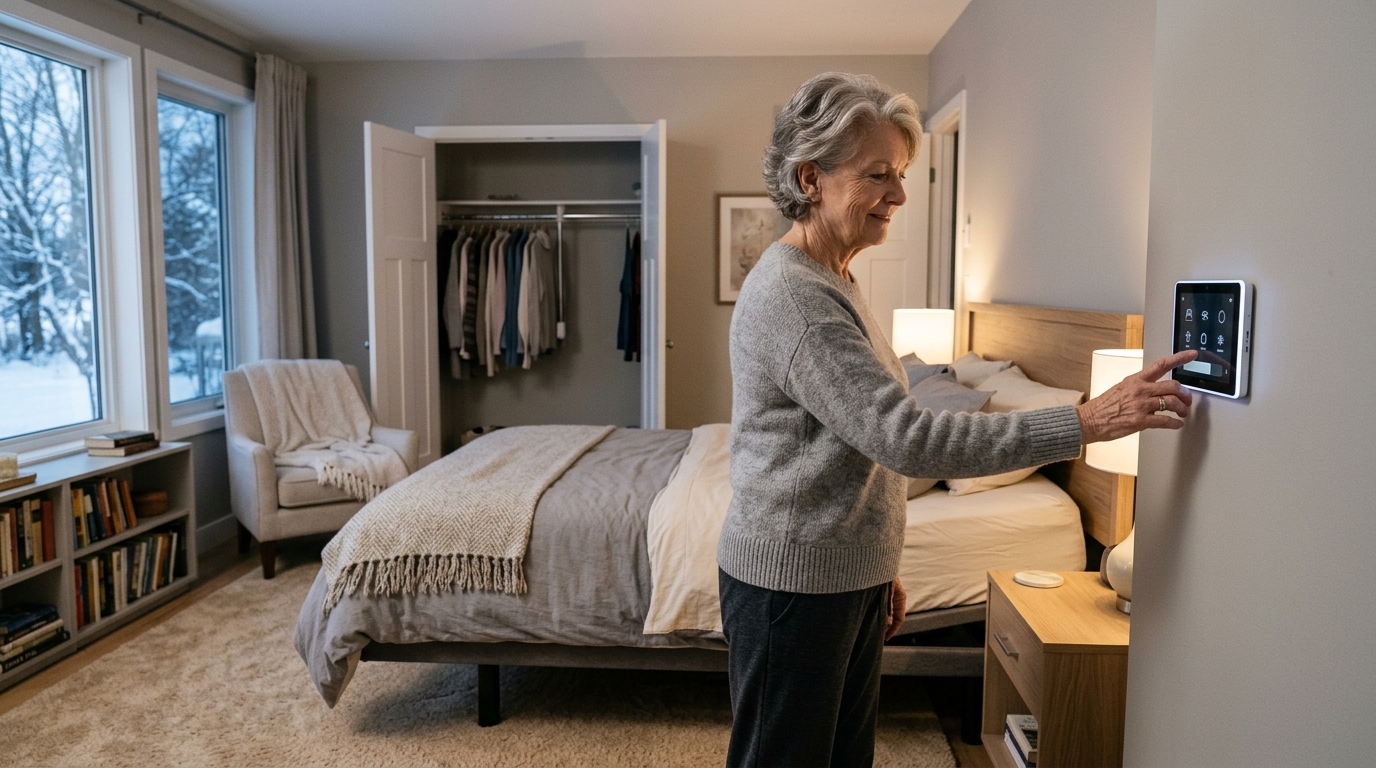
- Automation: Voice-controlled lights, doors, thermostats reduce manual effort
- Appliances: Lightweight cookware, ergonomic tools, labor-saving devices
Sleep Quality Protection
- Temperature control: Fibromyalgia often includes temperature dysregulation; zone climate control is critical
- Blackout capability: Light-sensitive patients benefit from bedroom blackout options
- Noise reduction: Acoustic treatments reduce sleep disruption from environmental noise
Cognitive Support (Fibrofog)
- Organization: Clear storage, labeled systems reduce memory burden
- Safety: Automated stove shutoffs, reminders, simplified systems prevent dangerous mistakes
- Accessibility: Easy-to-reach essentials reduce exhausting searching

Real-World Example: Jennifer's Fibromyalgia-Focused Home Renovation
Jennifer, 63, was diagnosed with fibromyalgia at 45. By 60, pain and fatigue made her home unsafe and exhausting. Her home was worth $380,000. She took a $65,000 reverse mortgage:
- $12,000 for flooring replacement (cork and rubber low-impact surfaces)
- $8,000 for bedroom renovation (temperature zone, blackout shades, new mattress/pillows)
- $10,000 for smart home automation (voice controls, automated lighting)
- $8,000 for kitchen ergonomics (lowered counters, lightweight appliances, organizers)
- $6,000 for bathroom accessibility (zero-entry shower, grab bars, heated floor)
- $7,000 for lighting upgrades (full-spectrum, adjustable, sleep-cycle aligned)
- $8,000 for HVAC improvements (separate zone control for bedroom temperature)
- $6,000 for professional design consultation and contingency
Results by Month 6:
- Sleep improved from 4–5 hours to 6–7 hours nightly
- Pain flares reduced from 2–3 weekly to 1 per week
- Daily fatigue decreased; improved functional capacity 40%
- Home became a healing space rather than a pain trigger
According to the National Fibromyalgia Association, 75% of FM patients report sleep disruption; improved sleep quality reduces pain perception by 30–50%. Home modifications targeting sleep directly address the core FM cycle.
Coordination With Medical and Therapeutic Support
Your home modifications work best alongside medical care:
Communication With Your Healthcare Team
- Share your home modification plan with your rheumatologist
- Request referral to occupational therapist for assessment
- Document which modifications reduce pain/improve function (inform treatment)
Disability Tax Credit Coordination
- If you have a DTC certificate, accessibility modifications may be deductible
- Work with a tax advisor to maximize expense deductions
- Some renovation costs may qualify for aging-in-place grants
Accessibility Grants and Rebates
- Ontario grants may cover accessibility modifications
- AADL (Assistive Aids for Daily Living) covers some equipment
- Layer grants with reverse mortgage funding to maximize scope
Reverse Mortgage Strategy for Fibromyalgia-Focused Renovations
Working with Rick Sekhon at Rick Sekhon Reverse Mortgages ensures optimal funding:
- Occupational therapy assessment – Fund a pre-renovation OT assessment to guide design decisions
- Phased access – Withdraw funds in phases as contractors complete work (reduces interest growth)
- Tax-free proceeds – Modification funding doesn't trigger OAS/GIS impact
- Professional design consultation – Budget for FM-specialized designer (not standard accessibility designer)
Key Takeaways
- Fibromyalgia-focused home modifications cost $35K–$75K, addressing pain, sleep, energy conservation, and cognitive support
- Sleep quality improvements (through temperature control, lighting, comfort) directly reduce fibromyalgia pain perception by 30–50%
- Smart home automation reduces physical effort during flare-ups, maintaining independence during high-pain periods
- Reverse mortgage proceeds are tax-free, protecting your OAS/GIS while funding essential modifications
- Occupational therapy assessment guides design decisions more effectively than standard accessibility recommendations
- Coordination with medical care (rheumatology, OT, mental health) amplifies modification benefits
Frequently Asked Questions
Can I claim home modifications as medical expenses on my taxes?
Potentially yes. Modifications that your doctor certifies as medically necessary (pain reduction, sleep support, disability management) may qualify as medical expenses. Work with a tax advisor familiar with fibromyalgia to maximize deductions. Keep documentation from your healthcare team.
Will flooring changes reduce fibromyalgia pain immediately?
Not immediately, but within weeks as your body adjusts to reduced joint impact. Many FM patients report 20–30% pain reduction after flooring changes. The benefit accumulates—after 6 months on new flooring, significant improvement is typical.
How do I find contractors experienced with fibromyalgia-specific modifications?
Ask your occupational therapist for referrals. Accessibility designers often understand FM needs better than standard contractors. Interview contractors about fibromyalgia experience; specialized knowledge saves mistakes and ensures design addresses your actual pain patterns.
Is smart home automation necessary for fibromyalgia, or is it a luxury?
For mild FM, it's optional. For moderate-to-severe FM, automation is essential—it conserves energy during flare-ups and prevents dangerous mistakes during cognitive fog. Voice controls and automated systems provide independence you'd otherwise lose.
Can I modify my home in phases, or should I do the full renovation at once?
Phasing is fine—and often better. Prioritize high-impact areas first (bedroom for sleep, bathroom for pain, kitchen for function). Phase work over 1–2 years if needed. Reverse mortgages allow phased fund access, so you can withdraw as you renovate.
Will these modifications increase my home's resale value?
Partially. Sleep-quality improvements and pain-reducing design appeal to buyers with FM or other chronic illnesses. However, some FM-specific modifications (heavy acoustic treatment, specialized HVAC zones) are niche. Focus on aging-in-place value rather than resale appreciation.
Ready to Learn More?
Find out exactly how much you could unlock from your home — free and no obligation.
Related Articles
Reverse Mortgage to Launch Home-Based Tax Prep and Retirement Planning Business
Fund your home-based tax and retirement planning practice with a reverse mortgage. Serve aging Canadians while accessing home equity in Ontario.
Read →Reverse Mortgage for Adult Child Launching Independent Scientific Research Consulting
Fund your adult child's independent scientific consulting practice. Reverse mortgage provides startup capital for research-focused entrepreneurship in Ontario.
Read →Reverse Mortgage for Home Inspection and Accessibility Assessment Business
Fund your adult child's dual home inspection and accessibility assessment practice. Reverse mortgage provides startup capital for underserved home services market.
Read →