
Reverse Mortgage for Aging Parent's Home Music Studio and Recording Space: Creative Retirement Legacy
Fund your aging parent's home music studio or recording space with a reverse mortgage—pursuing musical dreams and creating legacy projects in Ontario.
Your aging parent is a musician—pianist, guitarist, vocalist, or composer—who's always wanted a professional home studio to pursue serious music projects in retirement. A reverse mortgage can fund this dream: custom acoustics, quality recording equipment, soundproofing, and the infrastructure for recording albums, teaching, or creating a musical legacy before age limits activity.
Many retirees 65+ harbored musical dreams deferred by careers and family obligations. Now, with time and stability, they want to record an album, teach music, compose, or establish a home performance venue. A reverse mortgage unlocks the equity to create a world-class home music studio—a space that supports both artistic fulfillment and preserves their creative legacy.
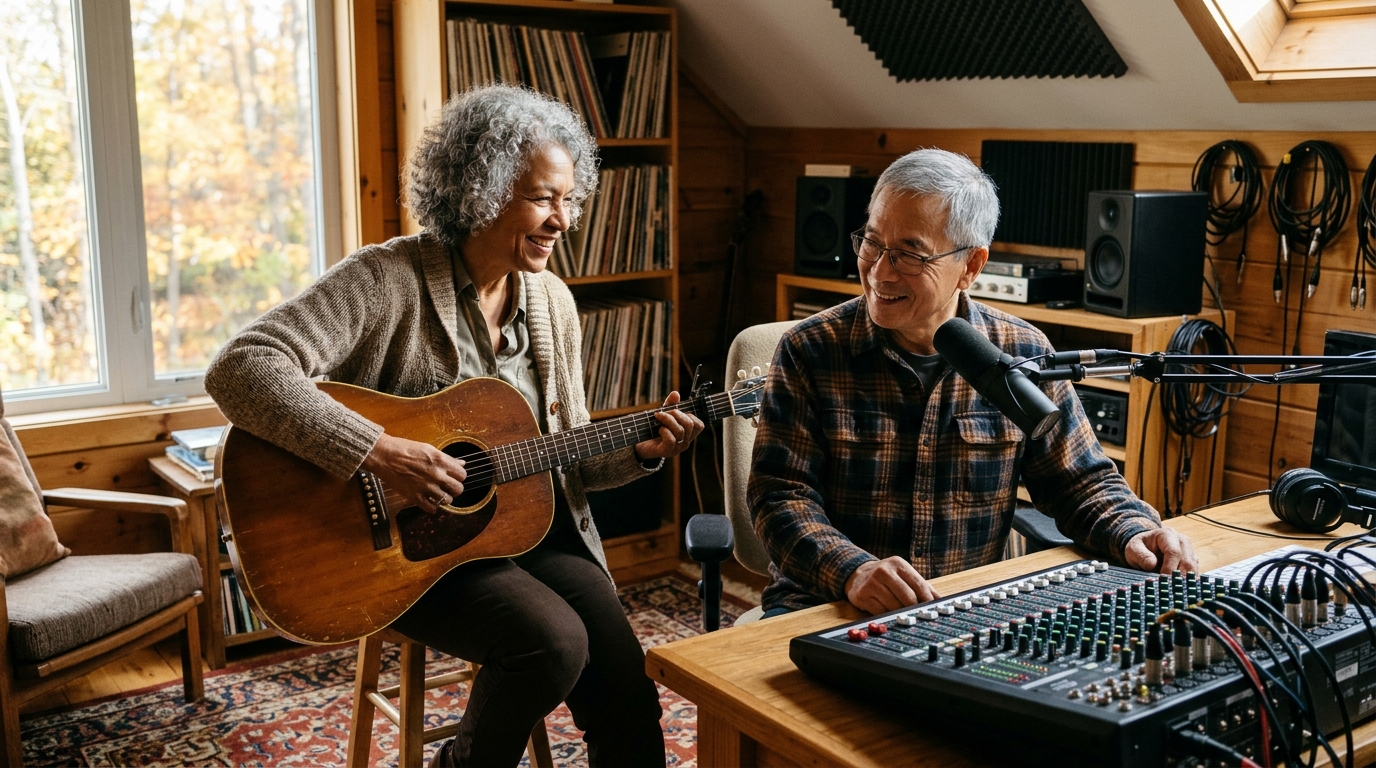
Why Home Music Studios Matter in Later Life
A dedicated music studio isn't just creative—it's therapeutic. Music engagement in aging reduces cognitive decline, depression, and anxiety while increasing life satisfaction and social connection.
Research from the Journal of Gerontology shows that musicians 65+ who maintain active music-making have 40% slower cognitive decline and 30% lower depression rates compared to non-musicians.
A home studio provides:
- Creative expression: Compose, record, perform without external pressure or judgment
- Cognitive engagement: Learning new techniques, music theory, recording technology keeps mind sharp
- Social connection: Host jam sessions, teach young musicians, host concerts for friends
- Purpose and meaning: Projects (recording an album, teaching, composing) create daily motivation
- Legacy creation: Recorded music, compositions, teaching videos become lasting legacy
- Income potential: Recording services for friends, teaching private lessons, selling recordings on streaming platforms
Unlike many aging-in-place renovations, home music studios appeal to musicians and music lovers—creating both personal fulfillment and potential resale value if the home is eventually sold.
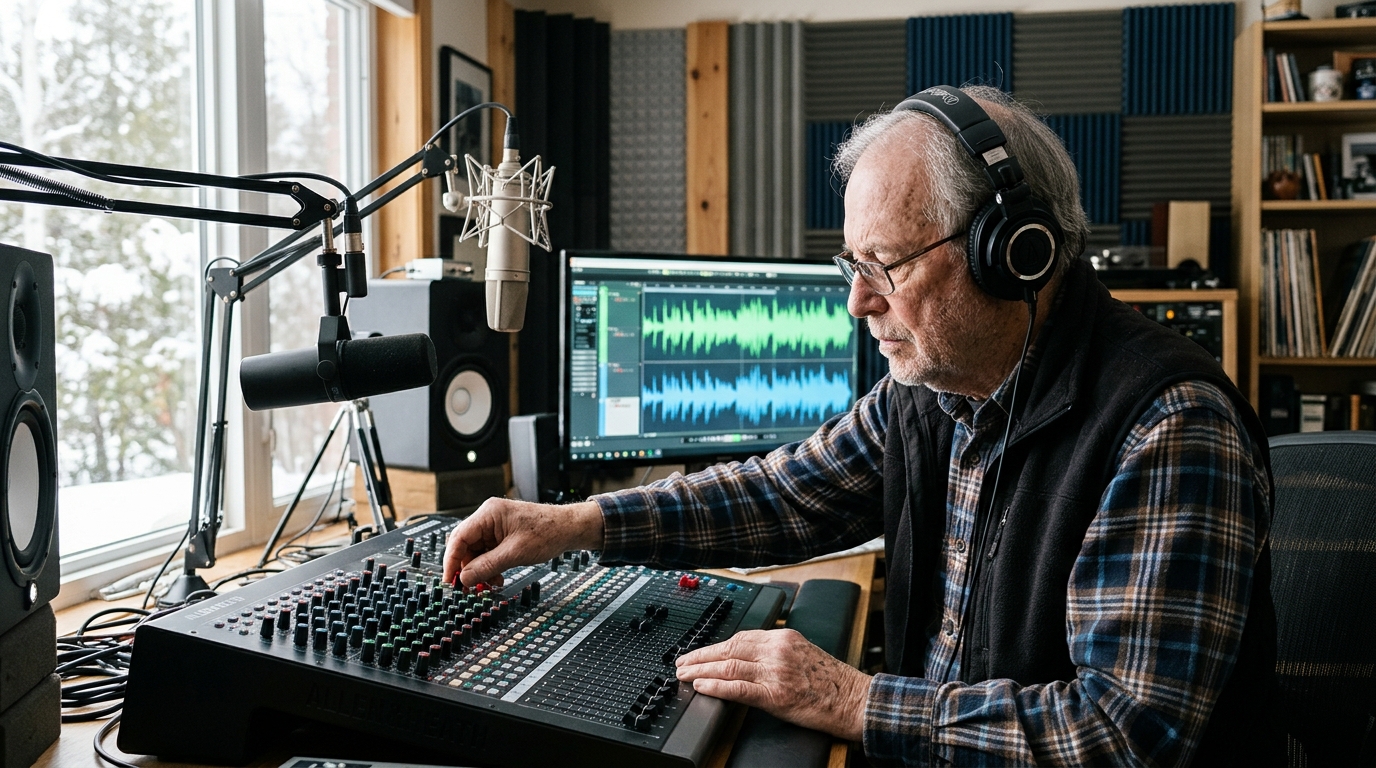
Components of a Professional Home Music Studio
A quality home music studio combines acoustic design, recording equipment, performance space, and storage.
| Component | Investment Range | Purpose |
|---|---|---|
| Acoustic treatment (soundproofing, foam, bass traps) | $4,000–$12,000 | Prevents sound leakage to neighbors; creates professional recording environment |
| Main recording computer (music-grade workstation) | $2,500–$6,000 | Dedicated system for recording software, plugins, sample libraries |
| Microphone & preamp (professional-grade) | $2,000–$5,000 | High-quality vocal/instrument recording |
| Monitor speakers & audio interface | $2,000–$5,000 | Accurate sound monitoring; converts analog to digital |
| Mixing console/control surface | $1,000–$3,000 | Professional-grade mixing; tactile control |
| Instruments (if upgrading piano, guitar, synth) | $3,000–$15,000 | High-quality instruments for recording |
| MIDI controllers & keyboards | $1,000–$4,000 | Composition and beat-making tools |
| Lighting & environment | $1,500–$3,000 | Comfortable performance space; professional ambiance |
| Furniture & acoustically-designed layout | $2,000–$5,000 | Chairs, stands, racks, organized workflow |
| Backup systems & redundancy | $1,000–$3,000 | External drives, UPS power backup, insurance |
Total professional home music studio: $20,000–$61,000
Most aging musicians pursue mid-range studios ($35,000–$50,000) that balance professional quality with practical home integration. This allows serious recording, teaching, and performance without excessive cost.
Real Ontario Example: From Deferred Dream to Recorded Album
David, 69, was a retired jazz pianist who'd played professionally for 40 years but never recorded an album. He wanted to record a final album of his original compositions—a legacy project for his family and grandchildren.
His apartment was inadequate for recording. He owned a $750,000 home (with spouse, mortgage-free) in Toronto with a spacious second floor that could become a studio.
His reverse mortgage strategy: Access $45,000 for home music studio
Breakdown:
- Acoustic treatment & soundproofing: $9,000
- Recording computer & music production software: $4,000
- Professional microphone & preamp: $3,500
- Monitor speakers & audio interface: $3,000
- MIDI keyboards & controllers: $2,000
- High-end Steinway upright piano (upgrade from aging spinet): $8,000
- Furniture, stands, lighting, design: $4,000
- Mixing console & studio desk setup: $2,500
- Backup systems & redundancy: $1,000
Timeline:
- Months 1–2: Design acoustic layout; order equipment
- Months 3–4: Construction phase (soundproofing, layout, installation)
- Months 5–6: Equipment arrives and integrates; David learns new recording software
- Months 7–12: Records his album (12–15 original jazz compositions)
- Year 2: Album mastered and released on streaming platforms; teaches jazz lessons from the studio
Results:
- Year 1: Recorded debut album, 15 original compositions
- Year 2: Released on Spotify, Apple Music, YouTube (~2,000 listens/month)
- Ongoing: Teaches 3–4 piano students weekly from the studio; earns $500–$700/week
- Legacy: Grandchildren grow up listening to their grandfather's recorded music; his compositions outlive him
The $45,000 investment paid for itself in teaching income within 12–15 months of studio completion, while creating a lasting legacy and providing daily creative fulfillment.
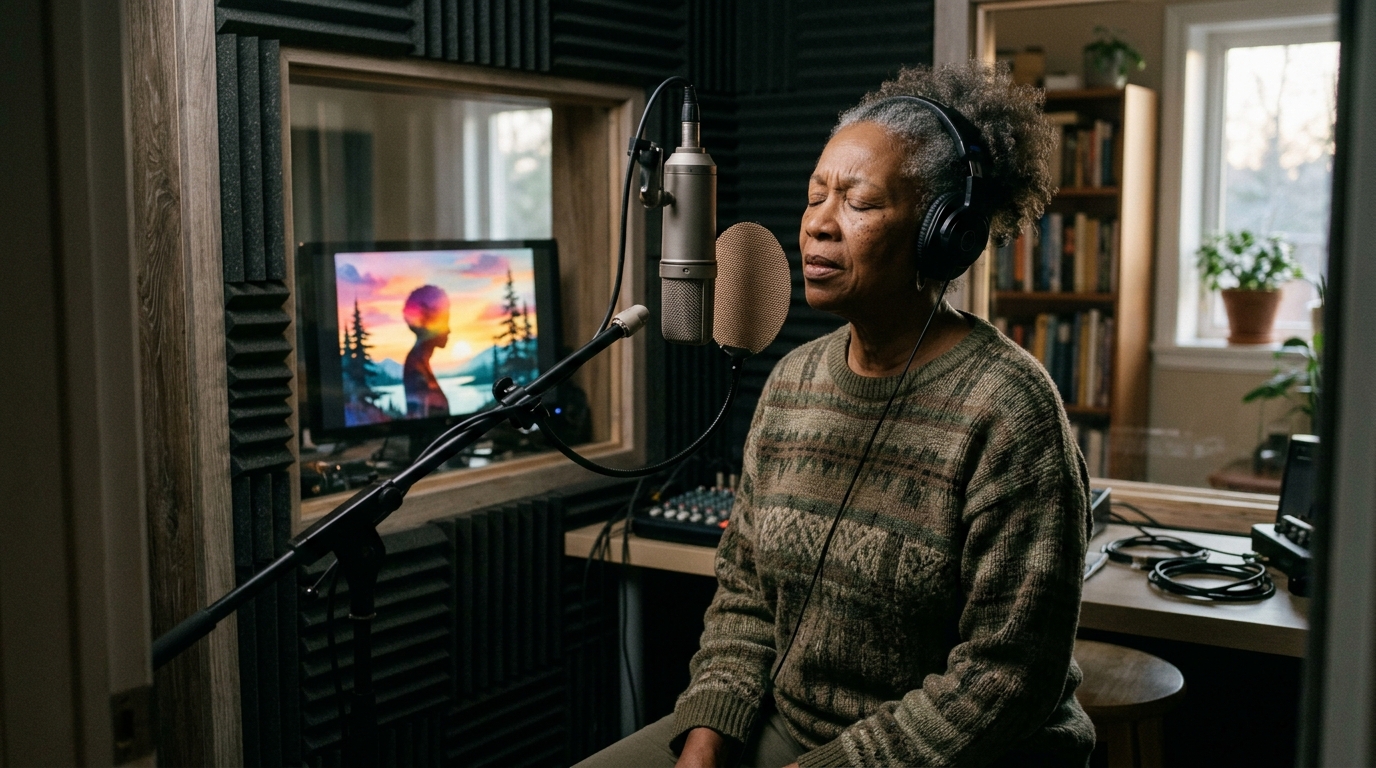
From Hobby to Income: Teaching and Recording Opportunities
Home music studios can generate income through teaching and recording services.
| Income Stream | Typical Rate | Realistic Annual Potential |
|---|---|---|
| Private music lessons | $50–$100/hour | $6,000–$12,000 (3–4 students/week) |
| Recording services (bedroom producer) | $200–$500/project | $5,000–$15,000 (10–30 projects/year) |
| Online music lessons (Zoom) | $40–$75/hour | $8,000–$18,000 (nationwide reach) |
| Composition work (local media, students) | $300–$1,000/project | $5,000–$15,000 (5–15 projects/year) |
| Streaming revenue (Spotify, Apple, YouTube) | $0.003–$0.005 per stream | $1,000–$5,000 (10,000–100,000 streams/year) |
| Conducting/arranging workshops | $100–$300 per workshop | $2,000–$6,000 (bi-monthly workshops) |
Combined realistic income: $10,000–$40,000+ annually for an active musician teaching, composing, and recording from home. This can offset reverse mortgage interest costs significantly.
Why Home Music Studios Appreciate Property Value
Unlike many aging-in-place renovations, quality music studios increase home appeal.
For buyers interested in music, a $50,000 home studio renovation typically recovers 60–75% of its cost ($30,000–$37,500), because:
- Professional soundproofing, acoustics, and architecture have residual value
- Recording equipment (monitors, preamp, console) can be sold or transferred
- Dedicated studio space is rare in Ontario homes—appeals to music teachers, producers, serious hobbyists
- Renovated second floor or studio room becomes premium living space
ROI on music studio renovation: 60–75% (better than many home renovations)
If your aging parent's home is eventually sold, the music studio investment is at least partially recovered.
Structuring the Reverse Mortgage for Home Music Studio
According to Bloom Financial and HomeEquity Bank, home renovations and creative spaces qualify for reverse mortgage funding, and are treated identically to accessibility or kitchen renovations from a lending perspective.
Timeline:
- Month 1: Establish reverse mortgage; $45,000 line of credit approved
- Months 1–2: Design studio layout with acoustician; order equipment
- Months 2–4: Construction/soundproofing phase: Draw $18,000
- Months 4–6: Equipment installation & setup: Draw $22,000
- Months 6–8: Fine-tuning, software setup, learning curve
- Month 8+: Studio fully operational; your parent begins recording, teaching, creating legacy
Advantage of line-of-credit RM: Your aging parent only draws funds as costs arrive, preserving emergency reserves for actual crises (health, home repair). If the project cost overruns, additional funds are available; if finished under budget, less is drawn.
Key Takeaways
- Professional home music studios cost $20,000–$61,000 but enable serious musical creation, teaching, and legacy projects
- A reverse mortgage gift of $40,000–$50,000 fully funds a mid-range studio, eliminating the financial barrier to artistic fulfillment
- Musicians 65+ who maintain active music-making show 40% slower cognitive decline and 30% lower depression—studio investment is health investment
- Income from teaching, recording, and streaming can generate $10,000–$40,000+ annually, offsetting reverse mortgage interest costs
- Home music studios recover 60–75% of their cost if the home is sold—better than many renovations
- Your aging parent's recordings become lasting legacy—music that grandchildren can enjoy forever, outliving the composer
Frequently Asked Questions
What if my aging parent isn't a serious or trained musician—is a home studio still worthwhile?
Yes, if they're passionate about music. Hobbyist musicians, songwriters, and ukulele/guitar players benefit from home studios just as much as conservatory-trained professionals. The studio creates space for exploration, learning, and creative expression—not just technical perfection. Many retirees discover latent musical talent when given a proper space to explore. If your parent sings, plays casually, or has always wanted to learn—a studio environment supports that journey.
Should I hire a professional acoustician to design the studio?
Yes, it's worth $2,000–$4,000. A professional acoustician designs the soundproofing, placement, bass traps, and acoustic treatment to achieve professional results without excessive cost. DIY acoustics often fail—bad room sound defeats expensive equipment. An acoustician's design creates a space that sounds professional without $50,000+ in construction. This is one place to invest in expertise upfront.
What if my aging parent passes away—what happens to the music studio equipment?
Equipment can be sold or inherited by family. Quality recording equipment holds resale value (50–70% of purchase price). Instruments (pianos, guitars, synthesizers) retain value and can be inherited by musical grandchildren or sold. The studio space itself reverts to your home's footprint—the acoustic treatment and structure remain, providing some residual value. Unlike many aging-in-place renovations, music studios have tangible, transferable assets.
Can my aging parent learn to use professional recording software at 70+?
Absolutely—millions do. Recording software like Logic Pro, Ableton, or Studio One have intuitive interfaces and extensive tutorials. Many retirees learn production in 2–4 months with dedicated practice. If your parent is computer-comfortable and motivated, learning curve is 3–6 months to basic proficiency. Many studios include "buddy support" from younger musicians or grandchildren who help with technical setup.
What if my aging parent wants to record and release music—are there legal/copyright issues?
No significant barriers for independent releases. Your parent can record original compositions and release on Spotify, Apple Music, YouTube through distribution services like DistroKid ($49–$150/year). No record label needed. If recording covers of existing songs, pay mechanical royalties ($0.091 per composition per reproduction). Legal setup is straightforward; streaming rates are modest but create lasting legacy income.
Should the music studio be documented in my aging parent's estate plan?
Yes, briefly. If your parent has equipment they want specific family members to inherit (piano to musical grandchild, recording equipment to inheriting child), mention this in the will. Document serial numbers, appraisals, and provenance of high-value instruments. The reverse mortgage is settled from estate proceeds; the studio equipment is a separate asset that can be bequeathed or sold.
Ready to fund your aging parent's musical dreams? A reverse mortgage enables them to create a world-class home music studio—pursuing artistic expression, building legacy, and potentially generating teaching income in retirement. Contact Rick Sekhon Reverse Mortgages to explore how much equity you can access for their creative sanctuary.
Ready to Learn More?
Find out exactly how much you could unlock from your home — free and no obligation.
Related Articles
Reverse Mortgage for Adult Child's Career Coaching Business Launch: Supporting Your Coach-Entrepreneur
Fund your adult child's career coaching or life coaching business startup with a reverse mortgage—certification, platform, and client acquisition in Ontario.
Read →Reverse Mortgage for Aging Parent's Philanthropic Legacy: Strategic Charitable Giving Before Death
Fund your aging parent's philanthropic goals with a reverse mortgage—strategic charitable giving, endowments, and legacy funding in Ontario.
Read →Reverse Mortgage for Aging Parent's Hobby Farm Expansion: Growing Your Agricultural Operation
Expand your hobby farm or small agricultural operation with a reverse mortgage—livestock infrastructure, land improvements, and equipment funding in Ontario.
Read →