
Reverse Mortgage for Older Renters: Becoming a First-Time Homeowner at 65+
Discover how renters 65+ can use a reverse mortgage to become first-time homeowners in Ontario without traditional mortgage approval. Complete guide for older renters transitioning to ownership.
What if you've rented your entire life, but now that you're retired, you want to own your own home in Ontario? Many older renters believe they're locked out of homeownership at 65+, especially after decades of rental payments. The truth is that a reverse mortgage combined with a home purchase can open a pathway to ownership that traditional lending has long blocked for renters in this age group.
This guide walks you through how renters aged 65 and older in Ontario can leverage a reverse mortgage to purchase their first home, transition from renting to owning, and build equity in their final decades of life.
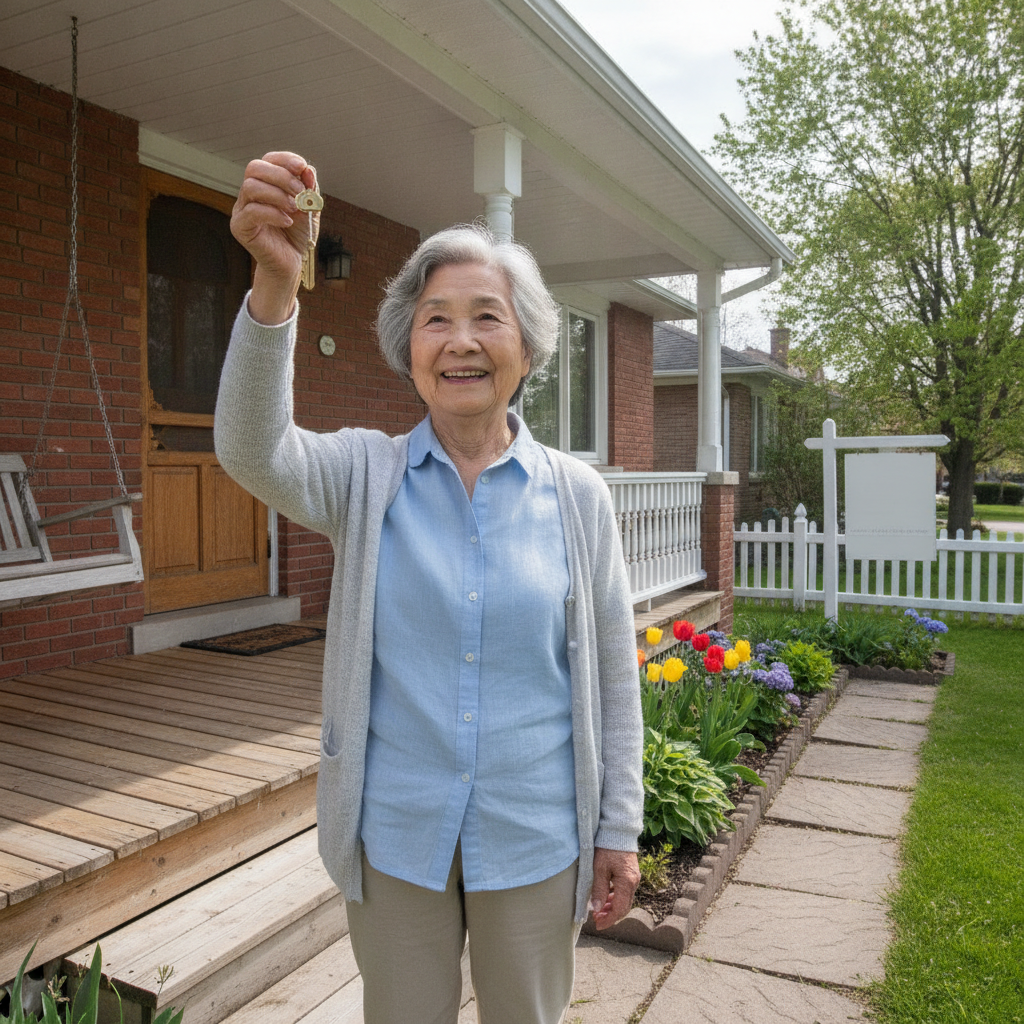
Why Renters Are Often Excluded From Traditional Homeownership
Traditional mortgages require a credit history and stable income documentation. Renters who have paid landlords for 40 years often have limited credit profiles — no mortgage history, no property tax records, no demonstrated borrowing through a lender. Combine that with being on fixed-income retirement sources like CPP and OAS, and most big banks won't touch the application.
The barrier isn't age; it's the absence of traditional homeownership markers. You have a lifetime of stable rental payments (which proves you can meet housing obligations), but banks don't weight that equally.
According to the Financial Consumer Agency of Canada (FCAC), older Canadians are increasingly excluded from prime lending markets, forcing them to explore alternative financing paths that prioritize ownership equity rather than creditworthiness.
How a Reverse Mortgage Changes the Homeownership Equation for Renters
A reverse mortgage is designed explicitly for homeowners 55 and older who have substantial equity in their property. Unlike a traditional mortgage (which requires credit approval), a reverse mortgage is based on home equity, not creditworthiness.
Here's the process for a renter transitioning to ownership:
- Purchase the home outright or with significant down payment — Use savings, investments, CPP advances, or a gift from family to purchase a property with at least 40–50% equity upfront
- Secure a reverse mortgage — The lender assesses the home's value and your age; they don't run a traditional credit check
- Access additional funds — Depending on your age and home value, you can borrow against the home's equity as a lump sum or line of credit
The reverse mortgage essentially becomes your flexible income tool after purchase, tapping your home's value without monthly payment obligations.

Step-by-Step: Renter-to-Owner Transition Strategy
Step 1: Assess Your Financial Position
Before purchasing, calculate your total liquid assets:
| Asset Type | Example |
|---|---|
| Registered savings (TFSA, RRSP) | $80,000 |
| Non-registered investments | $60,000 |
| CPP/OAS lump-sum options | $50,000 |
| Family gift (if available) | $100,000 |
| Total liquid assets | $290,000 |
A home purchase of $400,000–$500,000 with $150,000–$200,000 down leaves you with manageable equity to support a reverse mortgage (lenders typically require homes with $200,000+ in unencumbered equity).
Step 2: Identify an Affordable, Accessible Home
As a first-time older homeowner, prioritize:
- Single-floor or minimal stairs — Reduces future accessibility modification costs
- Modern electrical and plumbing — Minimizes unexpected repair expenses
- No HOA with high special assessments — Condo fees are predictable; surprise levies are not
- In established neighborhoods — Property taxes and costs are stable and well-documented
Properties in Kitchener, Hamilton, London, and Durham region often offer better value for first-time older buyers than downtown Toronto.
Step 3: Secure the Reverse Mortgage Pre-Purchase
Work with a reverse mortgage specialist early. Contact Rick Sekhon Reverse Mortgages to get pre-qualified before you start shopping. This gives you:
- Clear picture of borrowing power post-purchase
- Confidence in offer negotiations
- Faster closing timeline
Major lenders offering reverse mortgages to Ontario homeowners include CHIP, Equitable Bank, Bloom Financial, and Home Trust.
Step 4: Close on the Property
Purchase the home in your name (or joint names if married). At closing, you have full ownership with low or no debt.
Step 5: Complete the Reverse Mortgage Application
Within 30–60 days post-purchase, finalize the reverse mortgage application. The lender will:
- Order a home appraisal ($300–$500)
- Verify your age (55+)
- Confirm home ownership
- Provide an Independent Legal Advice (ILA) session
No credit check. No income verification. No monthly payment requirement.
Financial Example: Renter to Owner at 68
| Scenario Component | Amount |
|---|---|
| Home purchase price | $450,000 |
| Your down payment (saved as renter) | $200,000 |
| Traditional mortgage (not available to you) | —— |
| Home equity after purchase | $450,000 |
| Reverse mortgage borrowing limit (age 68, 55% LTV) | $247,500 |
| Available credit line for home upgrades, taxes, emergencies | $247,500 |
| Monthly payment obligation | $0 |
You now own a $450,000 home with zero debt and access to $247,500 in flexible credit tied to your equity.
Key Advantages for First-Time Older Homeowners
✓ No Monthly Payments
Unlike a traditional mortgage, a reverse mortgage has zero monthly payment requirement. As long as you live in the home, pay property taxes, maintain home insurance, and keep the home in reasonable repair, the lender has no claim to monthly cash.
✓ Tax Savings
Home ownership in Ontario brings:
- Principal residence exemption — Your home is exempt from capital gains tax when you sell
- Property tax deferrals — Ontario's Homeowners' Property Tax Deferral Plan allows homeowners 65+ to defer property taxes if their household income is below thresholds
- Accessibility tax credit — Seniors modifying homes for accessibility may qualify for provincial credits
✓ Predictable Housing Costs
Renters face annual rent increases (historically 2–3% in Ontario). Homeowners face:
- Fixed property tax (subject to assessment review, typically stable)
- Fixed home insurance (competitive annually)
- Predictable maintenance (your planning, your budget)
Over 20 years, ownership costs often stabilize lower than rising rent.
✓ Legacy for Family
Any home equity remaining when you pass is inherited by your beneficiaries. With a reverse mortgage, your heirs inherit the home minus the reverse mortgage balance — typically allowing them to keep the property or sell it debt-free.
According to the Government of Canada's reverse mortgage guidance, the no-negative-equity guarantee ensures your heirs never inherit debt exceeding the home's value, even if the reverse mortgage balance grows larger than the home's value at time of death.
Risks and Considerations
Interest Costs Compound Over Time
Reverse mortgages typically carry interest rates 1–2% higher than traditional mortgages. For a $250,000 line of credit at 6.5%, compound interest grows substantially if you draw slowly:
- Year 1 (drawing $10,000): $1,625 interest
- Year 10 (assuming total draws of $100,000): interest may exceed $50,000
- Year 20: interest may exceed $150,000+
This is acceptable if you stay in the home long-term or plan to downsize and sell before interest consumes excessive equity. It's less attractive if you expect to move in 5–7 years.
High Upfront Costs
Reverse mortgage closing costs are substantial:
| Cost Category | Range |
|---|---|
| Application fee | $0–$500 |
| Home appraisal | $300–$500 |
| Legal and notary | $800–$1,500 |
| Mortgage insurance premium (part of loan) | 1.25–2% of max borrowing |
| Lender administration fees | $100–$300 |
| Total upfront + initial fees | $2,500–$5,000+ |
Some lenders add fees to the loan balance; others require upfront payment. Confirm this before signing.
Your Home Must Maintain Value
If your Ontario home depreciates significantly (rare, but possible in distressed neighborhoods or after major damage), the reverse mortgage lender's collateral shrinks. This affects your available credit or, in extreme cases, lender remedies. Conversely, if your home appreciates, your equity grows and borrowing power increases.
Tax and Benefit Implications
CPP, OAS, and GIS are not affected. Reverse mortgage proceeds are loan advances, not income. You won't face clawback or benefit reductions because you used reverse mortgage funds.
However, if you're considering means-tested benefits like Guaranteed Income Supplement (GIS), some provinces track total household assets. A reverse mortgage doesn't change your asset position (you own the home before and after), so GIS eligibility is unaffected.
When to Act: Timing Considerations for First-Time Older Buyers
The best time to buy as a renter is when:
- You have 40%+ of the purchase price in liquid savings
- You're healthy and able to qualify for the reverse mortgage easily
- You find a property that meets your long-term accessibility needs
- Interest rates are below 7% (historically favorable)
Avoid rushing if:
- You're still working and unsure of retirement timing
- The housing market in your target region is in flux
- Your health is uncertain (cognitive or mobility issues may affect qualification)
Frequently Asked Questions
Can I get a reverse mortgage on my first home purchase in Ontario?
Yes, if you're 55 or older and can provide significant down payment (typically 40%+). A reverse mortgage lender will work with your purchase agreement to assess the property's value and your borrowing capacity after closing. Most major lenders including CHIP, Equitable Bank, and Bloom Financial support purchase scenarios for older first-time buyers.
Do I need a traditional mortgage to become a homeowner at 65?
No. If you have sufficient liquid savings for a substantial down payment (40%–60% of purchase price), you can buy outright or use a reverse mortgage alongside a smaller down payment. A traditional mortgage requires credit approval, income verification, and monthly payments — none of which apply to reverse mortgages.
Will property taxes on my first home be affordable on a fixed income?
Yes. Ontario property taxes are determined by home value and assessed at roughly 0.6–0.7% annually of market value. For a $400,000 home, expect $2,400–$2,800 per year — roughly $200–$230 monthly. Homeowners 65+ with household income below provincial thresholds can defer taxes under Ontario's Homeowners' Property Tax Deferral Program, which is worth exploring.
What happens to my reverse mortgage and home if I move into long-term care?
You have up to 12 months to repay the reverse mortgage balance after permanently leaving the home (this is the industry standard, though some lenders offer flexibility). Your family can sell the home, pay off the reverse mortgage from proceeds, and keep any remaining equity. If the home's value has appreciated, your heirs inherit more. The no-negative-equity guarantee ensures they never owe more than the home is worth.
How does a reverse mortgage affect my estate and what my children inherit?
Your children (or beneficiaries) inherit the home minus the reverse mortgage balance owed at that time. If the home appreciates, equity grows and inheritance is larger. If interest compounds substantially, equity is reduced. In most cases, the home sells and proceeds are distributed to beneficiaries after the reverse mortgage is repaid. There is no negative equity — your estate never owes more than the home's value.
Are there provinces or regions in Ontario where reverse mortgages are easier to qualify for?
All of Ontario is eligible territory. However, rural and small-city properties may appraise lower, affecting borrowing power. Urban and semi-urban properties in established neighborhoods typically have stronger appraisal outcomes. Consult with Rick Sekhon, a reverse mortgage specialist, to assess your target property before making an offer.
The Bottom Line: Renting to Owning at 65+ Is Achievable
The stereotype that older renters must continue renting or move in with family is outdated. With a reverse mortgage, you can transition to homeownership in your late 60s or beyond, stay in your own home for life, maintain financial independence, and leave an inheritance for your family.
The keys are:
- Save aggressively in your late 50s and early 60s to accumulate the down payment
- Consult a reverse mortgage specialist early to understand your borrowing capacity
- Choose an accessible property that won't require costly modifications later
- Understand interest costs and upfront fees so you enter ownership eyes-wide-open
- Plan for your long-term timeline — reverse mortgages work best for homeowners staying 10+ years
Homeownership at 65+ isn't a luxury reserved for the wealthy. It's an achievable goal for renters willing to plan strategically and understand the reverse mortgage pathway.
Ready to Learn More?
Find out exactly how much you could unlock from your home — free and no obligation.
Related Articles
Reverse Mortgage for Purchasing Accessible Housing: Finding the Right Home in Ontario
Use a reverse mortgage to buy an accessible home designed for aging in place. Complete guide to purchasing accessible housing in Ontario after 55.
Read →Reverse Mortgage for First-Time Homebuyers at 55+: From Renters to Owners
Discover how aging renters can transition to homeownership at 55+ using reverse mortgages. Build equity in your own home while maintaining financial security in retirement.
Read →Reverse Mortgage Eligibility in Ontario: Complete 2026 Guide
Everything Ontario homeowners need to know about qualifying for a reverse mortgage in 2026. Covers age requirements, home equity, property types, and the application process.
Read →