
Reverse Mortgage for First-Time Homebuyers at 55+: From Renters to Owners
Discover how aging renters can transition to homeownership at 55+ using reverse mortgages. Build equity in your own home while maintaining financial security in retirement.
Aging Renters: Why Buying at 55+ Makes Sense
For decades, you've paid rent to a landlord. Now, as you approach or enter retirement, you're watching your rent increase year after year while building zero equity. Many Ontario seniors age 55+ who are still renting wonder: is it too late to buy? The answer is a resounding no—and a reverse mortgage might be the key to making homeownership achievable.
This guide explores how aging renters can transition to homeownership using a reverse mortgage, transform rent payments into equity building, and secure stable housing for retirement.
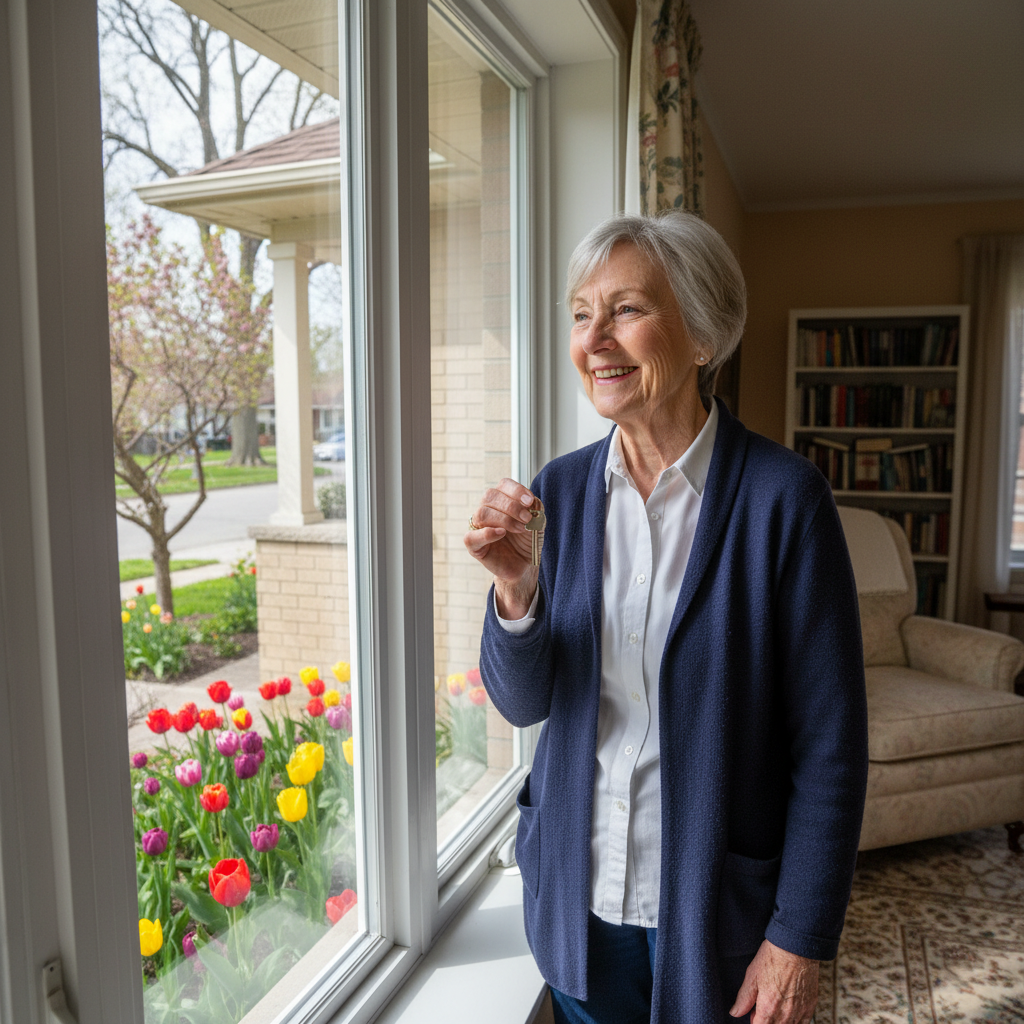
The Renter's Retirement Dilemma
Many Ontario renters face a difficult reality:
- Rent inflation: Ontario rents have increased 35-50% over the past decade, straining fixed retirement incomes
- No equity building: Decades of rent payments disappear without creating home equity
- Housing insecurity: Landlords can sell properties, end tenancies, or raise rents beyond seniors' means
- Limited retirement options: Renting on a fixed income forces difficult lifestyle compromises
For renters approaching 55, the timing is critical. You have 10-20 years of potential homeownership ahead before aging-in-place decisions become more complex. Buying now allows you to build equity, eliminate future rent increases, and create a stable foundation for aging in place.
Why a Reverse Mortgage Works for Aging First-Time Buyers
If you're 55+ with savings or access to down payment funds, a traditional mortgage might seem impossible—after all, lenders prefer borrowers with 20+ year income horizons. A reverse mortgage changes this equation because:
1. Age Is an Asset, Not a Barrier
- Reverse mortgages are exclusively for homeowners 55+
- Your age actually increases the amount you can borrow relative to home value
- No employment income documentation required
2. Flexible Down Payment Strategies
- Use savings accumulated during your renting years as a down payment
- Borrow additional funds needed through the reverse mortgage
- Combine these to reach purchase price without a traditional mortgage
3. No Debt Service Stress
- Unlike traditional mortgages, you don't need to prove debt-servicing ability
- Payments only come due when you sell, move, or pass away
- Your retirement income remains untouched for living expenses
4. Eliminate Future Rent Increases
- Lock in your "payment" by owning outright or managing a manageable reverse mortgage
- Protect yourself from unpredictable landlord actions
How the Transition Works: From Renting to Reverse Mortgage Ownership
Here's a practical pathway for an aging renter:
Step 1: Assess Your Down Payment Readiness
- Gather savings available for a down payment (20% is ideal but not required)
- Factor in legal fees, home inspection, property tax, and insurance estimates
- In Ontario, expect closing costs of 3-5% of purchase price
Step 2: Get Pre-Approved for a Reverse Mortgage
- Contact a reverse mortgage lender like CHIP, Equitable Bank, Bloom, or Home Trust
- Provide information on the property you're interested in and estimated value
- Receive a pre-approval indicating how much you can borrow
Step 3: Find Your Home
- Work with a realtor familiar with first-time buyers and reverse mortgages
- Target properties in your desired Ontario communities
- Remember: the higher the home value, the more you can borrow via reverse mortgage
Step 4: Make Your Offer
- Use your down payment savings + reverse mortgage pre-approval as purchase power
- The reverse mortgage covers the gap between your down payment and purchase price
- Include standard conditions: home inspection, appraisal, title insurance
Step 5: Close and Transition
- Complete the reverse mortgage process after closing
- Transition from rent to homeownership with no mortgage payment stress
- Begin building equity in your own property
Real Scenario: The Long-Time Renter
Margaret's Story: After 40 years of renting apartments in Toronto, Margaret (age 58) was paying $1,800/month in rent. Her annual rent increases of 3-5% meant she'd pay $25,000+ per year by age 70 with no equity return.
Margaret had accumulated $150,000 in savings over her working years. A modest home in her Scarborough neighborhood cost $450,000. Here's how she used a reverse mortgage:
- Down payment: $150,000 (her savings, 33% down)
- Reverse mortgage: $300,000 (covers remaining purchase price)
- No monthly payments: The reverse mortgage balance grows but requires no payments during her lifetime
- Result: Instead of $1,800/month rent at 58, increasing to $2,500/month by 70, Margaret now owns a $450,000 asset
Her equity grows as the property appreciates, and her housing costs are limited to property tax ($300/month), insurance ($150/month), and maintenance—roughly $450/month stable costs instead of escalating rent.
Margaret's Purchase Breakdown
| Item | Amount |
|---|---|
| Home purchase price | $450,000 |
| Down payment (savings) | $150,000 |
| Reverse mortgage amount | $300,000 |
| Prior monthly rent (age 58) | $1,800 |
| Projected monthly rent (age 70) | $2,500 |
| New stable monthly housing costs (tax, insurance, maintenance) | ~$450 |
Renting vs. Reverse Mortgage Ownership Comparison
| Factor | Continuing to Rent | Buying with a Reverse Mortgage |
|---|---|---|
| Monthly housing cost | Rises 3–5% annually | Stable (property tax, insurance, maintenance) |
| Equity built | None | Grows as property appreciates |
| Monthly mortgage payment | N/A | $0 (no payments required) |
| Housing security | Subject to landlord decisions | Full ownership retained |
| Funds due | N/A | Repaid on sale, move-out, or death |
What Property Types Work Best?
Not all properties qualify for reverse mortgages. Here's what works:
✓ Single-family detached homes — Ideal, easiest to appraise ✓ Semi-detached and townhouses — Generally approved ✓ Condominiums — Approved if condo reserve fund < 30% of annual budget ✓ Vacant land — Generally not approved ✗ Multi-unit rental properties — Not eligible ✗ Co-ops — Limited to specific lenders
For aging renters buying their first home, stick to standard single-family or modest condo options that offer strong resale value in your Ontario market.
Financial Planning: Bridging Rent to Ownership
The psychological shift from renter to owner requires planning. Consider these factors:
Property Taxes and Insurance
- Research property tax rates in your target neighborhoods
- Budget $200-400/month for homeowners insurance
- These costs are generally predictable and stable
Maintenance Reserve
- Budget 1-2% of home value annually for maintenance
- In your first year, factor in potential repairs the home inspection revealed
- A $400,000 home might require $4,000-8,000/year in reserves
Homeowner Fees (if Condo)
- Research condo maintenance fees carefully
- Factor into your overall housing cost comparison vs. rent
Property Improvements
- Your reverse mortgage can fund needed upgrades
- Update outdated systems, improve accessibility, enhance safety
- This builds equity while ensuring your home is properly maintained
Addressing Common Concerns
"Won't I lose my home?" No. With a reverse mortgage, you retain full ownership. The lender holds a lien, not the deed. You control when the home is sold.
"What if home values drop?" The "no negative equity guarantee" in Canadian reverse mortgages protects you. If your home value declines, you never owe more than its sale price.
"Is 55 too old to buy a first home?" Not at all. You have 20-30+ years of homeownership ahead. Many first-time buyers at 55+ report greater satisfaction knowing they're building equity instead of enriching landlords.
"Can I leave my home to my children?" Yes. After you pass away, the reverse mortgage must be repaid from sale proceeds, but any remaining equity goes to your heirs.
Tax Implications for First-Time Buyers
Ontario offers certain tax advantages for homeownership:
- Principal residence exemption: When you sell, capital gains on your primary residence are tax-free
- Property tax considerations: Verify local property tax rates in your target Ontario community
- HST/GST: New home purchases include HST (13% in Ontario), but you may qualify for HST rebates for new construction
Consult with an accountant familiar with reverse mortgages to understand your specific situation.
Key Takeaways
- Ontario rents have risen 35–50% over the past decade, while renting builds zero home equity, making ownership increasingly attractive for renters aged 55+.
- Canadian reverse mortgages are available to all title holders aged 55 and older, allowing you to access 15–59% of a home's value with no monthly payments required.
- Combining savings-based down payments with reverse mortgage funds, as Margaret did ($150,000 down + $300,000 reverse mortgage on a $450,000 home), can eliminate the need for a traditional mortgage.
- Property taxes, insurance, and maintenance typically run $450–$800/month for a modestly priced Ontario home, often comparable to or less than rising rent.
- Canadian reverse mortgages include a no-negative-equity guarantee, meaning you'll never owe more than your home's sale price, even if property values decline.
- Any remaining home equity after the reverse mortgage is repaid passes to your heirs, so buying at 55+ doesn't preclude leaving an inheritance.
Frequently Asked Questions
Can I really buy my first home at 55 or older using a reverse mortgage?
Yes. Reverse mortgages are specifically designed for homeowners aged 55 and older, and many aging renters use them alongside their savings to purchase a first home, combining a down payment with reverse mortgage funds to cover the remaining purchase price.
How much of the purchase price can a reverse mortgage cover?
Canadian reverse mortgage lenders, including HomeEquity Bank (CHIP) and Equitable Bank, typically allow qualifying homeowners aged 55 and older to borrow between 15% and 59% of the home's appraised value, depending on age, location, and property type.
Will I have to make monthly mortgage payments after buying with a reverse mortgage?
No. Reverse mortgages don't require monthly payments. The loan balance, including accrued interest, becomes due only when you sell the home, move out permanently, or pass away, so your retirement income remains available for living expenses.
What happens if home values in my area decline after I purchase?
Canadian reverse mortgages include a no-negative-equity guarantee. This means you or your estate will never owe more than the home's fair market value at the time it's sold, regardless of how the market performs.
Do all types of homes qualify for a reverse mortgage purchase?
Most single-family detached homes, semi-detached homes, and townhouses qualify. Condominiums are generally approved if the condo reserve fund is below 30% of the annual budget, while vacant land and most co-ops are typically not eligible.
Can I still leave my home to my children if I buy it using a reverse mortgage?
Yes. When you pass away, the reverse mortgage balance is repaid from the sale of the home, but any remaining equity goes to your heirs, just as it would with a traditional mortgage.
Next Steps: From Renter to Owner
If you're an Ontario renter age 55+ considering homeownership:
- Assess your savings and credit: How much down payment can you contribute?
- Research Ontario neighborhoods: Where do you want to plant roots?
- Get pre-approved: Contact CHIP, Equitable Bank, Bloom, or Home Trust for a reverse mortgage assessment
- Consult a realtor: Work with someone experienced in first-time buyers and reverse mortgages
- Engage professionals: Independent legal advice is required for reverse mortgages in Ontario
The transition from renting to ownership at 55+ is achievable, financially sensible, and increasingly common among Ontario seniors who refuse to let age stand in the way of building equity and security.
Your decades of rent payments prove you can afford homeownership. Now, with a reverse mortgage, you can afford to own.
Ready to Learn More?
Find out exactly how much you could unlock from your home — free and no obligation.
Related Articles
Reverse Mortgage for First-Time Homebuyers at 70+: Finally Own Your Home in Retirement
Late-life first-time homeownership with a reverse mortgage. Buy a home without mortgage payments while preserving your fixed income.
Read →Reverse Mortgage to Avoid Property Tax Foreclosure in Ontario: Stop the Clock Before You Lose Your Home
Avoid Ontario property tax foreclosure with a reverse mortgage. Learn how to access home equity to pay delinquent taxes and keep your home.
Read →Reverse Mortgage for Net-Zero and Sustainable Retirement Goals: Green Home Upgrades
Fund your sustainable retirement vision with a reverse mortgage. Upgrade to net-zero, install renewable energy, and achieve environmental goals while reducing energy costs.
Read →