
Reverse Mortgage for Home Modifications When You Have Dual Sensory Loss: Vision and Hearing Decline
Fund home accessibility when experiencing both vision and hearing loss. Reverse mortgage for dual sensory loss modifications, technology, and safety systems in Ontario.
What if you're experiencing both vision loss and hearing decline simultaneously—a challenging combination that makes home navigation, safety, and independence increasingly difficult? Dual sensory loss (DSL) affects approximately 280,000 Canadians over 65, often progressing from single-sense decline (hearing loss in your 60s, vision decline in your 70s) to combined challenges requiring comprehensive home modification. Unlike single-sense adaptation strategies, dual sensory loss demands specialized environmental design: lighting systems that compensate for vision loss, tactile or visual cues that replace auditory information, and safety features that don't rely on hearing alerts alone. A reverse mortgage enables these specialized modifications, allowing you to maintain independence, safety, and quality of life as you age with DSL.
This guide explains how Ontario homeowners 55+ experiencing dual sensory loss can use a reverse mortgage to fund comprehensive home accessibility modifications.
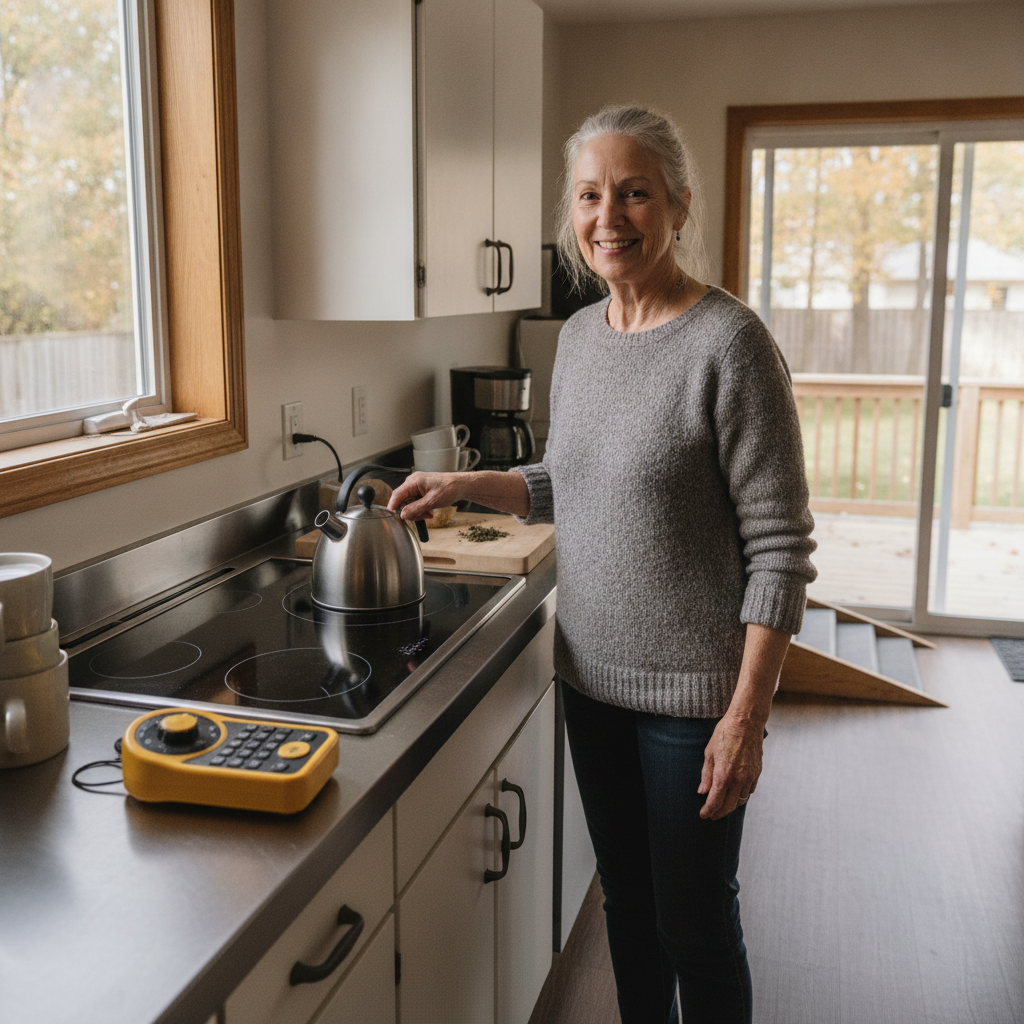
Understanding Dual Sensory Loss in Aging
Dual sensory loss is distinctly different from single-sense decline and requires specialized adaptation.
Dual Sensory Loss: Definition and Prevalence
Dual sensory loss (DSL) is the combination of significant hearing loss AND significant vision loss occurring simultaneously, dramatically affecting:
- Communication — Can't hear speech clearly AND can't see speaker's face/lips for visual cues
- Navigation — Can't hear environmental sounds (traffic, warnings) AND can't see obstacles clearly
- Safety — Can't hear alarm sounds AND can't see danger visually
- Social engagement — Can't participate in conversations or activities that require both senses
Research indicates:
| Age Group | Dual Sensory Loss Prevalence |
|---|---|
| 65–74 | 4–6% |
| 75–84 | 10–15% |
| 85+ | 20–25% |
For Ontario's aging population, approximately 60,000–80,000 seniors are experiencing meaningful dual sensory loss right now.
According to the Canadian Hard of Hearing Association and Vision Loss Canada, dual sensory loss creates psychological and social isolation effects comparable to or exceeding single-sense loss alone, because adaptation strategies for one sense can interfere with the other sense's functioning.
How Dual Sensory Loss Differs from Single-Sense Loss
| Adaptation Challenge | Vision Loss Only | Hearing Loss Only | Dual Sensory Loss |
|---|---|---|---|
| Communication | Read lips, use written notes | Use hearing aids | Cannot use either strategy; requires technology and one-to-one communication |
| Navigation | Memorize routes, use mobility aids | Listen for sounds | Cannot memorize safely, cannot hear alerts; requires lighting + tactile cues |
| Safety alerts | See visual warning lights | Hear alarm sounds | Cannot see lights clearly, cannot hear alarms; requires multiple alert types |
| Social participation | See faces and activities | Hear conversation | Excluded from group settings; needs one-to-one adapted communication |
Single-sense loss has established accommodations (hearing aids for hearing loss, magnification for vision loss). Dual sensory loss requires integrated environmental design.
Home Modifications for Dual Sensory Loss: A Comprehensive Approach
Effective home modifications for DSL address all safety and function areas simultaneously.
Priority 1: Comprehensive Lighting System Upgrade
Challenge: Vision loss + hearing loss means you can't navigate by hearing and can't see obstacles clearly.
Solution: Professional lighting design including:
- Bright, non-glare interior lighting (300–500 lux in living spaces vs. typical 150 lux)
- Task lighting for reading and detailed work (localized high-intensity lights)
- Pathway lighting (hallways, stairs, entrances) ensuring no dark areas
- Exterior lighting (entryway, driveway, deck) for safe outdoor navigation
- Light switches with tactile markings (large buttons, textured surfaces for easy location in dim light)
- Night-light system creating ambient illumination for nighttime navigation without full overhead lights
Cost: $5,000–$10,000 (professional design + installation)
Priority 2: Tactile Navigation and Safety Cues
Challenge: You can't hear warning sounds and can't see small visual cues easily.
Solution: Tactile alternatives:
- Bumps or textured strips on stair treads (tactile edge detection without seeing)
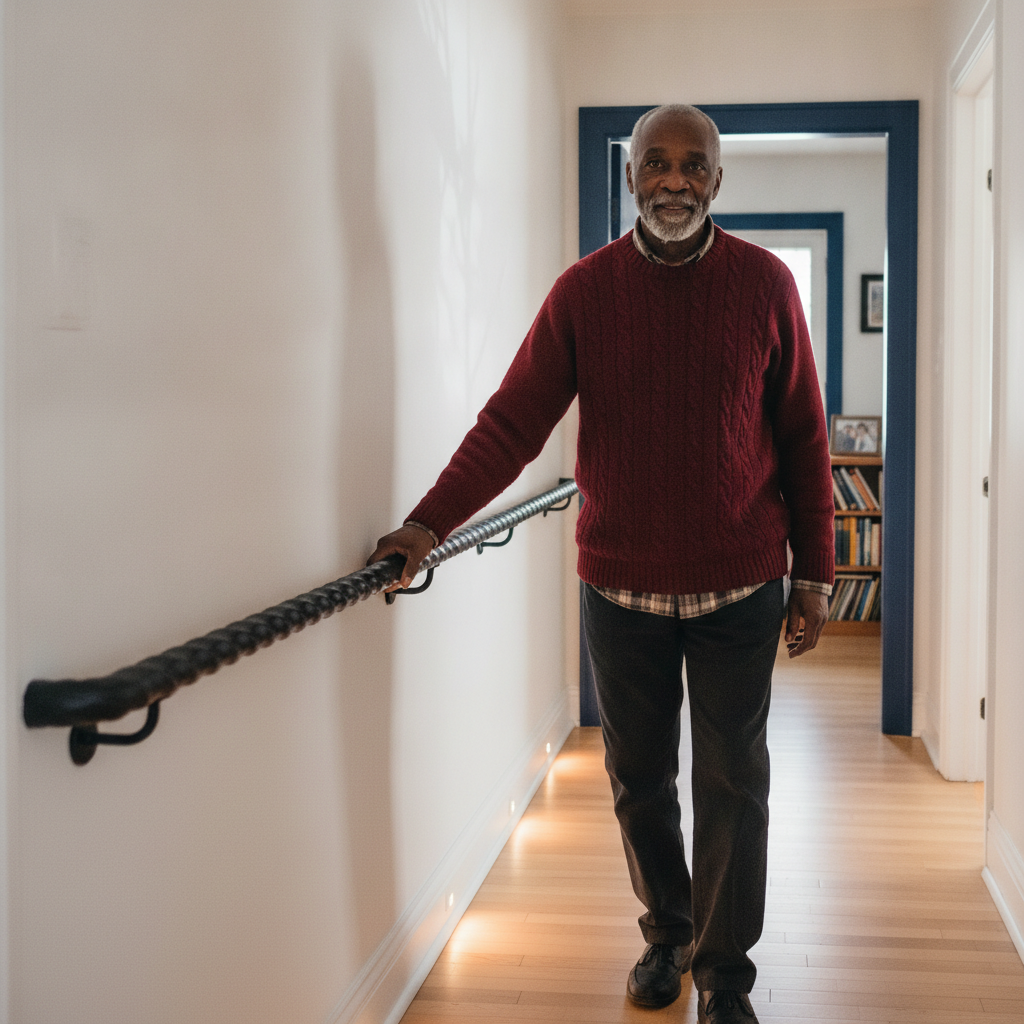
- Guide rails and handrails throughout home (tactile pathway guidance)
- Textured flooring transitions at stairs and room boundaries (tactile warning of level changes)
- Large-button door markers (tactile identification of rooms and doors)
- Textured kitchen markers (pots, appliances, temperature indicators with tactile labels)
Cost: $2,000–$4,000
Priority 3: Accessible Kitchen and Bathroom Design
Challenge: Cooking and personal care are complex with dual sensory loss; you can't see measurements clearly and can't hear boiling water or alerts.
Solution:
- Accessible stove with touchscreen or large, clearly marked controls (vs. small dials)
- Low-smoke or sensor-based cooking appliances (reduce reliance on hearing/seeing smoke)
- Accessible refrigerator with audio-visual alarm if door left open (addresses both senses)
- Bathroom grab bars and tactile cues for safe transfers
- Accessible shower design with lever (not knob) controls and thermostatic valves preventing dangerous temperature changes
- Toilet with raised seat and grab bars
Cost: $10,000–$20,000 (full kitchen or bathroom renovation); $3,000–$6,000 (targeted appliance/fixture upgrades)
Priority 4: Alarm and Alert System Adaptation
Challenge: Standard smoke alarms, doorbells, and emergency alerts are auditory-only; you can't hear them.
Solution: Integrated alert system with visual AND tactile components:
- Visual fire alarm (strobe light + standard alarm for any hearing-sighted visitors)
- Doorbell with visual and vibration alerts (flashing lights + vibrating pager)
- Telephone with visual/tactile ringer (lights + vibration)
- Home security system with visual and tactile alerts
- Medical alert system designed for dual sensory loss (includes visual alert + vibration + spoken message via speaker)
Cost: $3,000–$7,000 (full integrated system)
Priority 5: Technology and Communication Adaptations
Challenge: Phone calls, video calls, and digital communication become difficult with dual sensory loss.
Solution:
- Video calling technology (larger screen, adjustable settings) for visual communication when hearing is limited
- Text-based communication apps (WhatsApp, email) allowing written conversation
- Captioning devices for phone calls (speech-to-text in real-time)
- Large-screen devices for reading and communication
- Voice-to-text software for written communication support
Cost: $1,000–$3,000
Priority 6: Furniture and Layout Modification
Challenge: You navigate by touch and memory; furniture rearrangement is dangerous.
Solution:
- Consistent, minimalist furniture layout (fewer obstacles, predictable pathways)
- Stabilizing furniture pieces (heavy, stable seating that won't shift if used for balance)
- Soft-edge coffee tables or tables removed (eliminate head-injury risk from falls)
- Clear, wide pathways throughout home (furniture arranged to create wide, consistent walkways)
Cost: $1,000–$3,000 (furniture adjustment/purchase)
Case Study: Patricia's Dual Sensory Loss Home Modification
Scenario: Patricia is 79, living alone in her $420,000 home in suburban Toronto. Over the past 5 years, she's experienced progressive hearing loss (moderate, with hearing aids that don't fully compensate) and macular degeneration (age-related vision loss affecting central vision). She struggles to navigate her home safely, feels socially isolated, and is considering moving to assisted living. She wants to modify her home to maintain independence.
| Modification Category | Cost |
|---|---|
| Comprehensive lighting upgrade (professional design + installation) | $8,000 |
| Tactile navigation and cues (textured strips, markings, rails) | $2,500 |
| Accessible kitchen and bathroom updates (stove, controls, grab bars) | $12,000 |
| Alarm and alert system (fire, doorbell, medical alert, visual/tactile) | $5,000 |
| Technology adaptations (large screen, video calling, captioning device) | $2,000 |
| Furniture rearrangement and soft-edge tables | $1,500 |
| Total home modification cost | $31,000 |
Patricia accesses a $31,000 reverse mortgage against her home to fund comprehensive dual sensory loss modifications. Her home becomes navigable without heavy reliance on hearing or seeing small details. She remains living independently for another 10+ years. Her home equity is reduced by ~7%, a reasonable trade for maintaining independence and quality of life with dual sensory loss.
Reverse Mortgage Funding for Dual Sensory Loss Modifications
Why Reverse Mortgage Fits DSL Home Modifications
A reverse mortgage is ideal for dual sensory loss modifications because:
✓ Comprehensive scope — Modifications are typically $25,000–$40,000; reverse mortgages provide larger sums than personal loans
✓ No monthly payments — You're on fixed income; reverse mortgage doesn't add monthly obligations
✓ Professional coordination — You need specialized contractors (lighting designers, accessibility specialists); reverse mortgage funding is flexible for phased implementation
✓ Age-based eligibility — DSL affects 65+ primarily; reverse mortgage eligibility aligns with when DSL becomes significant
Funding Strategy: Phased vs. Comprehensive
Option A: Comprehensive Approach (All at Once)
- Access $30,000–$40,000 upfront
- Complete all modifications simultaneously
- Consistency of design; no learning new systems piecemeal
- Interest accrues on full amount immediately
Option B: Phased Approach (Staged Over Time)
- Access $10,000 initially for critical items (lighting, alerts, tactile cues)
- Evaluate how modifications work for your lifestyle
- Add additional modifications ($10,000–$15,000) in Year 2–3 based on what's working
- Lower initial interest accrual; flexibility to adjust
Most DSL individuals prefer phased approach, as adaptation is gradual and modifications can be refined based on real-world use.

Step-by-Step: Funding Dual Sensory Loss Home Modifications
Step 1: Get Comprehensive Sensory Assessment
Before reverse mortgage funding, work with specialists to understand your specific DSL profile:
- Audiologist assessment — What frequencies do you hear? What amplification helps?
- Optometrist/ophthalmologist assessment — What's your remaining vision? What magnification or lighting helps?
- Occupational therapist evaluation — How do your specific hearing and vision losses affect home activities?
This assessment guides which modifications will have highest impact for YOUR specific situation.
Step 2: Research DSL-Specialized Contractors
Standard home contractors often don't understand dual sensory loss. Seek:
- Accessibility specialists (certified aging-in-place specialists)
- Lighting designers experienced with vision loss accommodations
- Occupational therapists who design homes for sensory loss
- Smart home installers familiar with voice-control and alert systems for accessibility
Major organizations like Canadian Hard of Hearing Association and Vision Loss Canada often have contractor referral lists.
Step 3: Develop Modification Plan and Budget
Work with occupational therapist or accessibility specialist to prioritize:
- Critical safety (lighting, alerts, tactile cues) — $10,000–$15,000
- Daily function (kitchen, bathroom, communication) — $10,000–$15,000
- Social engagement (technology, accessible entryways) — $5,000–$10,000
Total: $25,000–$40,000 depending on scope.
Step 4: Get Pre-Approved for Reverse Mortgage
Contact Rick Sekhon Reverse Mortgages to understand:
- Your home value (approximate)
- Your age and spouse's age (55+ required)
- Estimated borrowing power
- Whether you can comfortably accommodate $25,000–$40,000 in reverse mortgage funding
Major lenders serving Ontario include CHIP, Equitable Bank, Bloom Financial, and Home Trust — all can fund accessibility modifications.
Step 5: Complete Reverse Mortgage Application
Timeline: 30–45 days from application to funding
Process includes:
- Home appraisal
- Age verification
- Independent legal advice meeting
- Lender approval and fund disbursement
Step 6: Execute Modifications Strategically
Once funded:
- Implement critical safety modifications first (lighting, alerts)
- Test and refine over 2–3 months
- Add daily-function modifications (kitchen, bathroom)
- Implement technology and communication aids
- Adjust based on what's working
Tax and Benefits Implications
Medical Expense Tax Credit (Potential)
Some home modifications for DSL may qualify for the Disability Tax Credit (DTC) or Medical Expense Tax Credit if they're prescribed by a healthcare provider. This can reduce personal income tax by $300–$600 annually.
Work with a tax professional and your occupational therapist to document modifications appropriately.
CPP, OAS, GIS Unaffected
Reverse mortgage proceeds don't count as income. Your government benefits remain unaffected.
Risks and Realistic Considerations
Learning Curve
New adaptive systems require learning and practice. Expect 3–6 months to feel truly comfortable with new lighting, tactile cues, alert systems. This is normal and manageable.
Ongoing Adaptation
Dual sensory loss often progresses over time. Modifications that work well today may need updating in 3–5 years as your hearing and vision continue to change. Budget flexibility and willingness to adjust.
Interest Costs
A $35,000 reverse mortgage at 6% will accrue ~$10,500 in interest over 5 years. This is acceptable if modifications extend your independent living by 10+ years, but it's a real cost.
Frequently Asked Questions
How much does comprehensive home modification for dual sensory loss cost?
Typically $25,000–$40,000 depending on scope. Comprehensive lighting: $5,000–$10,000. Tactile and safety cues: $2,000–$4,000. Kitchen and bathroom accessibility: $10,000–$20,000. Alert systems: $3,000–$7,000. Technology: $1,000–$3,000.
Will my hearing aids and vision aids work better if I modify my home?
Partially. Hearing aids amplify sound but can't create sound where there's none (silent visual information). Vision aids magnify but can't improve lighting. Home modifications address the gaps that devices alone can't fix, creating an integrated accessible environment.
Can I use a reverse mortgage to fund DSL modifications if I have a traditional mortgage?
No. You must own your home mortgage-free (or nearly so) to qualify for a reverse mortgage. If you have a traditional mortgage, pay it off first or explore other options.
Will reverse mortgage-funded DSL modifications affect my CPP, OAS, or GIS?
No. Reverse mortgage proceeds are loan advances (not income). Your government benefits are unaffected.
What if I move to long-term care? What happens to my home modifications and reverse mortgage?
The reverse mortgage remains against your home. Upon moving to long-term care, you have up to 12 months to repay it. Your home can be sold, reverse mortgage repaid, and remaining equity distributed to your estate. Modifications stay with the property.
The Living Legacy Dimension: Enabling Independence With Dual Sensory Loss
Funding comprehensive home modifications for dual sensory loss is an act of self-care and independence preservation. You're:
- Maintaining agency and control in your home despite sensory changes
- Preventing premature institutionalization — staying home instead of moving to assisted living before necessary
- Preserving social connections — accessible home enables family and friends to visit and communicate
- Modeling adaptation — showing that aging with sensory loss doesn't mean giving up
The Bottom Line: Adapting Home for Dual Sensory Loss
Dual sensory loss is challenging, but comprehensive home modifications can create an accessible, safe environment for independent living. A reverse mortgage makes these modifications financially possible without derailing your retirement.
Ready to Learn More?
Find out exactly how much you could unlock from your home — free and no obligation.
Related Articles
Reverse Mortgage for Home Security: Upgrade Your Safety System in Retirement
Fund home security upgrades, surveillance systems, and smart locks with a reverse mortgage. Keep your home safe while aging in place in Ontario.
Read →Reverse Mortgage for Hearing Aids and Vision Equipment: Sensory Health in Retirement
Learn how Ontario seniors can use reverse mortgages to fund hearing aids, vision devices, and sensory health equipment to maintain independence and quality of life.
Read →Aging in Place with a Reverse Mortgage: Home Modification Guide
How Ontario seniors can fund aging-in-place home modifications with a reverse mortgage — costs, top modifications, grants, and a complete planning guide.
Read →