
Reverse Mortgage for Home Modifications After Post-Surgical Complications: Extended Recovery and Disability
Fund home accessibility modifications when surgery causes unexpected disability. Learn how a reverse mortgage enables aging in place after surgical complications or unexpected disability.
You went into surgery expecting routine recovery—knee replacement, hip surgery, spinal procedure—something thousands of people do every year. But complications set in. What was supposed to be a 4-week recovery became 4 months. Infection developed. Nerve damage caused permanent weakness. You're wheelchair dependent now, or walking with a cane uncertain when you'll regain your prior mobility—if ever. Your home wasn't designed for disability, and sudden unexpected disability forces crisis decisions: Move to assisted living? Renovate your home? Burden your children with caregiving? A reverse mortgage can provide the funds to make your home accessible and allow you to recover, rehabilitate, and rebuild independence in the home you know.
Surgical Complications and Unexpected Disability
Post-surgical complications are more common than people realize:
Common Post-Surgical Complications
- Infection: Surgical site infection, sepsis; serious complication
- Blood clots: Deep vein thrombosis (DVT), pulmonary embolism (PE); life-threatening
- Nerve damage: Nerve damage during surgery; permanent numbness, weakness, pain
- Persistent pain: Chronic pain lasting months or years post-surgery
- Mobility problems: Weakness, balance issues, inability to fully recover prior strength
- Psychological impacts: PTSD from surgical complication; depression; anxiety
Impact on Disability
Some post-surgical complications cause permanent disability:
- Weakness: Permanent loss of strength in affected limb; may need mobility aids
- Limited range of motion: Joint stiffness or restriction limiting function
- Chronic pain: Ongoing pain requiring pain management
- Balance problems: Vestibular damage; balance impairment affecting mobility
- Fatigue: Post-surgical fatigue lasting months or years
- Psychological disability: PTSD, depression affecting function
Reality: 10–20% of major surgeries result in complications extending recovery beyond expected timeline. Some complications cause permanent disability.
The Financial and Functional Challenge of Post-Surgical Disability
Unexpected Recovery Timeline and Costs
- Extended recovery: Instead of 6 weeks, recovery takes 6 months or longer
- Extended therapy: Physical therapy becomes months/years not weeks
- Work absence: Can't return to work; disability may prevent return
- Care needs: Temporary caregiver needed; may become permanent
- Therapy costs: Extended physical therapy, occupational therapy, psychology
- Total recovery cost: $10,000–$50,000+ depending on complication severity
Home Accessibility Needs
Your home wasn't designed for disability:
- Stairs: Multi-story home inaccessible for wheelchair or walker users
- Bathrooms: Standard bathroom not accessible; can't shower, use toilet independently
- Bedroom: Elevated bed difficult to access with mobility limitations
- Kitchen: Standing to prepare meals impossible with limited mobility
- Hallways and doorways: Too narrow for wheelchair; doorways too small
- Psychological impact: Can't access own home independently; feels trapped
Home Modifications for Post-Surgical Recovery and Disability
Critical Immediate Modifications
Bedroom Accessibility
- Accessible bed: Lower bed height (16–20" off floor); grab bars for transitions
- Bedside commode or urinal: If bathroom access limited; reduces need to navigate home at night
- Bedroom location: First floor if multi-story; eliminates stair barrier
- Pathways: Clear floor space for walker, wheelchair, mobility aids
- Cost: $5,000–$15,000 to modify bedroom
Bathroom Accessibility
- Roll-in shower or tub: Essential for hygiene independence
- Grab bars: Multiple bars for support and safety
- Raised toilet seat: Makes transfers easier
- Accessible sink: Lowered height, space for wheelchair underneath
- Non-slip flooring: Prevents falls on wet surfaces
- Cost: $15,000–$35,000 to fully modify bathroom
Home Entry Access
- Ramps: Replace stairs at main entry (and other entries if wheelchair-needed)
- Accessible doorways: May need to widen doorways (minimum 32" clear width)
- Level entries: Eliminate thresholds; create level transitions
- Handrails: Along ramps and at entries for safety
- Cost: $5,000–$15,000 for accessible entry
Primary Pathways Through Home
- Hallway widening: Minimum 36" for walker; 48"+ for wheelchair
- Door widening: May need to replace doors to increase width
- Wall removal: Significant open surgery recovery may require wall removal for accessibility
- Flooring: Consistent flooring without transitions to prevent tripping
- Handrails: Along hallways for support and safety
- Cost: $5,000–$20,000 depending on modifications needed
Stair Alternatives
- Stair lifts: Expensive ($10,000–$20,000) but preserves multi-story living
- Elevators: Even more expensive ($30,000–$100,000+) but comprehensive solution
- Room relocation: Moving bedroom to first floor; alternate to lifts/elevators
- Cost: Variable depending on choice; significant investment
Kitchen Accessibility
- Lowered counters: Mix of heights (32–34" for wheelchair, standard 36" for standing)
- Accessible appliances: Stove, microwave at accessible heights
- Accessible sink: Space underneath for wheelchair
- Pull-out shelving: Makes reaching items in cabinets possible
- Cost: $5,000–$20,000 to modify kitchen
Supporting Equipment and Supplies
Mobility and Transfer Equipment
- Wheelchair: If permanent mobility limitation; $1,000–$5,000+ for quality chair
- Walker or cane: For balance support; $100–$500
- Transfer equipment: Transfer boards, grab bars, transfer benches; $500–$2,000
- Bed mobility equipment: Trapeze bars, turning sheets; $200–$1,000
- Cost: $2,000–$8,000 depending on mobility needs
Daily Living Aids
- Dressing aids: Long-handled shoehorn, sock aid, button hooks; $200–$500
- Bathing aids: Long-handled sponge, shower chair, handheld shower; $300–$800
- Toilet aids: Raised seat, grab bars, bidet; $300–$1,000
- Kitchen aids: Adapted utensils, reacher, cutting boards; $200–$500
- Cost: $1,000–$2,500 for complete adaptive equipment kit
Therapy and Recovery Infrastructure
Physical Therapy Space
- Open exercise area: Space for therapy exercises
- Therapy equipment: Resistance bands, foam rollers, exercise mat; $300–$1,000
- Parallel bars: If significant mobility recovery needed; $2,000–$5,000
- Mirror: Large mirror for feedback during exercises
- Cost: $2,000–$6,000 for therapy space setup
Therapy Services
- Physical therapy: 2–3x weekly; $100–$150/session; typical 2–6 months ($10,000–$40,000)
- Occupational therapy: Adapting daily activities to new abilities; $5,000–$15,000
- Psychological support: Trauma and adjustment; $150–$300/session ($3,000–$15,000)
- Home health aide: If unable to manage care independently; $20–$30/hour; 2–4 hours daily ($3,000–$8,000/month)
- Cost: $20,000–$80,000+ depending on recovery complexity
Building a Post-Surgical Recovery Modification Plan
Phase 1: Immediate Crisis (Weeks 1–4)
Before discharge from hospital, plan home modifications:
| Need | Cost | Urgency |
|---|---|---|
| Hospital bed rental | $500–$1,000 | Critical if mobility limited |
| Bathroom modifications | $2,000–$5,000 | Critical (hygiene access) |
| Bedroom modifications | $1,000–$3,000 | Critical |
| Transfer equipment | $500–$1,500 | Critical |
| Home care aide setup | $3,000–$8,000 | Critical if mobility limited |
| Total Immediate | $7,000–$18,000 | — |
Phase 2: Recovery Foundation (Months 1–3)
Establish accessible home infrastructure:
| Component | Cost | Timeline |
|---|---|---|
| Accessible bedroom setup | $5,000–$10,000 | Month 1 |
| Full bathroom accessibility | $15,000–$30,000 | Months 1–2 |
| Home entry ramps | $5,000–$10,000 | Month 2 |
| Hallway widening if needed | $5,000–$15,000 | Month 2–3 |
| Mobility equipment | $2,000–$5,000 | Weeks 1–4 |
| Physical therapy setup | $2,000–$5,000 | Month 1 |
| Total Phase 2 | $34,000–$75,000 | — |
Phase 3: Extended Recovery (Months 3–12)
Ongoing therapy and additional modifications:
| Need | Cost | Duration |
|---|---|---|
| Physical therapy | $100–$150/session × 50–100 sessions | 6–12 months |
| Occupational therapy | $5,000–$15,000 | 3–6 months |
| Home health aide (if needed) | $3,000–$8,000/month | 3–12 months |
| Kitchen modifications | $5,000–$15,000 | Months 6–9 |
| Psychological support | $150–$300/session × 20–40 sessions | 6–12 months |
| Total Phase 3 | $20,000–$60,000+ | 6–12 months |
Total Reverse Mortgage Allocation: $60,000–$150,000 depending on recovery complexity and whether permanent disability results
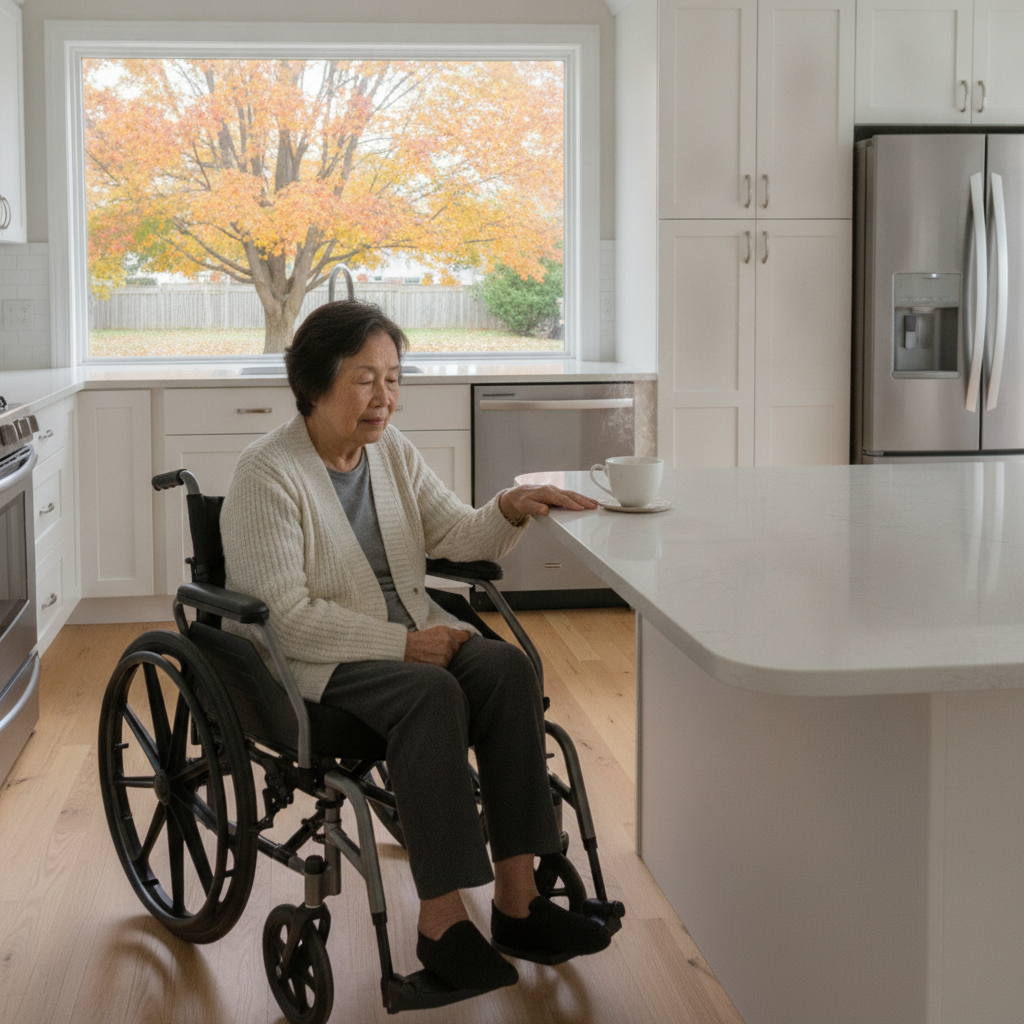
Real-World Example: Margaret's Hip Replacement Complication
Margaret's Situation
- Age: 72, active; had hip replacement (common surgery)
- Expected recovery: 6 weeks
- Actual: Surgical site infection; hospitalization extended; permanent weakness developed
The Complication
- Post-operative infection 2 weeks post-surgery
- Hospitalization for IV antibiotics
- Infection treated but permanent nerve damage discovered
- Permanent weakness in surgical leg; high fall risk
- Prognosis: Partial recovery possible but may remain mobility-limited
Immediate Challenges
- Can't navigate stairs (1.5 story home)
- Bathroom on second floor; can't access
- Bedroom upstairs; can't reach
- High fall risk; needs walker; home unsafe
Emergency Hospital Discharge Dilemma
- Hospital discharge required but home not accessible
- Daughter suggested assisted living or moving in with daughter
- Margaret insisted on aging in place in her home
- Needed rapid accessibility modifications
Reverse Mortgage Solution
- Margaret's home worth $500,000; significant equity available
- Accessed $100,000 reverse mortgage for accessibility modifications
- Investment plan:
Week 1 (Immediate)
- Hospital bed rental: $500
- Bathroom modifications (toilet, grab bars, shower chair): $4,000
- First-floor bedroom setup: $2,000
- Walker and mobility equipment: $800
- Home care aide for 4 weeks: $5,000
- Subtotal: $12,300
Months 1–3 (Foundation Phase)
- Full bathroom renovation (roll-in shower, grab bars, accessible fixtures): $18,000
- Ramp and accessible entry: $8,000
- First-floor bedroom accessibility: $5,000
- Physical therapy equipment setup: $2,000
- Subtotal: $33,000
Months 3–6 (Recovery Phase)
- Physical therapy (3x weekly): $12,000
- Occupational therapy: $5,000
- Kitchen modifications for standing/mobility: $8,000
- Psychological support: $3,000
- Ongoing home care aide: $15,000
- Subtotal: $43,000
Total Year 1 Investment: $88,300
Outcome
- Margaret recovered at home with dignity
- Physical therapy allowed partial strength recovery
- Remained in beloved home throughout recovery
- Built strong relationship with home health aide; felt less lonely
- By month 12: Walking independently with cane; returned to most ADLs
- Home modifications permanent; accessible for any future mobility issues
- Avoided assisted living; maintained independence and home life
Margaret's reflection: "The hospital wanted to discharge me to assisted living, but I wasn't ready to give up my home. The reverse mortgage let me make my home work with my new body. A year later, I'm stronger and can manage stairs again with the rail. I'm so grateful I didn't have to leave home while I healed."

Planning for the Unknown
Preparing for Possible Complications
Before elective surgery, consider:
- Worst-case scenarios: What if complications occur? Could you age at home with disability?
- Home assessment: Is your home accessible if mobility becomes limited?
- Financial preparation: Do you have access to funds if extended recovery needed?
- Family discussion: Are family members prepared to provide care if needed?
- Reverse mortgage readiness: Could you access funds quickly if needed?
Red Flags During Recovery
Seek immediate expert help if:
- Infection signs: Fever, increasing wound drainage, spreading redness
- Excessive pain: Pain not controlled by prescribed medication
- Swelling: Increasing swelling beyond expected
- Mobility plateau: No improvement in mobility after 12 weeks
- Psychological crisis: PTSD, depression, suicidal thoughts
- Inability to manage at home: Falling repeatedly, unable to perform ADLs safely
Important Considerations
Realistic Recovery Expectations
Post-surgical complications recovery is unpredictable:
- Some recover fully: Complication resolves; return to normal function
- Partial recovery: Permanent limitations but achieves functional independence
- Permanent disability: Complication causes lasting disability
- Timeline: Some complications resolve in weeks; others take months/years
- Hope balanced with realism: Plan for worst-case while hoping for best outcome
Psychological Impact of Unexpected Disability
Sudden disability from surgery is traumatic:
- Identity loss: Can't do things you always did; identity shifts
- Loss of autonomy: Dependent on others; difficult psychological adjustment
- PTSD: Traumatic surgery experience; complications intensify trauma
- Depression: Common in post-surgical disability recovery
- Professional support: Mental health support essential, not optional
Caregiver Impact
If family becomes caregivers:
- Burden: Intensive personal care is exhausting work
- Relationship change: Family dynamics shift when adult child becomes caregiver
- Boundaries: Important to maintain healthy caregiver boundaries
- Support: Caregiver also needs support—respite care, counseling, recognition
- Long-term: If disability permanent, family should expect years of caregiving
Key Takeaways
- 10-20% of major surgeries result in complications that extend recovery beyond the expected timeline, and some cause permanent disability.
- Immediate crisis modifications (hospital bed, bathroom access, transfer equipment, home care aide) typically cost $7,000-$18,000 in the first month.
- A full year of accessibility modifications and recovery support commonly totals $60,000-$150,000, depending on complication severity.
- Roll-in shower bathroom renovations run $15,000-$35,000, while entry ramps and accessible doorways run $5,000-$15,000.
- Reverse mortgage funds can be drawn in phases—immediate crisis, foundation, and extended recovery—rather than as one lump sum, matching costs to your actual recovery timeline.
- Setting up a reverse mortgage or line of credit before elective surgery, rather than after a complication, allows faster access to funds when they're needed most.
Frequently Asked Questions
How quickly can reverse mortgage funds be accessed after a surgical complication?
Timing depends on whether you've already established a reverse mortgage or line of credit. Homeowners who set one up before surgery can often draw funds within days; starting the application process after a complication typically takes several weeks, similar to a standard reverse mortgage closing.
Can reverse mortgage funds cover ongoing therapy costs, not just physical renovations?
Yes. Reverse mortgage proceeds can be used for physical therapy, occupational therapy, psychological support, and home health aide costs, in addition to physical modifications like ramps, roll-in showers, and widened doorways.
Do home accessibility modifications funded by a reverse mortgage affect the home's resale value?
Well-executed accessibility modifications—wider doorways, roll-in showers, ramps—generally maintain or improve resale value, particularly as more buyers look for aging-in-place features. They rarely reduce a home's marketability.
Is it possible to only borrow what's needed for immediate modifications and access more later?
Yes, many reverse mortgage products, including lines of credit, allow you to draw funds incrementally as needs arise rather than taking the full approved amount upfront, which reduces the interest that accrues on unused funds.
What if my recovery is shorter than expected and I don't need all the modifications I planned?
You only draw what you actually use. If recovery goes better than expected, you can stop drawing additional funds, and any completed modifications—like a roll-in shower or ramp—remain a permanent, useful upgrade to your home.
Moving Forward
If you're facing surgery with potential complications or recovering from post-surgical disability:
- Assess your home: Is it accessible if mobility becomes limited?
- Understand your home equity: Could you access funds if extended recovery needed?
- Prepare psychologically: Surgery and complication recovery difficult; prepare emotionally
- Build support team: Identify who will help with recovery
- Plan modifications: Know what modifications would make home accessible
- Establish reverse mortgage line of credit: Before surgery, not after complication
- Set realistic expectations: Some recovery takes longer than expected
- Prioritize mental health: Psychological support essential during recovery
Post-surgical complications are traumatic and financially devastating, but they're manageable if you plan ahead. A reverse mortgage that provides funds for accessible home modifications, extended therapy, and support services allows you to recover at home with dignity, surrounded by familiar environment and loved ones.
With proper home accessibility modifications, professional therapy, and family support, most people recover surprising mobility even after serious surgical complications. Your reverse mortgage makes recovery at home possible.
Ready to Learn More?
Find out exactly how much you could unlock from your home — free and no obligation.
Related Articles
Reverse Mortgage When Adult Child Becomes Disabled and Requires Caregiver Support
How to fund ongoing caregiver costs when your adult child acquires disability through illness or injury. Ontario reverse mortgage guide for mid-life caregiving.
Read →Reverse Mortgage for In-Home Physical Therapy Equipment: Recovering from Stroke, Injury, or Joint Surgery
Fund specialized PT equipment at home with a reverse mortgage—avoid long waits for physiotherapy and accelerate recovery after stroke, injury, or surgery in Ontario.
Read →Home Accessibility on a Budget: Must-Have Modifications for Aging in Place
Guide to affordable home accessibility modifications for aging in place in Ontario. Reverse mortgage funding for critical safety upgrades.
Read →