
Reverse Mortgage When Adult Child Becomes Disabled and Requires Caregiver Support
How to fund ongoing caregiver costs when your adult child acquires disability through illness or injury. Ontario reverse mortgage guide for mid-life caregiving.
What happens when your adult child—previously independent—becomes disabled through illness or injury and now needs full-time caregiving? Unlike children born with disabilities (whom you've supported since childhood), acquired disability in adulthood creates a sudden financial shock. Your adult child's income drops or stops entirely. Your home becomes their recovery space. You transition from parent to primary caregiver overnight. A reverse mortgage can provide the financial stability to navigate this crisis without derailing your retirement.
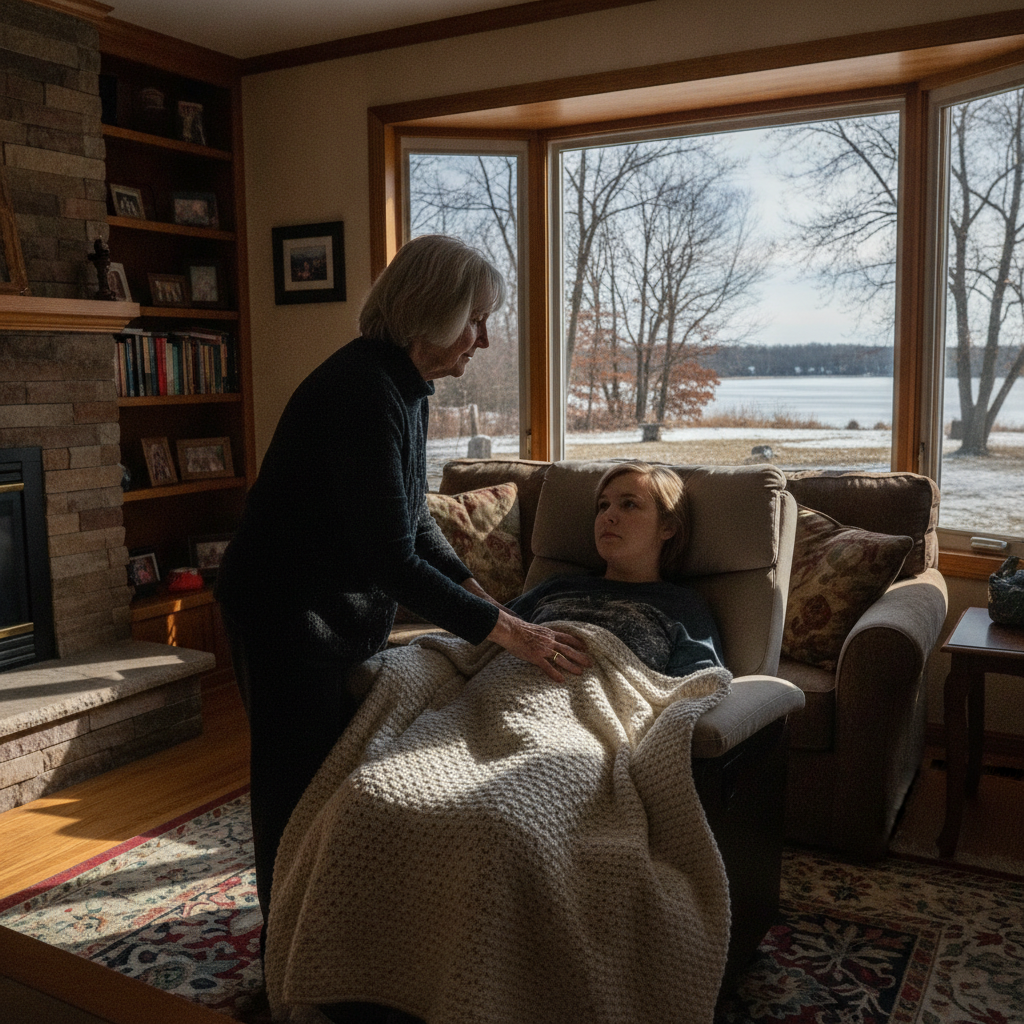
The Unique Crisis of Acquired Disability in Adulthood
Acquired disability differs profoundly from lifelong disability:
| Lifelong Disability | Acquired Disability |
|---|---|
| Planning occurs over decades | Crisis occurs suddenly—weeks to months |
| Support integrated into family structure from birth | Support requires family restructuring mid-course |
| Adult child has adjusted to limitations since childhood | Adult child grieving loss of former capability |
| Family finances planned around disability support | Family finances disrupted; retirement plans upended |
| Systems (ODSP, provincial support) understood since childhood | Systems unfamiliar; navigating new bureaucracies |
The financial impact is severe. An adult child who earned $50,000/year and suddenly becomes unable to work represents $50,000+ annual household income loss—plus caregiving costs. Overnight, your retirement income must cover both your needs and your adult child's living expenses.
Common Scenarios Leading to Acquired Disability
| Trigger | Disability Type | Common Outcomes |
|---|---|---|
| Motor vehicle accident | Spinal cord injury, traumatic brain injury | Partial or full paralysis, cognitive changes |
| Stroke or aneurysm | Neurological | Speech loss, partial paralysis, cognitive changes |
| Severe infection (meningitis, sepsis) | Neurological | Hearing loss, cognitive changes, limb loss |
| Cancer diagnosis and treatment | Multi-system | Fatigue, neuropathy, cognitive changes ("chemo brain") |
| Long COVID | Autonomic/immunological | Severe fatigue, neurological symptoms, exercise intolerance |
| Mental health crisis | Psychiatric | Inability to maintain employment, hospitalization needs |
| Autoimmune disease flare (MS, lupus) | Neurological/systemic | Progressive disability, mobility loss |
Real-World Scenario: James's Unexpected Caregiving
James, 64, was enjoying early retirement in London, Ontario. His adult son, Marcus (34), worked as an electrician earning $65,000/year. They had Sunday dinners; James attended Marcus's recreational hockey games.
Then, a construction accident. Marcus fell from scaffolding—18-foot drop. Spinal cord injury, incomplete paralysis, hospitalization for 3 months, then 6 months of inpatient rehabilitation.
Outcome: Marcus recovered partial mobility but couldn't return to electrical work (safety-sensitive role requiring full physical capability). He moved home to his father's house while:
- Completing rehabilitation (2 years of intensive physiotherapy)
- Retraining for desk-based work (computer skills course: $4,500)
- Waiting for ODSP approval (18-month process with initial denial)
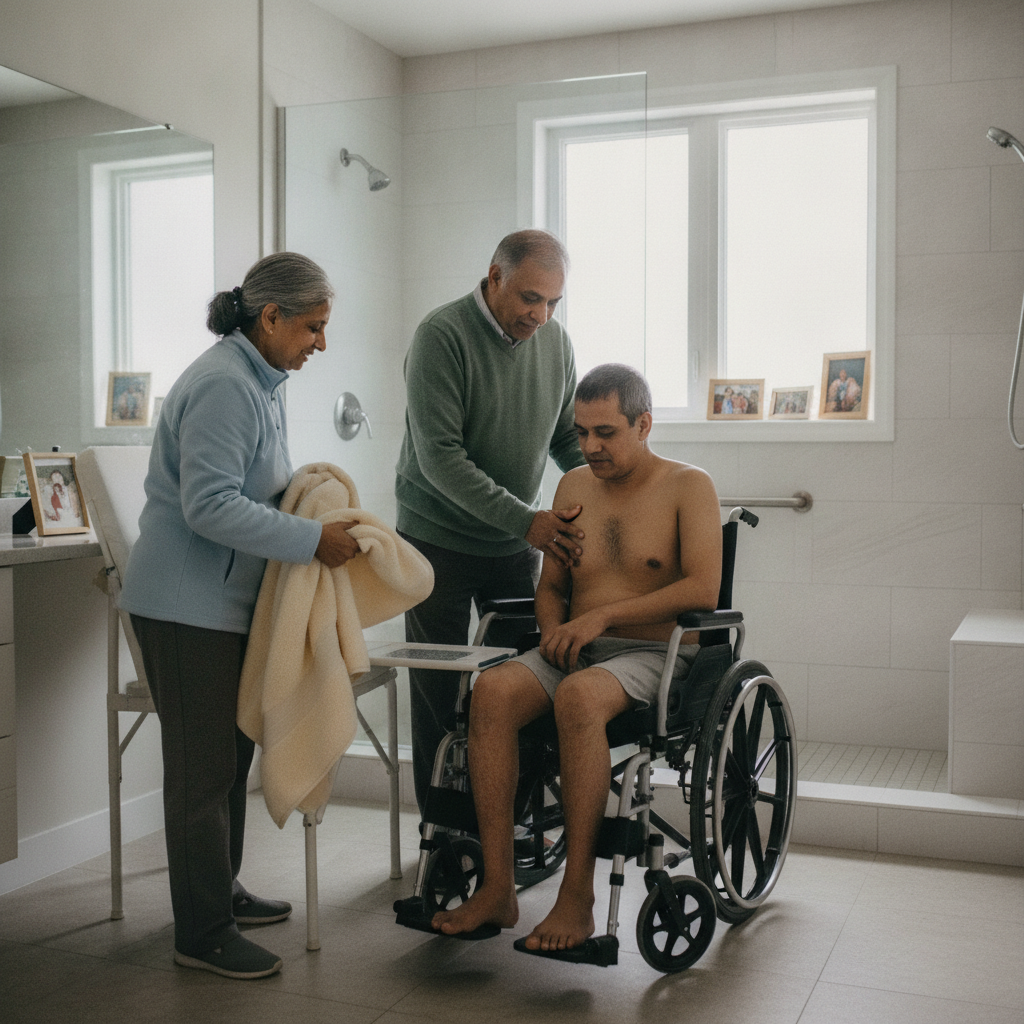
- Requiring full-time caregiver assistance for personal care (bathing, dressing)
Costs James faced:
- Lost room rental income (Marcus was independent; now occupying the rental suite)
- Home modifications for wheelchair accessibility ($8,000)
- Caregiver support (James's health deteriorating; he couldn't provide all personal care alone): $2,500/month
- Marcus's living expenses during non-ODSP waiting period: $1,200/month
- Medical supplies and equipment: $300/month
- Travel for rehabilitation appointments: $200/month
Monthly total need: ~$4,200/month beyond James's pension and CPP
Solution: At age 64, James accessed a reverse mortgage for $120,000, structured as:
- $8,000 for home accessibility modifications
- $30,000 reserved for ongoing caregiver costs (over 2+ years)
- $50,000 cushion for medical, equipment, and living expenses
- $32,000 contingency for unexpected complications or extended caregiving
This reverse mortgage funding allowed:
- James to retire fully (not forced to work extra years)
- Marcus to access full-time rehabilitation without financial crisis
- Professional caregivers to support both James and Marcus
- Stability during ODSP processing period
Outcome: By month 18, Marcus was approved for ODSP ($1,169/month) and had begun computer training for retraining. The acute crisis stabilized, though Marcus's ongoing support needs remain.
Financial Costs of Acquired Disability Caregiving
| Cost Category | Monthly | Annual | 5-Year Total |
|---|---|---|---|
| Professional caregiver (40 hrs/week) | $2,500 | $30,000 | $150,000 |
| Lost caregiver work income (if you stop working) | $2,000-4,000 | $24,000-48,000 | $120,000-240,000 |
| Home modifications | 0 (one-time $5,000-15,000) | — | — |
| Medical equipment and supplies | $200-500 | $2,400-6,000 | $12,000-30,000 |
| Living expenses (shared household) | $500-1,000 | $6,000-12,000 | $30,000-60,000 |
| Travel for medical appointments | $100-300 | $1,200-3,600 | $6,000-18,000 |
| Total 5-year cost | $5,300-8,300 | $63,600-99,600 | $318,000-498,000 |
For perspective: if your pension is $3,000/month and your adult child's ODSP is $1,200/month, you collectively have $4,200/month—often insufficient for living expenses, caregiving, and medical support. A reverse mortgage bridges this gap.
Using a Reverse Mortgage for Acquired Disability Support
Advantages Specific to This Scenario:
1. Lump-sum access for immediate needs. Home modifications, equipment, initial caregiver costs—all needed upfront, not spread across months.
2. No income requirements for your adult child. Unlike traditional loans requiring your adult child's credit, you borrow against your home equity and control funds.
3. Extended timeline for ODSP/CPP-D approval. Waiting 18-24 months for disability support approval? A reverse mortgage provides bridge funding without household destabilization.
4. Flexibility as circumstances evolve. If your adult child improves faster than expected, you're not locked into years of payments. If their condition worsens, the reverse mortgage has funded stability.
5. Protects your retirement. Without reverse mortgage funding, many parents forced back into full-time work, delaying retirement 5-10 years. This costs them retirement years.
Navigating Government Disability Support During Transition
| Program | Eligibility | Timeline | Benefit |
|---|---|---|---|
| ODSP (Ontario Disability Support Program) | Disability + financial need | 18-24 months | ~$1,200/month |
| CPP-D (Canada Pension Plan Disability) | Age 60+, disability, contribution history | 4-6 months | ~$1,300/month |
| EI sickness benefits | Recently employed, medical leave | 15 weeks | Up to 55% of insurable earnings |
| Registered Disability Savings Plan (RDSP) | Disability + DTC certificate | Variable | Tax-free grants, growth |
A reverse mortgage funding bridge means you're not forced to deplete retirement savings while waiting for these programs. By the time ODSP/CPP-D approves (18-24 months), you've stabilized your household. Then disability benefits offset reverse mortgage costs.
Caregiver Support and Your Own Health
Critical point: Many parents become the primary caregiver for an adult child with acquired disability, neglecting their own health. This accelerates aging and health decline.
A reverse mortgage can fund:
- ✓ Professional caregiver support (so you're not sole provider)
- ✓ Your own healthcare needs (you can't help your child if you collapse)
- ✓ Respite care (allowing you to rest, maintain friendships, prevent burnout)
- ✓ Mental health support for both you and your adult child
According to the Canadian Caregiver Coalition, unpaid family caregivers save the Canadian healthcare system $31 billion annually—but many caregivers develop serious health problems from the strain. Reversing this with professional support (funded by a reverse mortgage) actually improves outcomes for both parent and adult child.
Frequently Asked Questions
What if my adult child recovers and no longer needs caregiver support?
You've still benefited from bridge funding during the critical recovery period. If recovery is faster than expected, you simply use remaining reverse mortgage funds for your own retirement needs—no waste.
Will my adult child's disability benefits be affected by money in a reverse mortgage?
No. Reverse mortgage proceeds are borrowed funds (not income). ODSP and CPP-D have asset tests, but the reverse mortgage doesn't count as an asset—it's a liability against your home. Your adult child's eligibility is unaffected.
Should the reverse mortgage be in my name or a joint application with my adult child?
Always in your name only. This protects both of you. If the reverse mortgage is joint and your adult child later faces personal creditor issues, the lender could seize funds. Keeping it in your name protects the funds exclusively for caregiving.
How do I handle the emotional transition from parent to caregiver?
This is beyond financial scope, but support is available: counseling ($100-200/session, sometimes covered by extended health benefits), caregiver support groups (free, through Caregivers Ontario), and respite care (funded by your reverse mortgage). Don't try to manage this alone.
What happens to the reverse mortgage debt when I pass away?
The reverse mortgage becomes due. Your adult child and other heirs would need to either:
- Sell the home to repay the debt, or
- Refinance the debt (if they can qualify and want to stay in the home)
This is important to discuss with your adult child and estate planner before taking the reverse mortgage.
Moving Forward
If your adult child has acquired disability:
- Get a clear diagnosis and prognosis. Understand the likely trajectory of recovery and ongoing support needs.
- Calculate 3-5 year caregiving costs. Be realistic about professional caregiver support, living expenses, and medical needs.
- Apply for disability benefits immediately. ODSP, CPP-D, RDSP—start the approval process now; it takes 18+ months.
- Get reverse mortgage pre-qualification. Understand how much you can safely borrow to bridge the gap.
- Consult an estate planner. Discuss how the reverse mortgage affects your will, power of attorney, and your adult child's long-term support.
Ready to Learn More?
Find out exactly how much you could unlock from your home — free and no obligation.
Related Articles
Reverse Mortgage for Aging Caregivers: Managing Your Health While Supporting Others
Aging caregivers need financial support too. Fund respite care, wellness, and medical needs while caring for aging parents or relatives.
Read →My Adult Child Is My Caregiver: How a Reverse Mortgage Helps Both of You
Your adult child quit their job to care for you. A reverse mortgage can ease the financial strain on both of you—compensating them fairly while funding care costs.
Read →Reverse Mortgage for Aging in Place With Fibromyalgia: Home Modifications for Invisible Illness
Fund home modifications for aging with fibromyalgia. Reverse mortgage enables accessible design for pain management, energy conservation, and quality of life.
Read →