
Reverse Mortgage for In-Home Physical Therapy Equipment: Recovering from Stroke, Injury, or Joint Surgery
Fund specialized PT equipment at home with a reverse mortgage—avoid long waits for physiotherapy and accelerate recovery after stroke, injury, or surgery in Ontario.
What if the difference between a fast recovery and prolonged disability came down to accessing the right equipment? After a stroke, fall, or joint surgery, Ontario seniors often face months-long waitlists for hospital-based physiotherapy. A reverse mortgage can change that equation, letting you fund professional-grade equipment at home and work with a private physiotherapist on your own timeline.
Why PT Equipment Access Matters: The Timeline Problem
In Ontario, hospital-based physiotherapy waitlists average 8–16 weeks. For someone recovering from a stroke or hip replacement, that delay can mean the difference between regaining independence and developing chronic limitations. Private physiotherapy shortens this timeline but costs $80–$150 per session, and equipment—often the foundation of progress—requires upfront capital.
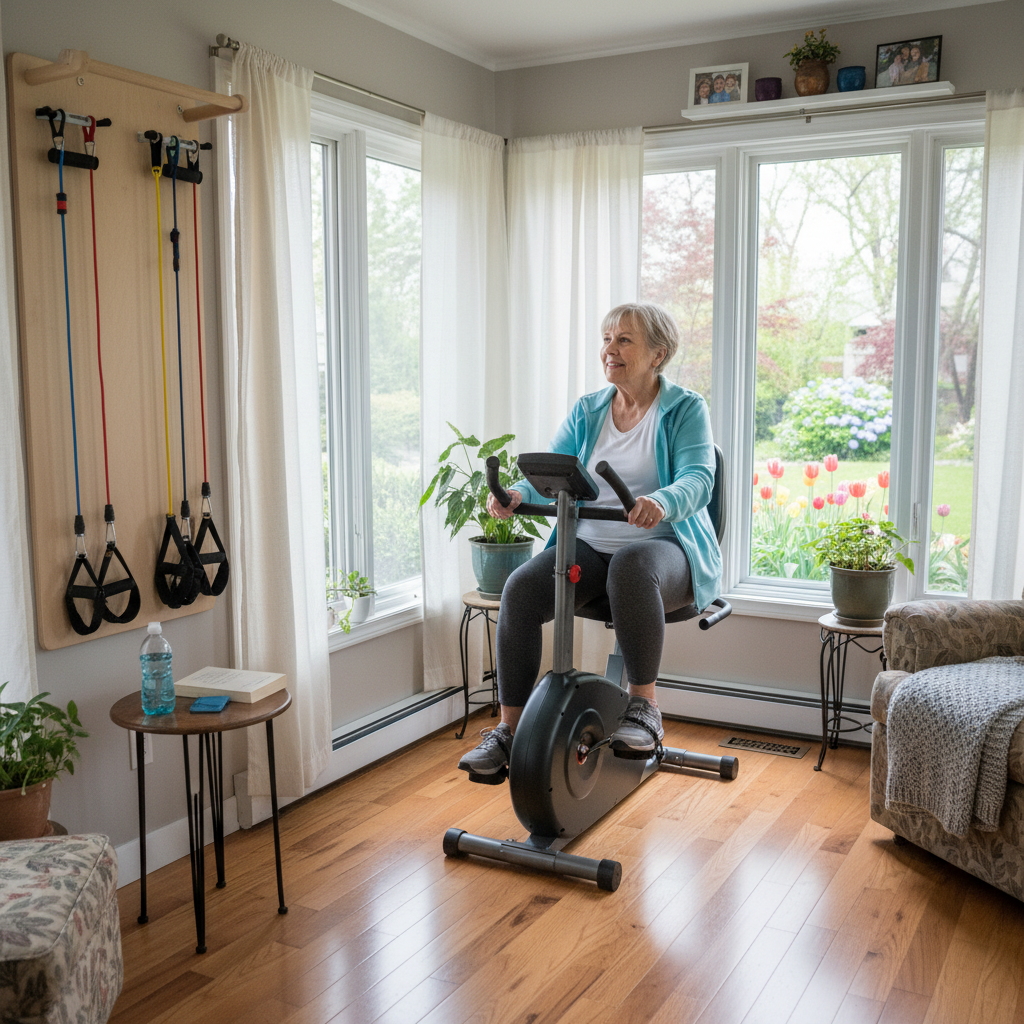
According to Physiotherapy Ontario, patients who complete intensive home-based recovery programs within the first 12 weeks after stroke achieve 40% faster functional improvement than those waiting for public system appointments. The equipment that makes home-based therapy possible isn't cheap, and most seniors can't access it immediately after an injury or surgery.
A reverse mortgage unlocks funds specifically for:
- Parallel bars, balance equipment, and walking aids ($800–$5,000)
- Resistance and weight systems for strength recovery ($1,500–$4,000)
- Treadmills and stationary bikes with injury-specific features ($3,000–$8,000)
- Upper extremity recovery equipment (ergotherapy equipment) ($1,000–$6,000)
- Functional electrical stimulation (FES) devices for stroke recovery ($4,000–$12,000)
- Home modifications to create safe PT space (grab bars, mats, layout changes) ($3,000–$10,000)
Understanding Your Recovery Equipment Needs
Physical recovery follows a predictable progression. Different stages require different equipment:
| Recovery Stage | Timeline | Equipment Needs | Cost | Reverse Mortgage Role |
|---|---|---|---|---|
| Acute (0–6 weeks) | Post-hospital, bed/chair bound | Walker, grab bars, transfer equipment | $1,500–$3,000 | Initial funds |
| Early mobility (6–12 weeks) | Learning to stand and walk safely | Balance bars, resistance bands, walker upgrade | $2,000–$4,000 | Expanded capabilities |
| Active strengthening (3–6 months) | Building strength and endurance | Weights, treadmill, stationary bike, specialized PT tools | $5,000–$10,000 | Major investment |
| Function restoration (6–12 months) | Returning to activities of daily living | Sport-specific or activity-specific equipment | $2,000–$5,000 | Customized recovery |
Your healthcare team can assess which stage you're in and what equipment accelerates your progress. A reverse mortgage provides the capital for this progression.
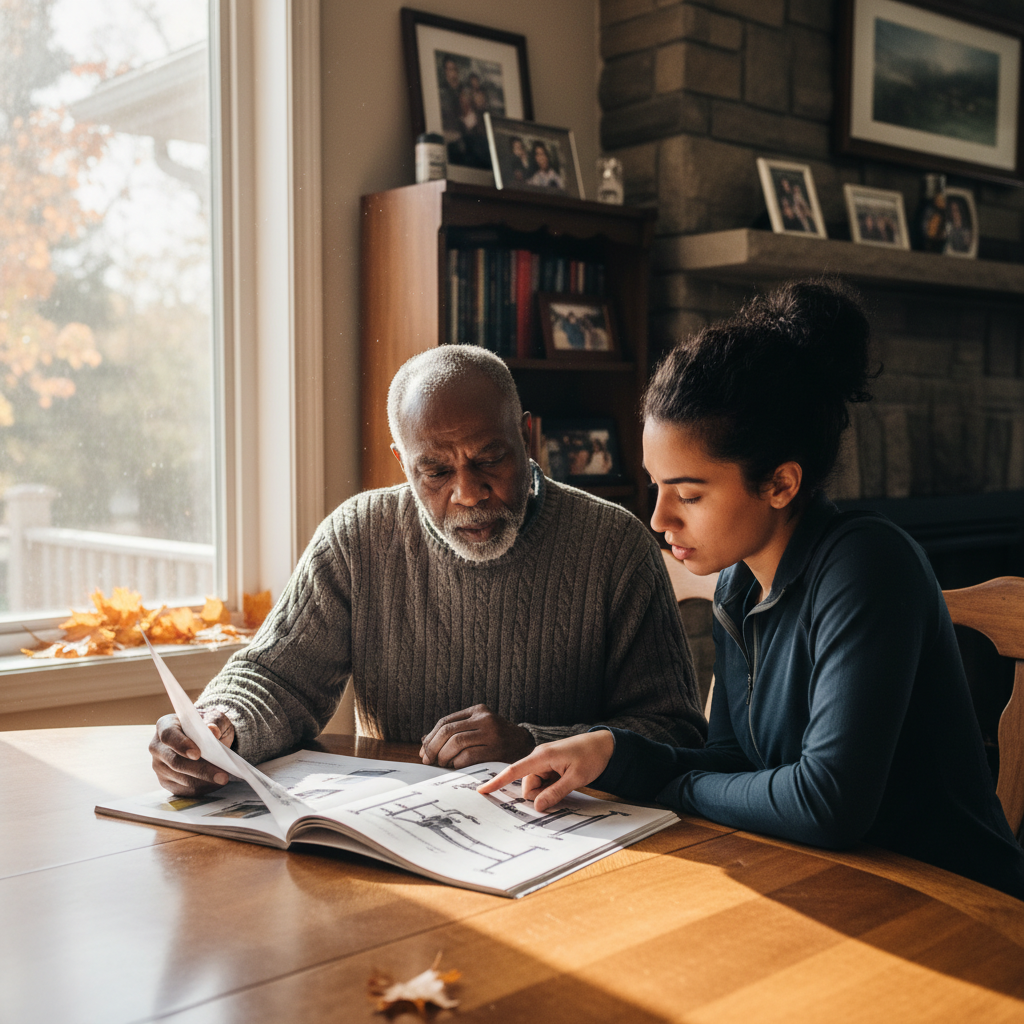
Common Recovery Scenarios and Equipment Costs
Stroke Recovery
Strokes require intensive upper and lower extremity work. A full home PT setup includes:
- Balance bars and parallel bars: $1,500
- Functional electrical stimulation device: $8,000–$10,000
- Upper extremity robotic device (e.g., hand recovery system): $5,000–$15,000
- Treadmill with handrails and safety features: $4,000–$6,000
- Total: $18,500–$36,000
Hip Replacement Recovery
Hip replacement requires controlled, graduated weight-bearing and range-of-motion work:
- CPM (continuous passive motion) machine: $2,000–$4,000
- Walker and adaptive equipment: $800–$1,500
- Exercise bike with adjustable resistance: $2,500–$4,000
- Resistance bands and light weights: $300–$500
- Home modifications (grab bars, higher toilet seat, etc.): $2,000–$3,000
- Total: $7,600–$13,000
Shoulder or Rotator Cuff Repair
Shoulder injuries require focused upper extremity work:
- Shoulder pulley system: $400–$800
- Resistance band and cable system: $600–$1,200
- Functional motion analyzer (optional, advanced): $3,000–$5,000
- Upper extremity ergotherapy tools: $800–$1,500
- Total: $1,800–$8,500
Note: Medicare doesn't cover equipment costs directly, but some equipment qualifies for the Ontario Accessibility for Ontarians with Disabilities Act (AODA) tax credit (15% of eligible spending up to $20,000). Check with your accountant.
How a Reverse Mortgage Funds Recovery-Focused Home Changes
A reverse mortgage lets you access capital without monthly payments, so funds go entirely into recovery rather than debt service. Here's how:
1. Immediate Equipment Purchase
You can receive a lump sum of $20,000–$50,000 immediately after closing (typically within 3–4 weeks). This covers major equipment purchases upfront, avoiding months of waiting and renting expensive items.
2. Physiotherapy Staffing
Many seniors pair equipment with private physiotherapy sessions ($80–$150/session). A reverse mortgage can fund:
- 2–3 sessions weekly for 6 months: $8,000–$12,000
- Certified physiotherapist home visits in Ontario: $120–$200 per session
- Assessment and exercise prescription: $300–$500 initially
3. Home Adaptation for PT Space
Safe PT requires specific home setup:
- Dedicated PT room with mats and safety equipment: $2,000–$5,000
- Handrails and grab bars (installation included): $1,500–$3,000
- Flooring upgrades for safety and slip-resistance: $2,000–$4,000
- Lighting and accessibility improvements: $800–$1,500
Comparing Equipment Funding Options
When facing a major recovery expense, you have several paths. Here's how they stack up:
| Funding Option | Speed | Cost | Flexibility | Tax Implications |
|---|---|---|---|---|
| Reverse mortgage | 3–4 weeks | 4–5% annually on borrowed amount | Can adjust draws over time | Loan proceeds aren't taxable |
| HELOC | 1–2 weeks | 6–7% annually, plus monthly payments required | Lower upfront commitment | Interest is not deductible |
| Personal loan | 1 week | 8–12% annually + monthly payments | Fixed term and amount | Not tax-deductible |
| Savings depletion | Immediate | 0% interest | Very flexible | No tax issue, but lost investment growth |
| Family loan | Varies | 0–3% (often informal) | Can be renegotiated | Relationship risk if not formalized |
Reverse mortgage advantage for recovery: You don't make monthly payments during recovery. At 6–12 months post-injury, you may be earning income again or receiving CPP benefits that make debt service easier. A reverse mortgage lets you delay payment pressure until you're stable.
Combining Reverse Mortgage Funds with Government Programs
Ontario offers several programs that complement reverse mortgage funding:
| Program | Support Type | Eligibility | Benefit |
|---|---|---|---|
| Ontario Health (formerly LHIN) Home Care | Publicly funded PT visits | Physician referral, low income | Covers some PT sessions; RM funds equipment not covered |
| ODSP or OW programs | Disability-related equipment fund | On disability support | Covers some equipment if approved; RM covers gaps |
| Registered Disability Savings Plan (RDSP) | Tax-sheltered savings for disability | Age 60+ with permanent disability | Can allocate RDSP funds to equipment if in plan |
| Medical expense tax credit (METC) | Retroactive tax deduction | Equipment prescribed by physician | Recover 15–40% of costs at tax time |
A reverse mortgage works alongside these programs. Government funds cover what they cover. Your RM covers the rest.
Working with Physiotherapists: Maximizing Equipment Investment
To get the most from equipment funding, work closely with your PT. Here's the ideal process:
- Initial assessment ($300–$500): PT evaluates your specific recovery needs and creates a 12-week plan.
- Equipment recommendation: PT specifies exactly what equipment accelerates your recovery.
- Phased purchase: Phase 1 (essential equipment) immediately, Phase 2 (advanced equipment) at 4–6 weeks.
- Usage intensity: 45–60 minutes daily on equipment, 3–5 days weekly, is the standard for recovery.
- Progress tracking: PT reassesses every 4 weeks and adjusts equipment/programming.
Equipment without professional guidance is underutilized. A reverse mortgage should fund both equipment AND the professional direction to use it effectively.
Frequently Asked Questions
Will my recovery equipment be covered by Medicare?
Medicare covers some PT sessions but not equipment. Most equipment falls under the patient's responsibility. Equipment prescribed by a physician may qualify for the Medical Expense Tax Credit (METC)—recover 15–40% at tax time.
How long will recovery equipment last after I'm healthy?
Quality equipment lasts 10–15 years with proper maintenance. Many seniors use recovery equipment for ongoing fitness afterward. A reverse mortgage investment pays dividends long after recovery.
Can I rent equipment instead of buying?
Yes, rental is available ($200–$500/month for premium equipment). Over 12 months, rental costs $2,400–$6,000—often exceeding purchase cost. A reverse mortgage lets you own equipment outright.
What if I need equipment I haven't anticipated?
A reverse mortgage line of credit (LOC) is ideal. You draw only what you need as recovery evolves. An LOC of $50,000–$80,000 gives flexibility over 12–24 months of recovery.
Can I use reverse mortgage funds for private physiotherapy costs too?
Yes. Private PT sessions ($80–$150/session) can be funded by your reverse mortgage, giving you faster access than public system waitlists.
What happens if I recover faster or slower than expected?
Your reverse mortgage is flexible. Faster recovery? You can repay early without penalty (check lender terms). Slower recovery? You can extend draws to cover ongoing costs.
Moving Forward: Funding Your Recovery
If you're facing recovery after stroke, joint surgery, or serious injury, a reverse mortgage can be the bridge between "waiting for the public system" and "starting intensive recovery now."
- Get a PT assessment: Consult a physiotherapist to identify equipment that accelerates your recovery timeline.
- Request a reverse mortgage quote from lenders like CHIP, Equitable Bank, or Bloom Financial to see available capital.
- Work with Rick Sekhon Reverse Mortgages to structure your draw to align with recovery phases.
- Set up your home PT space with professional guidance—ensure safety and efficiency.
- Track progress: Measure recovery metrics every 4 weeks to confirm equipment effectiveness.
Recovery is a race against time. The right equipment can shorten that race significantly. A reverse mortgage makes investing in recovery affordable.
Explore aging in place with health-focused modifications →
Learn about reverse mortgages for healthcare costs →
See how to fund in-home care →
Ready to Learn More?
Find out exactly how much you could unlock from your home — free and no obligation.
Related Articles
Fund Home Modifications to Age in Place: Ontario Guide
Discover how a reverse mortgage can finance accessibility upgrades, care services, and renovations to stay safely in your Ontario home as you age.
Read →Reverse Mortgage to Pay for Home Care in Ontario (2026 Guide)
Learn how Ontario seniors use a reverse mortgage to pay for home care costs. Compare care options, funding strategies, and what's covered in 2026.
Read →Reverse Mortgage for Healthcare Costs: Aging in Place in Ontario
How Ontario seniors use a reverse mortgage to fund home care, medical equipment, prescriptions, and healthcare expenses — and stay in their home longer.
Read →