
Reverse Mortgage for Bidding Wars: Securing Accessible Properties in Ontario's Hot Markets
Use a reverse mortgage to win property bids in competitive Ontario markets. Fast financing strategy for accessible home purchases and aging in place.
What if an accessible property you need appears on the market—but you're outbid because you don't have immediate financing? Ontario's real estate market is intensely competitive, and for aging homeowners seeking accessible properties, speed and financing power matter enormously. A reverse mortgage can be your secret weapon in a bidding war: quick qualification (no income checks), fast funding (2–3 weeks), and enough immediate capital to make compelling offers on homes designed for aging in place. This strategy is particularly powerful in Toronto, Hamilton, Ottawa, and other Ontario markets where accessible homes are scarce.

Many Ontario seniors search for years for the perfect home—one with main-floor accessibility, step-free entry, wide doorways, and proximity to healthcare. When such a home appears, competition intensifies. Traditional mortgage pre-approval takes weeks and requires income documentation. A reverse mortgage, by contrast, qualifies in days because age, home equity, and property condition matter more than income. When you're competing against cash buyers and buyers with instant financing, a reverse mortgage gives you the speed and certainty sellers crave.
Why Accessible Properties Are in Urgent Demand in Ontario
Who's competing for accessible homes, and why is the supply so limited? Ontario's demographics are shifting rapidly. According to Statistics Canada, the population aged 65+ is growing 3× faster than the general population. Simultaneously, homes with true accessibility (no steps, wide doorways, accessible bathrooms) represent fewer than 8% of Ontario's housing stock. This creates a severe supply-demand imbalance.
Competing buyers include:
- Aging homeowners transitioning from inaccessible homes
- Adult children seeking homes they can modify for aging parents
- Real estate investors recognizing accessibility as an emerging market niche
- Developers buying properties to convert to senior co-housing or accessible rentals
When an accessible property appears, multiple offers arrive within 48 hours. Sellers know they'll receive multiple bids and often sell to the fastest, most certain financing. Traditional lenders take 3–4 weeks to pre-approve; a reverse mortgage qualifies faster.
Reverse Mortgage as Bidding War Strategy
How does a reverse mortgage help you win in a competitive market? Unlike a traditional mortgage, which requires:
- Income verification (weeks of paperwork)
- Credit score confirmation (application review)
- Property appraisal by lender's appraiser
- Multiple underwriting checks (14–21 days)
A reverse mortgage requires:
- Age verification (55+)
- Home equity confirmation (quick appraisal)
- No income checks, no credit checks
- Qualification in 3–7 days; funding in 2–3 weeks
Bidding War Timeline Comparison
| Stage | Traditional Mortgage | Reverse Mortgage (Line of Credit) |
|---|---|---|
| Pre-approval | 10–14 days | 3–7 days |
| Property found & bid submitted | Day 15 | Day 8 |
| Inspection period | Days 16–22 | Days 9–15 |
| Appraisal completion | Days 23–28 | Days 16–19 |
| Final underwriting | Days 29–35 | Days 20–21 |
| Closing & funding available | Day 35–42 | Day 22–25 |
| Speed advantage | — | 10–20 days faster |
In a competitive Ontario market where bidding wars compress timelines, being 10–20 days ahead of the competition is decisive.
According to OSFI (Office of the Superintendent of Financial Institutions), reverse mortgages are explicitly designed for "rapid asset liquidity in home-owning seniors"—the regulator recognizes the speed advantage as a key product feature.
Real-World Scenario: Bidding for an Accessible Home in Toronto

Example: Margaret, 68, searching for accessible home in Toronto
The property: A 1970s bungalow in North York, fully accessible (no steps, main-floor bathroom, wide hallways), $575,000 asking price.
The situation: Margaret sees the listing Tuesday morning. By Wednesday evening, there are 6 competing offers. Sellers are reviewing offers Friday.
Traditional mortgage path:
- Pre-approval process starts Wednesday: 10–14 days
- Even if approved by Wednesday of following week, Margaret's offer arrives late
- Sellers have already accepted a competing bid from a cash buyer
Reverse mortgage path:
- Margaret calls Rick Sekhon Wednesday afternoon
- Qualification call Thursday: Rick gathers basic info (age, home value, existing mortgage)
- Appraisal ordered Thursday; completed Friday
- Pre-approval confirmed Friday afternoon
- Margaret submits strong offer Friday evening (within sellers' deadline)
- Sellers see immediate qualification, fast timeline, compelling offer
- Margaret's offer is accepted Saturday morning
- Closing by end of September (normal closing timeline)
Speed allowed Margaret to compete and win. This scenario plays out repeatedly in Ontario's accessible housing market.
Reverse Mortgage Bidding Strategy: Structuring Your Offer
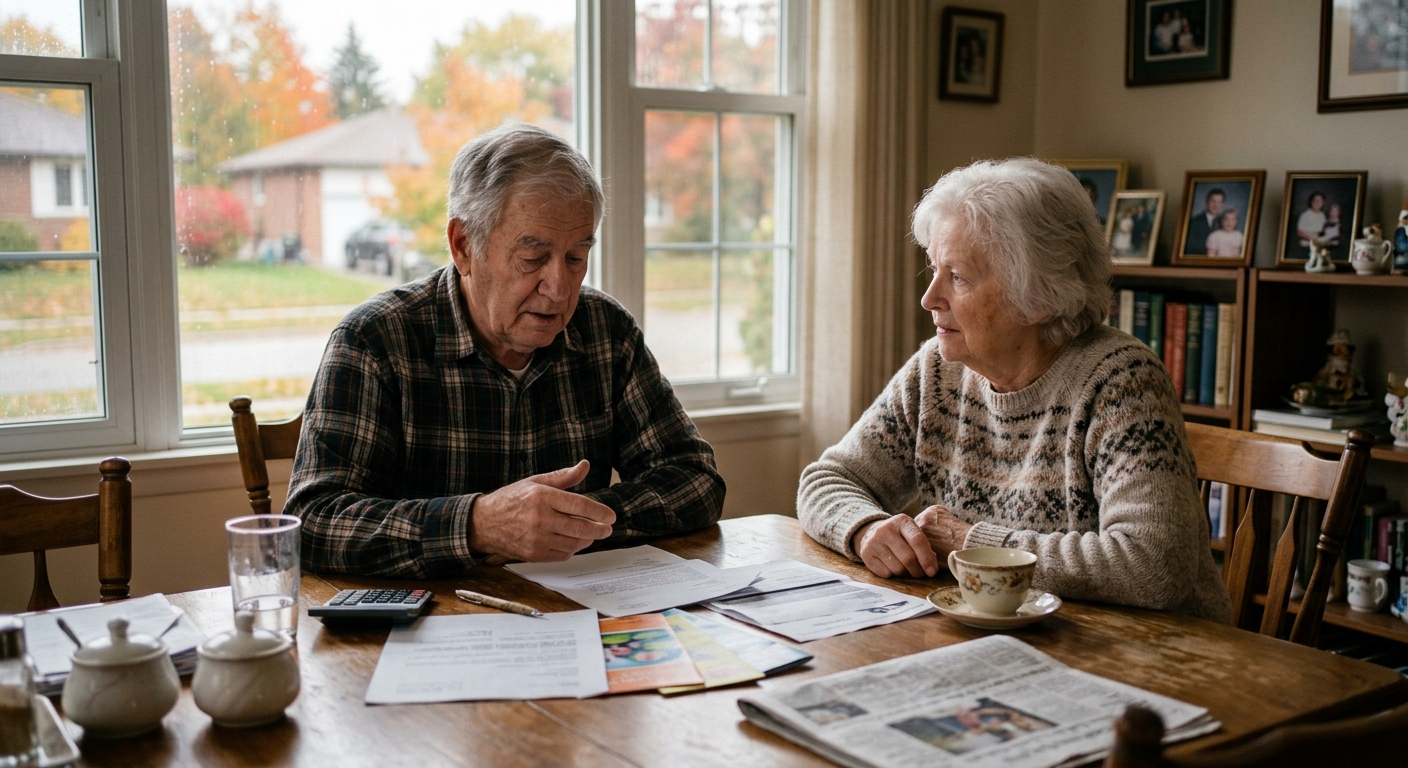
When making an offer in a bidding war, your financing certainty is as important as price. Here's how to structure a reverse mortgage offer that sellers find compelling:
The Financing Clause
Strong clause (using reverse mortgage):
"Buyer is pre-approved for reverse mortgage financing with [Lender] and will provide proof of pre-approval by [date]. Closing within 30 days. No financing contingency."
Why this works:
- Sellers know you're pre-approved (fast qualification)
- No traditional mortgage underwriting delays
- Certainty of closing (reverse mortgages have higher approval rates than traditional mortgages)
- Proof of pre-approval is immediate (2–3 days)
Proof of Pre-Approval Document
Your reverse mortgage lender provides a pre-approval letter within 2–3 business days, stating:
- Your qualification amount (e.g., "up to $300,000")
- Current mortgage amount on your existing home (if any)
- Net proceeds available
- Timeline to closing
This letter is your competitive advantage—sellers see certainty.
Funding Mechanics: Buying Accessible Home via Reverse Mortgage
Let's model a realistic purchase:
| Scenario | Amount | Notes |
|---|---|---|
| New accessible property price | $550,000 | Toronto area typical |
| Down payment (from savings/sale) | $150,000 | Your equity from selling previous home or savings |
| Mortgage needed from new property | $400,000 | Financed via traditional mortgage (sold property, has equity) |
| Reverse mortgage on new property | $0–$100,000 | To fund closing costs, renovations, immediate accessibility needs |
| Total financing | $400,000–$500,000 | Split between traditional mortgage (purchase) + reverse mortgage (home modifications) |
In practice:
- Your existing home sells (provides down payment)
- Reverse mortgage on new accessible home funds immediate costs:
- Closing costs ($8,000–$12,000)
- Accessibility modifications ($15,000–$40,000)
- Home inspections/repairs ($5,000–$15,000)
- You avoid cashing in investments or depleting emergency savings
Comparing Bidding Strategies: Cash vs. Mortgage vs. Reverse Mortgage
| Strategy | Speed | Certainty | Financial Impact | Best For |
|---|---|---|---|---|
| Cash offer (liquid savings) | Fastest; 1 week | Highest; no financing risk | Depletes liquid reserves; tax on investment withdrawals | Sellers' favorite; risky for buyer |
| Traditional mortgage | Slowest; 3–4 weeks | Moderate; underwriting delays | Normal; spreads payments; income-dependent | Standard purchases; employed buyers |
| Reverse mortgage | Fast; 2–3 weeks | Very high; age/equity-based | Preserves liquid savings; no monthly payment obligation | Seniors competing in hot markets |
A reverse mortgage combines speed (faster than traditional mortgage) with preserved liquidity (unlike cash offers).
Key Takeaways
✓ Accessible homes represent <8% of Ontario's housing stock and attract multiple simultaneous bidders
✓ Reverse mortgages pre-qualify in 3–7 days vs. 10–14 days for traditional mortgages (10–20 days faster)
✓ Pre-approval letters from reverse mortgage lenders give sellers certainty, strengthening your bid
✓ No income requirements mean faster qualification even for retirees with fixed income
✓ Fast funding allows you to close by negotiated date, avoiding deal collapse due to delays
✓ Reverse mortgage on new home funds closing costs and modifications, preserving your savings
Frequently Asked Questions
Can I make an offer contingent on reverse mortgage approval?
Most sellers in competitive markets won't accept financing contingencies. However, a reverse mortgage pre-approval (obtained before you make an offer) means your offer is essentially non-contingent. Sellers see you're already qualified—no contingency needed.
What if the accessible home appraises lower than the purchase price?
The appraised value determines your maximum reverse mortgage advance. If the home appraises below purchase price, you may have less equity to access. However, you're purchasing the home based on its actual value—a low appraisal protects you by preventing overpaying. Consult with your real estate agent and appraiser about fair market value before bidding.
Can I use a reverse mortgage to pay off a traditional mortgage on a newly purchased home?
Yes. One common strategy: take a traditional mortgage for the purchase, then refinance with a reverse mortgage immediately if it's advantageous. However, this triggers two sets of closing costs and appraisals. Better to arrange reverse mortgage before purchase if you're 55+ and want to maximize equity access.
If I'm still working and have employment income, should I use a reverse mortgage or traditional mortgage?
Traditional mortgage may be better if you're working with strong income—lenders will offer better rates. A reverse mortgage is most advantageous when you're retired or have limited verifiable income. Speak with Rick Sekhon about your specific situation.
What if I don't have a down payment saved?
This limits your options. Most properties require 5–20% down. If you're selling a previous home, proceeds typically cover the down payment. If not, you may need to defer purchase until you've saved. A reverse mortgage can supplement (fund closing costs and modifications) but isn't a substitute for the down payment.
How does a reverse mortgage affect my ability to refinance later?
If you later want to refinance with a traditional mortgage (rates drop, circumstances change), lenders will pay off the reverse mortgage first, then refinance. This is straightforward but costs more (two closing processes). Plan your long-term strategy with Rick Sekhon and your real estate advisor before committing.
Next Steps
If you're searching for an accessible home in Ontario's competitive market, getting pre-approved for a reverse mortgage before house hunting gives you a decisive advantage:
- Call Rick Sekhon for a reverse mortgage pre-approval (3–7 days)
- Get a pre-approval letter to strengthen your offer when the right property appears
- Begin house hunting with confidence, knowing you can move quickly
- When you find the right home, submit a strong offer with financing certainty
Speed and certainty win in bidding wars. A reverse mortgage provides both.
For more on aging in place and accessible home design, explore our aging in place guide → or home modification strategies →.
Ready to Learn More?
Find out exactly how much you could unlock from your home — free and no obligation.
Related Articles
Reverse Mortgage for Transition to Active Adult 55+ Community: Complete Move Costs
Fund your move to an active adult 55+ retirement community in Ontario. Reverse mortgage covers transition costs, entrance fees, and home modifications.
Read →Reverse Mortgage as Bridge Financing: Funding the Gap While Your Home Sells
Use a reverse mortgage as bridge financing to cover living expenses while waiting for your current home to sell. Ontario strategy guide for 2026.
Read →Reverse Mortgage for Aging in Place With Fibromyalgia: Home Modifications for Invisible Illness
Fund home modifications for aging with fibromyalgia. Reverse mortgage enables accessible design for pain management, energy conservation, and quality of life.
Read →