
Reverse Mortgage as Bridge Financing: Funding the Gap While Your Home Sells
Use a reverse mortgage as bridge financing to cover living expenses while waiting for your current home to sell. Ontario strategy guide for 2026.
You're selling your current home but need cash to cover living expenses or a down payment on a new home while the sale closes. A reverse mortgage can serve as bridge financing, providing funds immediately without waiting for sale proceeds.
This article is for educational purposes only and does not constitute financial advice.

The Bridge Financing Challenge
Common scenario: You've decided to downsize or relocate. Your current home is listed, but it won't sell for several months. Meanwhile, you've already found a new home and need a down payment, or you need cash to cover living expenses during the transition.
The Typical Problem
| Issue | Impact |
|---|---|
| Home sale takes 3–6 months to close | Gap between listing and funds available |
| New home down payment due soon | Cash needed before sale proceeds arrive |
| Carrying costs on old home | Mortgage, property tax, utilities during sale period |
| Living expenses continue | Rent, utilities, food—life doesn't pause during transition |
| Uncertainty of sale price | May not achieve asking price; net proceeds uncertain |
Result: Many seniors delay selling or make hasty decisions due to cash pressure. A reverse mortgage on the current home can bridge this gap.
How a Reverse Mortgage Works as Bridge Financing
Scenario 1: Down Payment Bridge
Richard, 69, owns a $500,000 Toronto home with a $80,000 mortgage balance.
Plan: Sell current home, buy a $350,000 condo in Mississauga. New condo requires 20% down payment ($70,000).
The challenge: Home is listed but won't close for 4 months. Richard needs the $70,000 down payment now.
Bridge solution:
- Richard applies for a reverse mortgage on his current home (before listing or after listing, both work)
- Approved for $200,000 (55% of $500,000 home value, less the $80,000 existing mortgage)
- Closes reverse mortgage; receives $120,000 in net proceeds ($200,000 – $80,000 existing mortgage payoff)
- Uses $70,000 for condo down payment; retains $50,000 for closing costs, moving expenses, etc.
- Current home sells after 4 months; sale proceeds ($420,000 after realtor fees, ~6%) pay the reverse mortgage ($120,000 balance) and close the transaction
- Richard receives remaining equity from sale
Result: Down payment secured immediately; current home's sale closes the reverse mortgage. No bridge loan needed.
Scenario 2: Living Expense Bridge
Grace, 72, is selling a $425,000 home and moving to a rental apartment (downsizing, not buying new).
The challenge: Sale takes 5 months. Grace's CPP is $20,000/year ($1,667/month). She wants to move to a new apartment immediately (lease starts next month), but current home sale funds won't arrive for 5 months.
Living expense bridge:
- Grace applies for a reverse mortgage on current home
- Approved for $233,750 (55% of home value)
- Closes reverse mortgage; receives $233,750 lump sum
- Uses $10,000/month × 5 months = $50,000 for living expenses during transition
- Home sells after 5 months; proceeds pay the reverse mortgage
- Grace moves to rental apartment with reversed mortgage fully repaid
Result: Living expenses covered during transition; home sale repays the reverse mortgage; Grace avoids financial pressure during a sensitive time.
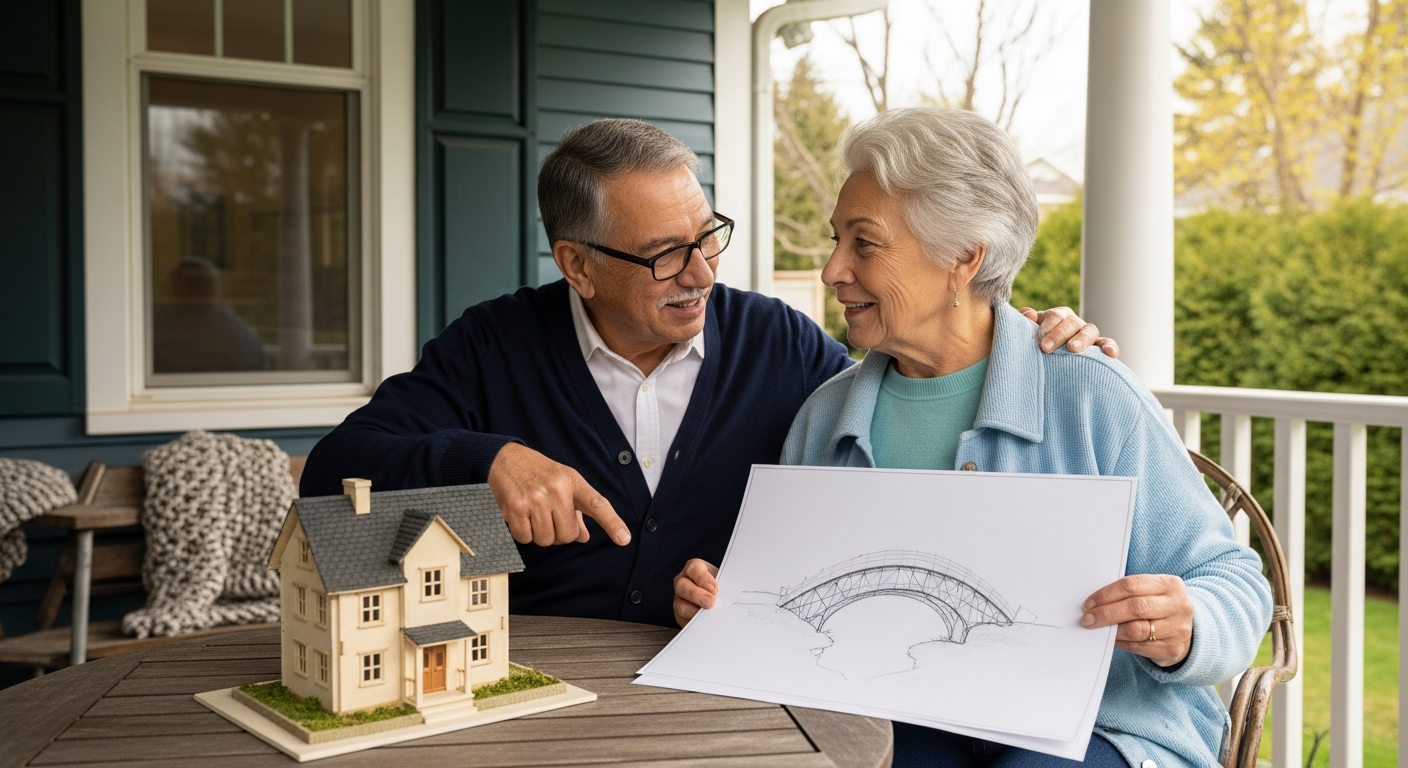
Reverse Mortgage Bridge vs. Traditional Bridge Loan
How does a reverse mortgage bridge compare to a traditional bridge loan?
| Factor | Reverse Mortgage Bridge | Traditional Bridge Loan |
|---|---|---|
| Age requirement | 55+ | Any age (lender discretion) |
| Interest rate | ~6.5% | ~8–10% (varies) |
| Monthly payments | None required | Required (interest-only typical) |
| Approval timeline | 4–6 weeks | 1–2 weeks (faster) |
| Closing costs | ~$1,500–$2,500 | ~$1,000–$2,000 |
| Ideal situation | Seller is 55+ | Seller is any age, quick turnaround needed |
| Risk of sale falling through | Reverse mortgage still due (unless sale occurs) | Bridge loan still due; borrower at risk |
Key insight: Reverse mortgage bridges are ideal for Ontario seniors because they require no monthly payments. You're not paying interest + principal while waiting for the sale. Traditional bridges often require monthly interest payments, adding cost during the holding period.
Step-by-Step: Using a Reverse Mortgage as Bridge
Step 1: Get Pre-Approval Before Listing (Recommended)
- Contact a reverse mortgage specialist (Rick Sekhon)
- Provide home address, current value estimate, existing mortgage balance
- Receive pre-approval and borrowing amount estimate
- Understand the costs and timeline
Why pre-approval helps:
- You know exactly how much bridge financing is available
- You can list the home with confidence
- You're not rushing to close a reverse mortgage while managing a sale
Step 2: List Your Home
Once pre-approved:
- List your home with a real estate agent
- Set a realistic timeline and price (work with agent; know market conditions)
- Advertise the sale
Note: You can list with or without having the reverse mortgage closed. Some sellers close it first for certainty; others close it only if they need the funds.
Step 3: Close the Reverse Mortgage (When Funds Are Needed)
- Formalize the reverse mortgage application
- Property is appraised (standard process)
- Receive updated valuation; confirm borrowing amount
- Independent Legal Advice obtained
- Close the reverse mortgage; receive funds
Timeline: 4–6 weeks from formal application to closing.
Step 4: Use Funds for Bridge Needs
- Down payment on new home (if applicable)
- Living expenses during transition
- Carrying costs (if old home and new home overlap)
- Moving expenses, new furniture, etc.
Track spending: Keep records of what you use bridge funds for; helpful for understanding cash flow.
Step 5: Home Sale Closes; Reverse Mortgage Repays
- Your home sells; closing is scheduled
- Real estate transaction closes; proceeds arrive
- Reverse mortgage is repaid from sale proceeds
- You receive remaining equity
Example math:
- Sale price: $500,000
- Realtor commission (6%): -$30,000
- Legal/closing costs: -$2,000
- Reverse mortgage balance: -$120,000 (principal + accrued interest)
- You receive: $348,000 (to use for new home purchase, living expenses, etc.)
Critical Timing Considerations
What If Your Home Doesn't Sell?
This is the main risk of using a reverse mortgage as bridge financing.
Scenario: You close a reverse mortgage expecting to sell in 4 months, but the sale falls through. What happens?
Answer: The reverse mortgage is still due. You have several options:
- Relist the home — Try selling again with a new realtor or adjusted price
- Keep the reverse mortgage active — Continue living in the home; mortgage stays in place; you pay interest (compounds annually)
- Refinance or increase the loan — If you need more funds and home equity allows
- Apply for traditional HELOC or home equity loan — Shift to different financing structure (typically requires monthly payments)
Risk mitigation:
- Ensure your home is realistically priced and marketed
- Have a backup plan (willingness to keep the home, or alternative residence option)
- Discuss worst-case scenarios with your reverse mortgage specialist before closing
What If the Sale Proceeds Are Less Than Expected?
Scenario: Your home sells for $420,000 instead of the $500,000 asking price. Reverse mortgage balance is $120,000. Will you still have enough to cover your move?
Answer: Maybe. Let's calculate:
- Sale price: $420,000
- Realtor commission (6%): -$25,200
- Legal fees: -$2,000
- Reverse mortgage repayment: -$120,000
- You receive: $272,800
This may still be sufficient for your new home down payment and transition, but it's less than expected. Discuss this risk with your realtor and reverse mortgage specialist upfront.
Pro tip: Consider a price floor. If your home won't sell for your minimum acceptable price, you may choose not to sell.
Timeline Expectations
Best-Case Timeline: 12–16 Weeks
| Week | Action |
|---|---|
| Week 1 | Pre-approval for reverse mortgage |
| Week 2–4 | List home; begin showing |
| Week 5 | Offer received; accepted |
| Week 5–8 | Formal reverse mortgage application; appraisal |
| Week 9 | Independent Legal Advice; reverse mortgage closes; funds received |
| Week 9–12 | Home inspection, title search, financing for buyer (if applicable) |
| Week 13–16 | Final title work, closing coordination |
| Week 16 | Home closes; funds received; reverse mortgage repaid |
Longer Timeline: 20–26 Weeks
If the home takes longer to sell, the timeline extends. Most homes in Ontario take 30–60 days to sell (in normal markets), though some take 3–6 months.
Comparing Costs
Scenario: $100,000 Bridge Amount Needed for 5 Months
| Method | Interest Cost | Fees | Total Cost |
|---|---|---|---|
| Reverse mortgage | $2,708 (6.5% annually) | $1,500 | $4,208 |
| Traditional bridge loan | $4,167 (10% annually, monthly payments) | $1,500 | $5,667 |
| HELOC | $4,167 (10% annually, monthly payments) | $500 | $4,667 |
| Credit card (12 months at 20%) | $10,000 (over 12 mo.) | $0 | $10,000+ |
Reverse mortgage is most cost-effective for situations where you don't want monthly payments and expect to repay within 6–12 months.
Who Should Use a Reverse Mortgage Bridge?
Ideal Candidates
✓ Age 55+ (reverse mortgage eligible) ✓ Home is worth $300,000+ (borrowing amount makes sense) ✓ Strong confidence home will sell within 6–12 months ✓ Prefer not to make monthly payments during transition ✓ Need cash for down payment or living expenses now ✓ Want to downsize or relocate
NOT a Good Fit
✗ Unsure whether home will sell ✗ In a declining real estate market ✗ Home is in poor condition or hard to sell ✗ Age under 55 (not reverse mortgage eligible) ✗ Home value under $250,000 (limited borrowing; costs may not justify) ✗ Plan to stay in the home (defeat the purpose)
FAQ: Reverse Mortgage Bridge Financing
Q: Can I close a reverse mortgage before my home is listed? A: Yes. Pre-closing (before listing) reduces time pressure. Once funds are available, you can list at your own pace.
Q: What if I close a reverse mortgage but the sale falls through and I need to stay? A: The reverse mortgage remains. You continue living in the home; interest accrues. No monthly payments required unless you choose to pay down principal.
Q: Can I get a reverse mortgage on my new home while still carrying the old one? A: Generally, no. Most lenders require you to have only one reverse mortgage on one primary residence at a time. Once the old home sale closes, you can explore options for the new home.
Q: Is a reverse mortgage bridge more expensive than other bridge loans? A: Often comparable or cheaper, especially when you factor in monthly payment requirements for traditional bridges.
Q: What if the sale closes but proceeds are insufficient to fully repay the reverse mortgage? A: The no-negative-equity guarantee protects you. If your home sells for less than the reverse mortgage balance, you owe nothing more than the sale proceeds. The lender absorbs the loss.
This content is for illustrative purposes only. Rates may vary. Call Rick Sekhon for the best rates and more information.
Speak to a licensed mortgage professional. Independent legal advice is required before closing a reverse mortgage in Ontario. Consult a real estate agent and accountant before making relocation decisions.
Ready to Learn More?
Find out exactly how much you could unlock from your home — free and no obligation.
Related Articles
Reverse Mortgage vs Relocating Within Ontario: Complete Analysis
Should you relocate within Ontario to a smaller home or use a reverse mortgage to stay? Cost and lifestyle comparison for Ontario seniors.
Read →Reverse Mortgage vs Bridge Financing in Ontario Explained
Reverse mortgage vs bridge financing Ontario comparison. See costs, timelines, eligibility, and which option suits your situation as an Ontario homeowner.
Read →How to Sell a Home with a Reverse Mortgage Ontario
Step-by-step guide to sell a home with a reverse mortgage in Ontario. Covers the discharge process, penalties, timelines, and what to expect at closing.
Read →