
Multiple Disability Home Accessibility: Reverse Mortgage for Complex Needs
When your adult child or aging parent has multiple disabilities, home modifications are complex and expensive. Use a reverse mortgage to fund comprehensive accessibility.
Your adult child or aging parent has multiple disabilities—perhaps cerebral palsy with hearing loss, or arthritis combined with vision decline. Single-purpose modifications don't work. They need integrated home design that accommodates overlapping accessibility needs simultaneously. Comprehensive modifications cost $50,000-$150,000. How do you fund the accessibility your loved one actually needs instead of settling for partial solutions? A reverse mortgage allows you to fund holistic, multi-disability home design.
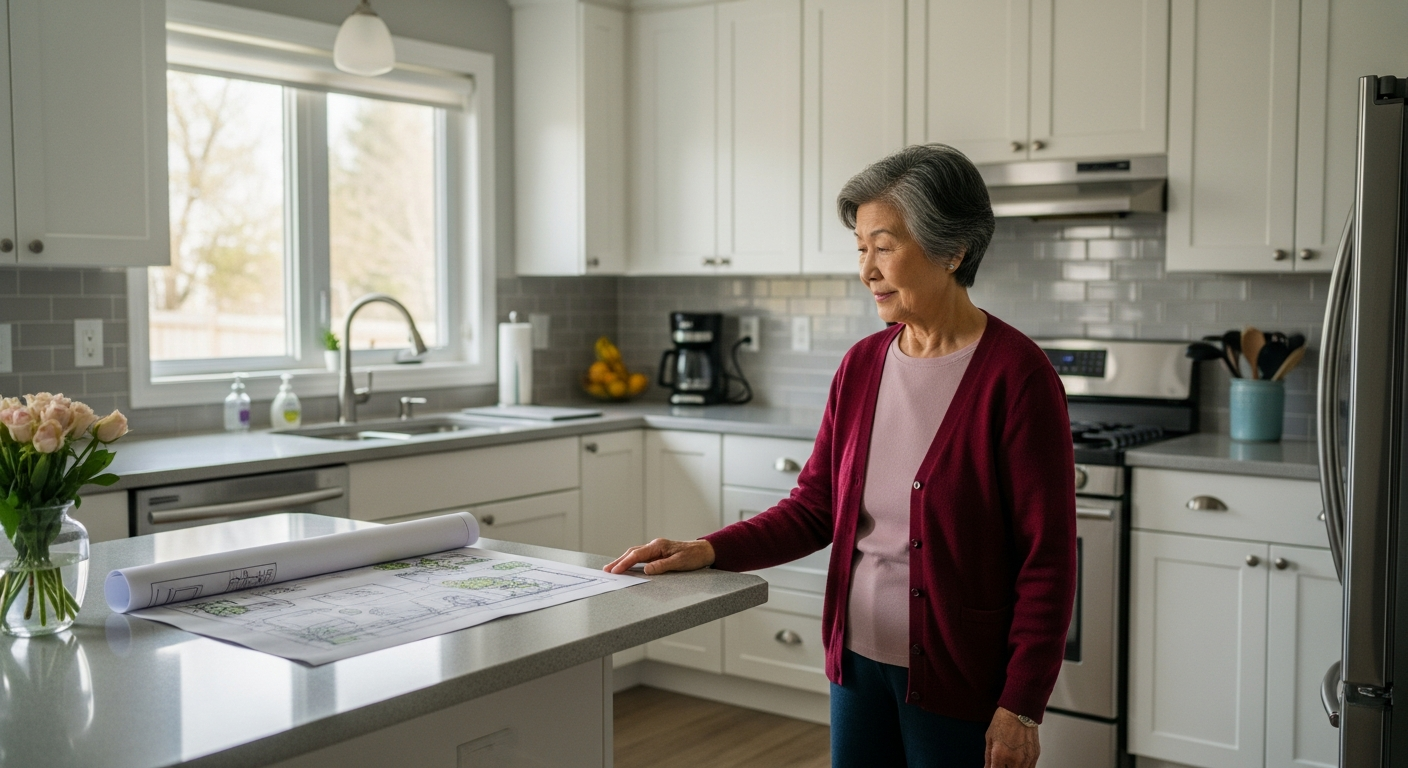
The Complexity of Multiple Disabilities
When someone has multiple disabilities, home accessibility becomes complex. A ramp solves mobility but may create acoustic problems. Bright lighting helps vision but disturbs someone with migraine-related light sensitivity. Solutions for one disability can worsen others, requiring sophisticated integrated design.
Approximately 25% of Canadians with disabilities have multiple disability types. These overlapping challenges create accessibility needs that standard single-disability modifications don't address.
Examples of Multi-Disability Combinations
| Disability Combination | Accessibility Conflict | Solution Complexity |
|---|---|---|
| Mobility (wheelchair) + Hearing loss | Ramps needed but doorways with poor sightlines; can't hear visitors | High: requires visual entry systems + accessible design |
| Vision loss + Balance/vestibular issues | Bright lighting helps vision but triggers dizziness | High: requires specialized lighting (bright but flicker-free) |
| Arthritis + Cognitive decline | Simpler controls help arthritis, but confusion needs clarity | High: requires intuitive design avoiding overwhelm |
| Autism spectrum + ADHD | Sensory-seeking vs. sensory-avoiding; visual stimulation helpful for ADHD but overwhelming for autism | Very high: requires nuanced sensory calibration |
| Chronic pain + Sleep disorder | Pain management suggests movement/activity spaces; sleep needs dark, quiet, isolated areas | Very high: requires multiple distinct zones |
Effective multi-disability home design requires specialized professional expertise—not standard contractor work.
According to the Canadian Association of Occupational Therapists, approximately 40% of accessibility renovation failures stem from addressing single disabilities while ignoring secondary disability needs. Homes designed for complex, overlapping disabilities are significantly more expensive but dramatically more effective.
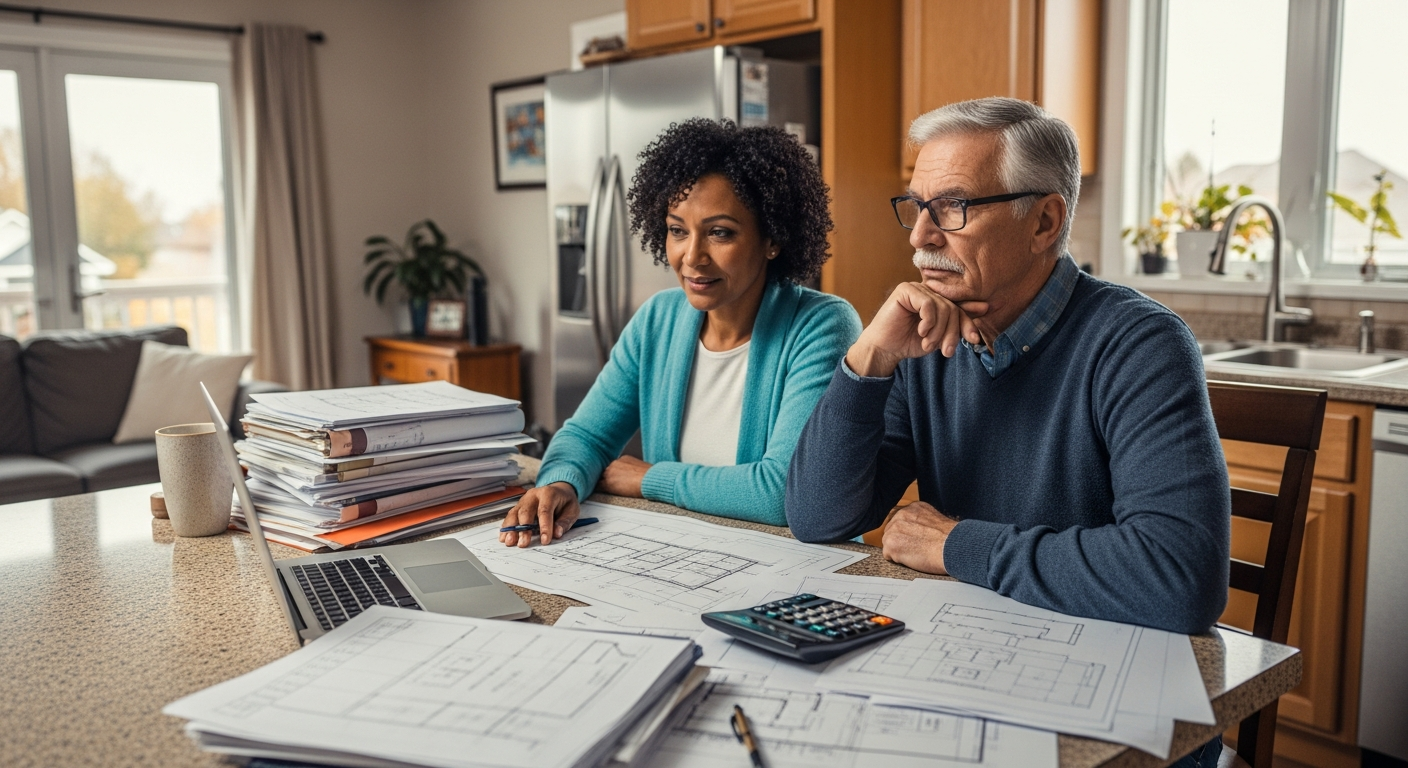
Cost of Comprehensive Multi-Disability Modifications
Full-Home Multi-Disability Accessibility Project
| Home System/Area | Standard Accessibility | Multi-Disability Accommodation | Added Cost |
|---|---|---|---|
| Entryway/exits | Ramp + handrails | Ramp + visual entry system + accessible doors + sensory considerations | +$8,000-$15,000 |
| Bathroom | Grab bars + accessible shower | Grab bars + accessible shower + visual/audio accommodations + sensory flooring | +$12,000-$20,000 |
| Kitchen | Lowered counters + accessible appliances | Lowered counters + specialty appliances + sensory-optimized design + visual/audio aids | +$8,000-$15,000 |
| Bedroom | Accessible bed + clear floor space | Accessible bed + mobility aids + specialized flooring + sensory zones + climate control | +$10,000-$18,000 |
| Lighting throughout | Bright, consistent | Specialized flicker-free + dimmable + color-adjustable + motion-detection | +$6,000-$12,000 |
| Flooring throughout | Slip-resistant | Slip-resistant + shock-absorbing + acoustic-dampening + easy-to-clean | +$5,000-$10,000 |
| Smart home integration | Basic accessibility controls | Integrated voice control + visual displays + redundant input methods | +$8,000-$15,000 |
| Professional design consultation | Included in contractor estimate | Specialized occupational therapist + architect + accessibility engineer | +$5,000-$10,000 |
| TOTAL COMPREHENSIVE PROJECT | ~$40,000-$60,000 | ~$100,000-$150,000 | +$60,000-$90,000 |
Single-disability modifications miss the integration that makes a home truly accessible for complex needs.
Case Study: Multi-Disability Home Redesign
Samantha, 42, has:
- Cerebral palsy (mobility limitation, uses wheelchair, speech affects)
- Hearing loss (communicates with hearing aids, sign language, written)
- Chronic pain (positions matter; movement essential for comfort)
- Anxiety disorder (needs control, predictability, escape spaces)
Samantha lives with her mother, Rachel, age 72. Rachel owns their Ontario home (valued at $600,000) outright.
Standard accessibility modifications ($50,000) would address mobility:
- ✓ Ramp to main entrance
- ✓ Accessible bathroom
- ✓ Lowered kitchen counters
- ✗ But poor for hearing loss (no visual entry system, acoustic problems)
- ✗ But problematic for anxiety (no retreat spaces, no sensory control)
- ✗ But inadequate for pain management (no movement spaces, poor ergonomics)
Samantha's specialist occupational therapist recommends comprehensive multi-disability modifications ($125,000):
Entryway/Circulation
- Ramp with optimal slope
- Video entry system (hearing loss accommodation)
- Clear sightlines throughout (anxiety/safety)
- Wide hallways (wheelchair + pain management through movement)
Bedroom Redesign
- Accessible bed with specialty positioning
- Quiet refuge area (anxiety management)
- Climate control (pain management)
- Visual alerting system (hearing loss; calls/alarms converted to lights)
Bathroom
- Accessible shower with grab bars
- Visual emergency call system
- Sensory flooring (non-slip, shock-absorbing for pain)
- Mobility optimization
Kitchen Adaptation
- Lowered, accessible design
- Visual communication aids for speech challenges
- Ergonomic positioning for pain management
- Movement-friendly layout
Smart Home Integration
- Voice control (accessibility for speech)
- Visual alerts (hearing loss accommodation)
- Automated lighting (pain, anxiety, vision needs)
- Redundant control methods (accommodates various abilities)
Rachel arranges a $130,000 reverse mortgage line of credit with Equitable Bank. The project is completed over 6 months.
Results:
- Samantha's mobility is supported
- Her hearing loss is accommodated through visual systems
- Her anxiety decreases with predictable, controllable spaces
- Her pain improves with optimized positioning and movement zones
- Her speech challenges are supported by visual systems
- The home becomes genuinely accessible, not partially
This comprehensive approach transforms Samantha's quality of life far beyond standard single-disability modifications.
Finding Multi-Disability Design Professionals
Standard contractors don't have expertise in multi-disability integration. You need specialists:
Essential Professional Team
| Professional | Expertise | Role in Project |
|---|---|---|
| Occupational therapist (OT) with multi-disability training | Assessment of complex needs, interaction analysis | Lead designer, needs assessment |
| Accessibility architect or designer | Universal design principles, building code compliance | Project design, feasibility analysis |
| Accessibility engineer (for smart systems) | Integrated technology, redundant controls | Smart home design, automation |
| Contractor experienced in accessibility projects | Building, installation, problem-solving | Project execution, quality control |
Never use a standard contractor alone for multi-disability work. Always include an OT and accessibility specialist in design.
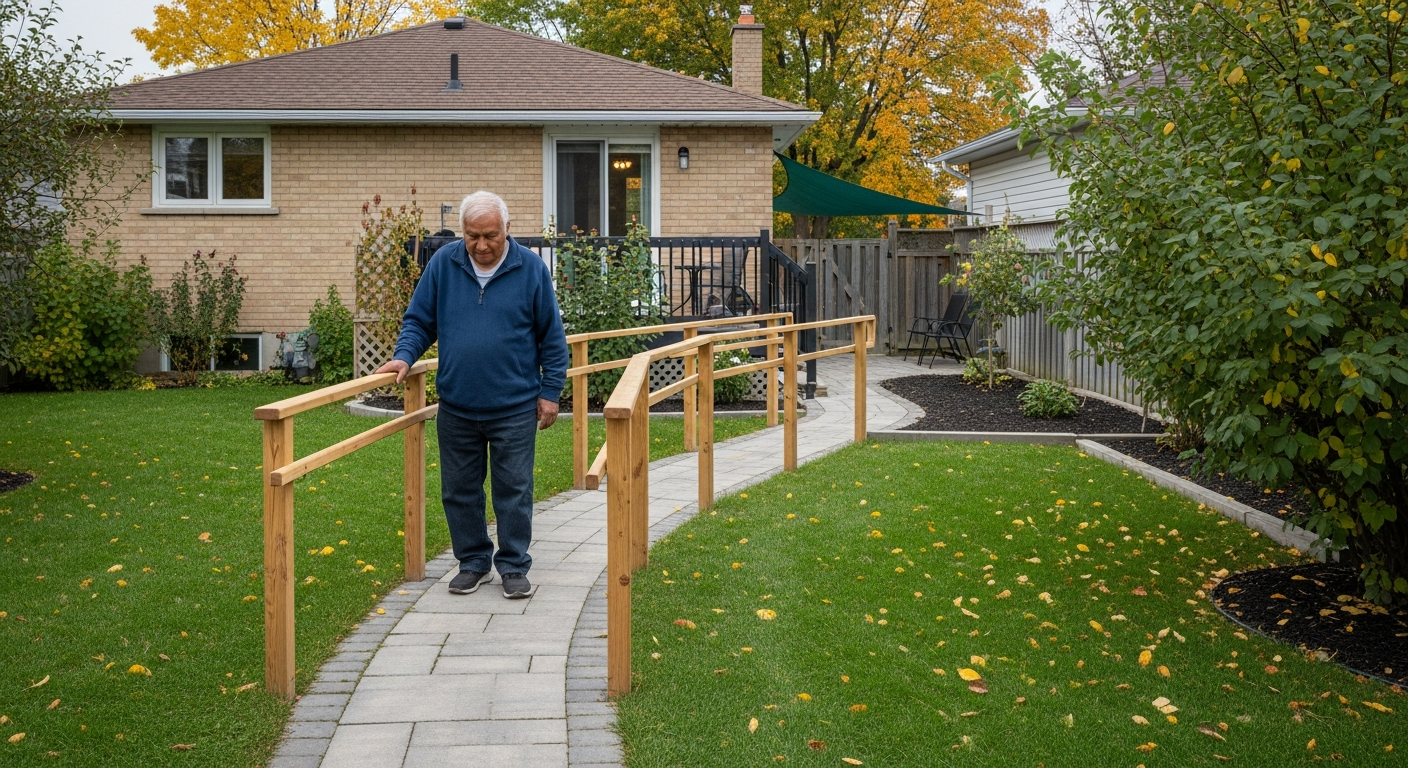
Funding Sources Beyond Reverse Mortgage
Before using a full reverse mortgage, explore other funding options:
Canadian Funding Sources for Accessibility
| Funding Source | Availability | Amount | How to Access |
|---|---|---|---|
| Ontario Disability Support Program (ODSP) | For ODSP recipients | $1,000-$2,000 annually | Apply through ODSP case manager |
| Registered Disability Savings Plan (RDSP) | For those eligible for Disability Tax Credit | Varies | Contributions + government matching |
| Accessibility for Ontarians with Disabilities Act (AODA) grants | Employer-provided (if applicable) | $500-$5,000 | Through employer HR |
| Provincial accessibility grants (varies by province) | Limited availability | $3,000-$15,000 | Check provincial government site |
| Disability Tax Credit (DTC) + Home Accessibility Deduction | Tax benefit, not cash | $15,000 tax deduction (cumulative) | Tax return claiming |
| Private disability insurance (if applicable) | Dependent on policy | Varies | Insurance policy review |
| Charitable organizations for specific disabilities | Limited, competitive | $1,000-$10,000 | Apply to disease-specific orgs |
| Reverse Mortgage (if other sources insufficient) | For homeowners 55+ | Up to 40-50% home equity | Available to fill gaps |
Combine these sources to reduce reverse mortgage dependence. Use the RM only for the remainder after other funding is exhausted.
Key Takeaways
- Multi-disability accessibility modifications cost $100,000-$150,000 because they require integrated design, not just single-disability fixes
- Standard contractors can't deliver complex multi-disability solutions — you need specialized occupational therapists and accessibility designers
- Single-disability modifications often worsen secondary disabilities — professional assessment prevents this
- Comprehensive design dramatically improves quality of life — more effective than cheaper, partial modifications
- Multiple funding sources exist — combine ODSP grants, RDSP, disability tax benefits, and charitable support before using reverse mortgage
- A reverse mortgage fills funding gaps when other sources are insufficient
When Multi-Disability Modification Is Necessary
Consider comprehensive multi-disability accessibility modification if:
- ✓ Your loved one has 2+ disabilities affecting independence
- ✓ Standard modifications have failed or worsened other conditions
- ✓ Professional assessment recommends integrated design
- ✓ Your loved one will age in the home long-term
- ✓ Your home is adequate structurally (not fundamentally unsuitable)
- ✓ You can afford funding (through combination of sources + reverse mortgage if needed)
Frequently Asked Questions
How do I know if my home is suitable for comprehensive multi-disability modifications?
An accessibility architect can assess this. Older homes, cramped layouts, or structural limitations may make comprehensive modification impractical. A professional assessment ($1,500-$3,000) can clarify feasibility before major planning.
Can I phase multi-disability modifications (do some now, some later)?
Yes. Prioritize the highest-impact areas first (usually bedroom + bathroom). Other areas can follow as funding allows. However, piecemeal approaches often miss the integration that makes modification effective.
What if my home can't physically accommodate comprehensive modifications?
Relocation may be necessary. Some homes—small bungalows, narrow layouts, or structural limitations—cannot accommodate full multi-disability accessibility. In such cases, downsizing to an accessible property might be more cost-effective than extensive renovation.
Should I invest in multi-disability modifications if my loved one might eventually need institutional care?
That depends on timeline expectations. If institutional care is likely within 2-3 years, comprehensive home modification may not be justified. If your loved one can age at home for 10+ years with proper modifications, the investment makes sense.
How do I monitor contractor quality during a complex multi-disability project?
Regular site visits, specification verification, and involvement of your OT/accessibility professional throughout construction are essential. Complex projects often require adjustments; don't rely solely on the contractor's judgment.
Does a reverse mortgage affect my adult child's eligibility for ODSP or disability benefits?
Not directly. Reverse mortgage proceeds to you (not your adult child) are not income. However, if your adult child receives ODSP and you provide financial support from RM proceeds, that could affect their asset limits. Consult ODSP about disclosure requirements.
Create True Accessibility Today
Multi-disability accessibility isn't about partial solutions—it's about comprehensive integration. A reverse mortgage, combined with other funding sources, can transform your loved one's independence and quality of life.
Ready to Learn More?
Find out exactly how much you could unlock from your home — free and no obligation.
Related Articles
Reverse Mortgage for Home Accessibility: Supporting Adult Child's Spouse with Mobility Disability
Fund home accessibility modifications for your adult child's spouse with mobility disability. Create wheelchair-accessible spaces and assistive features in Ontario homes with a reverse mortgage.
Read →Reverse Mortgage for Aging in Place With Fibromyalgia: Home Modifications for Invisible Illness
Fund home modifications for aging with fibromyalgia. Reverse mortgage enables accessible design for pain management, energy conservation, and quality of life.
Read →Reverse Mortgage for Accessible Community Kitchen: Culinary Training and Aging in Place
Convert your home kitchen into an accessible commercial culinary training space. Reverse mortgage funds renovation while creating community impact.
Read →