
Reverse Mortgage for Kitchen Appliance Replacement: Aging-Accessible Designs and Energy Efficiency
Replace aging kitchen appliances with senior-friendly models using reverse mortgage. Easy-to-use controls, ergonomic design support aging independence.
Aging kitchen appliances with tiny controls, complex interfaces, and poor visibility frustrate seniors and create safety hazards. Senior-friendly appliances—with large, easy-to-read controls, lower heights, and simplified operations—maintain independence in meal prep and cooking. A reverse mortgage funds these specialized upgrades without financial strain.
Why Kitchen Appliance Design Matters for Aging Seniors
Many aging seniors struggle with standard appliances:
- Tiny digital displays are unreadable without magnifying glasses
- Complex button panels create confusion about temperature, time, settings
- High counters and reaching strain shoulders and backs
- Standard stove heights require dangerous bending or standing on tiptoes
- Refrigerator shelves at eye level for 5'6" people, not 5'2" seniors
"Accessible kitchen appliance design is a major determinant of sustained independence in meal preparation for aging seniors. Poorly designed kitchens lead to nutritional decline, falls, and accelerated loss of independence." — CMHC Kitchen Accessibility Research 2025
These design mismatches lead seniors to:
- Avoid cooking (nutritional decline)
- Overheat or undercook food (safety risk)
- Struggle with temperature control (falls, burns)
- Lose independent meal preparation ability
Senior-accessible appliances remove these barriers and sustain independence.
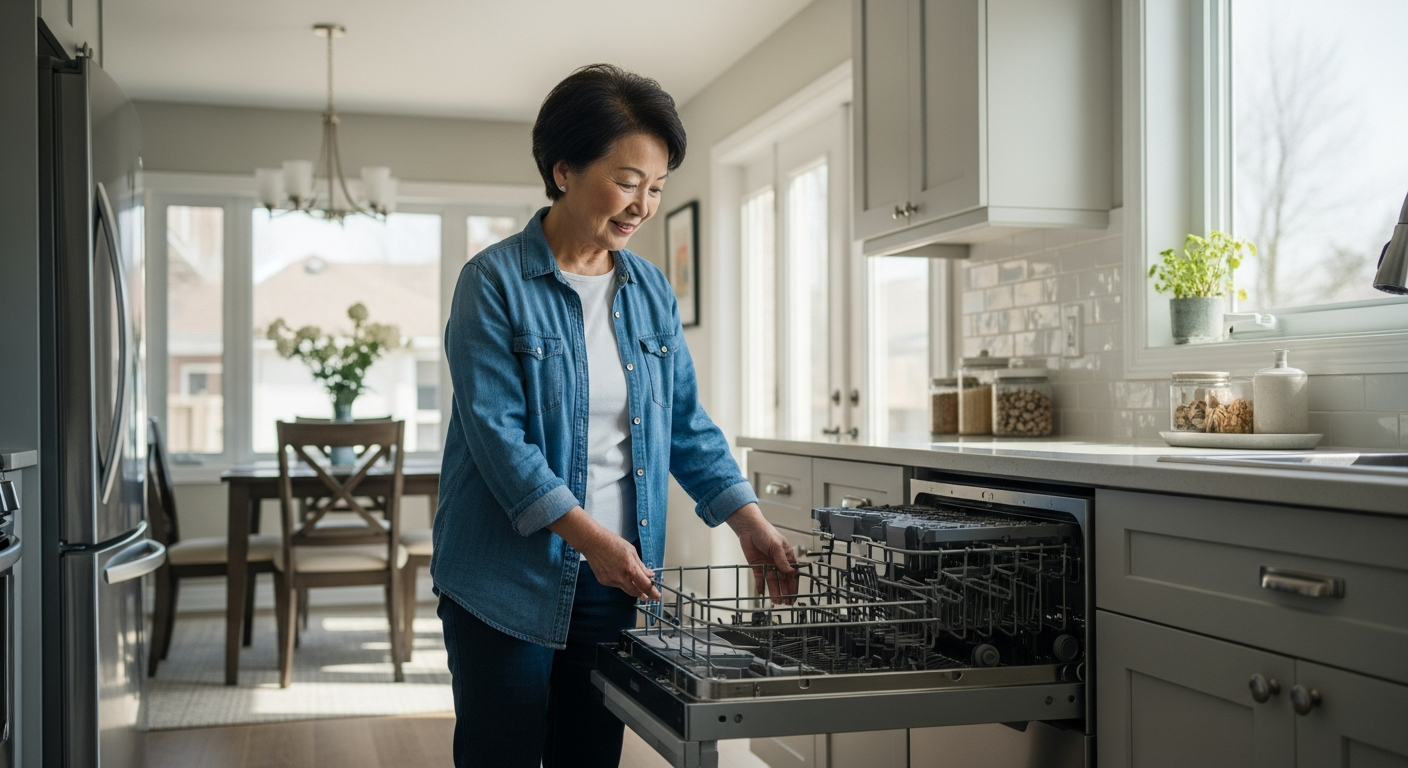
Senior-Friendly Appliance Features and Options
| Appliance | Senior-Friendly Features | Standard Cost | Age-Accessible Cost | Key Benefit |
|---|---|---|---|---|
| Refrigerator | Freezer drawer (no bending), large readable digits, easy-open door | $1,200–$2,000 | $1,800–$3,000 | Accessibility + energy efficiency |
| Electric range | Low profile (32" vs. 36"), large controls, digital display | $800–$1,500 | $1,200–$2,200 | Easy reach, clear visibility |
| Microwave | Large buttons, high-contrast display, accessible placement | $400–$700 | $600–$1,000 | Simple operation, safety |
| Dishwasher | Front-loading, raised height, easy controls, quiet cycle | $600–$1,200 | $1,000–$1,800 | Ergonomic, low physical demand |
| Slow cooker/instant pot | Large display, simple 3–5 button options, safety shutoff | $80–$150 | $100–$200 | Simplified cooking |
| Coffee maker | One-button operation, audible alert, drip tray accessible | $60–$150 | $100–$250 | Daily independence |
| Oven | Lower mounting, easy-pull racks, large temperature display | $1,500–$2,500 | $2,200–$3,500 | Safe cooking comfort |
The Reverse Mortgage Advantage for Kitchen Appliance Replacement
Updating an entire kitchen with senior-accessible appliances costs $5,000–$12,000. This is significant on a fixed income but transformative for independence.
A reverse mortgage:
- Eliminates monthly payment burden on pension income
- Covers complete kitchen renovation without disrupting retirement cash flow
- Allows phased replacement (replace stove this year, refrigerator next year)
- Provides flexibility through lump sum or draw structure
"Kitchen accessibility for aging seniors significantly extends the ability to prepare meals independently, which is strongly correlated with better nutrition, health outcomes, and quality of life." — CMHC Kitchen Design for Aging Research 2025
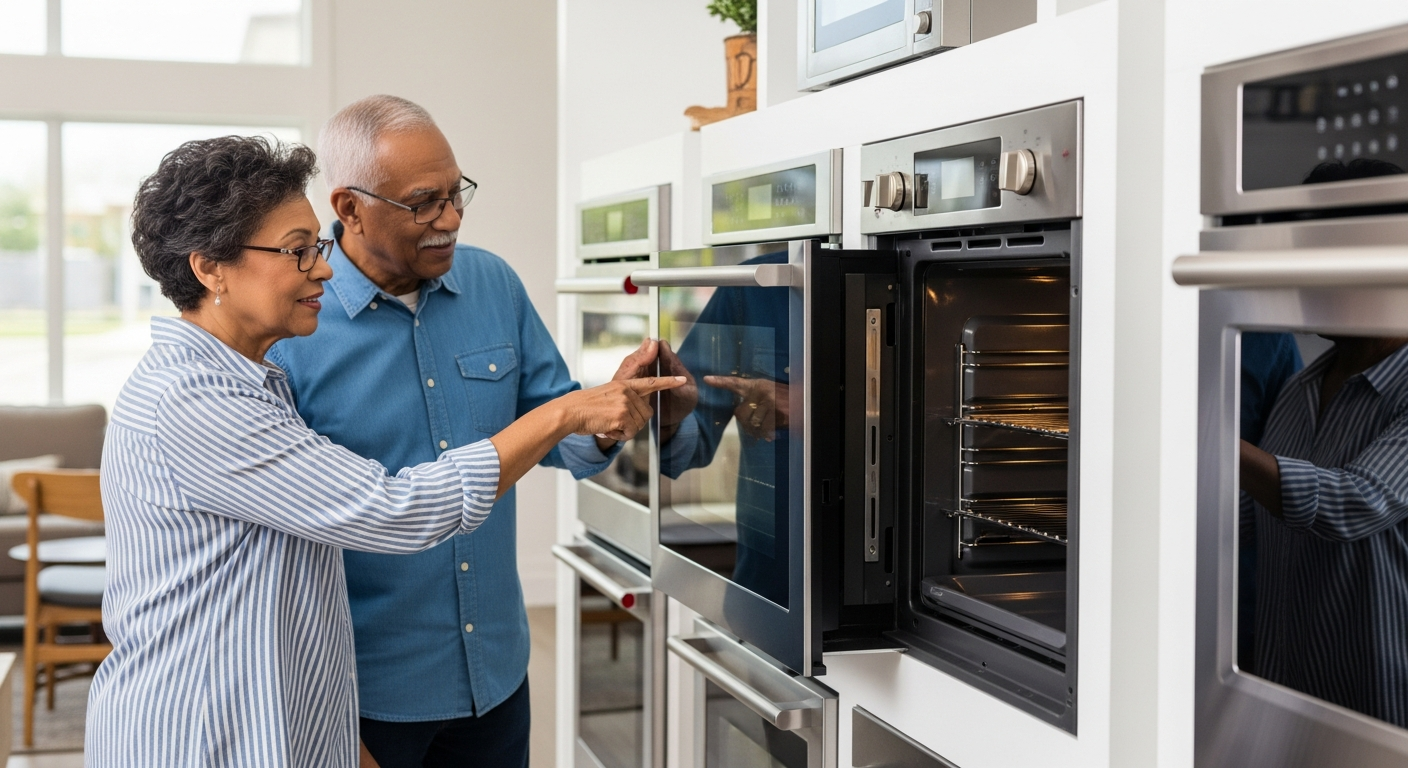
Real Scenario: Aging Kitchen Transformation with Reverse Mortgage
Robert, 74, in Hamilton, Ontario has a 1995 kitchen with original appliances. Controls are faded; he struggles to see temperature settings. His refrigerator's freezer is top-mounted (he bends painfully to access frozen foods). He owns his home ($520,000, no mortgage) and qualifies for a $165,000 reverse mortgage.
Robert's kitchen replacement plan:
- Year 1: New electric range (low profile, large controls) + refrigerator with bottom freezer drawer — $4,000
- Year 2: New dishwasher and microwave with accessible placement — $2,000
- Year 3: Add pantry organization and lighting improvements — $1,000
Total: $7,000 funded by reverse mortgage draws. Robert's kitchen becomes completely age-friendly. He prepares meals independently for 10+ more years. Monthly expenses don't change.
Comparison: Kitchen Appliance Replacement by Budget
| Budget | Scope | Appliances | Aging-In-Place Benefit |
|---|---|---|---|
| $2,000–$3,000 | Essential upgrades | New stove (with large controls) + improved lighting | Safely cook on reliable appliance |
| $3,000–$5,000 | Extended | Stove + refrigerator with accessible freezer | Cooking + easy food access |
| $5,000–$8,000 | Comprehensive | Stove + refrigerator + microwave + dishwasher | Full kitchen independence |
| $8,000–$12,000 | Complete overhaul | All major appliances + cabinet modifications + lighting | Premium aging-in-place comfort |
Energy Efficiency as an Added Benefit
Modern senior-accessible appliances are significantly more energy-efficient than 1990s–2000s models:
| Appliance | 1990s Model Annual Cost | Modern Model Annual Cost | Savings |
|---|---|---|---|
| Refrigerator | $200–$250 | $80–$120 | $120/year |
| Electric range | Varies | $100–$150 | $50–$100/year |
| Dishwasher | $80–$100 | $30–$50 | $50/year |
| Total household kitchen savings | $280–$350/year | $210–$320/year | $60–$140/year |
Over 15 years, energy savings offset 20–30% of the replacement cost. A $7,000 kitchen appliance replacement saves $900–$2,100 in energy costs alone.
"Modern kitchen appliances designed for accessibility use 30–40% less energy than 1990s models while providing significantly better functionality and safety features for aging users." — Statistics Canada Household Energy Consumption Report 2025
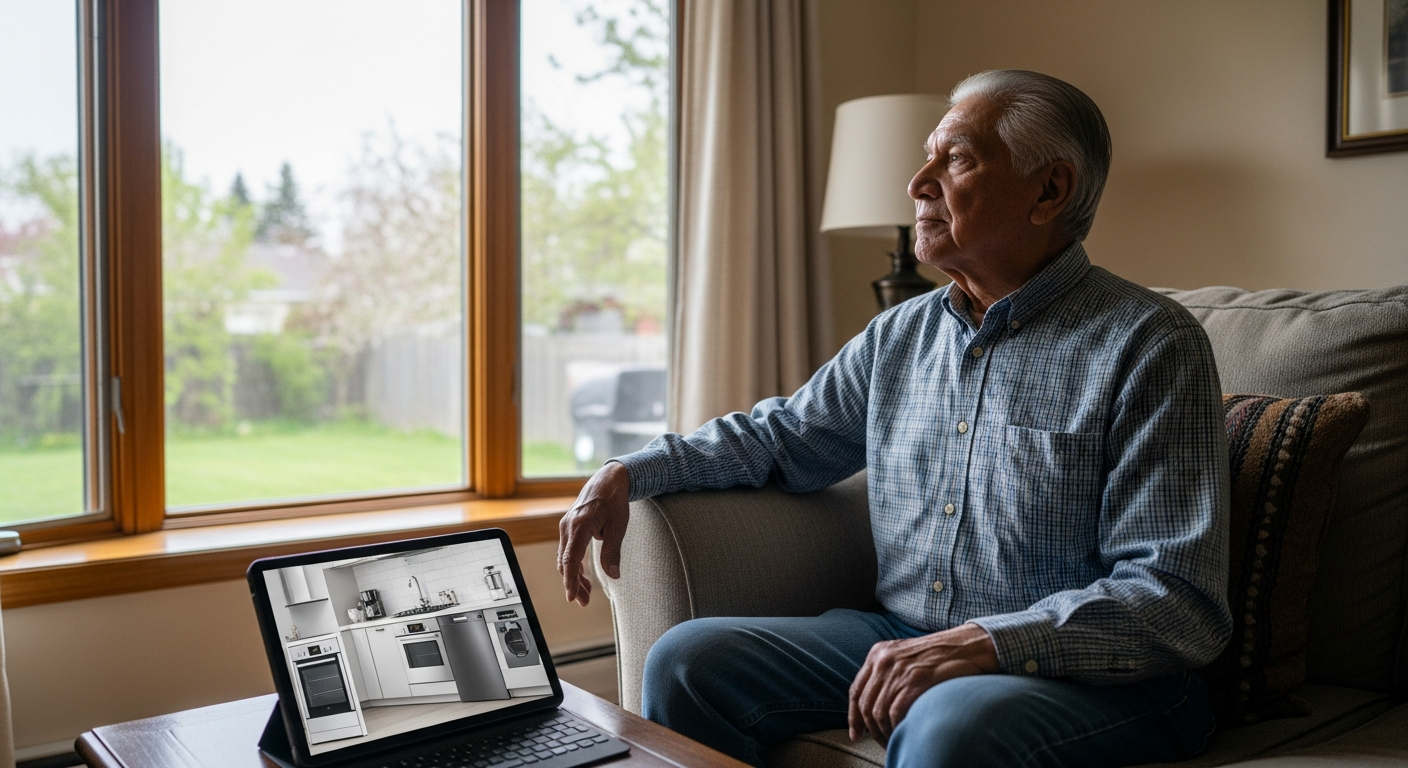
Phased Replacement Strategy
If full kitchen replacement is too much at once, prioritize this way:
Phase 1 (Essential): Replace stove and add improved lighting. Cooking is central to independence. Large, readable controls and good visibility are critical.
Phase 2 (Important): Replace refrigerator with bottom freezer model. Easier access to frequently used items reduces bending and falls.
Phase 3 (Comfort): Replace microwave and dishwasher. Simplified controls reduce cognitive burden.
Phase 4 (Optimization): Add oven modifications, cabinet organization, or additional accessibility features.
A reverse mortgage allows this phased approach without financial pressure to do everything at once.
Key Takeaways
- Senior-friendly kitchen appliances have large controls, readable displays, and ergonomic designs that sustain independence in meal preparation and cooking.
- Complete kitchen appliance replacement costs $5,000–$12,000 depending on budget, and a reverse mortgage funds this without monthly payments.
- Modern appliances save $60–$140 annually in energy costs, offsetting 20–30% of replacement costs over 15 years.
- Phased replacement (stove first, refrigerator second, etc.) works well with reverse mortgage line-of-credit draws.
- Accessible kitchen design directly correlates with better nutrition, health outcomes, and sustained independence for aging seniors.
Frequently Asked Questions
What's the most important appliance to replace first for aging accessibility?
The stove/oven. Cooking is central to independence, nutrition, and daily life. A stove with large, easy-to-read controls and lower height significantly improves safety and usability. Replace the stove before other appliances.
Are senior-accessible appliances more expensive than standard appliances?
Slightly. Senior-friendly appliances cost 10–20% more than basic models ($1,200 vs. $1,000 for a refrigerator, for example). However, they're cheaper than premium appliances and offer superior accessibility. The modest premium is worth it.
Can I retrofit existing appliances with easier controls?
Partially. Appliance labeling, simple knob replacements, or control panel upgrades help somewhat. However, nothing compares to purchasing appliances designed with aging-in-place features from the start. Replacement is the better long-term strategy.
Do all appliance brands offer senior-friendly designs?
Most major brands (LG, Samsung, Whirlpool, GE) offer accessibility options. Look for products marketed as "ADA-compliant" or "senior-friendly." Specialty retailers or aging-in-place consultants can recommend specific models tested with seniors.
Will my reverse mortgage cover installation costs?
Yes. Your reverse mortgage draw covers both the appliance cost and professional installation. Installation ensures proper setup and reduces safety risks.
Can I remove old appliances and donate them?
Yes. Contractors typically remove old appliances and can arrange donation to charities (Habitat for Humanity, Salvation Army) or recycling. Some contractors include removal in their installation cost.
A reverse mortgage makes aging-in-place kitchen accessibility affordable. Cooking independently sustains nutrition, quality of life, and confidence. Discuss kitchen appliance replacement with specialists as part of your aging-in-place strategy.
Ready to Learn More?
Find out exactly how much you could unlock from your home — free and no obligation.
Related Articles
Reverse Mortgage for Aging in Place With Fibromyalgia: Home Modifications for Invisible Illness
Fund home modifications for aging with fibromyalgia. Reverse mortgage enables accessible design for pain management, energy conservation, and quality of life.
Read →Reverse Mortgage for Accessible Community Kitchen: Culinary Training and Aging in Place
Convert your home kitchen into an accessible commercial culinary training space. Reverse mortgage funds renovation while creating community impact.
Read →Reverse Mortgage When You Previously Gifted Home Down Payment to Adult Child: Reclaiming Equity for Aging in Place
Reverse mortgage strategy when aging in place after gifting down payment to adult child. Recover equity for home modifications and care.
Read →