
Reverse Mortgage When You Previously Gifted Home Down Payment to Adult Child: Reclaiming Equity for Aging in Place
Reverse mortgage strategy when aging in place after gifting down payment to adult child. Recover equity for home modifications and care.
You gifted $50,000 to help your adult child buy their first home 10 years ago. That seemed fine—you had equity, they needed help. But now you're 72, developing arthritis, and your home needs $30,000 in accessibility modifications. Your child's home has appreciated 60%, but yours has equity you can't access. Is a reverse mortgage your only option? Yes—and it's exactly what this situation is designed for.
Aging parents who previously gifted down payments to adult children often face this paradox: they gave away liquidity when they had employment income, and now they need it back when they're older. This post explores how reverse mortgages help you reclaim equity for aging-in-place costs after years of family gifting.
The Generational Gifting Trap: How It Happens
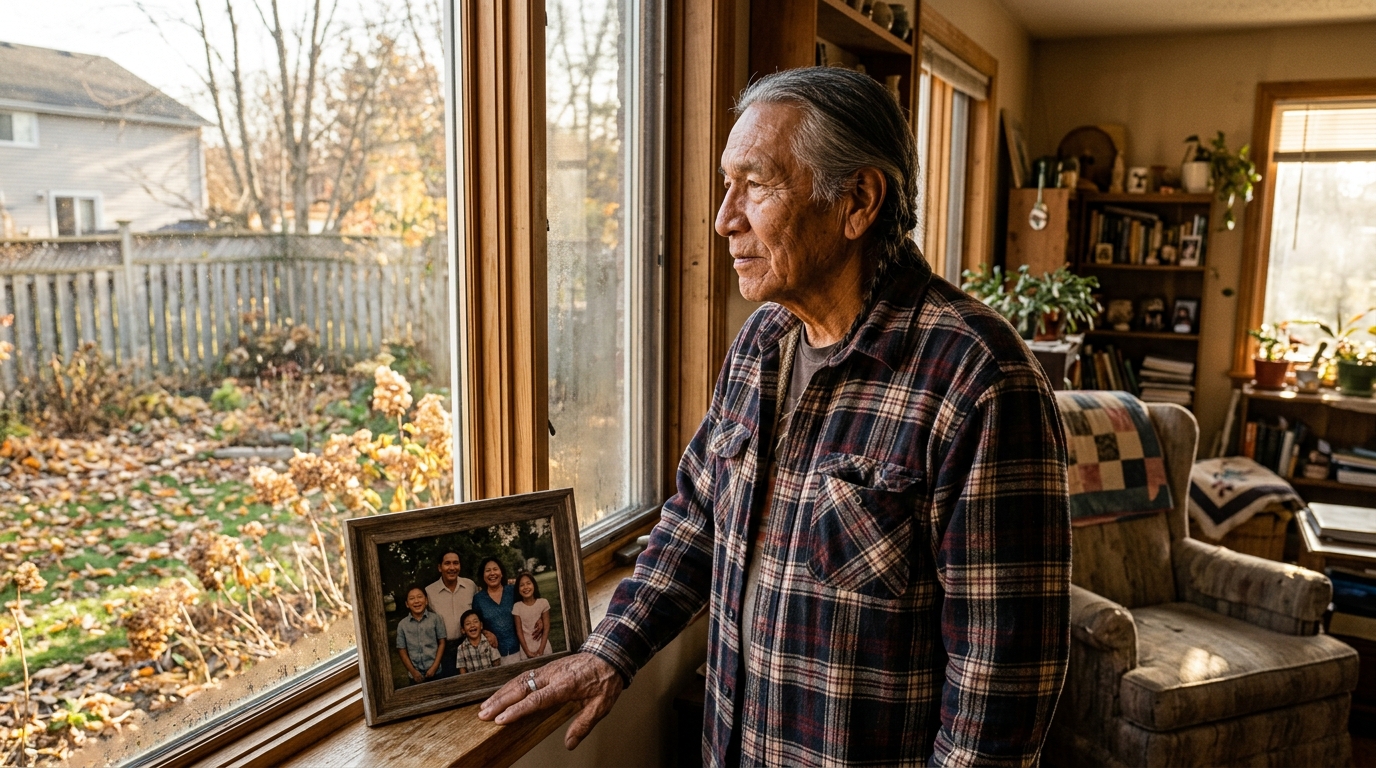
You had good intentions. Your adult child needed $50,000 for a home down payment. You had equity and stable income at 55–60. You gifted it. Their home is now worth $150,000 more. Your home has appreciated too, but you didn't anticipate needing that liquidity back.
This is remarkably common. According to TD Bank's 2024 Family Money Study, 41% of Canadian parents age 55+ have gifted money to adult children for home purchases—averaging $45,000 per gift. Only 12% of those parents anticipated needing to reclaim equity later for their own aging-related needs.
The Generational Wealth Trap: Equity Redistribution
| Scenario | Your Position Age 60 | Child's Position Age 35 | Your Position Age 72 |
|---|---|---|---|
| Your home value | $450,000 | N/A | $550,000 |
| Your home equity | $450,000 (paid off) | N/A | $550,000 (appreciated 22%) |
| Down payment gift to child | –$50,000 (cash out) | +$50,000 home down payment | Child now has $50,000 worth of equity they didn't earn |
| Child's home after 12 years | N/A | $400,000 initial value | $640,000 (60% appreciation) |
| Child's home equity now | N/A | $150,000 (50% down) | $450,000 (paid down mortgage + appreciation) |
| Your liquidity at 72 | N/A | N/A | $50,000 short for aging needs |
The reality: Your generosity at 60 now constrains your flexibility at 72. You have equity on paper, but accessing it for home modifications, care, or medical costs requires a reverse mortgage—which comes with costs and debt.
Why This Situation Warrants a Reverse Mortgage
You're not in crisis. You're not in debt. You simply gave away liquidity 10–15 years ago and now need it back. A reverse mortgage is a clean solution.
Comparison: Reverse Mortgage vs. Alternatives
| Option | How It Works | Pros | Cons | Best For |
|---|---|---|---|---|
| Reverse Mortgage | Borrow against home equity; repay from estate sale | No employment income required; no monthly payments; stays in home | Interest cost over time; reduces inheritance | This exact situation; older seniors (70+) |
| HELOC | Line of credit against home equity | Flexible; lower interest rates | Requires employment income or strong credit; lenders hesitant at 70+ | Younger retirees (55–70); not ideal for you |
| Downsize home | Sell home; buy smaller; recover $100K–$200K | Immediate liquidity; reduce maintenance | Leaves neighborhood; emotional cost; real estate transaction fees (5%) | Only if truly ready to move |
| Ask adult child to gift back | Request child gift $30K–$50K back | Maintains relationship; they have equity | Awkward; child may not have liquidity; resentment risk | Not recommended; family relationship cost too high |
| Personal line of credit | Bank personal loan against income | Faster than RM | Higher interest (6.5–8%); monthly payments required; hard to qualify at 70+ | Not viable for most seniors |
According to FCAC: "Seniors in your situation—who gifted equity 10+ years ago and now need liquidity for aging—are appropriate reverse mortgage candidates. This is a core use case, not a last resort."
Reverse Mortgage Amount Calculation for Home Modification
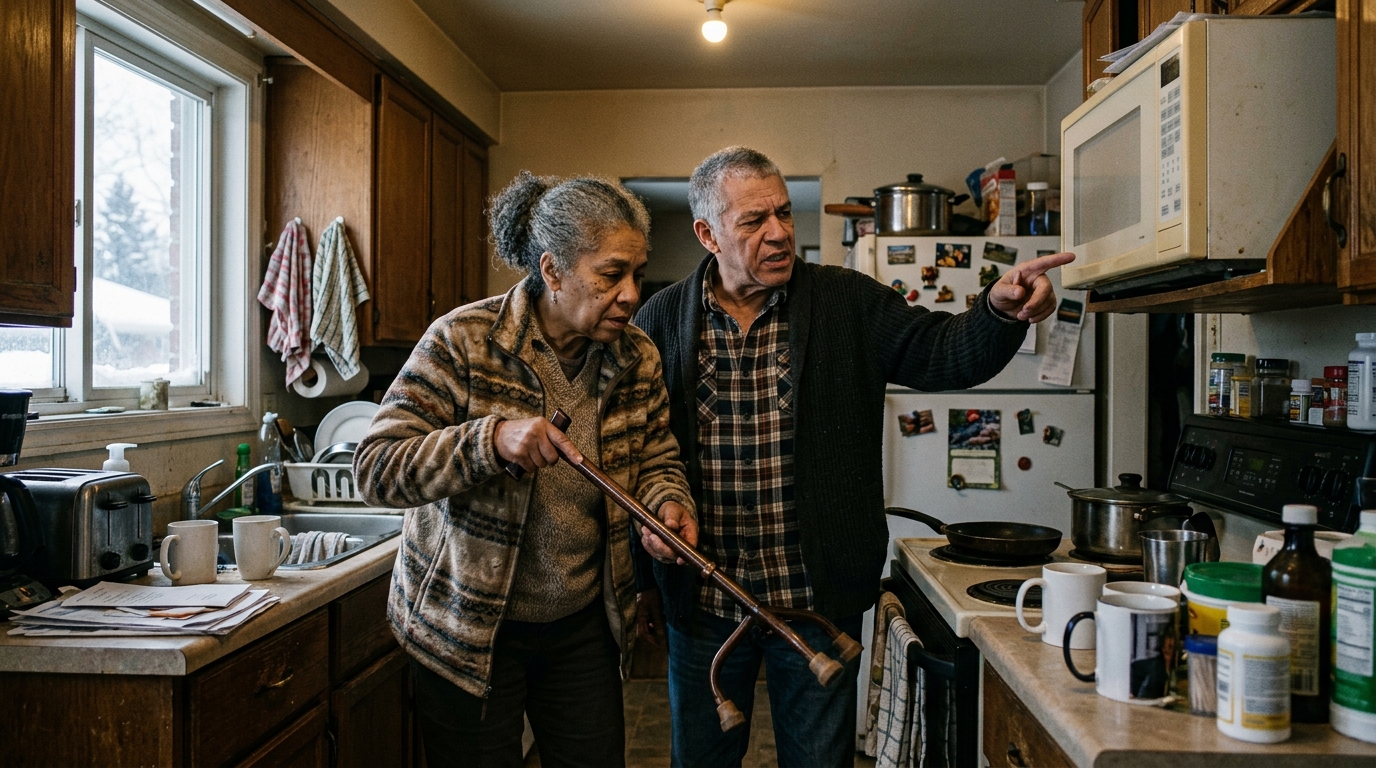
Let's work backward from your actual needs.
Your Aging-in-Place Costs: Realistic 10-Year Projection
| Modification / Cost | Years 1–3 | Years 4–7 | Years 8–10 | Ongoing |
|---|---|---|---|---|
| Bathroom accessibility (grab bars, walk-in shower) | $8,000 | $0 | $2,000 (repairs) | $500/year |
| Stair lift or ramp (if mobility declines) | $6,000–$15,000 | $0 | $2,000 (maintenance) | $400/year |
| Kitchen modifications (lowered counters, accessibility) | $5,000 | $0 | $1,000 (appliance replacement) | $300/year |
| Flooring (slip-resistant, maintenance) | $3,000 | $0 | $3,000 (replacement) | $200/year |
| Smart home tech (monitoring, fall detection) | $2,000 | $0 | $1,000 (upgrade) | $200/year |
| Professional home care equipment | $1,000 | $2,000 | $2,000 | $500/year |
| Total Aging-in-Place Budget (10 years) | $25,000 | $2,000 | $11,000 | $2,100/year |
Total need over 10 years: $38,000–$50,000
Most of this is front-loaded (years 1–3). A reverse mortgage lump sum of $40,000–$50,000 covers your entire aging-in-place projection for the next decade.
Reverse Mortgage Structuring for "Recovered Equity" Use
Strategy 1: Lump Sum for All Anticipated Home Modifications
Draw $45,000–$50,000 at age 72–73, before you need major modifications.
Advantages:
- Lock in current interest rates
- Complete modifications while you're still physically able to supervise/endure construction
- Peace of mind knowing aging-in-place is funded
- Avoid future RM application when you're older/frailer
Calculation:
- Draw $50,000 at 6.2% interest
- Assume you live 20 more years (to age 92–93)
- RM balance at age 92: ~$165,000
- Home value at age 92 (1.5% annual appreciation): $715,000–$800,000
- After RM payoff from estate: $535,000–$635,000 left for heirs
- ✓ Still substantial inheritance despite RM
Strategy 2: Line of Credit for Phased Modifications
Establish $70,000–$100,000 line of credit; draw $3,000–$5,000 annually as modifications are needed.
Advantages:
- Pay interest only on drawn amounts
- Flexibility if modifications aren't needed (health improves, you move, etc.)
- Better if uncertain about long-term aging trajectory
- Lower total interest cost if you live shorter than expected
Calculation:
- Establish LOC $80,000
- Draw $4,000/year for 10 years = $40,000 total
- RM balance at 6.2% after 10 years: ~$62,000 (vs. $165,000 if lump sum)
- Better if you're concerned about aggressive RM debt growth
Estate and Tax Implications: Gifting History
Does Your Previous Down Payment Gift Affect the Reverse Mortgage?
No. The reverse mortgage is a new debt against your current home equity. It doesn't matter that you gifted $50,000 to your child 10 years ago. That's past.
However, it matters for estate fairness:
| Scenario | Estate Impact | Solution |
|---|---|---|
| You gift down payment ($50K) at 60; take RM ($50K) at 72 | Child received $50K gift; you now owe $50K RM debt | Will should note: "Gift to [child] of $50K has been matched by my later needs; all children inherit equally from remaining estate" |
| Multiple children; only one received down payment gift | One child received $50K advantage 10+ years ago | Consider directing RM proceeds to other children's inheritance to equalize family treatment |
| Adult child's home appreciated 60% since your gift | Child benefited doubly: $50K gift + $100K+ home appreciation | Estate fairness might mean RM draw goes to balance other children's inheritance |
FSRAO guidance: "Aging parents should update their wills when taking reverse mortgages to explain the estate rationale. Clear documentation prevents sibling conflict post-death."
Capital Gains on Your Home at Death
Taking a reverse mortgage doesn't affect your principal residence exemption—your home is still tax-exempt when sold at your death. However:
- Home value: $550,000 at age 72 → $750,000 at age 92
- Capital gain: $200,000
- Taxable portion (50%): $100,000
- Estate tax (50% marginal rate): ~$50,000
This is estate tax you'd owe anyway—the reverse mortgage doesn't create additional tax liability.
Case Study: Patricia, Age 72, "I Gave Them Money, Now I Need It Back"
History:
- Age 60 (12 years ago): Gifted $50,000 to daughter Sarah for down payment
- Sarah's home now worth $640,000 (appreciated 60%)
- Patricia's home appreciated 22% to $550,000
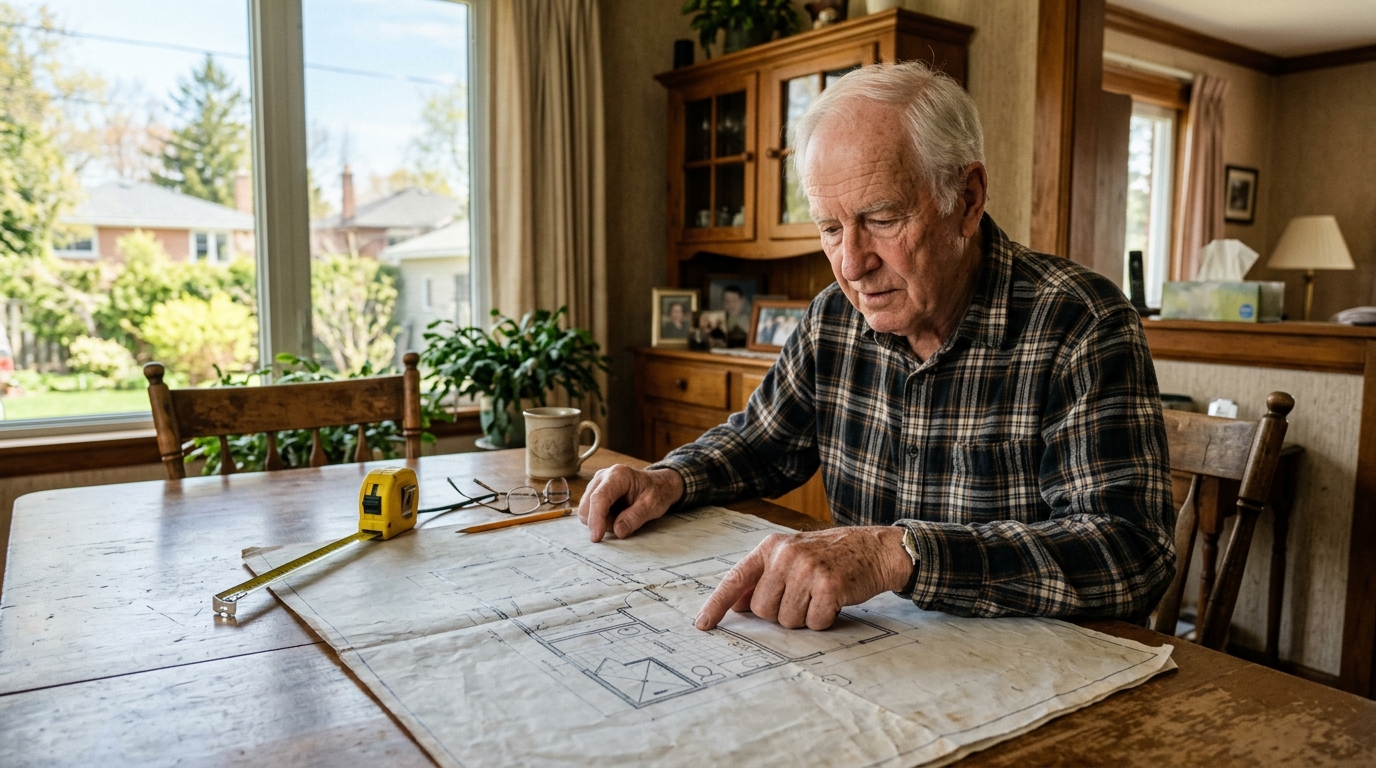
- Patricia now experiencing early osteoarthritis; needs bathroom accessibility
- Patricia's CPP/OAS: $28,000/year
- Patricia's home: Paid off, excellent condition otherwise
The realization: "I helped Sarah get into the real estate market. She's done great. But I'm paying the price now—I have equity on paper, but nothing in my bank account for modifications I need."
Patricia's solution:
- Apply for reverse mortgage at 72 (HomeEquity Bank recommended)
- Qualify for $200,000+ available; draw $50,000
- Use $40,000 for bathroom reno (walk-in shower, grab bars, accessibility)
- Keep $10,000 as emergency reserve
- Establish $100,000 LOC for future needs
- Interest-only payments on RM balance (no monthly payments required)
20-year outcome (to age 92):
- RM balance at 6.2% after 20 years: ~$165,000
- Home value at age 92: ~$720,000–$750,000
- Estate after RM payoff: $555,000–$585,000
- Patricia got her home modifications funded; no inheritance destroyed
- Sarah's dual advantage (gift + home appreciation) is separate from Patricia's later RM; fairness achieved through clear will documentation
Patricia's will update: "I gave Sarah $50,000 toward her home at age 60. At age 72, I accessed $50,000 via reverse mortgage for my own aging needs. I consider this balanced family generosity. My remaining estate is distributed equally among all three children."
Clear, no resentment, no ambiguity.
When NOT to Use a Reverse Mortgage to "Recover" Your Down Payment Gift
If your adult child's financial situation is dramatically worse than yours, reconsider RM.
| Scenario | Your Status | Child's Status | Recommendation |
|---|---|---|---|
| You're comfortable at 70; adult child lost job and house | Stable retirement income | Struggling; lost job; living with you | Don't use RM to recover gift. Your generosity is needed; reverse mortgage makes situation worse |
| You have multiple children; one received down payment gift | Stable retirement | One child did well; others didn't | Do use RM strategically to equalize inheritance fairly |
| Your health is declining rapidly (terminal diagnosis, dementia) | Declining | N/A | Don't use RM if you expect to move to care home in 2–3 years; better to downsize and gift remaining equity to children |
The key: Reverse mortgage to recover equity is appropriate when you're truly facing long-term aging-in-place needs, not when your child is in crisis.
Key Takeaways
- Gifting down payments at 60 often constrains flexibility at 72—reverse mortgage recovers that liquidity for aging-in-place modifications.
- You're not in crisis; you're making a strategic choice—reverse mortgage for home modifications is a legitimate, clean financing solution.
- Lump-sum reverse mortgage works best when modifications are anticipated in years 1–5—lock in rates, complete work before you're frail.
- Line of credit is flexible for phased modifications over 10+ years—pay interest only on what you draw; preserve estate if needs change.
- Update your will to explain the generational equity exchange—prevent sibling resentment by documenting the down payment gift and your later RM-funded needs.
- Estate inheritance still substantial after RM payoff—home appreciation and modest RM balance mean heirs inherit $500K+, not a depleted estate.
Frequently Asked Questions
Can I ask my adult child to "gift the money back" instead of taking a reverse mortgage?
Technically yes, but it's awkward. If your child's home appreciated 60% thanks partly to your original $50,000 gift, asking for it back creates resentment. A reverse mortgage avoids this emotional minefield. You're independently recovering your equity (via your home's appreciation), not pressuring your child to reverse their gains. Family relationships are worth the reverse mortgage cost.
If I take a reverse mortgage to fund modifications I already gifted equity for, can I claim this as a tax deduction?
No. Reverse mortgage interest is not tax-deductible for residential homes (this is different from investment properties). However, some accessibility modifications themselves may qualify for the Accessibility Tax Credit (Ontario). Keep all renovation receipts and consult your accountant.
My adult child is concerned I'm taking a reverse mortgage because of their down payment gift. Should I explain the RM to them?
Yes, for family clarity. A simple conversation: "I gifted you $50,000 at 60 to help with your home. At 72, I'm accessing my own equity via reverse mortgage for my aging modifications. This is my financial choice, not a reflection on you. My will reflects balanced family generosity." Most adult children appreciate this straightforward framing.
What if my adult child's home is now worth MORE than the down payment I gifted, and they want to "gift me equity" back?
That's generous, but complex. Receiving a large gift from your child could create tax implications and might affect OAS/GIS if the gift is incorrectly characterized. A reverse mortgage is cleaner because it's against your own home equity—no gift tax complications. If your child wants to help, better they pay for specific modifications directly (contractor pays them, not you borrowing) rather than gift large sums.
Should I tell my lender about the previous down payment gift to my child?
It's not required, but transparency is good. When applying for a reverse mortgage, you'll explain your income and assets. The down payment gift from 10+ years ago doesn't affect your qualification—it's already reflected in your home equity. No need to mention it unless the lender specifically asks about prior gifts.
If I recover equity via reverse mortgage for home modifications, am I reducing my adult child's future inheritance?
Yes, modestly. A $50,000 reverse mortgage draw (at 6.2% over 20 years) becomes ~$165,000 debt at your death. If your home sells for $750,000, heirs get $585,000. But this is entirely appropriate—you're using equity to fund your aging-in-place needs. An updated will explaining this family generosity pattern prevents confusion.
Ready to reclaim equity for your aging-in-place modifications? Contact Rick Sekhon Reverse Mortgages for a consultation on how to strategically recover liquidity while maintaining family fairness and your independence. Ontario seniors who've generously gifted deserve the same support as they age.
Ready to Learn More?
Find out exactly how much you could unlock from your home — free and no obligation.
Related Articles
Reverse Mortgage in Rural Depopulation Zone: Property Value Decline Strategy for Aging Homeowners
Reverse mortgage when aging in place in declining rural community. Navigate property value stagnation and population loss. Ontario rural aging strategy.
Read →Reverse Mortgage for Sandwich Caregiving: Supporting Both Aging Parent AND Aging Sibling Financially
Reverse mortgage strategy for mid-life adults supporting aging parent AND aging sibling. Multi-relative caregiving costs and planning.
Read →Reverse Mortgage When Supporting Multiple Adult Children With Disabilities: Protecting Long-Term Financial Obligations
Reverse mortgage strategy for aging parents as primary breadwinner for multiple disabled adult children. Secure long-term caregiving costs.
Read →