
Reverse Mortgage for the Caregiver Spouse: Maintaining Personal Financial Independence
When one spouse becomes a full-time caregiver, household income drops. Learn how a reverse mortgage can help caregiving spouses maintain financial independence while supporting their partner's care needs.
The Hidden Financial Cost of Spousal Caregiving
When one spouse becomes a full-time caregiver, the financial impact extends far beyond care costs. The caregiving spouse often leaves employment or reduces work hours, creating an income gap that affects both household finances and the caregiver's personal sense of independence.
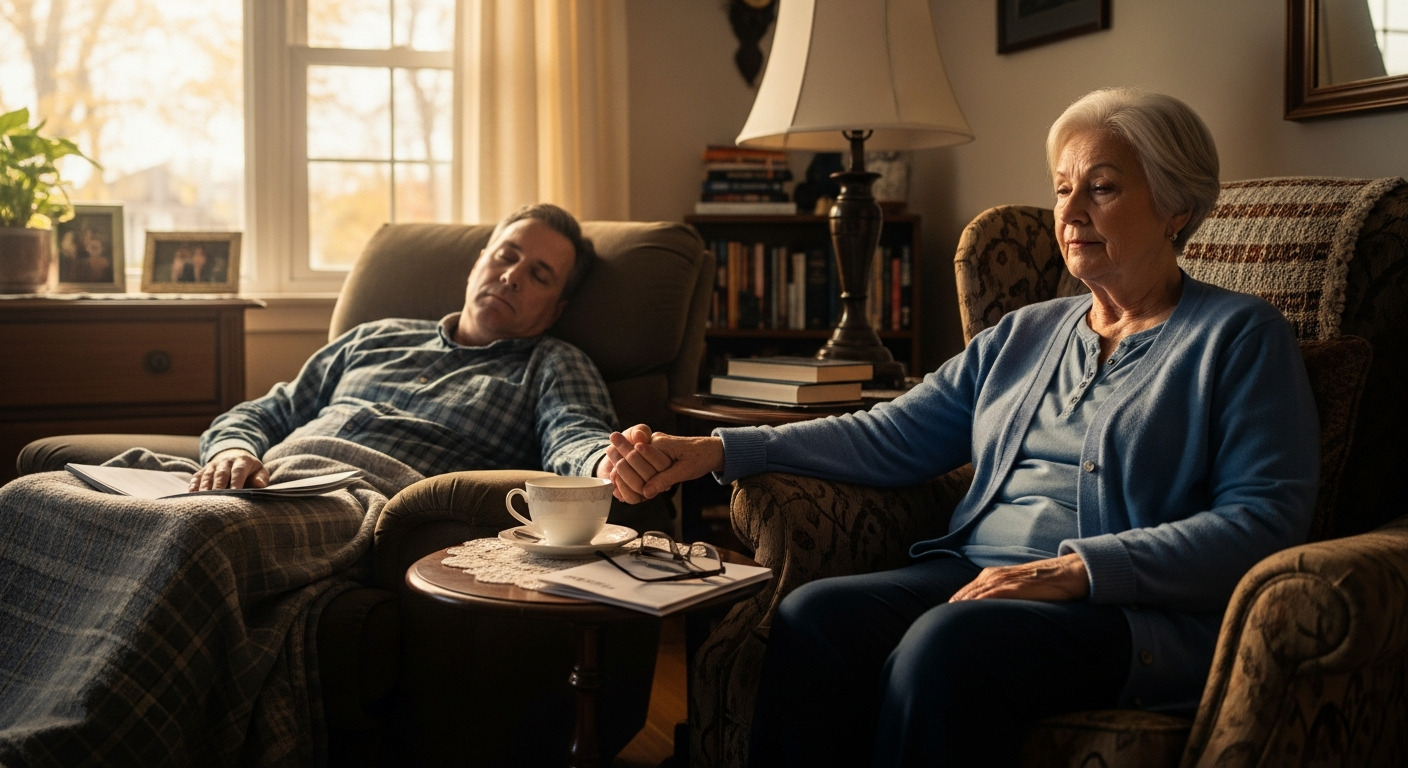
Margaret, 62, stepped away from her part-time accounting work when her husband's Parkinson's disease progressed. She now manages his daily care, appointments, and medications. While their modest savings helped initially, Margaret began to feel the psychological weight of financial dependence—her first experience being dependent on anyone since her twenties.
"I wanted to help him," Margaret explained. "But I didn't want to lose my identity in the process. My small income from part-time work was mine. It made me feel like I was contributing beyond just caregiving."
This situation is remarkably common in Ontario, where many couples are unprepared for the caregiving reality: when one spouse stops working, household cash flow tightens, and the caregiving spouse's personal financial autonomy can disappear.
Why Spousal Caregiving Income Loss Is Different
Most household income replacement conversations focus on maintaining lifestyle. But for caregiving spouses, the issue is deeper. Losing independent income can mean:
- Loss of autonomy: When you're dependent on your partner's pension or savings for discretionary spending, you lose agency over personal decisions
- Reduced personal security: If your partner passes away, you've had a work interruption that affects your future earnings and CPP contributions
- Caregiver burnout: Research shows that caregivers who maintain some personal financial identity experience less burnout and depression
- Power dynamics shift: Financial dependence can subtly alter the relationship dynamic during an already stressful period
A reverse mortgage specifically designed to support the caregiving spouse's financial independence addresses this psychological and practical reality.
How a Reverse Mortgage Creates Caregiver Financial Independence
Instead of the caregiving spouse leaving the workforce entirely, a reverse mortgage can provide:
Monthly income buffer for the caregiving spouse — Rather than both spouses losing income, the reverse mortgage provides funds that allow the care spouse to maintain part-time work (2-3 days per week) while the mortgage covers the income gap. This preserves their contribution to CPP, maintains professional engagement, and preserves personal spending autonomy.
Dedicated caregiver support fund — Many caregiver spouses benefit from setting aside reverse mortgage funds specifically for respite care, which allows them time away while someone else provides care. This is distinct from general home care costs—it's about funding the caregiver's rest and personal time.
Professional caregiver training support — Some caregiving spouses want to develop formal skills (dementia care certification, personal care training) to improve their confidence and competence. Reverse mortgage funds can cover these training programs, giving the caregiver a sense of professional development even while caregiving.
Separation of care costs from household bills — By using reverse mortgage funds specifically for care-related expenses, regular household bills can be paid from the well spouse's pension, maintaining clear financial boundaries and the caregiving spouse's sense of contributing to household operations.
Real Scenario: The Caregiving Spouse Strategy
Consider David and Patricia, both 68, in Hamilton. David's pension is $3,200/month. Patricia earned $2,800/month from her dental hygiene practice before she became his full-time caregiver as his cognitive decline progressed.
Without intervention, Patricia loses $2,800/month, and the household shrinks to $3,200/month—a 47% income reduction.
The reverse mortgage solution:
- Reverse mortgage approval: $180,000 available
- Monthly draw: $800/month allocated specifically to Patricia's "caregiver independence fund"
- Actual care costs: $1,200/month, covered by David's pension
- Patricia maintains 2 days/week dental hygiene work: $1,000/month (reduced from $2,800)
The result:
- Household total: $4,200/month instead of $3,200/month
- Patricia contributes $1,000/month (instead of $0), preserving her sense of contribution
- Patricia's personal spending account: $800/month (reverse mortgage funds) + personal earnings
- She avoids full financial dependence while remaining available for David's care needs
This structure maintains Patricia's professional identity, continues her CPP contributions, and preserves her financial independence—critical for her psychological well-being during an already challenging caregiving role.
| Item | Before Reverse Mortgage | After Reverse Mortgage |
|---|---|---|
| David's pension | $3,200/month | $3,200/month |
| Patricia's income | $0 (full-time caregiver) | $1,000/month (2 days/week) |
| Reverse mortgage draw | $0 | $800/month (caregiver fund) |
| Care costs covered | Not covered | $1,200/month (from pension) |
| Household total | $3,200/month | $4,200/month |
The Caregiving Spouse's Financial Security Beyond the Immediate Crisis
There's another compelling reason caregiver spouses benefit from this approach: what happens if the well spouse dies first?
Most people assume the sick or aging spouse dies first. But caregiving can be unpredictable. If the well spouse passes away while serving as caregiver, the caregiving spouse faces not only grief but also a sudden loss of the income they were relying on.
However, if the caregiving spouse has maintained part-time work and ongoing CPP contributions throughout the caregiving period, their long-term financial security is protected. They're not facing a 5-year work interruption that tanks their retirement income projection.
This is arguably the most valuable protection a reverse mortgage can offer the caregiving spouse: maintaining work history continuity.
How Much Monthly Income Does a Caregiving Spouse Need?
The answer varies, but experts generally recommend:
- $600-$1,000/month: Allows part-time work (20 hours/week) while covering respite care costs
- $1,200-$1,500/month: Allows more flexible caregiving while maintaining small personal business or increased part-time work
- $1,500+/month: Can fully maintain pre-caregiving work schedule with outside help covering care gaps
| Monthly Draw Range | What It Supports |
|---|---|
| $600–$1,000 | Part-time work (20 hrs/week) plus respite care costs |
| $1,200–$1,500 | Flexible caregiving plus a small personal business or increased part-time hours |
| $1,500+ | Near-full maintenance of pre-caregiving work schedule with outside help |
The reverse mortgage monthly draw should be calculated based on:
- Income gap (what the caregiver lost by stepping back from work)
- Additional care costs beyond what the well spouse's income covers
- Respite care needs (how often the caregiver needs professional relief)
- The caregiver's mental health and burnout risk factors
Conversations to Have Before Applying
With your spouse:
- What's the realistic caregiving timeline? (This affects how much monthly income is needed)
- Are there specific care costs you want to protect financially?
- How much does the caregiving spouse value maintaining independent income?
With your reverse mortgage broker:
- Can the mortgage be structured to provide monthly draws specifically designated for caregiver support?
- Are there flexibility options if caregiving needs change?
- What happens to the remaining funds if the caregiving period ends sooner than expected?
With your financial planner:
- How does caregiver income loss affect long-term household planning?
- Should the caregiving spouse's CPP contributions be prioritized?
Key Takeaways
- A caregiving spouse who leaves full-time work can lose 40-50% or more of household income, as seen in David and Patricia's case (a 47% reduction before intervention).
- To qualify for a reverse mortgage, at least one spouse on title must be age 55 or older; homeowners can typically borrow 15-59% of the appraised home value.
- Structuring reverse mortgage draws specifically as a "caregiver independence fund" helps preserve the caregiving spouse's sense of financial autonomy and contribution.
- Maintaining even part-time work during caregiving protects CPP contribution history and long-term retirement income.
- No monthly mortgage payments are required, which is critical when household cash flow is already strained by caregiving.
- Reverse mortgage funds can cover respite care, professional caregiver training, and dedicated personal spending—not just direct care costs.
Frequently Asked Questions
Can a reverse mortgage be split into a dedicated "caregiver fund" separate from household bills?
Yes. While the reverse mortgage itself is a single loan, homeowners commonly structure their monthly draws so that a portion is earmarked specifically for the caregiving spouse's personal use, such as respite care or discretionary spending, while other funds or existing income cover regular household bills.
Does a reverse mortgage affect CPP, OAS, or GIS benefits?
Reverse mortgage proceeds are considered a loan, not income, so they are not taxable and generally do not affect Old Age Security (OAS), Guaranteed Income Supplement (GIS), or Canada Pension Plan (CPP) benefits. This makes reverse mortgage funds a useful supplement for caregiving spouses without risking existing benefit eligibility.
What if the caregiving spouse is under 55?
Canadian reverse mortgages require all homeowners on title to be at least 55 years old. If the caregiving spouse is under 55 but is a co-owner, the couple typically cannot qualify until that spouse reaches the minimum age, though exceptions vary by lender, so it's worth discussing your specific situation with a broker like Rick Sekhon.
How quickly can a caregiving couple access reverse mortgage funds?
Approval timelines vary by lender, but many Ontario homeowners can complete the application, appraisal, and legal review process within four to six weeks. Funds can then be drawn as a lump sum, ongoing monthly payments, or a combination, depending on how the couple structures their caregiver income plan.
Will taking a reverse mortgage reduce what we leave to our children?
It can reduce the estate's remaining equity, since the loan balance grows over time and is repaid from the home's sale proceeds. However, Canadian reverse mortgages include a no-negative-equity guarantee, so heirs will never owe more than the home is worth, and many homeowners find that funding caregiver well-being now outweighs a smaller inheritance later.
The Bottom Line
A reverse mortgage for spousal caregiving isn't just about covering care costs. It's about recognizing that the caregiving spouse's financial independence and personal identity are as important as the care being provided.
In Ontario, where many couples face this exact scenario, a thoughtfully structured reverse mortgage can preserve the caregiver's sense of autonomy, reduce burnout risk, and protect their long-term financial security—even if caregiving circumstances change unexpectedly.
For caregiving couples, this isn't a luxury. It's a recognition that sustainable caregiving requires the caregiver's well-being too.
Ready to Learn More?
Find out exactly how much you could unlock from your home — free and no obligation.
Related Articles
Reverse Mortgage for Aging in Place With Fibromyalgia: Home Modifications for Invisible Illness
Fund home modifications for aging with fibromyalgia. Reverse mortgage enables accessible design for pain management, energy conservation, and quality of life.
Read →Reverse Mortgage for Accessible Community Kitchen: Culinary Training and Aging in Place
Convert your home kitchen into an accessible commercial culinary training space. Reverse mortgage funds renovation while creating community impact.
Read →Reverse Mortgage to Launch Home-Based Tax Prep and Retirement Planning Business
Fund your home-based tax and retirement planning practice with a reverse mortgage. Serve aging Canadians while accessing home equity in Ontario.
Read →