
Reverse Mortgage to Launch Home-Based Tax Prep and Retirement Planning Business
Fund your home-based tax and retirement planning practice with a reverse mortgage. Serve aging Canadians while accessing home equity in Ontario.
Ready to turn your accounting expertise into a thriving home-based tax practice? A reverse mortgage can provide the startup capital to establish a professional tax preparation and retirement planning service while you age in place—creating ongoing income and a lasting legacy.
Why Many Retiring Accountants Miss This Opportunity
Retiring accountants and financial advisors often underestimate the value of a home-based tax practice. You've spent 30+ years building expertise that Canadian retirees desperately need. Instead of walking away, a reverse mortgage lets you convert your home equity into a full-fledged business that serves your community.
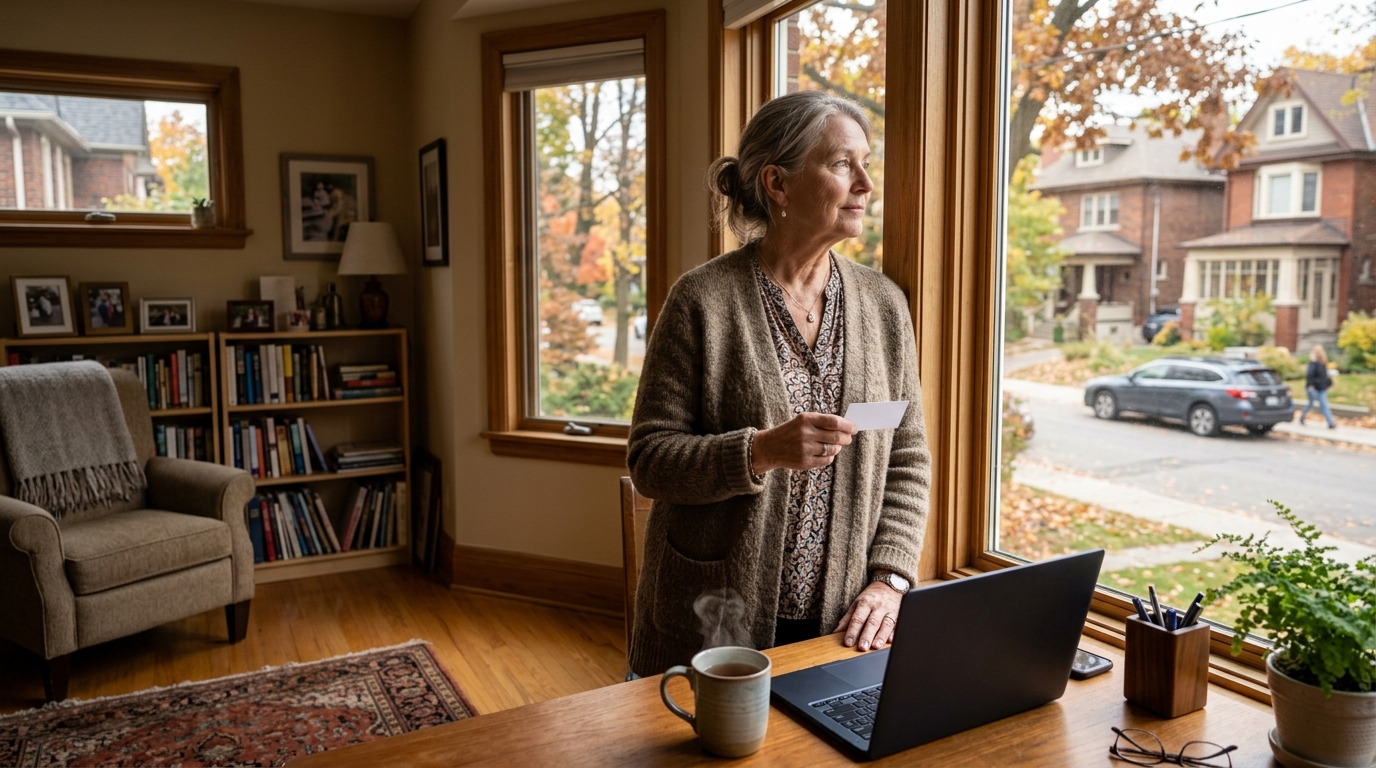
How Much Startup Capital Do You Need?
Most home-based tax practices require $40,000–$80,000 in initial investment. Here's the realistic breakdown:
| Investment Category | Typical Cost | Notes |
|---|---|---|
| Professional software licenses (UFile, TurboTax Live, CCH) | $3,000–$6,000 | Annual renewal varies by complexity |
| Office furniture and ergonomics | $5,000–$12,000 | Quality chair, desk, filing systems |
| Secure IT infrastructure and cybersecurity | $4,000–$10,000 | Client data protection is critical |
| Professional liability insurance | $1,500–$3,000 | Annual premium for tax/planning practices |
| Marketing and business development (first 12 months) | $5,000–$15,000 | Website, branding, local partnerships |
| Bookkeeping and administrative software | $2,000–$4,000 | Client record management |
| Filing cabinet systems and record storage | $2,000–$5,000 | Climate-controlled space for client documents |
| Contingency and operating capital | $15,000–$25,000 | First 6 months' overhead |
| TOTAL RANGE | $37,500–$80,000 | Scale up as you grow |
A reverse mortgage can cover all of this without affecting your retirement income.
Building Your Practice: A Realistic 12-Month Timeline
According to the FSRAO (Financial Services Regulatory Authority of Ontario), home-based financial professionals must meet strict registration and compliance requirements. Here's what to plan for:
| Timeline | Action Items | Purpose |
|---|---|---|
| Month 1–2 | Register with FSRAO; obtain E&Y/CPA insurance | Meet regulatory requirements |
| Month 1–3 | Set up secure office infrastructure; install encrypted file systems | Protect client confidentiality |
| Month 2–4 | Develop service offerings and pricing model | Clarify tax, planning, and audit services |
| Month 3–6 | Build client acquisition pipeline through referrals and partnerships | Generate initial client base |
| Month 4–12 | Launch marketing; partner with estate lawyers, financial planners | Build reputation and referral networks |
| Month 6+ | Scale to 30–50 clients; document procedures for possible future team | Create sustainable systems |

Your Reverse Mortgage Strategy for Tax Practice Startup
A reverse mortgage provides tax-free proceeds that you can deploy strategically:
According to the CRA (Canada Revenue Agency), reverse mortgage proceeds are NOT considered income for tax purposes, meaning your practice revenue won't push you off OAS or affect GIS eligibility.
Phase 1: Immediate Setup (Month 1–2)
- Allocate $15,000–$20,000 for professional registration, compliance, and office equipment
- This gets you licensed and operational before you take your first client
Phase 2: Technology & Infrastructure (Month 2–4)
- Invest $10,000–$15,000 in secure software, cybersecurity, and IT systems
- Client data protection determines your professional reputation
Phase 3: Market Development (Month 3–12)
- Reserve $12,000–$20,000 for marketing, partnerships, and client acquisition
- Focus on referral relationships with estate lawyers, CPAs, and financial planners
Ongoing Operations
- Your practice revenue covers month-to-month expenses after Month 6
- The reverse mortgage equity covers the gap before profitability
Targeting Your Ideal Client Base
As a tax and retirement planning professional, your sweet spot is clear: retirees and pre-retirees age 55–75 who need:
- CPP/OAS optimization and timing decisions
- Tax-efficient withdrawal strategies (RRIF vs TFSA vs taxable accounts)
- Estate tax planning and income splitting
- Disability Tax Credit (DTC) applications and claims
- GIS and pension income coordination
This is high-value, recurring revenue work. A single client paying $1,500–$3,000 annually for tax prep plus planning generates sustainable, predictable income.
According to Statistics Canada's 2024 Retirement Planning Survey, 63% of Canadian seniors regret not optimizing their CPP/OAS timing, creating massive pent-up demand for professional guidance.
Real-World Example: Patricia's Tax Practice Success
Patricia retired at 62 with 28 years of audit and tax experience. Instead of fully retiring, she took a $60,000 reverse mortgage against her $450,000 home, spending:
- $12,000 on professional setup and registration
- $18,000 on office technology and security infrastructure
- $20,000 on first-year marketing and client acquisition
- $10,000 in operating contingency
Within 18 months, she had 35 established clients at an average fee of $2,000/year (tax prep + planning). Her annual revenue: $70,000—exceeding her reverse mortgage's annual interest cost in Year 2.
Bonus: Her home-based practice means no commercial rent, allowing her to invest more in quality service, creating referrals that sustain the business long-term.
Tax and Regulatory Considerations
Working with a tax-qualified reverse mortgage broker like Rick Sekhon at Rick Sekhon Reverse Mortgages ensures your setup aligns with:
- FSRAO compliance – Home-based tax and planning professionals must register and maintain insurance
- CRA reporting – Your business income requires proper GST/HST registration if you exceed thresholds
- Professional liability – Insurance costs are deductible business expenses
- Home office deduction – A portion of mortgage interest, utilities, and property tax becomes deductible
Key Takeaways
- Home-based tax practices cost $40K–$80K to launch, covering software, office setup, insurance, and first-year marketing
- Reverse mortgage proceeds are tax-free, protecting your OAS/GIS eligibility while funding your startup
- Your target market (pre-retirees and retirees) generates recurring, high-value revenue at $1,500–$3,000 per client annually
- FSRAO registration is non-negotiable—budget $2,000–$4,000 for compliance and professional liability insurance
- Profitability typically hits in Month 12–18, after which reverse mortgage interest becomes insignificant relative to business income
- Your home-based practice creates a legacy business you can scale, mentor others into, or eventually pass down
Frequently Asked Questions
Can I deduct my reverse mortgage interest as a business expense?
No—reverse mortgage interest is NOT deductible because the loan is against your personal residence, not a business asset. However, a home office deduction (allocating a portion of your home's expenses to the business) IS allowed, reducing your taxable income.
Will my business income affect my OAS or GIS?
Yes, once your net business income exceeds CRA thresholds ($90,997 for 2026 OAS clawback). Plan for this with a tax accountant. However, the reverse mortgage proceeds themselves are NOT income, so your initial startup doesn't trigger clawback.
How do I find clients in the first 6 months?
Build referral partnerships with estate lawyers, financial planners, and CPAs before you officially launch. Offer them discounted rates for client referrals, and attend local business and retirement planning workshops to build visibility in your market.
What professional insurance do I need?
FSRAO-registered tax preparers and retirement planners typically need Errors & Omissions insurance ($1,500–$3,000 annually). This protects you if a client claims financial loss due to your advice or tax filing error. It's essential to your credibility.
Can I operate this practice at 75 or 80 if I want to?
Absolutely. A home-based tax practice can run indefinitely—you control your hours, your client load, and your pace. Many tax professionals operate into their 80s because the work is intellectually stimulating and client relationships are rewarding.
How do CHIP, Equitable Bank, and other lenders view reverse mortgages for business startup?
Most major lenders (CHIP, HomeEquity Bank, Equitable Bank, Bloom Financial, Home Trust) allow reverse mortgage proceeds to be used for business startup, provided you're establishing a legitimate service business. Home-based professional practices generally qualify without additional restrictions.
Ready to Learn More?
Find out exactly how much you could unlock from your home — free and no obligation.
Related Articles
Reverse Mortgage for Adult Child Launching Independent Scientific Research Consulting
Fund your adult child's independent scientific consulting practice. Reverse mortgage provides startup capital for research-focused entrepreneurship in Ontario.
Read →Reverse Mortgage for Home Inspection and Accessibility Assessment Business
Fund your adult child's dual home inspection and accessibility assessment practice. Reverse mortgage provides startup capital for underserved home services market.
Read →Reverse Mortgage for Aging in Place With Fibromyalgia: Home Modifications for Invisible Illness
Fund home modifications for aging with fibromyalgia. Reverse mortgage enables accessible design for pain management, energy conservation, and quality of life.
Read →