
Reverse Mortgage for Home Inspection and Accessibility Assessment Business
Fund your adult child's dual home inspection and accessibility assessment practice. Reverse mortgage provides startup capital for underserved home services market.
Does your adult child have construction, engineering, or accessibility expertise but wants business independence? A reverse mortgage can fund their home inspection and accessibility assessment practice—combining two high-demand services that command premium fees ($400–$800 per inspection) and serve an enormous aging population seeking certified assessments.
The Dual Service Advantage: Home Inspection + Accessibility
Home buyers need inspections (a commodity service). But aging homeowners need accessibility assessments—strategic evaluations to identify safety risks, modification needs, and aging-in-place solutions. This dual offering creates a competitive moat: inspectors can pivot to accessibility assessments for aging homeowners; accessibility consultants can add basic home inspection revenue.
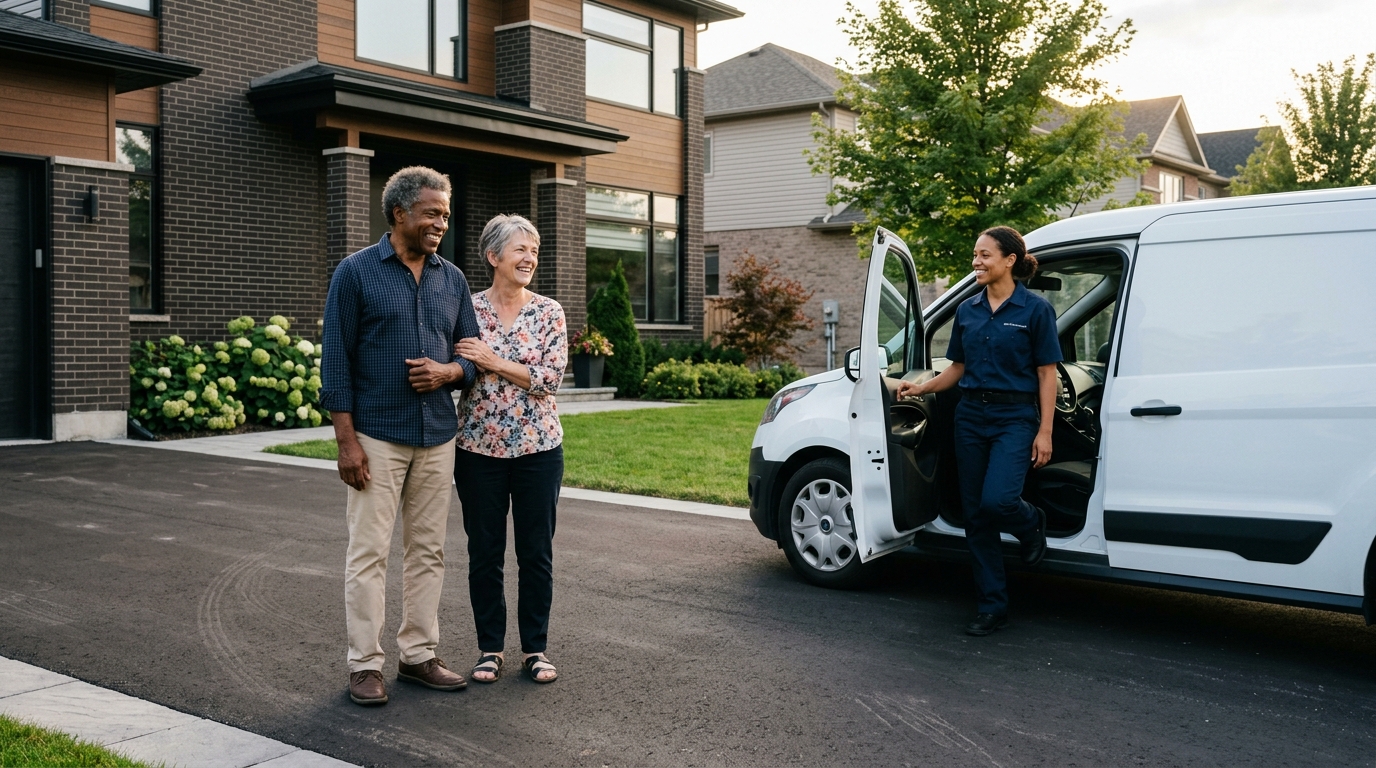
Startup Costs for Home Inspection + Accessibility Business
A dual-service home assessment practice requires $35K–$70K initially:
| Investment Category | Cost Range | Details |
|---|---|---|
| Home Inspectors' License (Ontario HIRI) | $2,000–$4,000 | Exam, training, initial licensure; annual renewal ~$500 |
| Accessibility Assessment Certification | $3,000–$8,000 | AODA, CCA (Certified Aging-in-Place Specialist), universal design |
| Specialized inspection equipment | $4,000–$8,000 | Moisture meters, thermal imaging, electrical testers, ladders |
| Liability and E&O insurance | $2,500–$5,000 | Critical for inspection business; $2,000–$3,000/year |
| Vehicle graphics and branding | $2,000–$4,000 | Professional van wrap, branding, business signage |
| Website and digital presence | $2,000–$5,000 | Portfolio, client reviews, online booking system |
| Marketing and client acquisition | $4,000–$10,000 | Real estate agent referral partnerships, local advertising |
| Home office/storage for equipment | $2,000–$5,000 | Secure equipment storage, office workspace |
| Business formation and licensing | $1,500–$2,500 | Corporate registration, CRA setup, accounting system |
| First 6 months' operating expenses | $6,000–$10,000 | Vehicle, insurance, travel, contingency |
| TOTAL RANGE | $29,000–$62,000 | Scale based on certification ambition |
Revenue Potential: Dual-Service Model
Home inspection + accessibility assessment creates multiple revenue streams:
| Service Type | Fee Structure | Timeline | Annual Potential (Volume) |
|---|---|---|---|
| Residential home inspections (MLS-driven) | $400–$600 per inspection | 2–3 hours on-site | $40K–$80K (80–150 inspections/year) |
| Accessibility assessments (aging homeowners) | $500–$900 per assessment | 2–4 hours; detailed report | $30K–$60K (40–80 assessments/year) |
| Pre-renovation accessibility planning | $1,500–$3,500 per consultation | 4–6 hours; design recommendations | $20K–$50K (8–20 projects/year) |
| Home modification oversight | $60–$100/hour (10–20 hours typical) | Ongoing during renovation | $15K–$40K (5–10 projects/year) |
| Total Year 1 Realistic Blend | Mixed service portfolio | Variable | $100K–$200K+ |
Inspection volume builds through real estate agent relationships. Accessibility volume builds through aging-in-place referral networks. Together: sustainable, diversified revenue.
Building the Referral Network
Success requires partner relationships in two distinct ecosystems:
Real Estate Ecosystem (Home Inspections)
- Real estate agents refer inspections to their buyers (standard in transaction flow)
- First 6 months: Build relationships with 20–30 local agents
- Revenue: 2–4 inspections/week at $400–$600 each
Aging-in-Place Ecosystem (Accessibility Assessments)
- Home care agencies refer assessments for care planning
- Occupational therapists refer for post-injury adaptation
- Contractors refer for modification planning
- Geriatric care managers refer for aging-in-place strategy
- Revenue: 1–2 assessments/week at $500–$900 each
According to Statistics Canada's 2024 Census on aging, 1 in 4 Canadians age 65+ have mobility or mobility-related disabilities. This creates 600,000+ potential accessibility assessment clients in Canada alone—an underserved market.
Real-World Example: David's Inspection + Accessibility Practice
David spent 12 years in construction project management and has deep knowledge of building systems and accessibility. At 52, he wanted independence. His parents funded a $55,000 reverse mortgage:
- $4,000 for Home Inspectors' License (HIRI) and training
- $6,000 for accessibility certifications (AODA + aging-in-place specialist)
- $7,000 for specialized inspection equipment
- $8,000 for vehicle branding and signage
- $5,000 for website and digital marketing
- $12,000 for first-year marketing and agent relationship building
- $8,000 for insurance, licensing, and contingency
Year 1 Results:
- Month 2: Started taking inspection referrals from agents
- Month 4: Built accessibility assessment offer; first aging-in-place referrals
- Month 8: 2–3 inspections/week + 1–2 assessments/week = $8K–$12K/month revenue
- Year-end: $110,000 revenue (double startup cost in 12 months)
Year 2 Projection:
- 60+ home inspections yearly ($25K–$36K)
- 40+ accessibility assessments yearly ($20K–$36K)
- 5–8 modification oversight projects ($20K–$40K)
- Annual income: $160K–$200K+ (3.6x his reverse mortgage cost annually)
Reverse Mortgage Strategy for Home Assessment Business
Working with Rick Sekhon at Rick Sekhon Reverse Mortgages ensures efficient funding:
- Home-based business advantage – Your child operates from home office with vehicle-based service delivery (no commercial rent)
- Tax-free startup capital – Reverse mortgage proceeds don't count as business income, protecting your child's tax filing
- Equipment flexibility – Funds cover both inspection and accessibility certifications, equipment, and marketing
- Scalable model – First-year revenue often exceeds startup cost, allowing rapid reinvestment and growth
Key Takeaways
- Dual home inspection + accessibility assessment startups cost $35K–$70K, covering licenses, certifications, equipment, and marketing
- Revenue potential is strong: $100K–$200K Year 1; $160K–$250K+ by Year 2–3
- Two referral ecosystems reduce risk: Real estate drives consistent inspection volume; aging-in-place network drives premium assessment fees
- Reverse mortgage proceeds are tax-free, protecting your retirement while funding your child's independence
- Aging population is accelerating demand – Accessibility assessment volume grows 15–20% yearly as Baby Boomers age
- All major lenders (CHIP, HomeEquity Bank, Equitable Bank, Bloom Financial, Home Trust) support service-based business startups
Frequently Asked Questions
What's the difference between being a home inspector and an accessibility consultant?
Home inspectors evaluate property condition for real estate transactions. Accessibility consultants evaluate homes for aging-in-place safety and modification needs. A dual-qualified professional can serve both markets, commanding higher fees and broader client appeal.
Do I need a Home Inspectors' License in Ontario to do this?
Yes, to conduct home inspections for real estate transactions, you need HIRI (Home Inspectors' Registry of Ontario) licensure. However, accessibility assessments don't require inspection licensure—they're separate consulting services. Many practitioners do both simultaneously.
How do I get real estate agent referrals for home inspections?
Build relationships by attending local real estate board meetings, sponsoring events, and offering agents a referral partnership. Agents need reliable inspectors; consistent quality and fast turnaround build strong referral relationships. First 2–3 months require active agent networking.
Can my adult child handle both inspection and accessibility assessment work simultaneously?
Absolutely. Many successful practitioners do 2–3 inspections/week (real estate) plus 1–2 accessibility assessments/week (aging-in-place). This creates diversified income without overwork and reduces dependency on a single market.
What if my adult child gets a job offer and wants to pause the business?
Reverse mortgage proceeds are yours. Your child isn't personally liable for the loan. If they pause or shift to employment, you can redirect funds to your own aging-in-place needs, care costs, or living expenses without impacting your child's obligations.
Which lenders support home inspection and service-based businesses?
CHIP, HomeEquity Bank, Equitable Bank, Bloom Financial, and Home Trust all support service-based businesses, particularly home-related services that serve aging populations. These are viewed as low-risk, established business models with proven demand.
Ready to Learn More?
Find out exactly how much you could unlock from your home — free and no obligation.
Related Articles
Reverse Mortgage to Launch Home-Based Tax Prep and Retirement Planning Business
Fund your home-based tax and retirement planning practice with a reverse mortgage. Serve aging Canadians while accessing home equity in Ontario.
Read →Reverse Mortgage for Adult Child Launching Independent Scientific Research Consulting
Fund your adult child's independent scientific consulting practice. Reverse mortgage provides startup capital for research-focused entrepreneurship in Ontario.
Read →Reverse Mortgage for Aging in Place With Fibromyalgia: Home Modifications for Invisible Illness
Fund home modifications for aging with fibromyalgia. Reverse mortgage enables accessible design for pain management, energy conservation, and quality of life.
Read →