
Spouse Leaves, You're Sole Earner: Reverse Mortgage When Marriage Breaks While Supporting Aging Parent
Your marriage just ended and you're the only earner for your household AND your aging parent. Reverse mortgage lifeline for dual financial crisis in Ontario.
Your marriage just collapsed, and you're suddenly the sole earner for your household, your kids, AND your aging parent. The timing couldn't be worse. Divorce costs are mounting, your ex isn't paying support reliably, and your parent needs $2,000/month in care. A reverse mortgage on their home can be the emergency bridge that keeps you from drowning.
The Perfect Storm: Marital Breakdown + Aging Parent Care Simultaneously
This scenario creates a financial vortex:
Your costs:
- Mortgage and property tax on your own home: $2,000–$3,500/month
- Childcare or child support: $500–$2,000/month
- Divorce legal fees: $5,000–$30,000+
- Your aging parent's care needs: $1,500–$3,000/month
Your income:
- Salary (often reduced due to caregiving): $45,000–$70,000/year net
The math: You need ~$5,500–$8,500/month but earn ~$3,800–$5,800/month. You're $1,700–$2,700 short each month before utilities, food, and insurance.
Your ex isn't reliable. Your credit is maxed. You can't qualify for a personal loan. Your own home equity is needed for stability.
The solution: A reverse mortgage on your aging parent's home, accessed as monthly income, can cover the care costs and take the financial pressure off your solo earning years.

Divorce and Caregiving: The Compounding Crisis
Divorce typically reduces household income by 20–40% (due to lost dual income, legal costs, and spousal/child support obligations). When caregiving is added:
- You have less time for career advancement (missed meetings, reduced hours)
- Childcare becomes more complicated (one parent instead of two to juggle schedules)
- Your emotional bandwidth is consumed by loss and parental obligation
- Your parent feels guilt about adding burden to a crumbling household
Many adult children delay divorce or refuse to leave because they fear they can't afford both independence and parental care. Others proceed with divorce but experience catastrophic financial stress in year 1–3.
According to Statistics Canada's Divorce Outcomes Study, 34% of adults who become sole earners while also providing parental care experience depression or anxiety within 24 months. Financial stress is cited as the #1 contributing factor. Access to additional income (via reverse mortgage or other means) significantly improves mental health outcomes.
The Timeline of Disaster
Here's how the first year typically unfolds:
| Month | Event | Cost | Income | Cumulative Deficit |
|---|---|---|---|---|
| 1–2 | Separation, legal consultations | $5–10K | Normal | $5–10K |
| 3–4 | Divorce filing, discovery costs | $8–15K | Reduced (missed work) | $13–25K |
| 5–6 | Mediation/court costs escalate | $5–8K per month | Reduced | $28–41K |
| 7–12 | Finalized divorce, new living costs | $3–5K/month | Stable but tight | $50–80K+ |
By month 12, you're easily $50K–$100K in debt (accumulated credit card, legal loans, deferred payments).
Now add aging parent care costs ($1,500–$2,500/month x 12 = $18K–$30K), and your total deficit is $68K–$130K.
A reverse mortgage on your parent's home can generate $1,500–$2,000/month immediately, eliminating the caregiving deficit and buying you 3–5 years to stabilize your own financial situation.

How a Reverse Mortgage on Aging Parent's Home Helps You
Scenario: You're 42, newly divorced, earning $55K/year. Your parent (75) owns a home with $250K equity.
A reverse mortgage on your parent's home generating $1,800/month:
- Covers their housing costs, food, utilities, and basic care
- Reduces the drain on your solo income by ~$21,600/year
- Allows you to avoid maxing credit cards or taking predatory personal loans
- Buys time for your divorce settlement to stabilize and child support payments to normalize
Your financial relief:
- Month 1–6: You survive the initial divorce shock
- Month 6–12: You begin paying down accumulated debt
- Year 2–3: Your own financial situation stabilizes; caregiving costs are managed
Without the reverse mortgage, you'd likely accumulate $40K–$60K in additional high-interest debt in year 1, which would take 5–10 years to repay.
Key Takeaways
- A divorce combined with aging parent care creates a financial crisis that personal income alone cannot solve
- A reverse mortgage on your aging parent's home can generate $1,000–$2,500/month without burdening your solo income
- This is a legitimate use of parent-child equity: transferring costs from the adult child's income to the parent's housing asset
- The reverse mortgage does NOT count as income on your personal tax return (the money comes from your parent's equity, not earned income)
- This solution is time-limited: you're not relying on it forever, just for the 3–5 years until your own situation stabilizes
Real Story: Marcus' Breaking Point
Marcus, 41, Hamilton
Marcus was married 14 years with two kids (12 and 8). His income: $62K/year. His wife earned $48K/year. Together, they managed.
His mother (74) lived alone 2 blocks away. Marcus visited weekly, helped with house repairs and finances. Everything was manageable.
Then his wife left him for her yoga instructor (yes, really). Divorce proceedings took 18 months and cost $28K in legal fees. His ex-wife won primary custody, and Marcus was ordered to pay $650/month child support.
His new financial reality:
- Mortgage on own home: $1,900/month
- Property tax: $350/month
- Child support: $650/month
- Utilities/insurance: $400/month
- Food/necessities: $800/month
- Subtotal: $4,100/month
His net income: $4,200/month.
Then his mother's health declined. She needed help with cleaning ($300/month), occasional medical transportation ($150/month), and home care assistance ($600/month).
The deficit: His mother needed $1,050/month. Marcus' own expenses were $4,100. He earned $4,200. The math collapsed.
Marcus was working every weekend, missing his kids' sports events (which strained his relationship with them further), and building credit card debt at $400–$600/month.
The breaking point: Year 1 post-divorce, Marcus was in crisis. He considered:
- Forcing his mother into long-term care (which would cost more and devastate her)
- Declaring bankruptcy
- Borrowing from his parents (deepening debt)
- Working a second job (which would reduce time with his kids)
The solution: His mother's home had $220K equity. A reverse mortgage generated $1,200/month.
With that income dedicated to her care, Marcus could breathe. His own housing and child support were covered. His mother could stay in her home. He could stabilize.
By year 3, Marcus' situation improved: a promotion ($8K raise), child support ending for his youngest (now 18), and credit cards mostly paid down. The reverse mortgage was still there as a safety net, but he no longer relied on it desperately.
More importantly: His kids saw their father stabilize. His mother kept her dignity. The family didn't shatter.
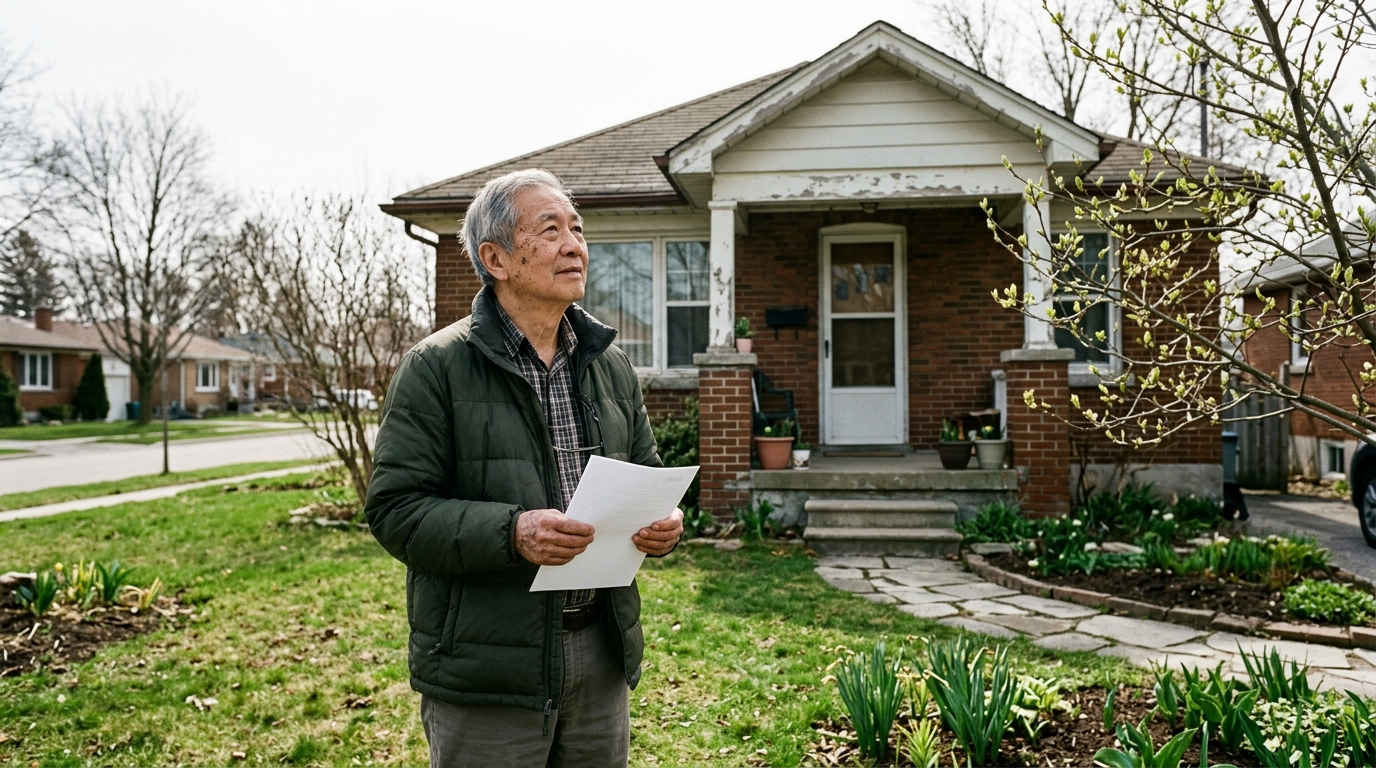
Talking to Your Aging Parent About This
This conversation is delicate. Your parent likely feels guilty adding burden during a crisis. You likely feel ashamed asking for help.
Reframe it:
"Mom, I love you, and I want to keep supporting you. But my finances are tight right now. I'd like to look at using some of your home equity—which is yours, not mine—to cover your care costs. This helps both of us. You stay in your home. I can breathe financially. And eventually, when things stabilize, the remaining equity is still part of your inheritance. What do you think?"
This isn't weakness. It's resource-sharing across generations.
Frequently Asked Questions
Will a reverse mortgage on my parent's home affect my inheritance?
Yes, it will reduce it. Your parent is borrowing against their home equity. When the loan is repaid (either from the sale of the home or the estate), the inheritance is less. However, this is often better than the alternative: your parent forced into long-term care (costing $5,000–$8,000/month), or you drowning in debt and losing relationships with your kids. It's a tradeoff.
Can I be listed as a co-borrower on my parent's reverse mortgage?
No. Reverse mortgages are individual loans. Your parent is the sole borrower. However, you can help them apply, support them through the process, and manage the funds they receive (with their permission and legal documentation).
If my parent's reverse mortgage goes unpaid, can I be sued?
No. You're not the borrower. Your parent is. If they default (very rare with reverse mortgages, as the loan only comes due when they move or pass away), the lender's recourse is the home, not you. You are protected.
What if my ex claims that my parent's reverse mortgage means I'm not supporting the kids adequately?
This is a risk. Your ex might argue to family court that you're using a reverse mortgage (framed as borrowing/debt) to hide income or avoid support obligations. Speak with a family law lawyer about how to frame this. Generally, money you receive from a reverse mortgage on your parent's home is your parent's money, not yours, so it shouldn't affect support calculations. But verify with legal counsel.
What happens to the reverse mortgage when my parent passes away?
The loan becomes due. Your parent's estate must repay it from home sale proceeds or other assets. If there's insufficient equity, the lender takes the home and sells it to recover the loan amount. This reduces (or eliminates) inheritance for you and your siblings. This is why transparency with siblings is crucial before taking out a reverse mortgage on a parent's home.
Should I tell my siblings about this reverse mortgage?
Yes, absolutely. Have a family meeting. Explain the situation: your marital crisis, your parent's care needs, and how a reverse mortgage helps both. This prevents shock and resentment later when siblings learn that the "family home" is encumbered or that the inheritance is reduced. Many siblings will appreciate the honesty and the fact that you're supporting your parent's independence rather than forcing them into care facilities.
Moving Forward: The Three-Year Plan
If you're facing this situation:
- Get legal counsel on divorce and child support ($500–$1,500 consultation) — understand your obligations and timeline.
- Have an honest conversation with your parent about home equity and care costs.
- Speak with a reverse mortgage specialist (like Rick Sekhon Reverse Mortgages) about what monthly income might look like from your parent's home.
- Make a 3-year financial plan with your own income, debt paydown, and the role of parental support.
You can survive this. Your parent can age with dignity. The reverse mortgage isn't a permanent solution — it's a bridge for the hardest 3–5 years of dual crisis.
You're not weak for needing it. You're resourceful.
Ready to Learn More?
Find out exactly how much you could unlock from your home — free and no obligation.
Related Articles
Reverse Mortgage When You Discover Adult Child's Hidden Debt Crisis
Your adult child has secret debt you just found out about. Should you help? How a reverse mortgage protects your retirement while supporting your child's financial recovery.
Read →Reverse Mortgage for Aging Parent Post-Divorce Financial Rebuilding
Late-life divorce left you financially compromised in retirement. Reverse mortgage rebuilds your stability without working longer or downsizing immediately.
Read →Reverse Mortgage for Managing Aging Parent's Medication Non-Adherence Due to Cost
When aging parents skip doses to save money, serious complications follow. Use reverse mortgage to fund full medication compliance and prevent costly hospitalizations.
Read →