
What Is Home Equity? A Guide for Ontario Homeowners 55+
Understand what home equity is, how it builds up over time, and how Ontario homeowners 55+ can access it through a reverse mortgage without monthly payments or selling.
"I know my home is worth a lot — but how do I actually use that value without selling?" This is one of the most common questions Ontario homeowners in their sixties and seventies ask. The answer begins with understanding home equity — what it is, how it builds, and how it can be converted into usable funds in retirement.
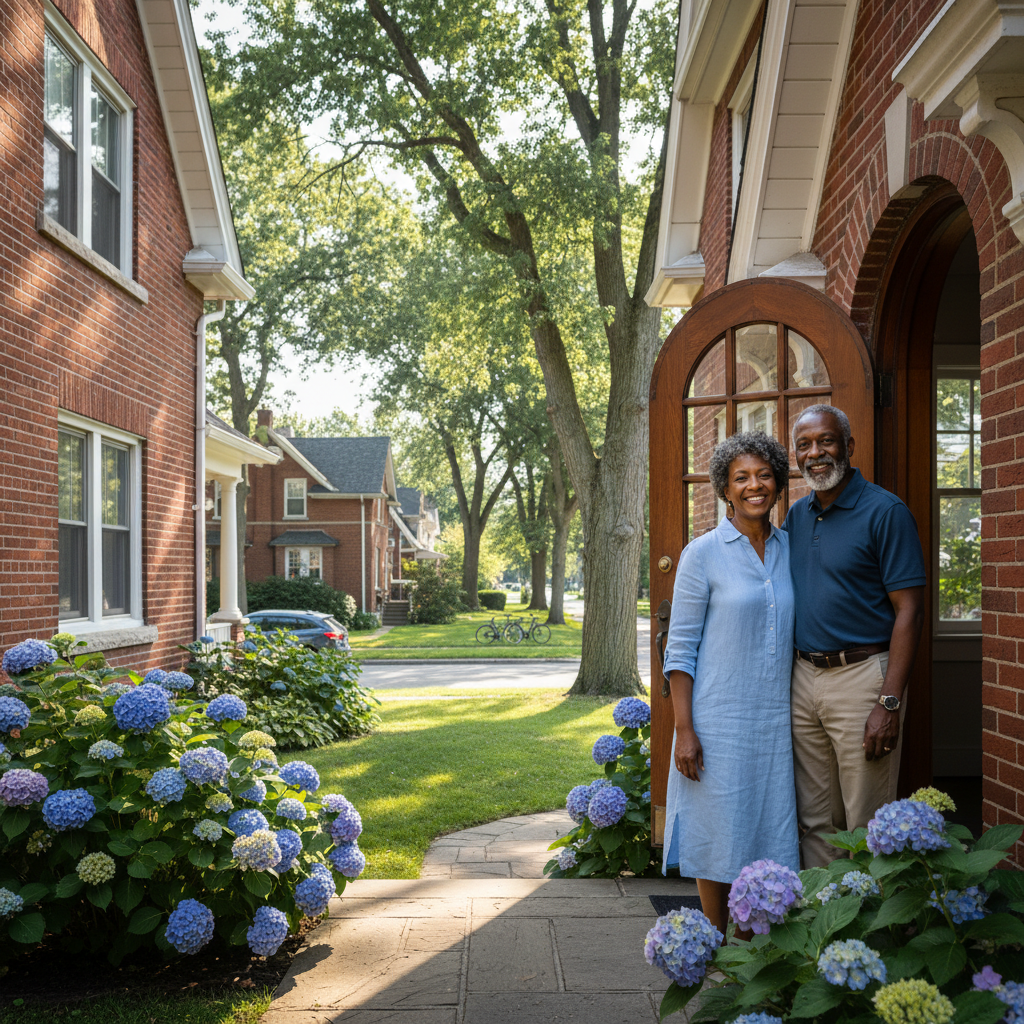
For many Ontario seniors, the family home represents the single largest component of their net worth. Understanding home equity is the foundation of informed retirement planning — and for homeowners aged 55 and older, a reverse mortgage is one of the most accessible ways to unlock that equity without taking on monthly payments.
This article is for educational purposes only and does not constitute financial advice.
What Is Home Equity?
Home equity is the portion of your home's current market value that you actually own — free of any debt secured against the property.
The formula is straightforward:
Home Equity = Current Market Value of the Home − Outstanding Mortgage Balance(s)
If your home is worth $850,000 and you have $120,000 remaining on your mortgage, your home equity is $730,000.
| Example | Amount |
|---|---|
| Appraised market value of home | $850,000 |
| Remaining mortgage balance | $120,000 |
| Home equity | $730,000 |
| Home equity as a percentage of value | ~86% |
This equity belongs to you. It represents the financial stake you have built in your property through years of mortgage payments, home appreciation, and any improvements that increased value.
How Home Equity Builds Over Time
Home equity grows through two mechanisms — sometimes simultaneously:
1. Mortgage Paydown
Every mortgage payment you make reduces the principal balance you owe. In the early years of a mortgage, most of each payment covers interest. Over time, the portion going toward principal grows — and as the balance shrinks, your equity increases.
2. Home Value Appreciation
In most Canadian urban and suburban markets, home values have increased significantly over the past two to three decades. An Ontario homeowner who purchased a home for $280,000 in 2000 may find that same home is now worth $900,000 or more — regardless of how much mortgage they have paid off.
| Ontario Housing Appreciation (Illustrative Example) | Value |
|---|---|
| Purchase price (2000) | $280,000 |
| Estimated current market value (2026) | $900,000+ |
| Appreciation gain | $620,000+ |
| Original down payment | $28,000 (10%) |
| Return on down payment from appreciation alone | ~2,200%+ |
For many Ontario homeowners, appreciation has contributed far more to their equity than mortgage payments ever did — making home equity their most significant retirement asset.
Why Home Equity Matters in Retirement
Traditional retirement planning focuses on savings: RRSPs, TFSAs, employer pensions, CPP, and OAS. But for many Ontario seniors, these income sources do not fully replace their working-year earnings — particularly with rising inflation, healthcare costs, and the desire to maintain the lifestyle they have built.
Home equity fills this gap. It represents wealth that has been accumulated gradually, often without intentional savings effort, and it can be significant even for homeowners who carried mortgages for most of their working lives.
| Retirement Income Source | Typical Annual Benefit (Illustrative) |
|---|---|
| Canada Pension Plan (CPP) — maximum | $17,400/year |
| Old Age Security (OAS) | $8,500–$9,800/year |
| Guaranteed Income Supplement (GIS — if eligible) | Up to $11,500/year |
| Employer pension (DB — varies widely) | $15,000–$40,000/year |
| RRSP/RRIF withdrawals | Depends on savings |
| Home equity (Ontario average) — untapped | $500,000–$900,000+ |
The contrast illustrates why home equity has become central to retirement financial planning: for many Ontario seniors, it dwarfs all other financial assets combined.
Four Ways Ontario Homeowners Can Access Home Equity
There are four main methods for converting home equity into usable funds. Each has distinct trade-offs that depend on your circumstances, goals, and age.
1. Sell the Home
Selling converts 100% of your equity into cash — after paying agent commissions, legal fees, land transfer taxes, and moving costs. The challenge: you must find and pay for somewhere else to live.
In Ontario's housing market, downsizing often costs more than expected. A smaller condominium in the same community can still cost $600,000–$900,000, leaving less cash than anticipated after the sale.
2. Home Equity Line of Credit (HELOC)
A HELOC allows you to borrow against your home's equity up to a maximum limit (typically up to 65% of the home's value on its own, or up to 80% combined with a first mortgage). You draw funds as needed and pay interest on the amount borrowed.
Key limitation: HELOCs require income qualification and a credit check. Many retired Canadians do not pass the lender stress test on pension and OAS income alone. Monthly interest payments are also required, which affects cash flow.
3. Traditional Mortgage Refinance
Refinancing your existing mortgage at a higher amount releases equity as a lump sum. Like a HELOC, this requires income qualification under federal stress test rules and results in higher monthly mortgage payments.
4. Reverse Mortgage
A reverse mortgage is a product available exclusively to Canadian homeowners aged 55 and older. It allows you to access up to 55% of your home's appraised value (or up to 59% with Equitable Bank) as tax-free funds — with no monthly payments, no income requirement, and no credit score requirement.
The loan is repaid when you sell the home, move out permanently, or the last registered borrower passes away. You retain full ownership of your home throughout.
| Access Method | Monthly Payments | Income Required | Credit Required | Max Equity Access | Retain Ownership |
|---|---|---|---|---|---|
| Sell and downsize | N/A | N/A | N/A | 100% (after costs) | ✗ No |
| HELOC | ✓ Yes — interest | ✓ Yes | ✓ Yes | Up to 65% | ✓ Yes |
| Mortgage refinance | ✓ Yes — principal + interest | ✓ Yes | ✓ Yes | Up to 80% (OSFI limit) | ✓ Yes |
| Reverse mortgage | ✗ No | ✗ No | ✗ No | Up to 55%–59% | ✓ Yes |
How Much Home Equity Can You Access with a Reverse Mortgage?
The amount available through a reverse mortgage depends on three factors:
-
Your age (and the age of your co-borrower, if applicable): Older applicants can access a larger percentage of their home's value. A 55-year-old may access a lower percentage than a 75-year-old with an identical home.
-
Your home's appraised value: A professional appraisal determines the current market value. The reverse mortgage is calculated as a percentage of this value.
-
Your property location and type: Urban properties in established Ontario markets (Toronto, Ottawa, Hamilton, Kitchener) typically receive appraisals that support higher loan amounts than rural or remote properties.
| Homeowner Age | Approximate Maximum Access (Illustrative) |
|---|---|
| 55 years old | 20%–30% of home value |
| 62 years old | 30%–40% of home value |
| 70 years old | 40%–50% of home value |
| 78 years old | 50%–55%+ of home value |
These are illustrative ranges only. Actual amounts vary by lender and individual property assessment. To get a personalized estimate, speak with Rick Sekhon or use the reverse mortgage calculator.
The No-Negative-Equity Guarantee
One of the most important protections in the Canadian reverse mortgage market is the no-negative-equity guarantee. This means you will never owe more than the fair market value of your home at the time the loan is repaid — regardless of how long you hold the mortgage, how much interest compounds, or how property values fluctuate.
This protection is provided by all four Canadian reverse mortgage lenders and is a significant safeguard for homeowners and their heirs.
Important Considerations
Home equity is a valuable but finite resource. Using it through a reverse mortgage has long-term implications that deserve careful thought:
Interest compounds over time. Because no monthly payments are required, the outstanding balance grows as interest accrues. The longer the reverse mortgage is held, the more equity is consumed by interest — reducing what remains in the estate.
Equity is reduced for heirs. If leaving the maximum possible inheritance is a priority, accessing home equity now means less will be available later. Many families weigh this trade-off explicitly. For a discussion of inheritance implications, see our guide to reverse mortgages and inheritance in Ontario.
Home maintenance obligations remain. The homeowner must continue to pay property taxes, maintain adequate home insurance, and keep the home in reasonable condition throughout the life of the reverse mortgage.
Frequently Asked Questions
Is home equity the same as home value?
No. Home value is the current market value of the property. Home equity is the portion of that value that you own free of debt. If your home is worth $800,000 and you have a $200,000 mortgage, your home equity is $600,000.
Does home equity change over time?
Yes — both up and down. Equity increases when your property value rises or when you pay down your mortgage. Equity decreases when property values fall, when you borrow against the home, or when a reverse mortgage balance grows through accumulated interest.
Can I access home equity if I still have a mortgage?
Yes. A reverse mortgage can be used to pay out an existing mortgage as part of closing — provided there is sufficient equity remaining after payoff. Many Ontario homeowners use a reverse mortgage specifically to eliminate their remaining traditional mortgage payment. See our guide to paying off your mortgage with a reverse mortgage in Ontario.
Is home equity taxable?
Generally no. In Canada, the capital gain on the sale of your principal residence is exempt from income tax under the Principal Residence Exemption. Funds borrowed against your home through a reverse mortgage are loan advances and are also not taxable income. For a complete discussion, see our guide to CRA tax treatment of reverse mortgage proceeds.
How is home equity different from net worth?
Net worth includes all assets minus all liabilities — not just the home. Home equity is the single component of net worth relating to your principal residence. For many Ontario homeowners aged 55 and older, home equity represents 60%–80% of their total net worth.
Your home has likely been your most reliable financial asset for decades. Understanding home equity — and knowing how to access it on your own terms — is one of the most important steps in retirement financial planning. If you are 55 or older and own your Ontario home, a reverse mortgage may be the key to unlocking the value you have spent a lifetime building.
Speak to a licensed mortgage professional. Independent legal advice is required before closing a reverse mortgage in Ontario.
Get your free Ontario Reverse Mortgage Guide →
This content is for illustrative purposes only. Rates may vary. Call Rick Sekhon for the best rates and more information.
Ready to Learn More?
Find out exactly how much you could unlock from your home — free and no obligation.
Related Articles
How Much Can I Get from a Reverse Mortgage in Ontario? (2026)
Find out how much you can get from a reverse mortgage in Ontario. See LTV ranges by age, home value comparison tables, and factors that affect your amount.
Read →Reverse Mortgage Calculator Ontario: How Much Can You Borrow?
Discover how much you can borrow with a reverse mortgage in Ontario. Independent guide covering age tiers, home value, and the four key factors lenders use.
Read →Reverse Mortgage Eligibility in Ontario: Complete 2026 Guide
Everything Ontario homeowners need to know about qualifying for a reverse mortgage in 2026. Covers age requirements, home equity, property types, and the application process.
Read →