
Reverse Mortgage on a Newly Built Home in Ontario: What to Know
Can you get a reverse mortgage on a newly built or recently purchased home in Ontario? Learn about age requirements, title history, and eligibility for new construction.
"I sold my old house and bought a newly built bungalow — now I want a reverse mortgage, but my broker says there may be complications." New construction homes in Ontario present a specific set of questions when it comes to reverse mortgage eligibility. The good news: newly built homes can qualify for a reverse mortgage in most cases — but there are important timing, title, and appraisal factors that homeowners need to understand before applying.
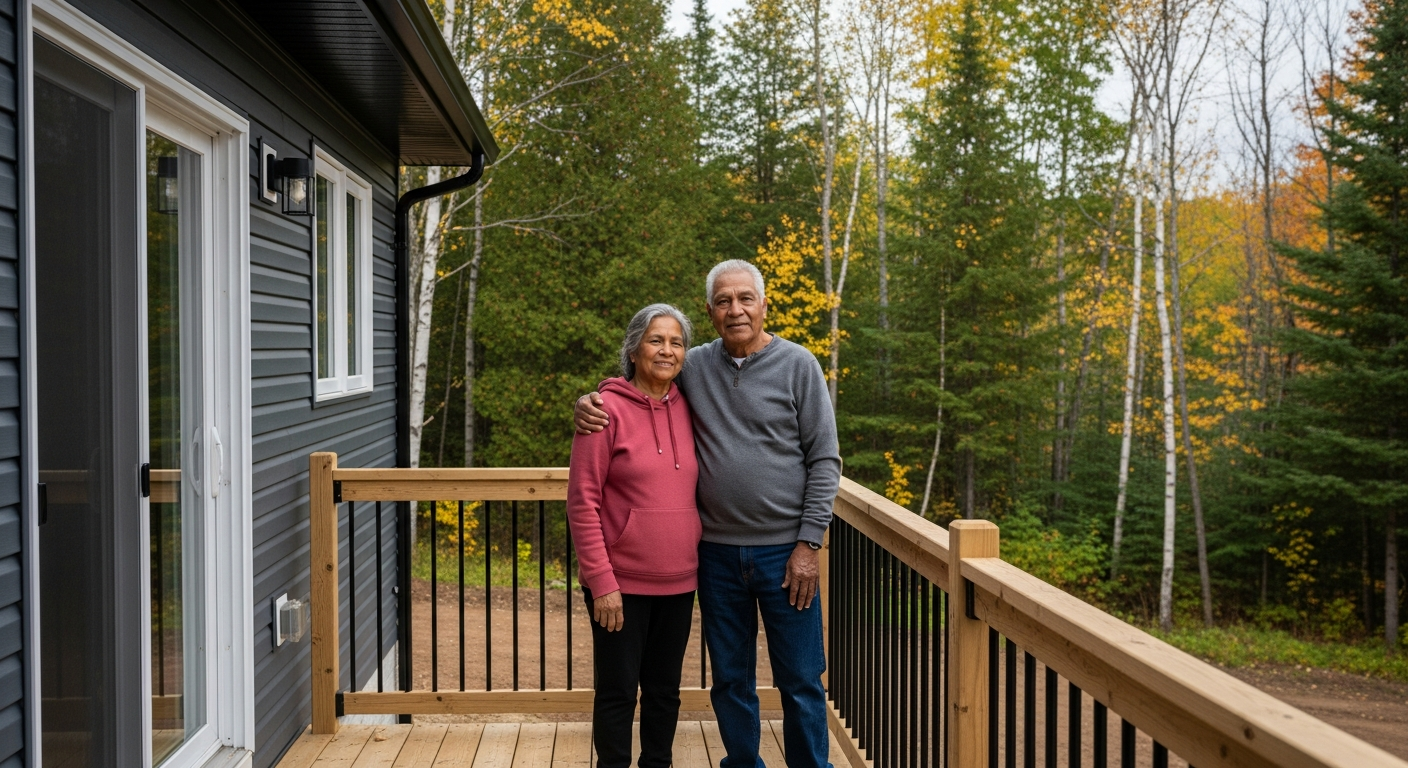
This guide covers everything Ontario homeowners need to know about getting a reverse mortgage on a newly constructed or recently purchased property — including common misconceptions, lender requirements, and how to set yourself up for a smooth application.
This article is for educational purposes only and does not constitute financial advice.
Does the Age of the Home Affect Reverse Mortgage Eligibility?
The short answer: the age of the building itself is not a primary eligibility criterion. Reverse mortgage lenders in Canada assess the property based on its current appraised market value, structural integrity, and compliance with applicable building codes — not whether the home was built last year or fifty years ago.
However, several factors unique to newly built and recently purchased properties can affect the application:
| Factor | How It Affects Eligibility |
|---|---|
| Building completion | Home must be fully complete — not under construction |
| Occupancy permit | Home must have a final occupancy permit issued |
| Title registration | The homeowner must have clear registered title |
| Property taxes | Property tax assessment must exist or be in progress |
| Appraisal | Market value must meet lender minimums ($150,000–$250,000+) |
| Ownership period | Some lenders may require a minimum ownership period (see below) |
The Occupancy and Completion Requirement
A reverse mortgage cannot be placed on a home that is under construction or does not yet have a final occupancy permit. The lender needs a completed, habitable, titled property.
For buyers of new construction from a developer:
- The interim occupancy period (when you can move in but do not yet own the freehold title) does not make you eligible. Ownership for reverse mortgage purposes begins when the title is formally transferred to your name.
- Once title is registered and an occupancy permit has been issued, you are eligible to apply — subject to the other eligibility requirements (age 55+, primary residence, sufficient equity).
This distinction matters for Ontario new construction buyers who often experience an extended interim occupancy period — sometimes six to eighteen months — before final title transfer.
Does Recently Purchasing a Home Affect Eligibility?
There is no standard minimum ownership period required by all Canadian reverse mortgage lenders. However, there are important considerations:
Equity After Purchase
A reverse mortgage is available up to a percentage of the home's current appraised value (up to approximately 55% with most lenders, depending on your age). If you recently purchased the home with a large down payment, you may have significant equity — and a reverse mortgage can be applied for relatively soon after purchase.
If you purchased with a small down payment, your equity may be limited in the early years, and the reverse mortgage amount available may be low (or insufficient to pay out any existing purchase mortgage).
| Scenario | Available Equity |
|---|---|
| Purchased $900,000 home with 20% down ($180,000) | $180,000 in equity immediately |
| Outstanding purchase mortgage | $720,000 |
| Max reverse mortgage (illustrative, age 70) | ~$450,000 |
| Shortfall vs. purchase mortgage | $270,000 — cannot pay out with reverse mortgage alone |
| Alternative: Pay down purchase mortgage first | Increases reverse mortgage feasibility |
Lender Seasoning Requirements
Some individual lenders may apply internal guidelines that prefer properties owned for at least six to twelve months, or that have had a prior appraisal establishing value. This is not a formal regulatory requirement — it is a lender-specific underwriting preference.
Working with Rick Sekhon, who has relationships with all four Canadian reverse mortgage lenders (CHIP/HomeEquity Bank, Equitable Bank, Bloom Financial, Home Trust), ensures you are matched with the lender best suited to your specific purchase timeline.
The Appraisal Process for New Construction
For newly built homes, the appraisal process may differ from that of an established property:
New construction in an established neighbourhood: The appraiser uses recent comparable sales in the area to establish value. If similar new builds have sold nearby, this provides a solid comparables basis.
New construction in a developing subdivision with limited sales: The appraiser may use a combination of replacement cost approach and available comparable sales. Value may be appraised conservatively if the subdivision is new and sales data is limited.
Custom-built homes on rural or semi-rural properties: These can be more complex to appraise, as comparable sales data may be limited. Value may come in lower than the cost of construction in some markets.
| Appraisal Type | New Build Consideration |
|---|---|
| Sales comparison approach | Primary method — requires recent nearby sales data |
| Cost approach | Used when comparables are scarce — replacement cost less depreciation |
| Income approach | Not applicable for owner-occupied residential |
| Builder/developer estimate | Not accepted by lenders — independent appraisal required |
For a full overview of the Ontario reverse mortgage appraisal process, see our guide to the reverse mortgage appraisal process in Ontario.
Seniors Who Buy a New Home Specifically for Aging in Place
Many Ontario seniors sell their previous home and purchase a newly built bungalow or condo specifically designed for aging in place — wider doorways, no stairs, step-in showers, accessible features. This is a growing demographic in Ontario's new construction market.
For these buyers, a reverse mortgage on the new property can serve a specific purpose: eliminating the purchase mortgage that was taken out when buying the new home, so the senior can live in the accessible new home without monthly payments.
| Scenario | Detail |
|---|---|
| Sale proceeds from old home | $750,000 |
| Purchase price of new accessible bungalow | $650,000 |
| Down payment from sale proceeds | $300,000 |
| Outstanding purchase mortgage on new home | $350,000 |
| Reverse mortgage available (age 72, illustrative) | ~$350,000–$390,000 |
| Outcome | Reverse mortgage pays out purchase mortgage — no more monthly payments |
This is one of the most practical uses of a reverse mortgage for Ontarians who have downsized or right-sized into a newer, more accessible property.
For a broader discussion of this approach, see our guide on reverse mortgages for aging in place home modifications.
Condos and New Construction in Ontario's Urban Markets
New construction condos deserve a separate note. Many Ontario seniors purchase pre-construction condos — paying deposits over years, then taking possession and title when the building is completed. For reverse mortgage purposes:
- The condo must be registered on title to the applicant
- The condo must have a final occupancy permit (not just an interim occupancy)
- The condo must meet minimum value thresholds (varies by lender)
- The applicant must be 55+ and the condo must be their primary residence
Pre-construction purchases present timing considerations: the interim occupancy period can last one to three years. During this time, the buyer occupies the unit but does not yet hold title. The reverse mortgage application can only proceed once title is formally registered.
Important Considerations and Potential Drawbacks
New construction often has less equity in early years. If you purchased with a modest down payment, the difference between your current home value and your outstanding mortgage balance may be small — limiting the reverse mortgage amount available to you.
HST on new construction. In Ontario, newly built homes are subject to HST (on a sliding scale, with rebates available). Ensure you understand the total cost of your purchase, including HST and applicable rebates, as these affect your actual cost basis and equity calculation.
Tarion warranty applies. Ontario's new home warranty program through Tarion provides protections for new construction buyers, including coverage for structural defects. If your new home develops a significant structural issue, this warranty protects your investment — and indirectly protects the equity a reverse mortgage lender is relying on.
Interest compounds over time. As with any reverse mortgage, the outstanding balance grows over time without monthly payments. For a newly built home with many anticipated years of ownership ahead, this long-term compounding effect should be modelled carefully. See our guide to compound interest projections for reverse mortgages.
Frequently Asked Questions
Can I apply for a reverse mortgage the same month I take title to my new home?
Technically yes — once you hold registered title and the occupancy permit is in place, you meet the ownership requirement. However, lenders will still conduct an appraisal and review the file. If you also have a purchase mortgage, the reverse mortgage would need to pay it out, and the math must work (sufficient equity after payoff). In practice, many new homeowners apply after a few months of ownership once the full picture is clear.
Does my Tarion new home warranty interact with the reverse mortgage in any way?
No. Tarion warranty protections run with the property and benefit the owner regardless of any financing on the home, including a reverse mortgage. Your warranty is not affected.
Can I get a reverse mortgage on a home I built myself (an owner-built home)?
Yes, in most cases — if the home is fully completed, has a final occupancy permit, is registered on title to you, and is your primary residence. Owner-built homes may be appraised using a cost approach if comparable sales data is limited in your area. Contact Rick Sekhon to assess your specific situation.
What if I am buying a new home and want to use a reverse mortgage as the financing instead of a traditional mortgage?
This is possible if you are 55+ and buying in Ontario. Some seniors use a reverse mortgage on their existing home to generate proceeds, then pay cash for a new home. Others sell their existing home, use the sale proceeds for the new home down payment, and then apply for a reverse mortgage on the new home to access additional equity. A third approach is to purchase the new home with a traditional mortgage, then immediately refinance with a reverse mortgage if sufficient equity exists after purchase.
My builder is delayed — I am in interim occupancy but title is not yet registered. Can I apply?
Not until title is formally registered in your name. The interim occupancy period is a transitional phase and does not confer registered ownership. Once the condominium corporation is registered and your unit's title is transferred, the reverse mortgage application can proceed.
A newly built home is not a barrier to a reverse mortgage in Ontario — but timing, equity, and title registration matter. If you have recently moved into a new home and are 55 or older, speak with Rick Sekhon to understand exactly what is available to you and when.
Speak to a licensed mortgage professional. Independent legal advice is required before closing a reverse mortgage in Ontario.
Get your free Ontario Reverse Mortgage Guide →
This content is for illustrative purposes only. Rates may vary. Call Rick Sekhon for the best rates and more information.
Ready to Learn More?
Find out exactly how much you could unlock from your home — free and no obligation.
Related Articles
Reverse Mortgage Application Process: Step-by-Step Guide for Ontario
Complete step-by-step guide to the reverse mortgage application process in Ontario. Learn the timeline from first call to funding, typically 3-6 weeks.
Read →How Reverse Mortgage Appraisals Work in Ontario
Complete guide to the reverse mortgage appraisal Ontario process: costs, preparation tips, what appraisers evaluate, and how your home's value determines borrowing limits.
Read →Reverse Mortgage Eligibility in Ontario: Complete 2026 Guide
Everything Ontario homeowners need to know about qualifying for a reverse mortgage in 2026. Covers age requirements, home equity, property types, and the application process.
Read →