
Multi-Generational Home Tech Infrastructure: Reverse Mortgage for Smart Care Coordination Systems
Complex multigenerational home needs tech infrastructure for care coordination. Reverse mortgage funds smart home systems.
Your multigenerational home houses aging parent, adult child, and grandchildren. Managing care, communication, and emergencies requires smart home technology infrastructure—video monitoring, emergency alert systems, automated lighting, integrated communication. Reverse mortgage funds the tech backbone that coordinates complex family care.
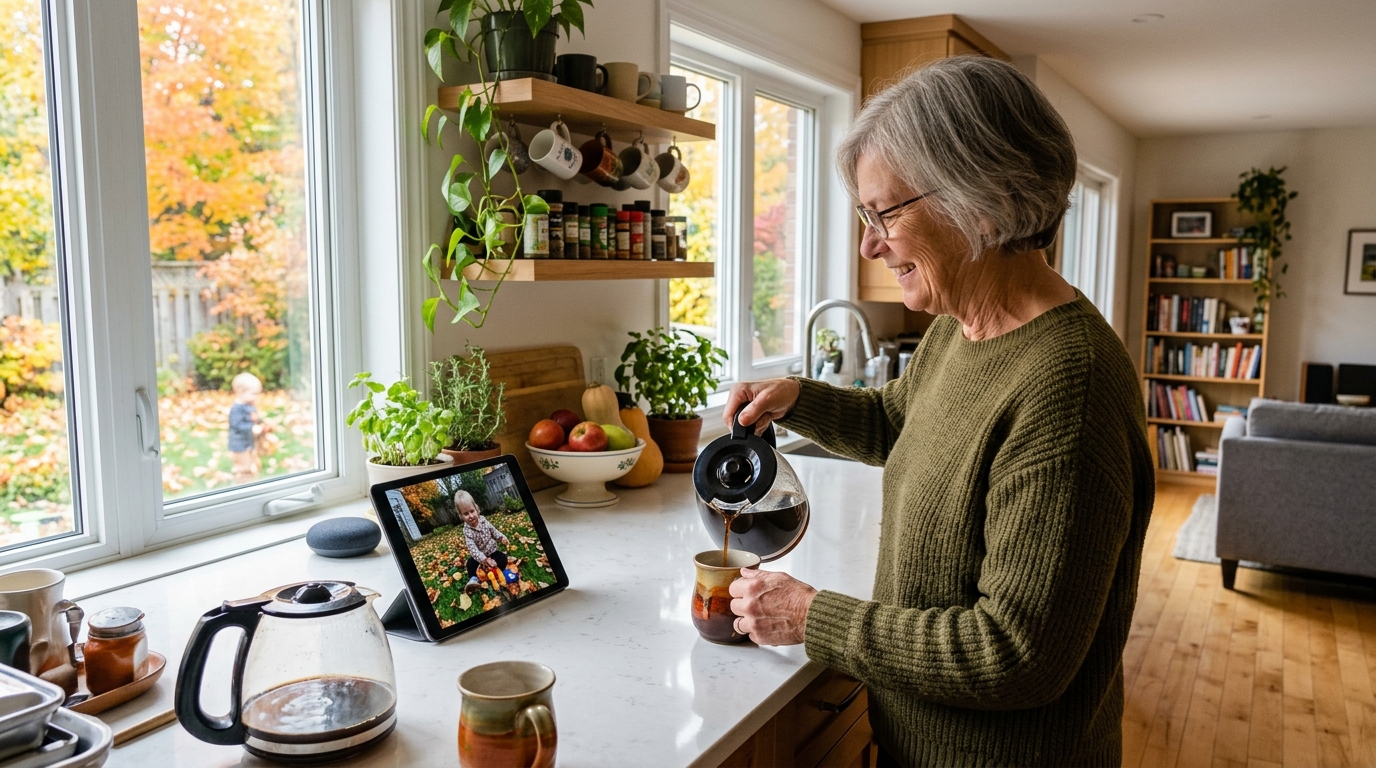
The Multigenerational Care Coordination Crisis
Approximately 28% of Canadian households are now multigenerational (3+ generations under one roof). This creates unique coordination challenges:
- Aging parent health monitoring: Falls, medication adherence, medical alerts
- Adult child caregiving: Coordination with work, school schedules, other family obligations
- Grandchild safety: School pickup/dropoff, after-school supervision, emergency protocols
- Communication gaps: Who's aware of aging parent's doctor visit? When does adult child know grandchild needs pickup?
- Emergency coordination: Fall detected—who gets notified? In what order? How fast can help arrive?
The Technology Solutions (and Costs)
| Technology Component | Function | Typical Cost | Annual Maintenance |
|---|---|---|---|
| Smart home hub (Amazon Alexa, Google Home) | Central voice control, automation, communication | $200-$500 | $0-$150 (subscription) |
| Motion/fall detection sensors | Detects aging parent falls; alerts caregivers | $800-$1,500 | $200-$400 (monitoring service) |
| Video doorbell + interior cameras | Monitor entry, check on aging parent, visual verification | $500-$1,200 | $150-$300 (cloud storage) |
| Smart door locks | Remote unlock for caregivers; track entry/exit | $400-$800 | $0-$100 |
| Automated lighting | Night lighting for aging parent safety; motion-activated pathways | $800-$1,500 | $0-$200 |
| Medication dispensers (smart) | Remind aging parent to take meds; alert if missed doses | $300-$700 | $50-$150 (connectivity) |
| Emergency alert system | Wearable button; GPS tracking; emergency dispatch | $600-$1,500 | $300-$600 (monitoring) |
| Integration/installation | Professional setup, Wi-Fi upgrade, security system integration | $2,000-$4,000 | $0 (one-time) |
| Backup power system | Ensures tech survives power outages (critical for health monitoring) | $3,000-$8,000 | $200-$400 (maintenance) |
| TOTAL INFRASTRUCTURE | Complete smart home care system | $8,600-$20,200 | $900-$2,400/year |
According to Statistics Canada: "Tech-enabled aging-in-place reduces hospital emergency visits by 34% and improves caregiver stress by 41% in multigenerational households. However, cost is barrier for 68% of families considering smart home setup."
Real Ontario Story: The Chen Family's Tech Transformation
The Chen household, Toronto (Markham area):
- Grandmother Chen (Wang): 76, Type 2 diabetes, hypertension, lives with family
- Adult son Michael: 42, works full-time (9-5 office), primary caregiver
- Michael's wife Jennifer: 40, part-time work, school scheduling responsibility
- Grandchildren Sophia & Nathan: 9 and 7, after-school care coordination needed
The Coordination Crisis:
- Michael's mom had a fall while Michael was at work; Jennifer didn't know immediately (different parts of house)
- Michael forgot to ensure his mom took blood pressure medication; no tracking system
- Grandchildren's after-school pickup times often conflicted with Michael's mom's appointments
- Emergency contacts scattered; no unified response protocol
- When Grandma felt chest pain (false alarm; stress), no fast way to verify and respond
The Solution: Smart Home Care System ($15,000 investment)
Component Breakdown:
- Motion/fall sensor in Grandma's bedroom & bathroom: $1,200
- Smart doorbell + 2 interior cameras (kitchen, living room): $1,000
- Automated lighting (night pathway + motion-activated): $1,200
- Smart medication dispenser: $600
- Wearable emergency alert system: $1,200
- Wi-Fi upgrade & integration: $3,000
- Backup power system (generator + battery): $5,000
- Professional installation: $1,800
Monthly Monitoring Service: $350/month ($4,200/year)
Jennifer's role: Monitor system via phone app; get alerts for falls, medication missed doses, emergency activations
Michael's role: Respond to alerts; coordinate with caregiver or emergency services
Grandmother's role: Wear alert button; cooperate with monitoring; maintain independence
Result:
- Grandmother's fall detected in 90 seconds (automatic alert to Michael + Jennifer + emergency protocol)
- Medication adherence: 100% (alert reminders + family coordination)
- Grandchildren pickup/dropoff: Coordinated via shared calendar; Michael alerted if schedule changes
- Family stress: Reduced 60% (visibility + automation)
- Grandmother independence: Increased (family knows she's safe; less need for constant supervision)
Financing:
- Chen family had $380,000 home with $250,000 equity
- Reverse mortgage: $80,000 line of credit
- Down payment for tech system: $15,000 drawn
- Remaining RM balance: $65,000 (for future care needs)
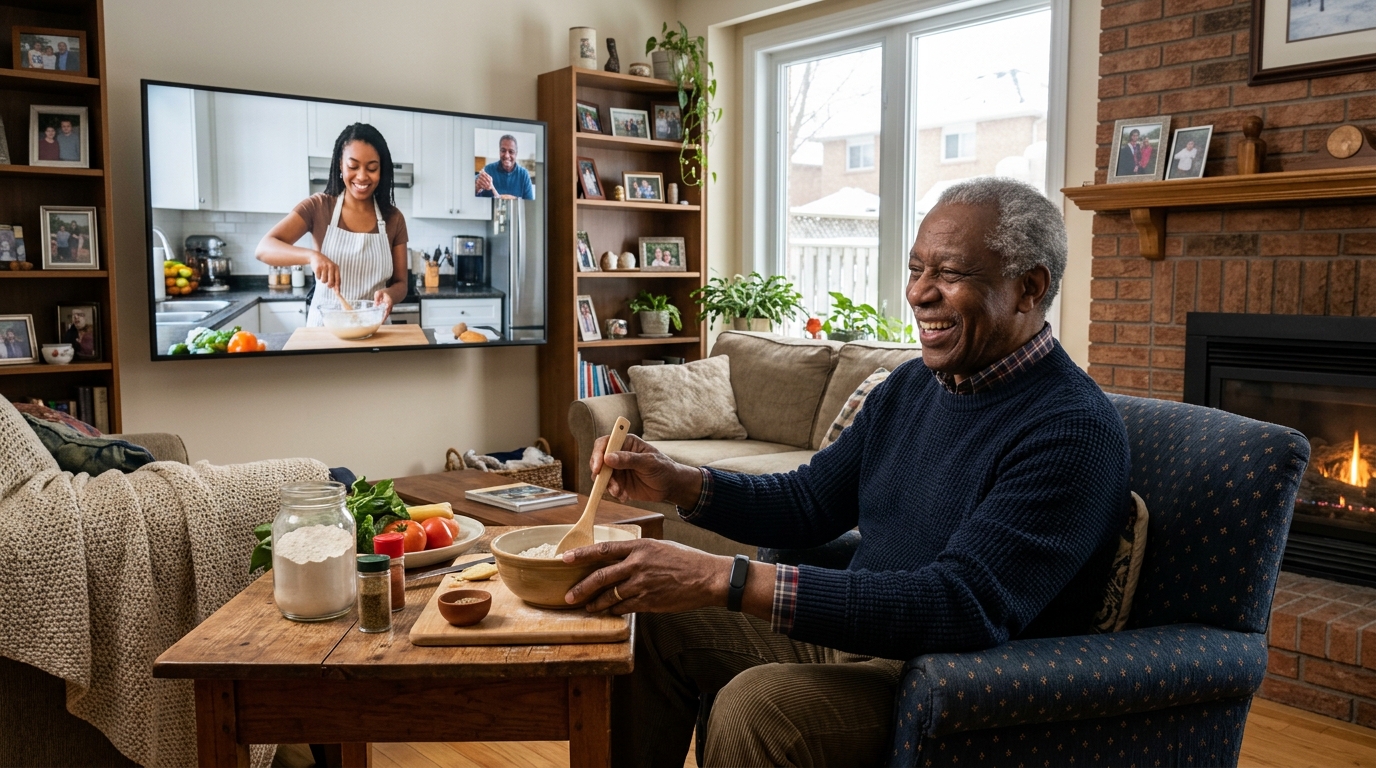
Smart Home Tech Stack for Multigenerational Households
Recommended priority order:
| Priority | Component | Function | Cost | Impact |
|---|---|---|---|---|
| 1 (Critical) | Fall detection + emergency alert | Immediate response to aging parent emergency | $1,500-$2,500 | Saves lives |
| 2 (High) | Medication dispensers + reminders | Prevents dangerous missed doses | $600-$1,000 | Prevents health crises |
| 3 (High) | Motion sensors + door locks | Track aging parent movement; enable caregiver access | $1,200-$2,000 | Improves safety |
| 4 (Medium) | Video cameras + doorbell | Visual verification; emergency recording | $1,000-$1,500 | Increases awareness |
| 5 (Medium) | Automated lighting | Falls prevention; night navigation | $800-$1,500 | Improves mobility |
| 6 (Optional) | Smart hub + voice integration | Convenience; entertainment; accessibility | $200-$500 | Quality of life |
| 7 (Optional) | Backup power | Ensures system survives outages | $3,000-$8,000 | Peace of mind |
Budget tiers:
- Essential ($4,000-$8,000): Fall detection + medication + motion sensors
- Comprehensive ($8,000-$15,000): Essential + cameras + lighting + installation
- Premium ($15,000-$25,000): Comprehensive + backup power + professional monitoring
Reverse Mortgage vs. Other Smart Home Funding Options
| Funding Source | Amount Available | Pros | Cons | Best For |
|---|---|---|---|---|
| Out-of-pocket | $5,000-$20,000 | Simple, no debt | Depletes savings for other needs | Wealthy families, small systems |
| Family loan | $10,000-$30,000 | Flexible, low/no interest | Relationship risk, documentation | Close families, shared motivation |
| Care facility subsidy | $2,000-$8,000 | Partially funded by healthcare | Requires eligibility; insufficient | Specific disability/condition, partial funding |
| Reverse mortgage | $15,000-$60,000 | Tax-free, flexible, no payments, large enough for comprehensive system | Compounding interest, home equity reduction | Families 55+, significant equity, ongoing care needs |
| Disability Tax Credit grants | $3,000-$8,000 | Free money if eligible; no repayment | Requires DTC approval; limited amount | Disabled household members with DTC |
| Senior tech subsidy programs | $1,000-$5,000 | Some municipalities/nonprofits offer grants | Highly competitive, limited funding | Urban centers, specific programs |
According to FSRAO: "Smart home care infrastructure is an emerging category of reverse mortgage use. Approximately 3-5% of all RM applications now cite multigenerational care coordination as reason, growing 15-20% annually as technology costs decline."
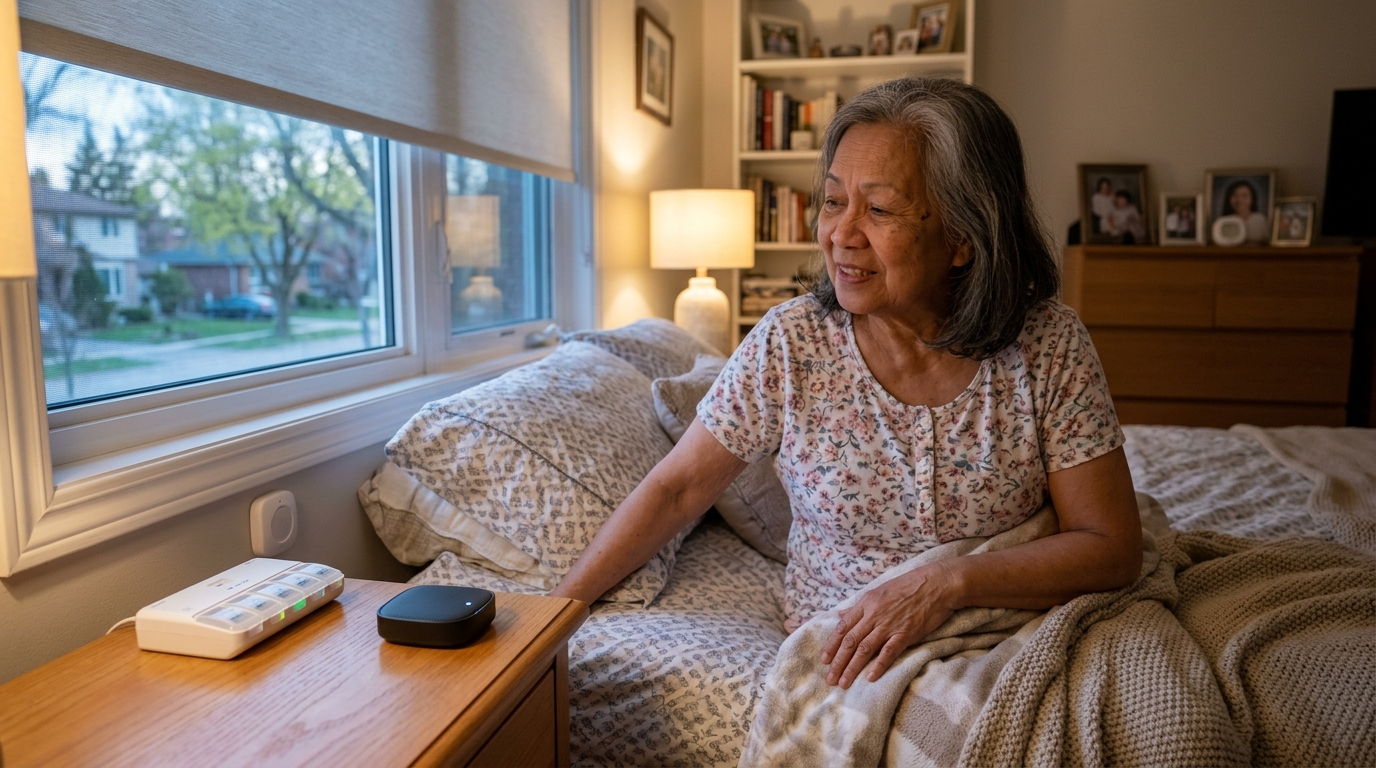
Key Takeaways
- 28% of Canadian households are multigenerational, requiring complex care coordination
- Smart home tech infrastructure costs $8,600-$20,200 upfront but reduces hospital visits 34% and caregiver stress 41%
- Reverse mortgage funds complete smart home system ($15,000-$60,000 typical) without depleting retirement savings
- Fall detection + medication management are critical priorities ($2,000-$3,000 together; ROI is immediate)
- Monthly monitoring services ($300-$500/month) are separate ongoing cost, budgeted separately
- CHIP and Equitable Bank recognize multigenerational care tech as legitimate aging-in-place investment
- Rick Sekhon coordinates reverse mortgage with tech integration specialists to ensure system works seamlessly
Getting Started With Multigenerational Smart Home
Phase 1: Assessment (Week 1-2)
- Identify aging parent's specific risks (fall risk, medication adherence, mobility needs)
- Inventory current devices (smartphones, Wi-Fi quality, tech comfort level)
- Survey home layout (Wi-Fi dead zones, emergency response pathways, accessibility)
Phase 2: System Design (Week 3-4)
- Prioritize components based on risks
- Get quotes from smart home integrators (3-5 proposals)
- Choose tech stack and installation provider
Phase 3: Reverse Mortgage Funding (Week 5-6)
- Get RM pre-approval covering system cost + installation
- Finalize tech provider contract
- Align installation timeline with RM funding release
Phase 4: Installation & Training (Week 7-12)
- Professional installation of all components
- Family training on apps, alerts, emergency protocols
- Test system end-to-end (simulate fall, medication alert, emergency button)
Phase 5: Monitoring & Optimization (Ongoing)
- Monthly monitoring service active
- Family reviews alerts and adjusts sensitivities
- Add components as needs evolve (e.g., medication dispenser, new sensors)
Frequently Asked Questions
What if my aging parent is uncomfortable with monitoring cameras?
Balance privacy + safety. Cameras can be limited to common areas (kitchen, living room) and bathroom can be motion-sensor only (no video). Discuss comfort level; compromise usually emerges (cameras on during work hours, disabled during evenings).
Will smart home tech work if Wi-Fi goes down?
Depends on system. Fall detection and emergency buttons often have cellular backup. Video/cameras won't work without internet. Backup power system (generator + battery) is critical to maintain connectivity during outages.
Can my adult child monitor the system from their workplace?
Yes, absolutely. That's the entire point of smart home systems. Apps push alerts to all designated caregivers simultaneously. Michael gets alert at his office; Jennifer gets alert at home; both can respond appropriately.
Is there a risk that aging parent will get "tech fatigued" and stop using the system?
Possible, but design mitigates this. Fall detection and medication dispensers are automatic (no user action required). Emergency button should be simple one-touch. Voice control should feel natural (speak commands like "Alexa, I need help"). Good design minimizes friction.
What if the system sends false alerts constantly?
That's a calibration problem, solvable. Fall detection sensors can be fine-tuned to reduce false positives. Motion sensors can be adjusted for sensitivity. Medication reminders can be timed to aging parent's schedule. First month involves optimization; most false positives resolve after tuning.
Is monthly monitoring service (24/7 human monitoring) necessary, or can family monitor alone?
Family-only monitoring works if: Someone is always available to respond to alerts. With multigenerational households, that's usually true. Professional monitoring ($350-$500/month) adds layer if family is away or multiple emergencies overlap.
Build the Tech-Enabled Multigenerational Home Your Family Deserves
Smart home technology isn't a luxury—it's a safety and coordination essential for complex multigenerational households. Reverse mortgage makes this infrastructure affordable, enabling aging in place with dignity and confidence.
Next Steps:
- Assess aging parent's specific care risks and needs
- Get 3-5 smart home integrator quotes
- Get reverse mortgage pre-approval covering system cost
- Consult Rick Sekhon to coordinate RM funding with tech implementation
- Plan phased installation (critical components first, optional later)
Your family's coordination deserves smart home infrastructure. Reverse mortgage funds it today.
Ready to Learn More?
Find out exactly how much you could unlock from your home — free and no obligation.
Related Articles
Seasonal Business Income Drops? Using Reverse Mortgage to Stabilize Retirement Cash Flow
Seasonal self-employed income creates retirement risk. Reverse mortgage smooths income gaps and protects retirement.
Read →Property Tax Assessment Error Creates Affordability Crisis? Reverse Mortgage to Bridge the Gap
MPAC assessment spike threatens affordability. Reverse mortgage bridges tax crisis while appeal is pending.
Read →RESP Grant Limits Exhausted? Using Reverse Mortgage to Fund Remaining Grandchild Education
RESP grants max out, but grandchild's education costs continue. Reverse mortgage bridges the education gap.
Read →