
Reverse Mortgage for Service Animal Certification and Professional Training Costs
Fund service dog training, certification, and ongoing care for mobility, diabetes, seizure, and mental health support needs in Ontario.
Service animals provide life-changing mobility support, health monitoring, and safety for seniors with disabilities—but their training, certification, and ongoing care cost $15,000–$40,000+. Many Ontario seniors can afford to own and support a service animal, but the upfront training and certification costs are prohibitive. A reverse mortgage provides immediate funding to bring a certified service animal into your life, transforming independence and safety.
Understanding Service Animal Training and Certification
A trained service animal is fundamentally different from a pet or emotional support animal. A service animal is a dog professionally trained to perform specific tasks for a person with a disability, such as mobility assistance, balance support, seizure detection, or diabetes monitoring. Service animal training requires 18–24 months of intensive work with professional trainers and costs $15,000–$40,000 depending on the dog's role and the training organization.
Ontario seniors with mobility challenges, diabetes complications, seizure disorders, or PTSD-related anxiety often qualify for service animals, but the cost barrier prevents many from accessing this transformative technology.
According to CMHC (Canada Mortgage and Housing Corporation) research, seniors with properly trained service animals report significant improvements in independence, fall prevention, and confidence remaining in their homes longer compared to seniors without support animals.
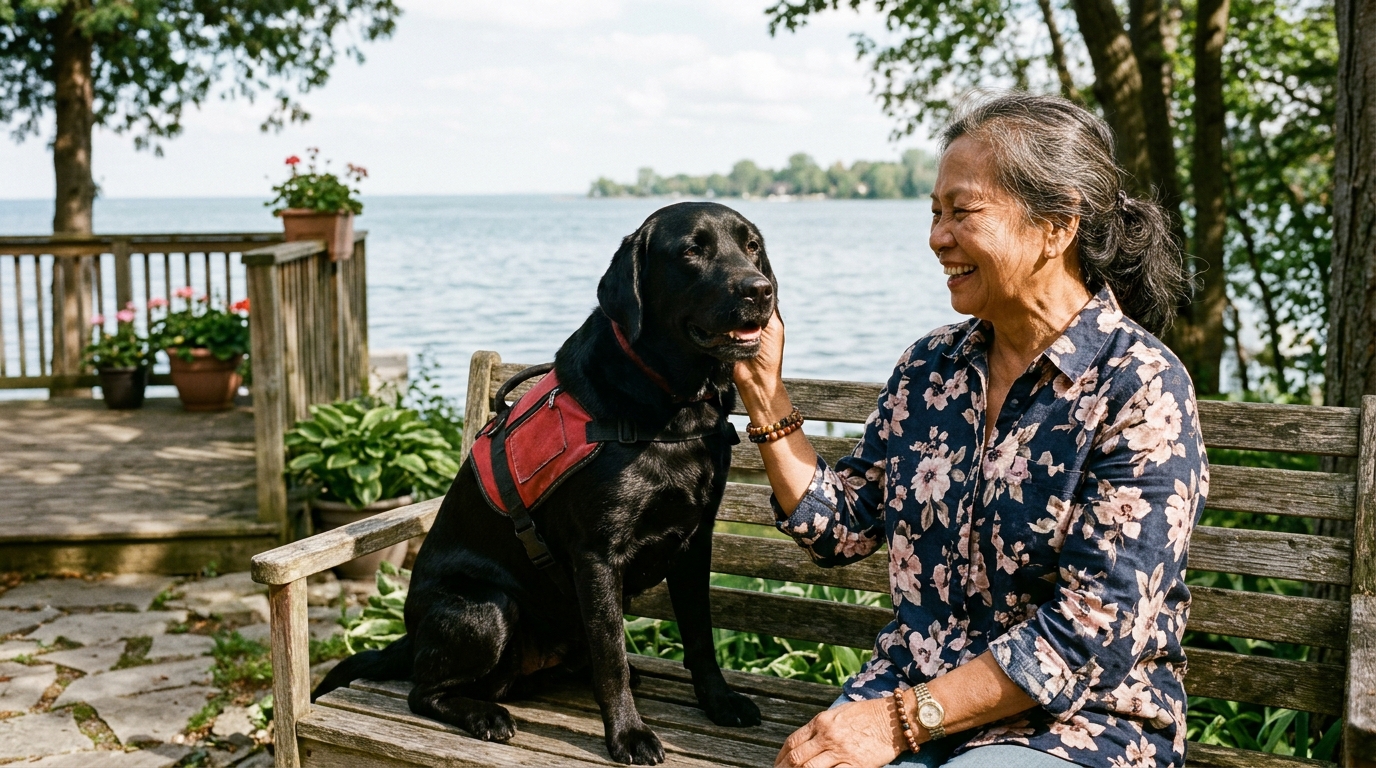
Service Animal Training Costs and Timeline in Ontario
| Service Animal Type | Training Duration | Cost Range | Ongoing Annual Cost |
|---|---|---|---|
| Mobility/Balance Assistance Dog | 18–24 months | $18,000–$35,000 | $1,500–$3,000 |
| Diabetes Alert Dog | 12–18 months | $15,000–$25,000 | $1,200–$2,500 |
| Seizure Response Dog | 18–24 months | $20,000–$40,000 | $1,500–$3,000 |
| PTSD Service Dog | 12–18 months | $15,000–$30,000 | $1,200–$2,500 |
| Psychiatric Service Dog (anxiety/panic) | 12–18 months | $12,000–$25,000 | $1,000–$2,500 |
| Basic Task-Specific Dog | 6–12 months | $5,000–$12,000 | $800–$1,500 |
Types of Service Animals That Transform Senior Independence
Mobility Support Dogs are trained to help seniors with arthritis, Parkinson's disease, or post-stroke mobility challenges. The dog learns to:
- Brace the senior's legs during standing and walking
- Retrieve dropped items without requiring the senior to bend
- Assist with balance during transitions from sitting to standing
- Alert caregivers if the senior falls
For a senior with degenerative joint disease, a mobility dog can literally be the difference between aging in place and requiring nursing home care.
Diabetes Alert Dogs are trained to detect blood sugar changes through scent and alert the owner before dangerous hypoglycemia occurs. These dogs can prevent seizures, loss of consciousness, and emergency hospitalizations for seniors with type 1 diabetes or advanced type 2 diabetes.
Seizure Response Dogs learn to recognize the early warning signs of seizures and position themselves to protect the senior from injury during and after the event. They can also alert family or emergency services if the senior is alone.
Psychiatric Service Dogs are trained to recognize anxiety or panic attacks and apply deep pressure therapy by sitting on the person's chest or applying grounding pressure, helping the senior regain emotional regulation without medication.
Reverse Mortgage Strategy for Service Animal Training
A reverse mortgage provides focused funding for service animal training and certification:
- Apply for a reverse mortgage on your Ontario home (age 55+, $300,000+ equity)
- Receive lump sum funding specific to your service animal needs ($15,000–$40,000)
- Work with a certified service animal organization in Ontario to assess your needs and begin training
- Complete 18–24 month training period while home equity works for you
- Receive your certified service animal with full public access rights and documentation
- Budget ongoing care costs ($1,000–$3,000 annually) from CPP/OAS or flexible reverse mortgage line of credit
This approach keeps your monthly retirement income intact while investing in a device (the service animal) that extends your independence.
Certified Service Animal Organizations in Ontario
Several organizations in Ontario train and certify service animals for seniors:
- MSFM (Mutual Service Family Ministries) – Mobility, diabetes, and psychiatric service dogs
- Lions Foundation of Canada Dog Guides – Mobility and PTSD service dogs trained at their provincial centre
- Assistance Dogs International – Accredited trainers and programs across Ontario
- Canadian Association of Assistance Dog Partners – Registry of certified programs and trainers
Working with Rick Sekhon or a reverse mortgage specialist, you can:
- Identify your specific service animal needs
- Research organization reputations and trainer qualifications
- Understand the waiting list (often 18–36 months) for training
- Fund the training through a reverse mortgage to begin the process immediately
- Budget for ongoing veterinary care, food, and handler training
Service Animal Certification vs. Emotional Support Animals
Service animals have full legal public access rights under the Canadian Human Rights Act and can accompany seniors into retail stores, restaurants, medical offices, and public transit. This differs fundamentally from emotional support animals, which have limited legal protection.
A certified service animal's public access rights are tied to its training and documentation. Reverse mortgage funding for training ensures your animal receives proper certification, unlocking these legal protections and independence benefits.
According to OSFI (Office of the Superintendent of Financial Institutions), properly certified service animals represent a health and independence investment comparable to hearing aids, mobility aids, or home accessibility modifications—all recognizable uses of reverse mortgage funding.
Ongoing Care Costs and Reverse Mortgage Planning
Beyond the initial $15,000–$40,000 training investment, service animals require:
- Veterinary care: $800–$1,500 annually (preventive, emergency, age-related treatment)
- Food and supplies: $300–$600 annually (specialized diet, grooming tools, replacement collar/harness)
- Handler training and recertification: $200–$500 annually (keeping your skills sharp)
- Equipment replacement: $150–$400 annually (worn harnesses, leads, medical alert vests)
A reverse mortgage line of credit can be structured to cover both initial training costs and an ongoing "service animal reserve" for annual care expenses, ensuring you never compromise your animal's wellbeing due to monthly budget constraints.
Key Takeaways
- Professional service animal training in Ontario costs $15,000–$40,000 and takes 18–24 months to complete
- Mobility, diabetes, seizure, and psychiatric service dogs provide measurable improvements in senior independence and safety
- A reverse mortgage lump sum funds full training and certification, with service animals providing 7–10 years of active service
- Service animals have full legal public access rights under Canadian Human Rights law, unlike emotional support animals
- Ongoing annual care costs ($1,000–$3,000) can be budgeted through ongoing reverse mortgage line of credit access
Frequently Asked Questions
How long is the waiting list for a trained service animal from Lions Foundation of Canada?
Lions Foundation typically has an 18–36 month waiting list depending on the type of service animal. Many Ontarians start the application process while the reverse mortgage funding is being arranged, so the animal is ready when the funds arrive. Rick Sekhon can coordinate these timelines to ensure continuity.
Will my aging parent's mobility improve immediately after receiving a service animal, or is there a training period?
There's a 4–8 week handler training period after the animal is placed with you. The trainer teaches you specific commands, safety procedures, and how to recognize the animal's signals. This transition period is critical to building the partnership. Most seniors feel significant improvement in confidence and independence within the first month.
Can I get a service animal if I rent my Ontario home rather than own?
Service animal training and certification are not tied to home ownership. However, many landlords resist renting to tenants with service animals due to liability concerns. If you rent, consult your lease carefully. A reverse mortgage is available only if you own your home, so service animal funding via reverse mortgage requires home ownership.
If my service animal passes away, can I use the remaining reverse mortgage funds to train a replacement?
Yes. If you've set up a reverse mortgage line of credit and structured it for ongoing service animal support, remaining funds can be used to train a replacement animal. The cost and timeline are similar to the first animal. Most seniors plan for this possibility when structuring their initial reverse mortgage.
Does Ontario's provincial health insurance cover any portion of service animal training costs?
Unfortunately, OHIP does not cover service animal training. However, some disability tax credits or provincial disability supports may offer partial grants. Check with your local Accessibility for Ontarians with Disabilities Act (AODA) office. A reverse mortgage bridges the gap when grants don't cover the full cost.
How does a service animal affect my ability to age in place or eventually move to a retirement residence?
Most active retirement communities and continuing-care retirement homes welcome residents with certified service animals. The animal's public access rights and certification typically override housing restrictions. Your service animal actually enhances your ability to remain independent and stay engaged with community activities that retirement residences offer.
Ready to Learn More?
Find out exactly how much you could unlock from your home — free and no obligation.
Related Articles
Reverse Mortgage When Aging Parent Owes Back Spousal Support: Managing Old Family Law Debts
Clear accumulated back alimony and spousal support debt in retirement. Avoid collections and wage garnishment on CPP/OAS payments.
Read →Reverse Mortgage for Basement Theater Conversion: Creating Multigenerational Entertainment Space
Convert your basement into an accessible home theater. Fund entertainment space for aging in place and multigenerational family gatherings.
Read →Reverse Mortgage for Professional Home Energy Audit and Green Building Certification
Fund professional energy audits, Energy Star certification, and retrofit recommendations. Lower Ontario heating costs while improving home value.
Read →