
Reverse Mortgage When Home Defects Discovered Reduce Property Value Significantly
Major property defects discovered (mold, structural, foundation) reduce home value. Reverse mortgage funds repairs or carries mortgage gap in Ontario.
Discovered a major home defect after years of living somewhere you thought was fine? Structural cracks, mold, foundation issues, or underground contamination can slash your home's value by 15-40%, creating a financial crisis for retirees who depend on home equity. A reverse mortgage can help you fund critical repairs or navigate the equity gap when your home is suddenly worth far less than you expected.

When Major Defects Destroy Home Equity
Property defects fall into several categories, each with serious financial consequences:
| Defect Type | Typical Cost | Value Impact | Insurability |
|---|---|---|---|
| Mold (significant remediation) | $10,000–$50,000 | -10% to -25% | Insurance may deny claims |
| Foundation repair (major cracking, settlement) | $25,000–$100,000+ | -15% to -40% | May be uninsurable |
| Radon (soil gas remediation system) | $2,000–$8,000 | -5% to -15% | Minimal impact |
| Asbestos/lead abatement | $15,000–$60,000 | -10% to -20% | May require disclosure |
| Environmental contamination (groundwater, soil) | $50,000–$250,000+ | -20% to -50% | Property may be unmarketable |
| Severe water damage (persistent moisture) | $20,000–$80,000 | -10% to -25% | Insurance cancellation likely |
A major defect discovered late in life creates a crisis: you can't sell without fixing it (and disclosing it), but you may not have $100,000+ available to repair it.
How Reverse Mortgage Helps with Discovered Defects
A reverse mortgage addresses defects in three ways:
Option 1: Fund the Repair
If the defect is repairable, a reverse mortgage provides capital for remediation. You retain home ownership, fix the issue, and preserve the home's value. This is the ideal outcome.
Option 2: Bridge the Equity Gap
If repair costs are catastrophic (e.g., $200,000 environmental cleanup on a $600,000 home), you may not have enough equity to justify fixing it. A reverse mortgage bridges the gap, allowing you to pay yourself through the equity loss while remaining in the home.
Option 3: Enable Downsizing
If the defect makes the home too expensive to maintain, a reverse mortgage funds the move to a smaller, defect-free home. You sell the defective property (at reduced value), use sale proceeds to repay the reverse mortgage, and start fresh elsewhere.
Case Studies: Ontario Defects and Reverse Mortgage Solutions
Case 1: Foundation Cracking
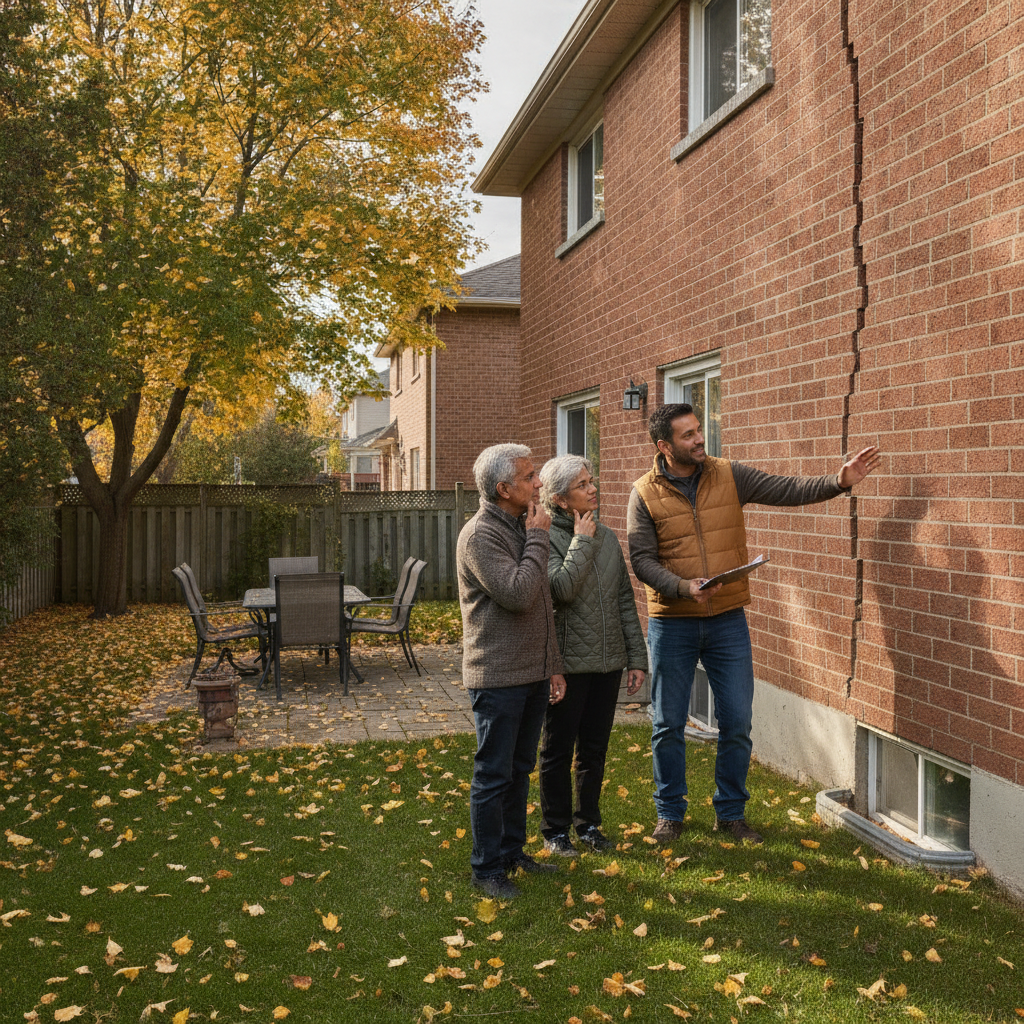
Robert, 72, discovers foundation cracking affecting 60% of his Toronto home's foundation. Repair estimate: $85,000. His home was worth $700,000, but post-discovery appraisals show $600,000. He's lost $100,000 in equity.
Solution: Reverse mortgage for $90,000. Robert funds the repair, bringing the foundation to code. Once repaired, the home's value stabilizes at $680,000 (still $20,000 below pre-discovery, but the repair prevented further loss). Robert repays the reverse mortgage from home sale proceeds when he eventually downsizes.
Case 2: Mold in Basement
Susan, 65, uncovers extensive mold in the basement affecting HVAC and insulation. Remediation cost: $45,000. Home inspection also reveals previous water damage that previous owners never disclosed. Home value drops from $550,000 to $470,000.
Solution: Reverse mortgage for $50,000. Susan funds mold remediation, repairs HVAC, and replaces insulation. The home stabilizes at $520,000 after repairs (still slightly lower than original value due to disclosure history, but manageable). Reverse mortgage repaid when Susan eventually moves to a condo.
Case 3: Radon + Well Contamination
Margaret, 70, on rural Ontario property, learns her well is contaminated with high radon levels. Remediation: $25,000 for water treatment system. Radon mitigation: $8,000. Home already has limited buyer pool due to rural location. Fixing the issues is essential but depletes reserves.
Solution: Reverse mortgage for $35,000. Margaret funds both remediation systems, preserves the property's habitability, and avoids forced sale. The home remains owner-occupiable, though buyer pool is still limited. Reverse mortgage repaid upon sale or estate settlement.
Reverse Mortgage vs. Alternative Funding Sources
| Funding Source | Speed | Credit Check | Monthly Payment | Best For |
|---|---|---|---|---|
| Reverse Mortgage | 4–6 weeks | Minimal | None | Homeowners 55+, no income verification |
| HELOC | 1–2 weeks | Yes (required) | Yes | Employed borrowers with stable income |
| Home Equity Loan | 2–4 weeks | Yes (required) | Yes | Fixed-amount needs with employment |
| Personal Loan | 1 week | Yes (strict) | Yes | Smaller amounts (<$30,000) |
| Savings/Investments | Immediate | N/A | N/A | Available cash, but depletes emergency reserves |
For retirees who discovered defects late in life, reverse mortgages are often the only viable option because they don't require employment income verification or monthly payments.
Steps to Take When a Defect Is Discovered
1. Get Independent Assessments
Don't rely on a single contractor's estimate. Obtain 2-3 independent quotes for repairs. Different contractors may estimate different scope and cost.
2. Investigate Insurance
Contact your homeowners insurer to determine if the defect is covered. Some policies exclude mold, foundation issues, or environmental contamination. Document the insurer's response in writing.
3. Obtain a Pre-Repair Appraisal
Hire a licensed appraiser to assess your home's current value post-discovery (before repairs). This establishes the baseline for equity loss.
4. Consult with Rick Sekhon
Discuss reverse mortgage options. Rick Sekhon can explain how much you can borrow, what the costs are, and whether a reverse mortgage makes financial sense given your home's condition.
5. Budget for Repairs
Get a detailed repair estimate in writing. Understand what repairs address the defect (mandatory for safety/habitability) and what upgrades are optional.
6. Decide: Repair, Sell, or Downsize
Based on repair costs, equity loss, and your financial position, decide whether to:
- Fix the issue and stay (requires reverse mortgage funding)
- Sell as-is at reduced price (full disclosure required)
- Downsize to a defect-free home and use sale proceeds to repay reverse mortgage
Tax and Financial Planning Implications
According to the CRA, repair costs for structural defects are capital improvements, not deductible expenses. However, if the defect affects your ability to remain in the home safely, remediation may be necessary to maintain your health and independence—a key reverse mortgage use case.
According to CMHC, structural defects can affect a property's insurability and saleability. Professional repairs documented by licensed contractors significantly improve recovery prospects when the home is eventually sold.
Estate Consideration: If a major defect remains unrepaired when you pass away, the estate's value is reduced, potentially leaving insufficient assets to cover other inheritance plans. Repairing the defect now (via reverse mortgage) ensures the estate is maximized for heirs.
When NOT to Use a Reverse Mortgage for Defects
- If you plan to sell within 6 months anyway (the reverse mortgage may cost more than the repair)
- If the defect makes the home unsaleable (e.g., environmental contamination requiring cleanup exceeding home value)
- If the home is in a declining market where repairs won't recover value
- If you have liquid savings or family assistance available
Disclosure and Legal Obligations in Ontario
Ontario real estate law requires sellers to disclose material defects. A discovered defect must be revealed when you sell. If you repair it first:
✓ Disclose the previous defect but reveal the repair completed
✓ Provide repair receipts and contractor certifications
✓ Offer a home inspection warranty or post-repair inspection
This transparency often helps recover lost value because buyers see the issue was professionally addressed.
Key Takeaways
- Major property defects (foundation, mold, environmental) can reduce home value by 15-50%
- Reverse mortgages from CHIP, Equitable Bank, and Bloom Financial can fund critical repairs
- You don't need monthly income to qualify—only home equity and age 55+
- Repair costs typically $15,000–$100,000+, making reverse mortgages a practical funding source
- Get independent appraisals and repair estimates before committing to a reverse mortgage
- Disclosure is mandatory when selling; transparency about repairs can help recover lost value
Frequently Asked Questions
Will the home appraisal for a reverse mortgage reflect the defect?
Yes. The reverse mortgage lender will order an appraisal that identifies major defects. The appraisal value will be lower than pre-discovery, potentially reducing the amount you can borrow. However, if you're planning to repair the defect with reverse mortgage funds, you may be able to request a post-repair appraisal to increase your borrowing capacity.
Can I use a reverse mortgage to fix a defect, then immediately sell the home at higher value?
Possibly, but it's not guaranteed. After repairs, you can request a new appraisal, which may show value recovery. However, buyers are often aware of disclosed defect history, even after repairs—the home may still carry a "defect discount" of 5-10%. Plan conservatively.
What if the defect makes my home uninsurable?
If an insurer cancels your policy due to a defect (e.g., extensive mold), the reverse mortgage lender may require proof of insurance to keep the loan active. You'll need to either repair the defect to become insurable again or find an alternative insurance carrier (usually at higher cost). Discuss this with Rick Sekhon Reverse Mortgages before proceeding.
Do I have to repair the defect, or can I just live with it?
If the defect affects habitability or safety (e.g., active mold, foundation cracking, unsafe structure), you should repair it. If it's cosmetic or affects value but not safety (e.g., minor radon, contained damage), you can choose to live with it—but you'll face difficulty selling and may experience insurance issues.
Can I get a reverse mortgage if my home is currently uninhabitable due to the defect?
No. Reverse mortgages require the home to be your primary residence and habitable. If a defect renders the home unsafe to live in, you'll need to repair it or sell it before accessing a reverse mortgage. Discuss emergency repair funding options with Rick Sekhon.
Will repairing a major defect fully recover the home's value?
Not always. A repaired foundation often recovers 70-90% of lost value. Repaired mold recovers 60-80%. Environmental remediation may recover only 40-50%, depending on the severity. Always get a post-repair appraisal to confirm value recovery before assuming the repair will pay for itself.
Ready to Learn More?
Find out exactly how much you could unlock from your home — free and no obligation.
Related Articles
Critical Home System Repairs: When Your Reverse Mortgage Funds Structural Safety
Reverse mortgages fund urgent structural and safety repairs—foundation, electrical, plumbing, HVAC. Learn when and how to prioritize critical home systems.
Read →Reverse Mortgage for Home Mold and Moisture Remediation: Health Protection Strategy
Fund critical mold and moisture remediation with a reverse mortgage. Protect your home's health and structural integrity while aging in place in Ontario.
Read →Foundation Repairs and Reverse Mortgage: Funding Structural Issues
Foundation cracks, settling, or water damage can cost $15,000–$50,000 in Ontario. Learn how a reverse mortgage funds critical structural repairs.
Read →