
Reverse Mortgage for Professional Genealogy Research: Documenting Your Family's Legacy
Hire a professional genealogist to document your family history using reverse mortgage equity. Preserve your heritage and legacy for descendants.
Have you ever wished to document your family's full history—not just memories you hold, but actual genealogical records, family trees, and the stories of ancestors you've never met? For Ontario retirees in their 60s, 70s, and beyond, hiring a professional genealogist has become an accessible way to create a permanent family legacy. A reverse mortgage can fund this important work, ensuring your family history doesn't die with you.
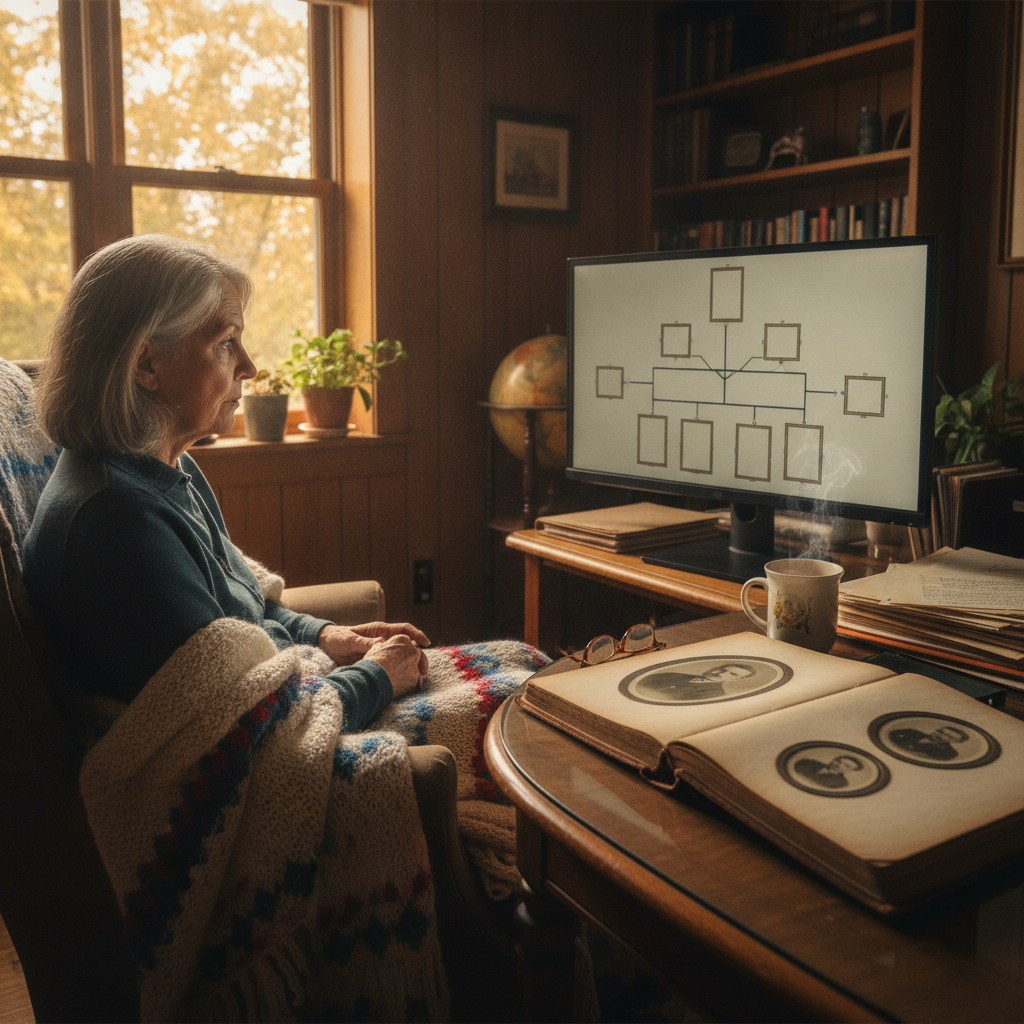
Why Professional Genealogy Matters in Later Life
Genealogy isn't just about creating a family tree chart. Professional genealogists provide:
- Verified ancestral records – Birth, marriage, and death certificates from archives
- Immigration documentation – How your ancestors arrived in Canada, settlement locations, land grants
- Family business history – Trade records, land ownership, professional achievements
- Cultural and ethnic heritage – Connections to ancestral homelands, traditions, language roots
- DNA analysis interpretation – Connecting genetic results to documented family lines
- Bound family history books – Published, professionally formatted records that become keepsakes
For aging parents, especially those with immigrant backgrounds or complex family stories, professional genealogy creates a documented legacy that your adult children and grandchildren can preserve and build upon for generations.
The True Cost of Professional Genealogy Research
Professional genealogists in Canada charge between $50–$150 per hour, with most comprehensive family history projects ranging from $5,000–$25,000+ depending on:
| Project Scope | Typical Cost | Timeline |
|---|---|---|
| Single-line ancestry (4–5 generations) | $3,000–$8,000 | 3–6 months |
| Full family tree (both sides, 4–6 generations) | $8,000–$15,000 | 6–12 months |
| Extended ancestry with documentation | $12,000–$25,000 | 12–18 months |
| Immigration and settlement records | $5,000–$12,000 | 6–12 months |
| DNA analysis and matching integration | $2,000–$5,000 | 3–4 months |
For retirees on fixed income, this is a significant expense. A reverse mortgage provides access to this capital without disrupting your monthly cash flow. Unlike pulling from retirement savings, reverse mortgage proceeds are not taxable, so you don't trigger OAS clawback or income tax consequences.
How a Reverse Mortgage Funds Genealogy Work
Option 1: Lump Sum
Borrow $12,000–$15,000 from your reverse mortgage as a one-time payout to hire a genealogist for a comprehensive family history project. You pay nothing monthly; the loan compounds over time. This works best if you:
- Have substantial home equity
- Want the project completed quickly
- Don't need the reversed borrowed amount for other purposes
Option 2: Line of Credit (Flexible)
Establish a reverse mortgage line of credit, then draw as your genealogist bills you (typically monthly or as milestones are completed). This spreads payments and gives you flexibility to expand or adjust the scope as discoveries emerge.
Option 3: Combination: Partial RM + Savings
Use some savings for the initial consultation and document gathering, then use reverse mortgage for the detailed research and professional write-up phase. This reduces your total borrowing and stretches your retirement savings.

Finding and Hiring a Professional Genealogist
Credentials to Verify
Professional genealogists should hold:
- APG (Association of Professional Genealogists) membership or similar certification
- Specialization in Canadian records (Ontario archives, provincial vital records)
- Proof of education – Diploma or certificate programs (many universities offer genealogy studies)
- References – Previous client testimonials
Research Organizations
Organizations like the Genealogical Institute of the Maritimes, University of Wisconsin–Madison genealogy program, and National Institute for Genealogical Studies train and certify Canadian genealogists.
Average Project Timeline
Most professionals work on multiple projects simultaneously:
- Initial consultation and fee discussion: 1–2 weeks
- Preliminary research phase: 4–8 weeks
- Documentation and archive searches: 8–16 weeks
- Final report compilation and delivery: 2–4 weeks
Total: 4–6 months for a comprehensive project (some complex cases take 12+ months).
What Your Genealogy Report Will Include
Professional genealogists deliver comprehensive packages:
- Detailed family tree chart – Visual representation of all discovered ancestors
- Complete source citations – Every person, date, and location backed by archival records
- Narrative family history – Story of ancestors' lives, migration patterns, achievements
- Immigration records – Ship manifests, land grants, settlement documents
- Copies of original documents – Birth/marriage/death certificates, land deeds, wills
- Photo collection – Scanning and organizing any family photos you have
- Bound or digital book – Professional publication for distribution to family members
Digital Legacy Benefit
Once completed, your genealogy becomes:
- A digital archive your children can share with their children
- A source for future DNA testing and genetic matching
- A foundation for additional research by other family members
- A historical record if your family has significant Canadian heritage
Case Study: Margaret's Family History Project
Margaret, 71, wanted to document her father's immigration from Scotland and her mother's Mi'kmaq heritage before she passed the knowledge to her four adult children. Her memory was clear, but actual records were scattered across three countries.
Margaret's path:
- Used a reverse mortgage to borrow $14,000
- Hired a genealogist with expertise in Scottish immigration and Indigenous Canadian records
- 14-month project resulted in:
- 6-generation family tree on her father's side
- Documented connection to her mother's First Nations community
- 200-page bound family history book
- Digital archive with 50+ historical documents and photos
Cost breakdown:
- Genealogist fees: $12,500
- Binding and reproduction of family books: $1,000
- DNA analysis integration: $500
- Total: $14,000 (covered by reverse mortgage)
Outcome: Margaret's four children and nine grandchildren each received a copy. One grandchild is now conducting her own genealogy research, building on Margaret's foundation.
Beyond Genealogy: Creating a Complete Legacy Package
Professional genealogy often opens doors to complementary legacy projects:
- Oral history recording – Professional video or audio interviews with you sharing stories
- Family cookbook – Compiled with recipes and stories from your genealogist's research
- Historical documentary – Short film featuring your family's immigration and settlement story
- Heritage language project – Recording of speaking your ancestral language, lessons for grandchildren
A reverse mortgage can fund these complementary projects, creating a complete multi-media family legacy.
Tax and Legacy Considerations
Is Genealogy Research Tax-Deductible?
In Canada, genealogy research is not tax-deductible for personal purposes. However:
- If you're publishing a book or creating a product, some business-related portions may be deductible
- Consult your accountant for specifics based on your situation
Reverse Mortgage Proceeds and Tax
Your reverse mortgage proceeds are tax-free. This makes them ideal for funding legacy projects that don't generate business income.
Passing Genealogy to Your Heirs
Your completed genealogy becomes part of your estate. Unlike digital files that may be lost, professional genealogy books become physical family heirlooms that persist across generations.
Planning Your Genealogy Project Timeline
Year 1 (age 68–70):
- Gather family photos, documents, stories
- Consult with genealogists to understand scope and cost
- Apply for reverse mortgage
Year 2 (age 69–71):
- Begin genealogy research project
- Collaborate with genealogist on discoveries
- Share preliminary findings with adult children
Year 3 (age 70–72):
- Complete project and receive final deliverables
- Distribute bound books to family members
- Plan complementary legacy projects (oral history, cookbook)
Ongoing:
- Your genealogy becomes foundation for future family research
- Grandchildren grow up with documented family history
- Legacy continues beyond your lifetime
Digital Tools That Support Professional Genealogy
Professional genealogists use:
- Ancestry.com – Largest genealogical database in North America
- FamilySearch.org – Free resources maintained by The Church of Jesus Christ
- Archives Canada – Official government genealogical records
- Fold3 – Military records and historical documents
- Ontario Genealogical Society – Canadian-specific research resources
Action Steps: Starting Your Genealogy Project
- Gather your materials – Photos, family documents, stories, names of older relatives
- Research genealogists – Contact 2–3 professionals for consultations and quotes
- Review your timeline – When do you want the project completed?
- Consult with adult children – Involve them in planning; they may have information
- Apply for reverse mortgage – Secure funding before committing to genealogist
- Begin research – Start collecting documents while genealogist works on detailed research
Frequently Asked Questions
How long does a genealogy project take?
Most comprehensive projects take 4–8 months for preliminary findings, 12–18 months for full detailed research. Simpler projects (single family line) take 2–3 months.
Can I do genealogy research myself instead of hiring a professional?
You can, but it's time-intensive. You'll need skills navigating archives, understanding historical record-keeping, and interpreting documents in different languages and formats. Professionals typically complete projects in 1/3 the time and with higher accuracy.
What if I don't find all my ancestors?
Professional genealogists work with what records exist. Some ancestors may be undocumented (especially those from marginalized communities or migrating multiple times). A good genealogist explains what they found and why gaps exist.
Can genealogy research help with DNA testing?
Yes. DNA results become much more meaningful when interpreted within a documented family tree. Many genealogists include DNA analysis as part of their comprehensive packages.
Will my genealogy ever be finished?
Genealogy is technically never "finished"—new records emerge, DNA matches provide new connections. However, a completed project creates a solid foundation that you or future family members can build upon.
Next Steps
Ready to Learn More?
Find out exactly how much you could unlock from your home — free and no obligation.
Related Articles
Reverse Mortgage for Culinary Legacy: Documenting Your Family's Food History and Heritage
Use a reverse mortgage to create a documented culinary legacy—professional food photography, videography, recipe publication, and family cooking education that preserves your food heritage for future generations.
Read →Reverse Mortgage for Personal Memoir and Life Story Documentation
Fund memoir writing, family history, and legacy documentation with a reverse mortgage. Preserve your life story for your family in Ontario.
Read →Reverse Mortgage for an Early Inheritance: Gifting Equity to Children
Use a reverse mortgage for an early inheritance gift to children. Learn Canada's tax-free gifting rules, attribution risks, and estate planning considerations.
Read →