
Reverse Mortgage for Maintaining Professional Credentials as Aging Consultant
Reverse mortgage for ongoing professional development and certification maintenance during consulting retirement phase. Stay competitive, keep earning.
You're a respected consultant with 30+ years of expertise—engineering, law, accounting, IT. You've "retired" from full-time employment, but you're still consulting 15–20 hours/week at excellent rates ($150–$250/hour). However, your industry requires continuous certification: annual CPD credits, licensing renewal, training in new standards. These certifications cost $3,000–$8,000/year. A reverse mortgage can fund ongoing professional development while you maintain your earning edge. This post explores a unique scenario: reverse mortgages for aging professionals who stay engaged through consulting, not traditional retirement.
Many professionals mistakenly think retirement ends their career. It doesn't—it transforms it. This post covers how reverse mortgages support the "active professional retirement" lifestyle.
The Active Professional Retirement Model
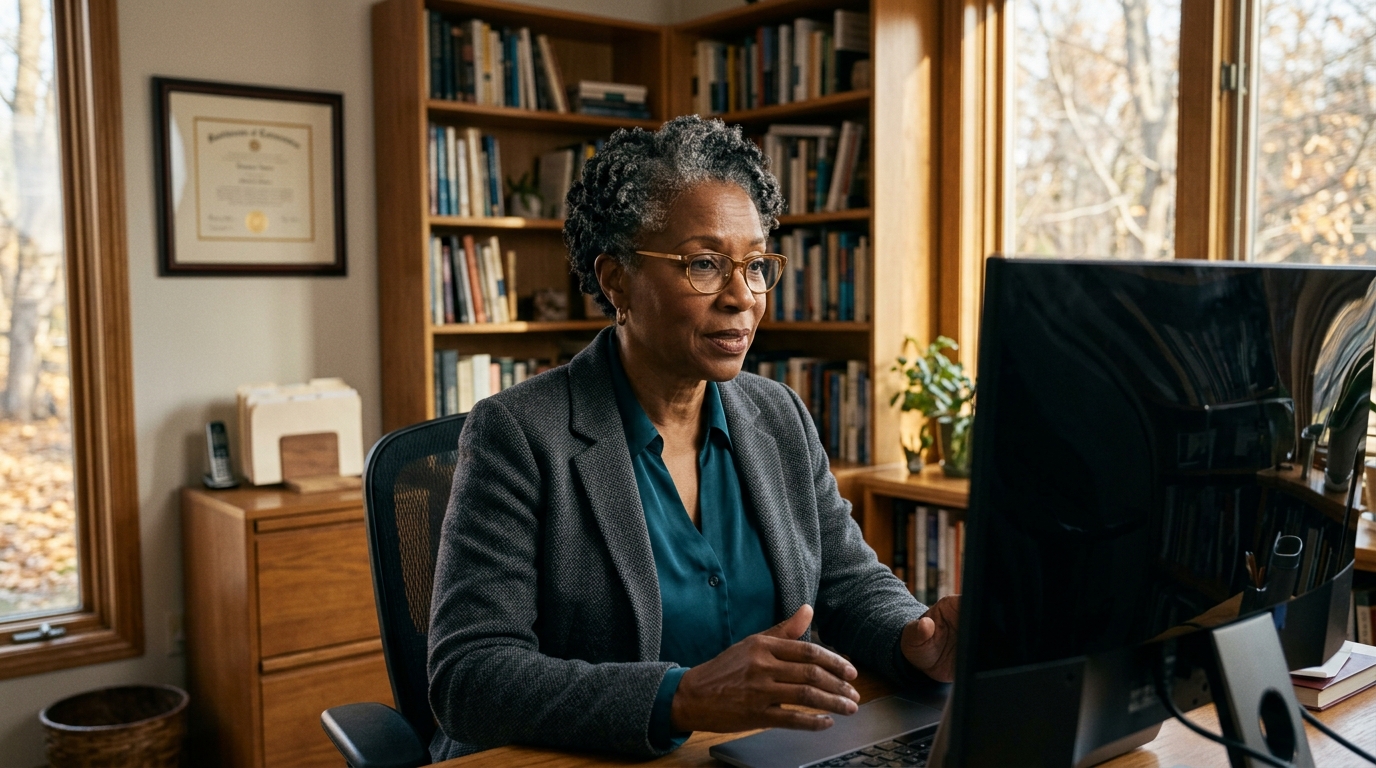
You're not fully retired. You're "professionally semi-active."
Instead of the traditional 40-hour corporate job, you're doing:
- Strategic consulting projects (15–25 hours/week at $150–$250/hour)
- Expert witness work (episodic, high-paying)
- Board advisor roles (credentials-based)
- Mentorship and guest lecturing (often unpaid or low-paid, but credibility-building)
According to Statistics Canada, 32% of Canadian professionals age 60–75 maintain some form of professional income beyond formal retirement. They average 12–18 hours/week of consulting work and earn $35,000–$65,000/year.
The catch: Staying credible requires credentials. Your engineering PE, your CPA, your legal license—these require continuous professional development (CPD).
The Professional Credentials Cost Reality
| Profession | Annual CPD Requirements | Cost Per Year | 5-Year Cost | 10-Year Cost |
|---|---|---|---|---|
| Professional Engineer | 80 hours CPD | $4,000–$6,000 | $20,000–$30,000 | $40,000–$60,000 |
| Chartered Accountant (CPA) | 20 hours CPD | $3,000–$5,000 | $15,000–$25,000 | $30,000–$50,000 |
| Lawyer (Ontario) | 12 hours CPD | $2,000–$4,000 | $10,000–$20,000 | $20,000–$40,000 |
| IT Systems Architect | 40 hours CPD | $2,500–$4,500 | $12,500–$22,500 | $25,000–$45,000 |
| General Consultant (Multiple Certs) | Variable | $5,000–$8,000 | $25,000–$40,000 | $50,000–$80,000 |
The paradox: Your consulting income is $45,000–$65,000/year. CPD costs are $4,000–$8,000/year—8–15% of gross consulting income. This is reasonable, but it competes with your living expenses (mortgage, utilities, healthcare, leisure). Many aging professionals stop consulting earlier than they'd like because CPD costs become burdensome.
Why You NEED These Credentials to Stay Consulting
| Credential Status | Consulting Opportunities | Hourly Rate Possible | Reality |
|---|---|---|---|
| Current, gold-standard credentials | High-value expert witness work, strategic advisory, premium clients | $200–$300/hour; project retainers $50K+ | Competitive; in-demand |
| Current, baseline credentials | Standard consulting, smaller projects | $100–$150/hour; project fees $15K–$30K | Adequate but lower-tier |
| Lapsed credentials (not current on CPD) | Limited consulting, risk of liability, lower rates | $50–$100/hour; project fees decline 50% | Risky; may lose opportunities |
| No credentials (fully retired) | No professional work possible | N/A | Forced to stop; no consulting income possible |
The logic: Investing $5,000/year in CPD to maintain $60,000/year consulting income is a 12:1 return. But if that $5,000 comes from your living budget (not discretionary consulting income), it feels expensive. A reverse mortgage can fund the credential maintenance, leaving your consulting income entirely for living and leisure.

Reverse Mortgage Structuring for Professional Development
Strategy: Modest LOC for Annual Credential Costs
Scenario at age 68:
- Home value: $550,000
- Consulting income: $50,000–$60,000/year (15–20 hours/week)
- CPP/OAS: $28,000/year
- Annual credential/CPD costs: $5,000–$6,000/year
- Living expenses: $48,000/year
- Income gap (CPD + living): $25,000–$26,000/year
- Current strategy: Use consulting income for living, personally pay CPD from savings; feel squeezed
Solution: Reverse mortgage LOC for professional development only
- Establish reverse mortgage line of credit: $60,000–$80,000
- Each year, draw $5,000–$6,000 for CPD costs (conferences, training, licensing renewal, certification exams)
- Use CPP/OAS + consulting income for living expenses
- Preserve personal savings for actual retirement (healthcare emergencies, long-term care, etc.)
Financial outcome:
- Your consulting income ($50K–$60K) stays in savings/living account
- CPD costs ($5K–$6K) come from RM LOC (interest-only, ~$310/year initially on $5K draw)
- Your lifestyle doesn't compress; you stay professionally current
- Over 15 years, RM draws total $75,000–$90,000; balance grows ~$120,000–$150,000 at 6.2%
- Home equity still substantial for inheritance
Alternative: Lump Sum for Bulk CPD Investment
Some professionals prefer to batch their CPD training:
- Draw $30,000–$40,000 as lump sum in year 1
- Use for: Advanced certifications, intensive training programs, international conferences, professional association memberships
- Front-load your credential advantages; then maintain with minimal annual costs ($1,000–$2,000/year)
This works if:
- Your industry is rapidly changing and you want to be ahead of the curve
- You're considering a significant consulting pivot (e.g., engineer transitioning to sustainability consulting)
- You want to establish thought leadership (publish, speak, build reputation)
Drawback: Interest accrues on full $30,000–$40,000 from day one, even if you don't use all of it.
Government Benefits Coordination for Consulting Income + CPD
Does Consulting Income Affect CPP/OAS?
| Scenario | CPP Impact | OAS Impact | Tax Impact |
|---|---|---|---|
| Consulting income $50,000/year (self-employed) | No impact; CPP only calculated to age 60 | Counts toward net income; may trigger partial clawback if over $92,000 | Self-employed income; pay both employer+employee CPP, regular income tax |
| Reverse mortgage draw $5,000/year for CPD | NO impact; not income | NO impact | Not income; no tax |
| CPD expenses: Can you deduct them? | N/A (CPP doesn't recognize deductions) | N/A (OAS doesn't recognize deductions) | YES; self-employed can deduct professional development as business expense |
Tax advantage for consulting professionals:
- Your consulting income is self-employment income
- CPD expenses (courses, certifications, conference travel, memberships) are deductible business expenses
- If you earn $50,000 consulting and spend $5,000 on CPD, your taxable consulting income is $45,000
- Reverse mortgage draws for CPD are NOT income and NOT deductible (they're not business expenses you're paying)—but this is fine because you're not trying to deduct them; they're just funding the real deductible expenses
The smart structure:
- Draw $5,000–$6,000/year from reverse mortgage LOC
- Use that to pay for CPD (courses, conferences, licensing)
- Deduct CPD expenses against your consulting income on your tax return
- Net result: Your consulting income is reduced by CPD costs (via deduction); RM funding doesn't interfere with tax reporting
Case Study: Margaret, 70, Structural Engineer, Active Consulting
The situation:
- Retired from full-time engineering firm at 62
- Now: Independent structural engineering consultant (15–20 hours/week)
- Consulting income: $48,000–$52,000/year (at $200/hour for complex projects)
- PE License (Professional Engineer): Requires 20 CPD hours/year = $4,000–$5,000/year
- Willing to stay consulting through age 75–78 (15+ more years)
- Home: Paid off, $600,000 value
- CPP/OAS: $29,000/year
- Living expenses: $46,000/year
- Gap: $17,000/year (CPD $4,500 + living shortfall $12,500)
Margaret's decision at age 70: "I love consulting. I'm sharp, my clients love me, and at $200/hour I'm earning decent money. But maintaining my PE and staying current on structural codes/standards costs $4,500/year. That cuts into my consulting income. If I can reverse-mortgage my home to cover CPD costs, I can keep consulting guilt-free until age 75."
Margaret's reverse mortgage plan:
- Apply for reverse mortgage at 70 (while still actively consulting—good qualification signal)
- Establish line of credit: $60,000
- Draw $4,500–$5,000/year for CPD (PE renewal, continuing education courses, engineering conference attendance)
- Use consulting income ($50K) + CPP/OAS ($29K) = $79,000 for living + savings
- Continue consulting through 75 (5+ more years of $48K–$52K income)
Financial projection to age 85:
- Consulting income (5 more years): $250,000
- RM draws (15 years at $4,500/year): $67,500
- RM balance at 6.2% over 15 years: ~$130,000
- Home value at age 85: ~$825,000 (1.5% annual appreciation)
- Estate after RM payoff: ~$695,000
- Margaret stayed professionally active, credible, and earning well into her 70s
- Inheritance still excellent ✓
Coordinating Consulting Income, CPD, and Reverse Mortgage
| Planning Element | Interaction with RM | Best Practice |
|---|---|---|
| Self-employment income tax filing | RM draws are NOT income; CPD expenses ARE tax-deductible | Report consulting income on T2125; deduct CPD expenses; RM draws don't appear on tax return |
| CPP contributions (self-employed) | Consulting income requires CPP contributions; RM draws don't | Pay CPP contributions on net consulting income (after CPD deduction) |
| Professional liability insurance | Insurance may require active CPD to maintain coverage; RM funds this | Ensure RM draws are sufficient to cover CPD and insurance renewal costs |
| Professional association fees | Often bundled with CPD; RM can cover both | Confirm your profession's fee structure; some associations charge membership + CPD separately |
| Consulting contract negotiations | Clients don't care about your financing; focus on your credentials | Your up-to-date credentials (funded by RM) are your selling point |
Key Takeaways
- Active professional retirement costs $4,000–$8,000/year in CPD to stay credible and competitive. A reverse mortgage line of credit cleanly separates credential funding from living expenses.
- Professional consulting income ($40,000–$65,000/year) is 8–15x the cost of credential maintenance. The ROI is exceptional; maintaining credentials is smart career investment.
- Apply for reverse mortgage while still consulting—lenders prefer active income; approval is stronger and faster than for fully retired applicants.
- CPD expenses are self-employment tax deductions—reverse mortgage draws aren't deductible, but they fund the real expenses that are. Smart tax structuring keeps your consulting income efficient.
- Line of credit model is ideal for professional development—annual draws of $4,000–$6,000 maintain credentials without overcommitting reverse mortgage debt.
- Stay professionally current through age 75–80—reverse mortgage enables extended consulting careers for credentialed professionals who want to keep earning and contributing.
Frequently Asked Questions
If I take a reverse mortgage at 70 to fund my consulting CPD, does it affect my ability to get professional liability insurance?
No. Professional liability insurers care about your credentials, claims history, and risk profile. They don't audit your personal finances or reverse mortgage status. Continue paying premiums, maintain your CPD, and you're insurable regardless of your home financing.
Can I use reverse mortgage proceeds to pay for continuing legal education (CLE) required to maintain my law license?
Yes, absolutely. CLE costs ($2,000–$4,000/year) are perfect for reverse mortgage LOC draws. Same with any professional credential maintenance. The principle is identical: funding your professional credibility so you can continue consulting/practicing.
If my consulting income drops (fewer clients), can I adjust my reverse mortgage draws?
Yes. With a line of credit model, you draw what you need each year. If consulting income is down and you need more for living, draw more from LOC. If consulting income is strong, draw less. It's flexible by design.
Should I disclose my reverse mortgage to my professional liability insurer?
No disclosure is required. Your home financing is private. Your insurer cares only that you maintain credentials and handle client work competently. However, if they ask (unlikely), be transparent: "I have a reverse mortgage on my home to fund ongoing professional development."
If I maintain my professional credentials via reverse mortgage until age 78, what happens if I get too old to consult?
The reverse mortgage stays in place. You don't have to repay it immediately. If you stop consulting, the RM balance continues to grow against your home equity. Eventually (when you move to care, downsize, or pass away), the home is sold and the RM is paid off. Your stopping work doesn't accelerate the debt.
Can I use reverse mortgage draws for professional conference travel that includes vacation time?
Technically yes, but keep it separate. Conference registration and travel directly related to CPD is deductible business expense. Adding vacation days is personal. Best practice: Use RM for the conference portion; pay for vacation days from consulting income/savings. This keeps your tax deductions clean and defensible.
Active professional ready to stay credible in retirement? Contact Rick Sekhon Reverse Mortgages to structure a line of credit for professional development. Ontario consultants deserve solutions that fund ongoing excellence while enabling the flexible, higher-earning retirement you've built. Keep earning, stay sharp, leave a legacy of expertise.
Ready to Learn More?
Find out exactly how much you could unlock from your home — free and no obligation.
Related Articles
Reverse Mortgage When Transitioning From Corporate Career to Nonprofit Board Leadership
Reverse mortgage strategy for aging executives leaving corporate roles for board advisor positions. Bridge income gap while staying active.
Read →Reverse Mortgage on Commercial Rental Property: Managing Liability and Succession Planning
Reverse mortgage for aging landlords with commercial tenants. Navigate liability exposure and business succession while transitioning to retirement.
Read →Executive Leadership Transition Coaching: Reverse Mortgage for C-Suite Career Shifts
Fund professional executive transition coaching for your adult child's career shift from corporate leadership to entrepreneurship. Reverse mortgage for high-impact career support.
Read →