
Reverse Mortgage for Managing Predictable Decline: Phased Accessibility Planning Over 10+ Years
Plan home modifications proactively in phases, not crisis-driven emergencies. A reverse mortgage funds accessibility upgrades as your mobility needs change predictably.
You're 68, still active, and walking without aids. But you know your parents' history: by 75, they struggled with stairs. By 80, they needed grab bars and walk-in showers. By 85, they were considering long-term care. Smart aging means anticipating your future needs and funding modifications before crisis forces them. A reverse mortgage lets you implement accessibility upgrades strategically—bathroom in year 2, bedroom modifications in year 5, kitchen adaptations in year 8—staying ahead of decline instead of scrambling in emergency.
The Reactive vs. Proactive Accessibility Crisis
Most aging in place retrofits happen reactively—after a fall, after a hospitalization, after mobility suddenly declined.
Reactive costs: Emergency accessibility modifications (done fast, under pressure) cost 30–50% more:
- Emergency contractors charge premium rates
- Modifications are hastily designed, not optimized for your aging trajectory
- You may need multiple rounds (first fix doesn't address underlying issue)
- Stress and fear drive bad decisions
Proactive costs: Planned modifications (done over years) cost 40–50% less:
- Competitive bidding among contractors
- Designs are thoughtful, tested, and refined
- One comprehensive approach vs. band-aid fixes
- You age into modifications rather than scrambling into them
According to CMHC, aging-in-place retrofits planned 2+ years in advance cost an average of $8,500 per major modification. Emergency retrofits after hospitalization average $14,200—67% higher.
The Accessibility Planning Timeline
Most aging follows a predictable arc. With family medical history, you can anticipate your trajectory:
| Age | Typical Changes | Accessibility Need | Cost per Modification |
|---|---|---|---|
| 65–70 | Still walking; stairs navigable | Preventive (grab bars, lighting, non-slip) | $3,000–$8,000 |
| 70–75 | Walking slower; balance issues emerging | Bathroom access (grab bars, walk-in shower); bedroom on main floor | $15,000–$30,000 |
| 75–80 | Balance poor; stairs risky; mobility aid use | Full bathroom retrofit; wider doorways; ramp or stair lift; master bedroom relocation | $25,000–$60,000 |
| 80–85 | Wheelchair consideration; lift equipment | Roll-in shower; accessible kitchen; patient lifts in bedroom/bathroom; ceiling tracks | $40,000–$80,000 |
| 85+ | Significant mobility loss; palliative care | Fully accessible bedroom/bathroom on one level; care coordination spaces | $80,000–$150,000+ |
The key insight: You can predict roughly what you'll need and when. Planning around this timeline beats crisis-driven decisions.
How to Create Your Proactive Accessibility Plan
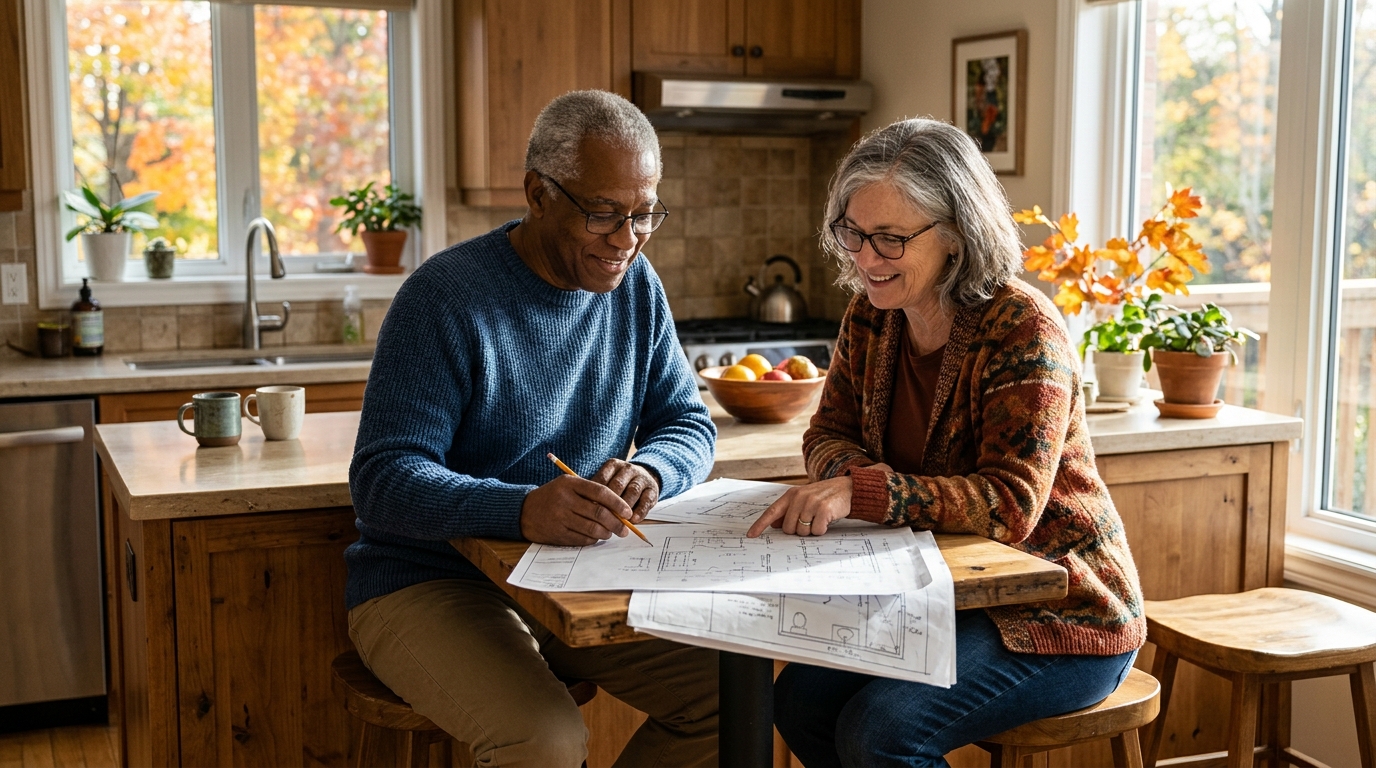
Step 1: Medical History Assessment (Age 65–68)
Review your family patterns:
Questions to answer:
- At what age did your parents/grandparents struggle with stairs? Balance? Mobility aids?
- Did your parents have arthritis, diabetes, heart issues, mobility challenges?
- Are there neurological patterns (Parkinson's, dementia) in your family?
- Your personal health: Any balance issues, joint problems, vision changes NOW that might accelerate?
This isn't diagnosis; it's pattern-spotting. If both parents used walkers by 78, you can reasonably anticipate similar. If they had Parkinson's onset at 70, you might monitor differently.
Step 2: Professional Accessibility Assessment (Age 68–70)
Before making any modifications, hire an occupational therapist (OT) to assess your home and your trajectory.
Cost: $300–$600 for comprehensive assessment. Best investment you'll make.
The OT will map:
- Current hazards (stairs, narrow doorways, bathroom layout)
- Your anticipated mobility arc (based on health history + current function)
- Modifications needed NOW (low-hanging fruit: grab bars, lighting)
- Modifications needed in 5–10 years (major: bathroom, bedroom)
- Long-term considerations (wheelchair accessible? Live-in caregiver space?)
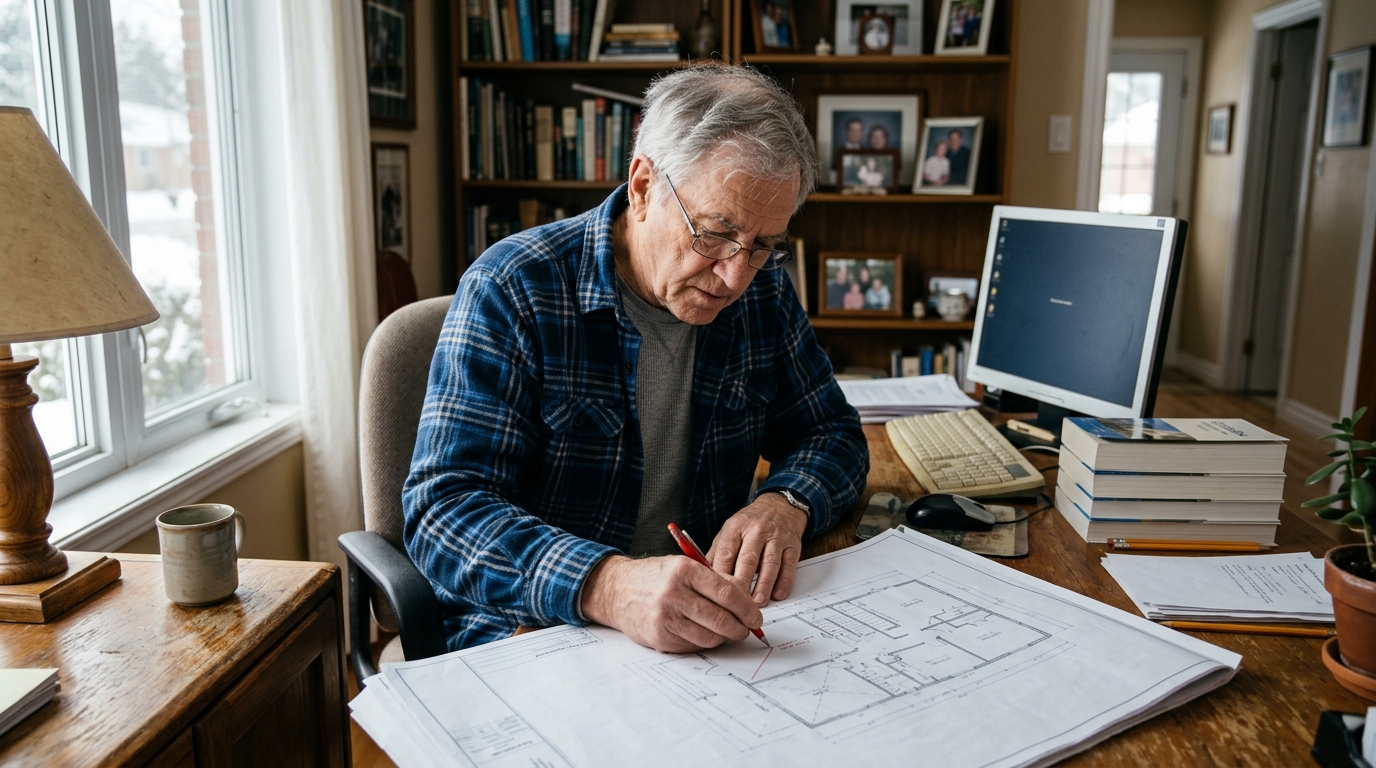
Output: A 10–15 year accessibility roadmap with phases and cost estimates.
Step 3: Phase Your Modifications Over Time
Phase 1 (Years 1–3, Age 68–71): Preventive
- Install grab bars in bathrooms, bedrooms, hallways ($2,000–$5,000)
- Upgrade lighting (especially stairs, bathrooms, entryways) ($3,000–$6,000)
- Install non-slip flooring in bathrooms, kitchens ($4,000–$8,000)
- Remove trip hazards (smooth thresholds, secure rugs) ($1,000–$3,000)
- Phase 1 Total: $10,000–$22,000
Phase 2 (Years 4–6, Age 72–74): Bathroom & Mobility
- Walk-in shower replacement (vs. tub) ($12,000–$25,000)
- Accessible bathroom sinks, toilets, storage ($5,000–$10,000)
- Widen doorways if needed ($8,000–$15,000)
- Install stair lift OR ramp (depending on your needs) ($6,000–$20,000)
- Phase 2 Total: $31,000–$70,000
Phase 3 (Years 7–10, Age 75–78): Main-Level Living
- Move primary bedroom to main floor (or add bedroom on main level) ($40,000–$100,000)
- Install lift equipment in bedroom/bathroom ($15,000–$40,000)
- Full kitchen accessibility retrofit (lower cabinets, accessible appliances) ($20,000–$50,000)
- Phase 3 Total: $75,000–$190,000
Phase 4 (Years 10+, Age 78+): Advanced Needs
- Roll-in shower, specialty beds, care spaces ($40,000–$80,000+)
- Home health monitoring, smart systems ($10,000–$30,000)
- Caregiver suite or live-in space ($30,000–$100,000+)
Total 15-year proactive plan: $150,000–$350,000 (but spread over 15 years, not crisis-driven in one year)
Reverse Mortgage Strategy for Phased Planning
Model: Line of Credit for Staged Drawdown
A reverse mortgage line of credit is ideal for phased accessibility planning because:
- You draw only what you need, when you need it
- Interest accrues only on drawn funds, not the full LOC
- You have flexibility if timeline changes (faster or slower than predicted)
- You can repay portions if you'd like (improves flexibility)
Example:
- Age 68, home value $500,000
- Establish reverse mortgage LOC: $250,000 available
- Year 1 (age 68): Access $12,000 for Phase 1 preventive work
- Interest accrues on $12,000 only
- Year 3 (age 70): Access $35,000 for Phase 2 bathroom
- Interest accrues on $47,000 total
- Year 6 (age 73): Access $80,000 for Phase 3 bedroom relocation
- Interest accrues on $127,000 total
- Year 10+ (age 77+): Access remaining funds for Phase 4 advanced needs
Advantage: You only pay interest on funds actually drawn. Compare to lump sum where you'd pay interest on $250,000 from day 1, whether accessed or not.
Alternative: Lump Sum + Conservative Investment
If you prefer certainty, access reverse mortgage lump sum ($200,000–$250,000) and invest conservatively:
- Place in GIC ladder (4–5 year terms at 4–5% rates)
- Draw principal as phases occur
- Let interest cover some modification costs
- Provides psychological comfort ("funds are set aside")
Trade-off: You pay interest on full amount immediately, not just drawn funds. But you eliminate uncertainty about LOC availability if lender changes terms.

Your Proactive Plan: Implementation Timeline
| Age | Year | Phase | Modifications | Reverse Mortgage Draw | Running Total Interest Cost |
|---|---|---|---|---|---|
| 68 | Year 1 | 1 (Preventive) | Grab bars, lighting, non-slip | $12,000 | $750 |
| 69 | Year 2 | 1 | Lighting completion | $4,000 | $1,000 |
| 70 | Year 3 | 1 | Bathroom ventilation, minor repairs | $6,000 | $1,350 |
| 72 | Year 4 | 2 (Bathroom) | Walk-in shower design/permit | $8,000 | $1,800 |
| 73 | Year 5 | 2 | Walk-in shower installation | $18,000 | $2,500 |
| 75 | Year 7 | 3 (Bedroom) | Master bed move to main floor | $60,000 | $4,500 |
| 76 | Year 8 | 3 | Lift equipment, accessible storage | $25,000 | $5,200 |
| 77 | Year 9 | 3 | Kitchen retrofit | $30,000 | $6,000 |
| 79+ | Year 11+ | 4 (Advanced) | Final accessibility, as-needed | $30,000–$50,000+ | $7,500+ |
Total invested over 15 years: $193,000–$213,000 | Total interest cost: ~$7,500–$8,500 (6% rate, LOC draw model)
Compare to: Emergency bathroom retrofit at age 78 after a fall = $25,000 in 2 months, panic decisions, suboptimal design.
Key Takeaways
- Most aging-in-place accessibility retrofits are reactive—triggered by falls or hospitalizations—and cost 50–70% more than proactive modifications planned years in advance
- Your family medical history predicts your accessibility needs with surprising accuracy; a 65-year-old can reasonably anticipate needs at 75, 80, 85 by examining parents' trajectory
- A professional occupational therapy assessment ($300–600) creates a 10–15 year accessibility roadmap, eliminating guesswork and preventing wasted modifications
- A reverse mortgage line of credit lets you stage modifications over years, drawing only what you need when you need it—and paying interest only on funds drawn, not the full available amount
- Phased modifications cost less, are better designed, cause fewer disruptions, and let you age into changes naturally rather than scrambling in crisis mode
- CHIP, HomeEquity Bank, and Equitable Bank all offer lines of credit; rates and terms vary—confirm flexibility and draw terms before closing
Frequently Asked Questions
If I access a reverse mortgage LOC at 68 but don't draw until 72, am I paying interest for 4 years on $0?
No. A line of credit charges interest only on funds drawn. If you establish a $250,000 LOC but draw $0 in years 1–3, you pay $0 interest. Interest begins when you draw funds. (There may be a small annual fee to maintain the LOC, typically $0–$200/year; confirm with your lender.)
Can I use my reverse mortgage draws for other things besides home modifications?
Absolutely, yes. Reverse mortgage funds are your money; use them for modifications, caregiver wages, travel, gifts, or anything else. The suggestion to use for phased accessibility is a strategy, not a restriction.
What if my accessibility needs change faster than I predicted (e.g., fall at 72 requires immediate modifications)?
The LOC has flexibility built in for this. If you need earlier, larger draws, you can access them. The phased plan is a guide, not a straitjacket. If your needs accelerate, you accelerate your draws. If they slow, you slow draws. Line of credit is flexible.
Who pays for the occupational therapy assessment? Does it get covered by provincial health plans?
OT assessments for aging-in-place are typically not covered by Ontario Health (OHIP). You pay out-of-pocket ($300–$600). However, some private insurance plans (if you have them) may cover. It's also a deductible tax-claim expense in some cases. Worth asking your accountant.
If I implement modifications but my needs change differently than predicted, am I stuck with expensive upgrades I don't use?
Good modifications are flexible. Grab bars don't hurt if you age faster—you just use them earlier. A walk-in shower works whether you need it at 75 or 82. Accessible doorways work forever. The modifications that may be wasted are over-specific ones (e.g., installing a full 24-hour caregiver suite if you end up moving to long-term care). That's why professional OT assessment is crucial—it ensures modifications are versatile across scenarios.
Ready to plan your accessibility future proactively? Work with Rick Sekhon Reverse Mortgages and a geriatric occupational therapist to create your 10–15 year aging-in-place roadmap.
Ready to Learn More?
Find out exactly how much you could unlock from your home — free and no obligation.
Related Articles
Reverse Mortgage for Funding Preventive Aging Assessments: Staying Ahead of Decline
Don't wait for a health crisis to assess your aging needs. Reverse mortgage funds comprehensive geriatric assessments at 70, letting you plan proactively instead of reacting to emergencies.
Read →Reverse Mortgage When Siblings Fundamentally Disagree on Aging Parent's Home Safety Modifications
Navigate sibling conflict over whether to renovate, move, or stay in an aging home. Use reverse mortgage to fund compromise solutions and prevent family rifts.
Read →Reverse Mortgage When Aging Parent Refuses to Acknowledge Cognitive Decline
Strategic funding for aging parents who deny memory loss. Get ahead of safety risks before forced decisions become necessary.
Read →