
Reverse Mortgage for Multigenerational Home With Conflicting Accessibility Needs
Living with aging parent plus adult child with disability? Their accessibility needs conflict. Reverse mortgage funds creative home design solving multiple disabilities.
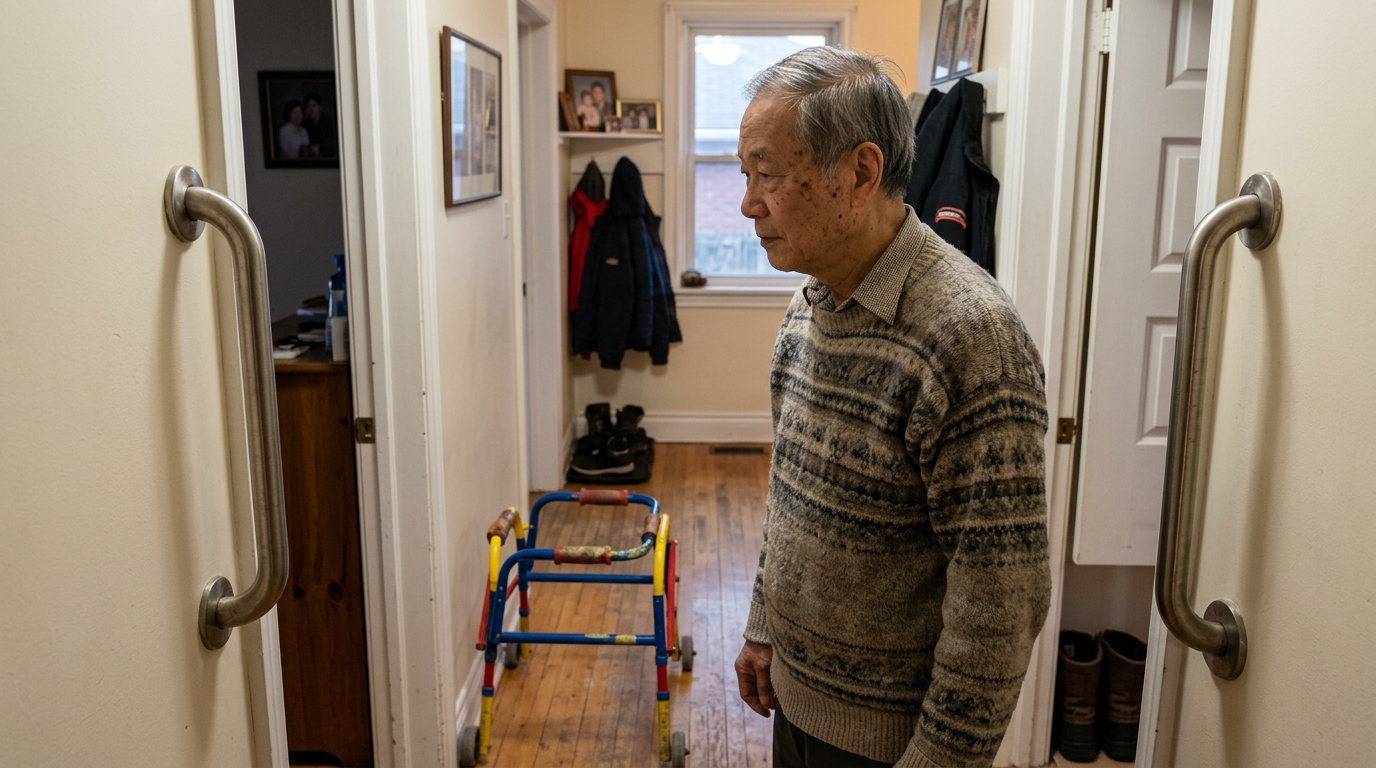
Your aging parent lives with you AND your adult child with a physical disability. Aging parent needs grab bars and step-reduction; your child needs wheelchair accessibility and sensory-friendly spaces. These needs conflict: wheelchair ramps slope differently than aging-safe step modifications. Sensory-friendly spaces (muted colors, quiet rooms) conflict with aging parent's needs (bright lighting, social spaces). A reverse mortgage funds creative home design solving multiple, overlapping accessibility needs.
The Accessibility Conflict: Multigenerational Homes With Different Disabilities
Yes, aging + adult child disability in one home creates genuine design conflicts. According to Statistics Canada, 1.5 million Canadian households contain both aging seniors and adult children with disabilities—a growing reality.
The fundamental tension:
| Need | Aging Parent | Adult Child (Mobility) | Adult Child (Autism/Sensory) | Solution Complexity |
|---|---|---|---|---|
| Ramps/slopes | Minimal (prefer flat) | 1:12 slope required (steep!) | N/A | CONFLICT |
| Lighting | Bright (safety, vision loss) | Variable (depends on disability) | Dim/filtered (sensory sensitivity) | CONFLICT |
| Flooring | Non-slip, flat | Non-slip, firm for wheelchair | Soft/sound-dampening | CONFLICT |
| Sound environment | Quiet for sleep | N/A | Extremely quiet (noise sensitivity) | PARTIAL CONFLICT |
| Social spaces | Engaging, centered | Accessible for navigation | Private, retreat-friendly | CONFLICT |
Each disability requires $2,000–$8,000 in modifications. Combined, they require $5,000–$20,000 in integrated design (not just stacking separate solutions).
The Reverse Mortgage Accessibility Strategy
A reverse mortgage LOC enables comprehensive accessibility design that solves multiple overlapping needs, rather than treating each disability separately.
Here's how integration works:
Single Accessible Entry Solution
- Traditional approach: install wheelchair ramp (1:12 slope, 20 feet long) + aging-safe entry chair lift
- Cost: $4,000–$8,000; takes up space; looks institutional
- Integrated approach: design slightly elevated entry with covered approach walk (1:20 slope for aging parent, wheelchair accessible), with intermediate seating for both
- Cost: $5,000–$7,000; compact; serves both; aesthetic
Multi-Use Bathroom
- Aging parent: grab bars, toilet seat raiser, non-slip flooring
- Adult child in wheelchair: wider space, roll-under sink, curbless shower
- Adult child (sensory): minimal tile (echoey), natural light controls
- Integrated solution: large bathroom (9×12 ft) with accessible vanity, curbless shower with fold-down seat, strategically placed grab bars serving both functions, soft window treatments reducing sensory overwhelm
- Cost: $8,000–$12,000 (vs. $15,000 if done separately)
Multi-Sensory-Friendly Bedroom Zones
- Aging parent: light access, connected to main living area
- Adult child (sensory-seeking wheelchair user): retreat space with muffled acoustics, dimmable lights, textured flooring
- Integrated approach: two adjacent bedrooms with connecting door; one bright/connected; one dim/sensory-controlled; shared accessible bathroom
- Cost: $6,000–$10,000 renovation
Universal Design Principles Solving Conflict
The key to managing conflicting needs is Universal Design—creating spaces that work for diverse abilities without specialized modifications.
| Universal Design Principle | Aging Parent Benefit | Disability Child Benefit |
|---|---|---|
| Lever-style door handles (vs. knobs) | Easier grip for arthritis | Accessible for limited dexterity |
| Zero-threshold entry (no step up) | Prevents fall risk | Wheelchair accessible |
| Open floor plan (minimal walls) | Clear sightlines; safer navigation | Wheelchair mobility; sensory orientation |
| Adjustable lighting (dimmers) | Vision loss accommodation | Sensory sensitivity accommodation |
| Accessible kitchen design (high/low reach) | Reduced bending (back safety) | Wheelchair accessible work surfaces |
Universal design costs 5–10% MORE than standard, but 30–50% LESS than specialized modifications for each disability. A reverse mortgage funds this proactive universal design approach.
When to Hire a Professional Accessibility Designer
Before renovating, consult a professional Certified Universal Design Home Professional (CUDHP) or occupational therapist specializing in home accessibility.
Cost: $1,500–$3,000 (consultation + design recommendations) Value: Prevents $5,000–$20,000 in wasted renovations solving the wrong problems
A professional will:
- Assess all occupants' disabilities and overlapping needs
- Prioritize which modifications have highest impact
- Design integrated solutions (not stacked separate ones)
- Create phased renovation plan (fund most critical first)
A reverse mortgage funds this professional consultation upfront, preventing costly mistakes.
Phased Renovation Approach With Reverse Mortgage LOC
Most multigenerational homes with conflicting accessibility needs require phased renovation. A reverse mortgage LOC funds this:
Phase 1 (Months 1–4): Entry + Bathrooms | Budget: $12,000
- Accessible entry ramp/approach (serves aging parent + wheelchair user)
- Master bathroom renovation (grab bars, curbless shower, accessible vanity)
- Draw from reverse mortgage LOC: $12,000
Phase 2 (Months 5–8): Kitchen + Main Living | Budget: $8,000
- Accessible kitchen design (lowered counters, pull-out shelves)
- Open floor plan wall removal (improves wheelchair mobility + aging safety)
- Draw from reverse mortgage LOC: $8,000
Phase 3 (Months 9–12): Sensory Modifications + Bedrooms | Budget: $6,000
- Soundproofing/acoustic treatment for sensory-sensitive adult child
- Bedroom accessibility (pathway widening, door modifications)
- Draw from reverse mortgage LOC: $6,000
3-Year Total Renovation Budget: $26,000 Reverse mortgage LOC draw: $26,000 at 6.8% = $1,768/year in interest
This phased approach spreads costs over time, allowing you to fund renovations without catastrophic impact on retirement income.
Government Accessibility Grants: Layering With Reverse Mortgage
Before drawing from your reverse mortgage LOC, explore government accessibility grants:
| Grant | Eligibility | Maximum | Ontario Availability |
|---|---|---|---|
| Accessibility for Ontarians With Disabilities Act (AODA) rebates | Adult child with documented disability | Up to $5,000 | Yes |
| Home Adaptations for Seniors Independence (HASI) | Senior 65+; low-to-moderate income | Up to $3,500 | Ontario-wide |
| Multigenerational Home Renovation Tax Credit (proposed 2026) | Multi-generational households | TBD | Pending |
Many homeowners combine grants (aging parent accesses HASI; adult child accesses AODA) and use reverse mortgage to fund the gap.
According to Ontario Ministry of Seniors and Accessibility, homeowners can layer HASI + AODA grants for combined accessibility improvements. A $26,000 renovation might receive $5,000 in combined grants, reducing reverse mortgage draw to $21,000.
Key Takeaways
- Conflicting disabilities require integrated design: Aging + adult child disability in one home demands creative solutions, not stacked separate modifications.
- Universal design solves conflict: Lever handles, zero-threshold entries, open floor plans, and adjustable lighting serve multiple disabilities efficiently.
- Professional consultation prevents waste: Hire a certified accessibility designer ($1,500–$3,000) to assess overlapping needs before renovating.
- Reverse mortgage LOC funds phased renovation: Draw over 12–36 months to spread costs; fund most critical modifications first.
- Government grants reduce reverse mortgage need: Layer HASI + AODA + potential tax credits to minimize home equity borrowing.
- Universal design increases property value: Well-designed accessible homes appeal to broader buyer pool if you eventually sell.
Frequently Asked Questions
Can aging parent + adult child live together long-term in an accessible home?
Yes. Many multigenerational households thrive with proper accessibility design and emotional boundaries. The key is respecting each person's space, independence, and privacy. Professional family mediation helps manage relationship dynamics.
What if aging parent's accessibility needs change rapidly (e.g., sudden mobility loss)?
Accessible homes are flexible. If aging parent experiences sudden disability (stroke, fall), most modifications already in place (grab bars, curbless entry, accessible bathroom) adapt to new needs without major renovation. This is why upfront accessibility investment is wise.
Can I get a loan specifically for accessibility renovations (not a full reverse mortgage)?
Yes. Some lenders offer home equity lines of credit (HELOCs) or accessibility-specific loans. However, reverse mortgages are often more accessible for aging homeowners with fixed income and modest liquid savings. Consult with both HELOC lenders and Rick Sekhon Reverse Mortgages to compare options.
Will accessible home modifications increase my property taxes?
Potentially. Some Ontario municipalities reassess homes post-renovation, which may increase property tax. However, accessibility modifications typically increase home value less than luxury renovations, so tax increases are usually modest. Consult your local assessment office.
What if adult child eventually moves out or ages parent passes away?
Accessible homes remain valuable to future buyers: families with disabilities, aging retirees, and universal design enthusiasts all value accessible features. Your renovation investment is preserved in home value, not wasted.
Can I modify one room to be completely disability-inclusive (one bathroom for all uses)?
Sometimes, but it's limiting. A single "super-accessible" bathroom shared by all family members creates bottlenecks and privacy issues. Better to design distributed accessibility: multiple bathrooms each serving different needs (aging parent's master bathroom + accessible guest bathroom for adult child's visitors, etc.).
Creative accessible design solves multigenerational conflict. Speak with Rick Sekhon Reverse Mortgages about funding phased accessibility renovations for your diverse family's needs.
Ready to Learn More?
Find out exactly how much you could unlock from your home — free and no obligation.
Related Articles
Reverse Mortgage for Transitioning Into Volunteer Board Leadership in Retirement
Stepping into nonprofit board leadership or volunteer coordinator role in retirement? Reverse mortgage funds the training, technology, and travel to lead effectively.
Read →Reverse Mortgage for Aging Parent as Professional Witness or Litigation Support
You're being asked to serve as an expert witness in pending litigation—paid work during retirement. Bridge income gaps while you wait for legal case resolution.
Read →Reverse Mortgage for Aging Parent Post-Divorce Financial Rebuilding
Late-life divorce left you financially compromised in retirement. Reverse mortgage rebuilds your stability without working longer or downsizing immediately.
Read →