
Reverse Mortgage for Mature Student Education: Mid-Career Change at 50+
Career change at 50+ requires education funding. Reverse mortgage bridges tuition gap for mature students returning to college or university in Ontario.
Burned out from your career but ready for a new direction? Many Ontarians aged 50-65 want to pursue education for a genuine career change—transitioning from corporate work to skilled trades, healthcare, education, or technology. But education costs $15,000–$60,000+ per year, and savings are often limited. A reverse mortgage can fund your own education while maintaining your home—allowing you to invest in yourself without depleting retirement savings.
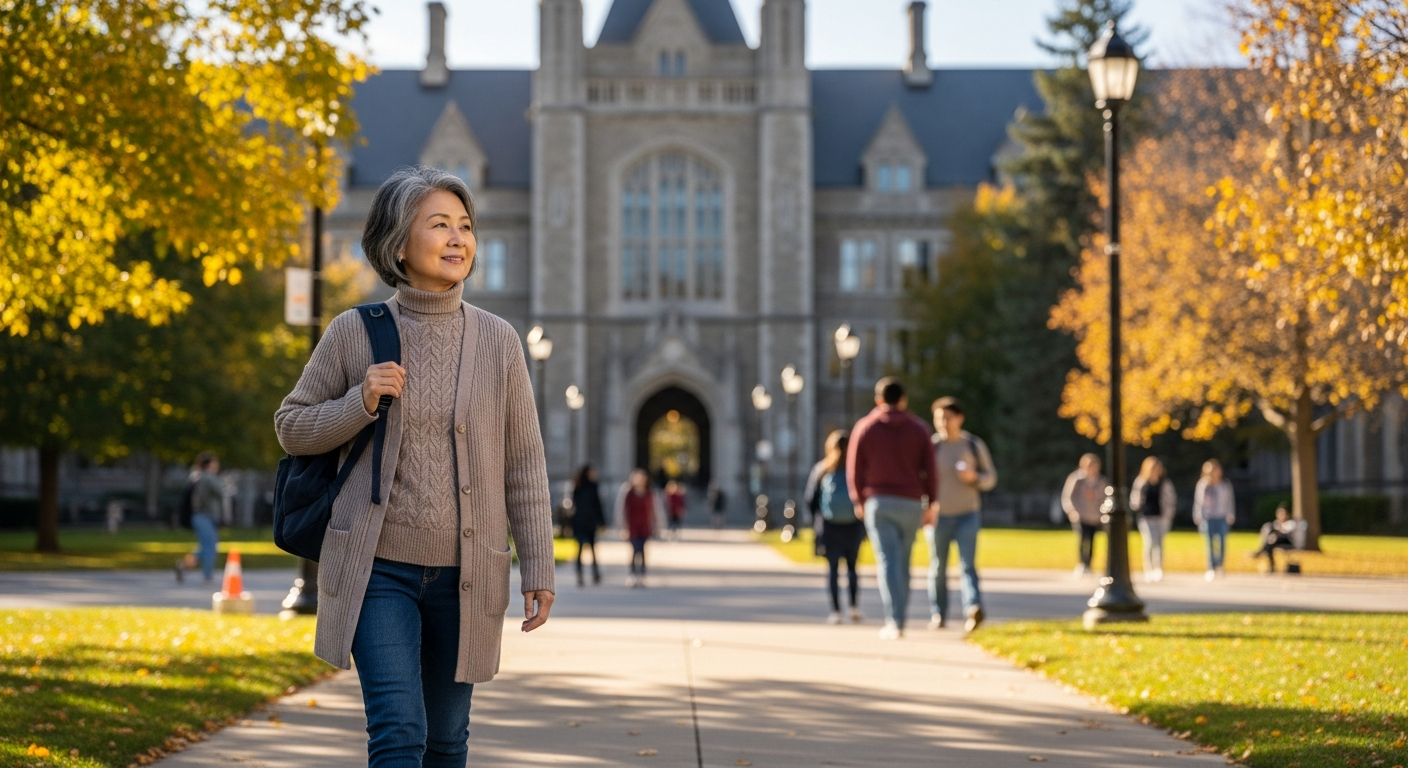
The Mature Student Opportunity (Age 50–65)
More Ontario colleges and universities are welcoming mature students:
- College diploma programs: 2 years, $30,000–$50,000 total
- Bachelor's degree (career-change focus): 3–4 years, $60,000–$120,000
- Master's degree (specialized fields): 1–2 years, $40,000–$80,000
- Certification programs (trades, healthcare, tech): 6 months–2 years, $15,000–$40,000
The advantage of mid-career education: You have 15–20 working years remaining before full retirement, allowing you to recoup education investment through higher earnings in the new field.
Financial Reality of Career Change at 50+
| Education Path | Duration | Cost | Expected Earnings Increase |
|---|---|---|---|
| Skilled Trades (plumber, electrician) | 2 years | $25,000–$40,000 | +$20,000–$35,000/year |
| Healthcare (RN, respiratory therapist) | 2–3 years | $40,000–$60,000 | +$25,000–$45,000/year |
| Tech Bootcamp (coding, data analytics) | 3–6 months | $15,000–$25,000 | +$15,000–$30,000/year |
| Master's Degree (education, counseling) | 1–2 years | $40,000–$80,000 | +$25,000–$50,000/year |
Return on investment: In many cases, the earnings increase pays back education costs within 3–5 years, with 10–15 additional years of higher earnings before retirement.
How a Reverse Mortgage Funds Career Change Education
A reverse mortgage allows you to:
1. Access Home Equity Without Selling
Keep your home while withdrawing tuition funds. No pressure to liquidate RRSPs (preserving tax-deferred growth) or TFSAs (losing contribution room).
2. Maintain Flexibility During Studies
If you need to reduce work hours while studying, you don't have monthly reverse mortgage payments to worry about. Your cash flow is flexible.
3. Bridge the Income Gap
Many mature students reduce work hours (50% to 75% employment) while studying. A reverse mortgage covers the income loss during this transition period.
4. Preserve Retirement Savings
Your CPP, pension, RRSPs, and TFSAs remain intact, growing for retirement. The reverse mortgage is the education funding source.

Real Ontario Mature Student Stories
Marcus, Age 54: Electrician Career Change
Marcus spent 30 years in corporate procurement but felt burned out. He decides to become a licensed electrician—higher income, hands-on work, early semi-retirement possible at 62.
- Apprenticeship cost: $35,000 (2 years)
- Reduced work income during apprenticeship: -$25,000/year
- Total funding need: $85,000 (tuition + income gap)
Marcus applies for a reverse mortgage on his $850,000 home. He borrows $100,000, funds the apprenticeship and income gap, completes his license at age 56, and earns $75,000–$90,000/year as an electrician for 10 years before full retirement. He repays the reverse mortgage from increased earnings.
Jennifer, Age 52: RN to Master's in Nursing Education
Jennifer is an experienced RN but wants to transition to nursing education, requiring a Master's degree.
- Master's program cost: $60,000 (2 years, part-time)
- Work-study balance: Reduce to 50% RN work, income drops $35,000/year
- Total funding need: $130,000
Jennifer borrows $140,000 via reverse mortgage. She completes her master's at 54, transitions to a nursing education role at $95,000/year (up from $75,000 as bedside RN), and works 12 years before retirement. The Master's degree investment pays off significantly.
Timing Your Reverse Mortgage Education Plan
| Phase | Timeline | Action |
|---|---|---|
| Exploration | Months 1–3 | Research programs; attend information sessions; talk to career counselors |
| Reverse Mortgage | Months 2–4 | Apply for reverse mortgage; get approved; funds available before school starts |
| Studies | Years 1–2 (or longer) | Attend school part-time or full-time; live on reverse mortgage funds if needed |
| Job Search & Transition | Months 1–6 after graduation | Secure employment in new field; begin repaying reverse mortgage from new income |
| Repayment | Years 3–15 | Reverse mortgage repaid from increased earnings in new career |
Reverse Mortgage vs. Student Loans for Mature Students
| Funding Source | Interest Rate | Repayment | Best For |
|---|---|---|---|
| Reverse Mortgage (55+) | 7.0–8.5% | Optional; no monthly payment | Homeowners wanting flexible repayment |
| Government Student Loan | 5.0–7.5% | 6-month grace; then required monthly | Recent graduates with lower income initially |
| Personal Line of Credit | 7.0–9.0% | Monthly payment required | Borrowers with employment income |
| RRSP Home Buyers Plan | N/A (self-directed withdrawal) | Repay to RRSP over 15 years | First-time home buyers (doesn't apply here) |
For mature students, reverse mortgages win because:
- No monthly payments during school (when income is reduced)
- Flexible repayment aligned with new career earnings
- No credit check required (unlike student loans)

Government Education Grants for Mature Students
Ontario offers limited support for mature learners:
- Canada Lifetime Learning Plan: Withdraw up to $8,000/year from RRSPs tax-free for eligible full-time education (repay to RRSP)
- Ontario Student Grants: Some availability for low-income mature students (income-tested)
- Municipal Community Colleges: Lower tuition ($10,000–$20,000/year) than universities; strong employment outcomes
- Employer Education Assistance: Some employers fund employee education; ask your current employer
Reverse mortgages complement government programs—you can claim grants/RRSP withdrawals first, then use a reverse mortgage for remaining costs.
Tax Considerations
According to the CRA, education expenses for career development are not directly tax-deductible. However, if you work while studying and the employer requires education, some professional development costs may be deductible. Additionally, reverse mortgage proceeds are not taxable income, so education funding doesn't create a tax liability.
According to Ontario government guidance, mature students may qualify for government grants and bursaries that can supplement reverse mortgage funding. Research your specific program's eligibility before borrowing the full amount—government support can reduce your reverse mortgage need.
Keys to Success: Mature Student + Reverse Mortgage
- Choose a program with clear ROI: Ensure earnings increase will recoup education costs within 3–5 years
- Have a job-search plan: Secure employment in the new field before graduation to manage reverse mortgage repayment
- Balance work and studies: Many mature students study part-time while working reduced hours; a reverse mortgage funds this transition
- Plan repayment from new career earnings: Don't count on retirement savings to repay; plan to repay from increased income
Key Takeaways
- Mature students (age 50–65) can pursue career-change education with reverse mortgage funding
- Reverse mortgages ($50,000–$150,000) cover tuition and income gaps during studies
- No monthly payments allow flexible work-study balance during education
- Expected earnings increase in new career typically repays education investment within 3–5 years
- Work with Rick Sekhon Reverse Mortgages to align education timeline with reverse mortgage funding
Frequently Asked Questions
Will going to school affect my ability to get a reverse mortgage?
No. Student status doesn't disqualify you from a reverse mortgage. Lenders care about home equity and age (55+), not employment status. However, apply for the reverse mortgage before leaving your job—it's easier to show stable employment history.
Can I take out a reverse mortgage specifically for education without using it for living expenses?
Yes. You control how reverse mortgage funds are used. You can direct them entirely to tuition and fees, or use them for living expenses if you reduce work hours during studies.
What if I don't graduate or change my mind about the career change?
Reverse mortgage proceeds are yours to use as you wish. If you don't complete the program or change your mind, the funds can be used for other purposes (home renovations, debt repayment, etc.). However, you'll still need to repay the reverse mortgage—plan accordingly.
Can I use my RRSP for education AND get a reverse mortgage?
Yes. Use the Canada Lifetime Learning Plan to withdraw RRSP funds ($8,000/year) for education, and use a reverse mortgage for additional costs. This stacks government support with home equity to maximize education funding.
Will the earnings increase from my new career be enough to repay the reverse mortgage?
This depends on your program and job market. Before enrolling, research expected salaries in your new field. If earnings increase by $20,000+/year, you can repay a $100,000 reverse mortgage within 5 years while maintaining living expenses. If earnings increase is minimal, reconsider the program's value.
What if I'm not 55 yet but want to pursue education?
If you're under 55, you'll need alternative funding (student loans, HELOC, RRSP withdrawal). Reverse mortgages require age 55+. Consider whether you can complete education before turning 55, then revisit reverse mortgage options if needed.
Ready to Learn More?
Find out exactly how much you could unlock from your home — free and no obligation.
Related Articles
Reverse Mortgage for Funding Your Own Master's Degree in Retirement
Use home equity to pursue graduate education at 55+. Master's programs, tuition costs, and career advancement strategies for retired professionals in Ontario.
Read →Reverse Mortgage for Skills Training: Career Transitions in Retirement
Fund professional development and career transitions in retirement using a reverse mortgage. New skills, new income, new purpose for Ontario seniors.
Read →Reverse Mortgage When Aging Homeowner Discovers Hidden Defects: Seller Non-Disclosure Remediation
Fund major repairs when aging homeowner discovers undisclosed property defects. Reverse mortgage for remediation costs in Ontario.
Read →