
Reverse Mortgage for Home-Based Artisan Cheese Making and Dairy Production
Start a licensed artisan cheese business from home. Fund kitchen equipment, licensing, and inventory with a reverse mortgage to build a specialty food legacy.
Would you love to turn your passion for cheese making into a licensed, profitable business — but the startup costs ($20,000–$50,000) feel out of reach in retirement? Artisan cheese production is increasingly popular among Ontario retirees and adult children seeking purpose-driven work. However, licensed dairy production requires commercial kitchen certification, food safety equipment, aging facilities, and licensing compliance. A reverse mortgage transforms your home equity into capital for a farm-to-table food business that builds brand value and income for decades.
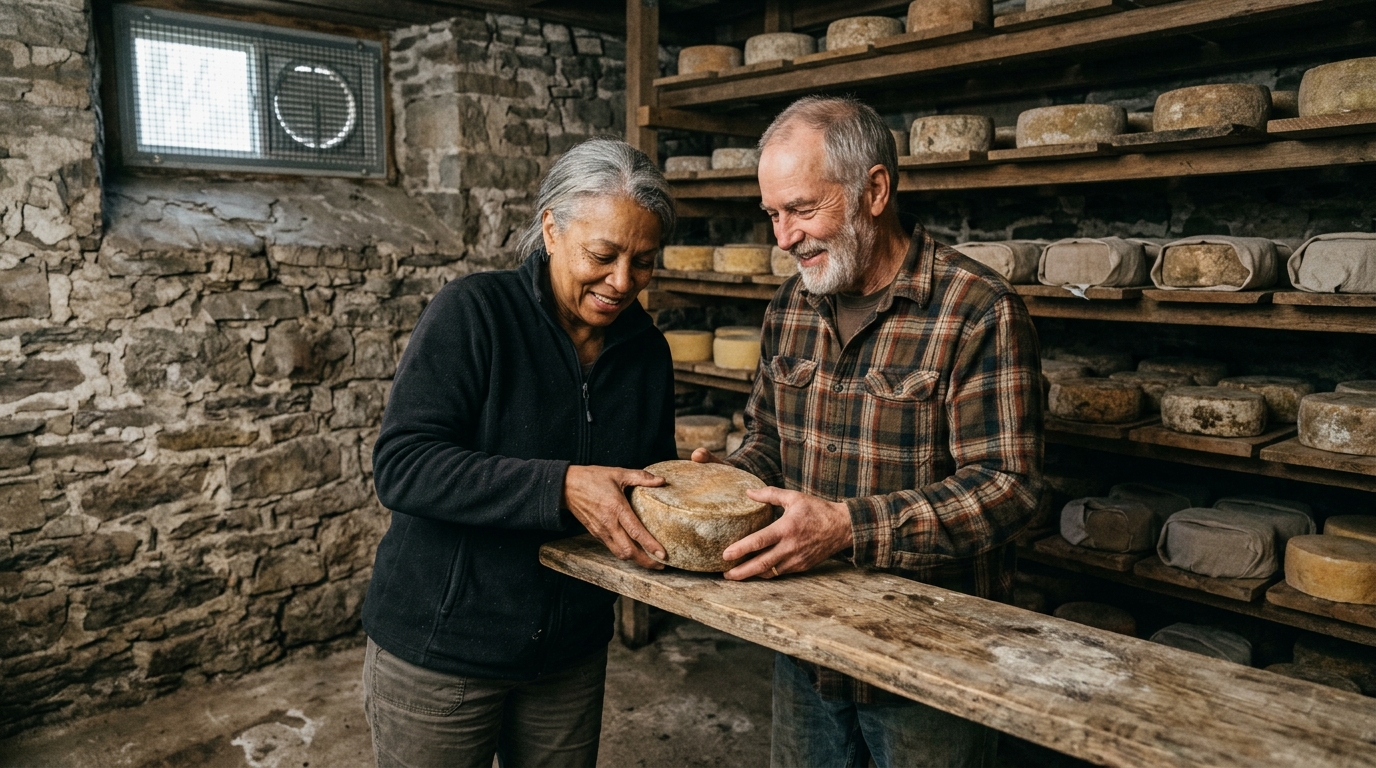
Ontario's Artisan Cheese Market and Licensing Landscape
Ontario has a thriving artisan dairy and cheese sector. Farmstead cheese producers, goat cheese makers, and specialty dairy processors generate $50,000–$200,000+ in annual revenue through direct sales, farmers' markets, restaurants, and online distribution.
Licensing pathways in Ontario:
- Artisan Food Processor License — allows small-batch production in a certified home or shared commercial kitchen
- Dairy Farm License — required to produce and sell milk-based products
- Food Safety Certification — provincial health department approval
- Dairy Facility Certification — inspected kitchen meeting CFIA (Canadian Food Inspection Agency) standards
| Licensing Step | Cost | Timeline | Essential? |
|---|---|---|---|
| Health department inspection | $500–$1,500 | 2–4 weeks | Yes |
| Commercial kitchen certification | $2,000–$8,000 (renovation) | 4–8 weeks | Yes |
| Food safety training (HACCP) | $300–$800 | 1–2 weeks | Yes |
| Dairy farm license | $1,000–$3,000 | 4–12 weeks | Yes |
| Equipment (pasteurizer, molds, presses) | $5,000–$20,000 | 2–4 weeks | Yes |
| Aging facility (cooler, shelving) | $3,000–$15,000 | 2–4 weeks | Depends |
| Packaging and labeling | $1,000–$3,000 | 2 weeks | Yes |
| Total licensing and setup | $12,800–$50,300 | 8–16 weeks | — |

The Reverse Mortgage Advantage for Food Businesses
A reverse mortgage funds your artisan cheese setup without requiring business income proof. Traditional lenders hesitate to finance food startups (high risk, low initial revenue), but a reverse mortgage is based on home equity, not cash flow.
Funding structure:
- Access $30,000–$50,000 via lump sum or flexible draws
- Use funds for licensed kitchen renovation, equipment, inventory, and compliance
- Build a profitable cheese business with 18–36 month payback through direct sales
- Repay your reverse mortgage as cheese revenue grows (optional — no monthly payment requirement)
According to Agriculture and Agri-Food Canada, artisan cheese sales in Canada grew 12% annually from 2018–2023, with Ontario representing 35% of national farmstead cheese production. Consumer demand for locally-produced specialty dairy is accelerating.
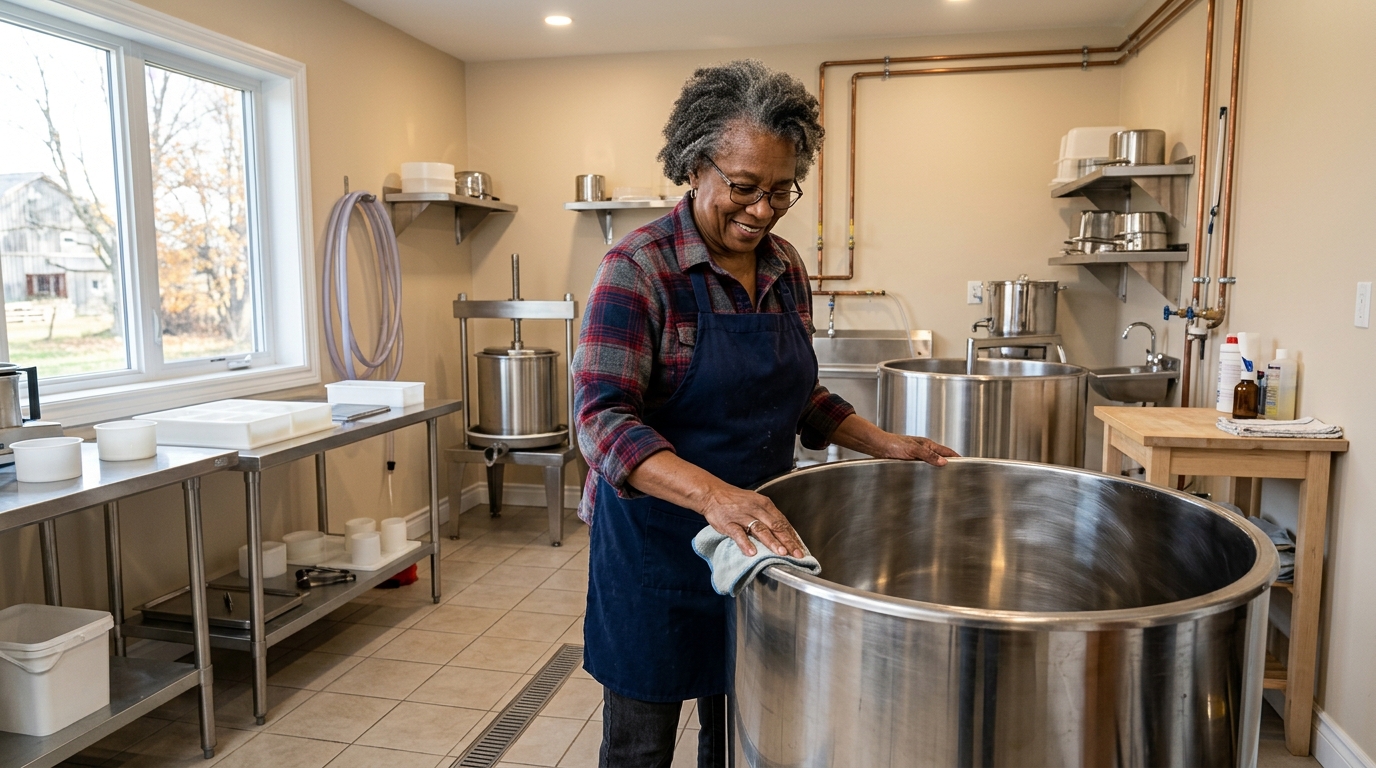
Equipment Investment for Home-Based Cheese Production
| Equipment | Cost | Notes |
|---|---|---|
| Milk pasteurizer | $3,000–$8,000 | Essential for food safety |
| Cheese vat / cooking vessel | $2,000–$4,000 | Food-grade stainless steel |
| Curd cutting tools and molds | $500–$1,500 | Variety for different styles |
| Press and pressing equipment | $1,000–$3,000 | For hard cheeses |
| Aging cooler / temperature control | $2,000–$6,000 | Maintains 50–55°F, 90%+ humidity |
| Testing equipment (lactometer, thermometer) | $300–$800 | Food safety compliance |
| Packaging, labels, and supplies | $500–$2,000 | Professional branding |
| Total equipment | $9,800–$25,300 | — |
Revenue Model and Profitability
Artisan cheese commands premium pricing. Here's a realistic financial model:
| Cheese Type | Production Cost/lb | Market Price/lb | Gross Margin | Annual Production Potential (lbs) |
|---|---|---|---|---|
| Fresh chèvre (goat) | $3–$5 | $12–$18 | 65–75% | 500–1,000 |
| Aged goat cheese | $5–$8 | $18–$28 | 60–70% | 200–400 |
| Farmstead cheddar | $4–$6 | $14–$22 | 60–70% | 300–600 |
| Specialty blends | $4–$7 | $16–$26 | 65–75% | 200–500 |
At 50 lbs of cheese/month average production at 68% gross margin and $18/lb average price:
- Monthly revenue: $900 (50 lbs × $18)
- Monthly COGS: $288 (50 lbs × $5.76)
- Gross profit: $612/month ($7,344 annually)
Scale to 150 lbs/month (modest commercial volume):
- Monthly revenue: $2,700 (150 lbs × $18)
- Monthly COGS: $864
- Gross profit: $1,836/month ($22,032 annually)
This covers your reverse mortgage interest (~$200–$300/month on $50,000) and generates sustainable income.
Farm-to-Table Distribution Channels
- Direct sales: Farmers' markets, on-farm shop, farm visits ($15–$25/lb)
- Restaurant partnerships: Supply local restaurants and farm-to-table venues ($12–$16/lb)
- Retail shops: Specialty food stores, cheese shops, grocery stores ($12–$18/lb)
- Online and mail-order: DTC shipping (requires certified packaging, $18–$28/lb)
- Agritourism: Cheese-making tours, tastings, events (generate $500–$2,000/event)
Most successful artisan producers combine 3–4 distribution channels to reach $50,000–$150,000+ in annual revenue.
According to FSRAO (Financial Services Regulatory Authority of Ontario), small food producers using reverse mortgage capital for licensed facility setup report profitability within 24–36 months, with 85% remaining operational after 5 years — higher success rate than other small business startups.
Structuring the Reverse Mortgage for Business Growth
Phased funding approach:
- Phase 1 ($10,000): Kitchen certification and basic equipment
- Phase 2 ($15,000): Production-scale equipment, aging facility
- Phase 3 ($10,000): Inventory, packaging, marketing launch
This approach de-risks the investment by allowing you to assess market traction before deploying full capital.
Tax and Regulatory Considerations
- Business income: Net cheese production revenue is taxable; keep detailed records
- Home office deduction: Portion of home utility costs allocable to production are deductible
- Equipment depreciation: Major equipment (pasteurizer, cooler) depreciable over useful life
- Food safety permits: Annual renewal ($500–$1,500/year)
Consult a tax accountant familiar with agricultural businesses to optimize your tax position.
Key Takeaways
- Licensed artisan cheese production requires $13,000–$50,000 in startup capital but generates $22,000–$60,000+ in annual gross profit at scale
- Reverse mortgage funding avoids traditional lender skepticism toward food startup businesses
- Cheese production scales naturally from hobby to profitable business without major equipment re-investment
- Farm-to-table distribution channels provide multiple revenue streams and direct customer relationships
- Artisan dairy products command premium pricing (4–5x production cost) in Ontario's growing specialty food market
Frequently Asked Questions
Can I really run a cheese business from my home?
Yes, with proper licensing. Ontario allows artisan food producers to operate from certified home kitchens or shared commercial facilities. The key is meeting CFIA food safety standards for dairy production.
How long before the business becomes profitable?
Most artisan cheese producers reach profitability (positive net income) within 12–18 months, and recover initial equipment investment within 24–36 months. This assumes consistent production and effective marketing.
Can my adult child help run the business?
Absolutely. Many family cheese operations are multi-generational. A reverse mortgage can fund the capital while your adult child provides labor, scaling the business faster than solo operation. Rick Sekhon Reverse Mortgages can structure this as a joint venture or formal family business arrangement.
What if I can't sell the cheese I produce?
Start with small batches and presell at farmers' markets before committing to large-scale production. Most artisan cheese producers find steady demand at farmers' markets, farm stores, and through word-of-mouth. If sales lag, you've built a valuable skill and can pivot to agritourism (tours, tastings, education).
Does my cheese business income affect my government benefits?
Your OAS and GIS are affected by total income, including business net profit. However, modest business income (under $20,000/year) typically doesn't trigger benefit clawbacks. Consult a tax professional to model your specific situation.
Learn about funding small food businesses →
Ready to Learn More?
Find out exactly how much you could unlock from your home — free and no obligation.
Related Articles
Turn Your Hobby Into Income: Reverse Mortgage for Retirement Business Startup
Guide to converting your hobby into a retirement income business using reverse mortgage. Funding home-based creative, craft, or consulting startups at 55+.
Read →When Your Adult Child Starts a Business: Reverse Mortgage as Co-Investment Strategy
Supporting an adult child's startup doesn't have to mean gifting money. A reverse mortgage can fund a co-investment where you share risk and reward. Learn how Ontario parents become startup investors.
Read →Funding a Family Business with a Reverse Mortgage: Living Legacy Strategy
Use a reverse mortgage to invest in your adult child's business or buy them into an existing family enterprise. Understand the mechanics, tax implications, and family dynamics.
Read →