
Turn Your Hobby Into Income: Reverse Mortgage for Retirement Business Startup
Guide to converting your hobby into a retirement income business using reverse mortgage. Funding home-based creative, craft, or consulting startups at 55+.
Can you turn a retirement hobby into income-generating business using a reverse mortgage? What happens when you convert woodworking, photography, or consulting from passion project to revenue stream?
Yes. Many retirees discover that their hobby has market value—and a modest reverse mortgage draw ($10,000–$30,000) can transform a hobby into a side income business, often earning $1,000–$5,000 monthly. For retirees on fixed incomes, hobby-to-business conversion supplements CPP/OAS without the stress of full-time employment.
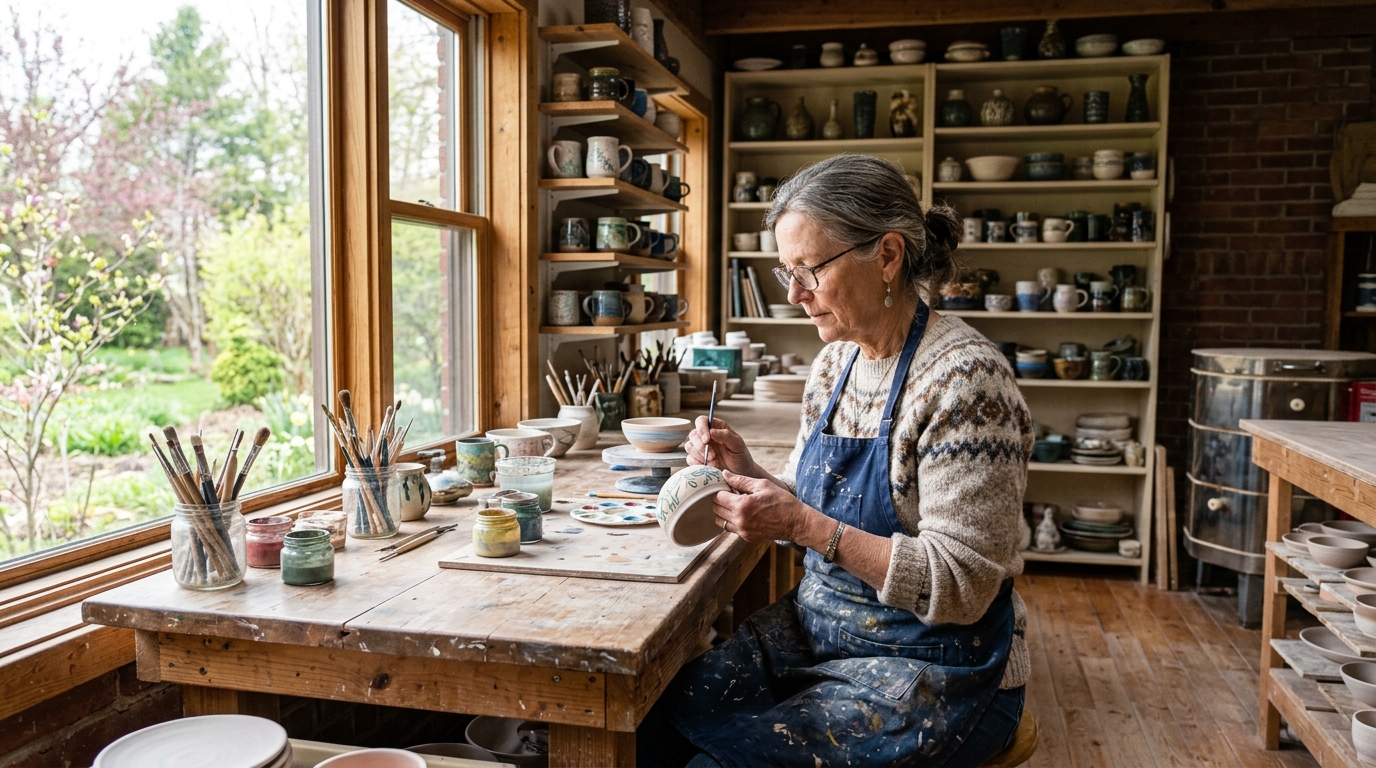
Hobbies With Genuine Income Potential
Not all hobbies translate to income. But some have proven market demand:
| Hobby | Market Demand | Startup Capital Needed | Income Potential (Annual) |
|---|---|---|---|
| Woodworking (furniture, cutting boards, toys) | High (Etsy, custom orders) | $8,000–$15,000 (tools, materials, workspace) | $15,000–$40,000 |
| Photography (portraits, events, stock photos) | High (weddings, events, microstock) | $3,000–$8,000 (camera, lighting, editing software) | $12,000–$50,000 |
| Jewelry making (handcrafted, custom) | High (Etsy, galleries, custom orders) | $5,000–$12,000 (tools, materials, kiln/equipment) | $10,000–$35,000 |
| Writing/editing (books, blog sponsorships, ghost writing) | Moderate–High | $1,000–$3,000 (software, website, marketing) | $8,000–$30,000 |
| Consulting (in your former career field) | High | $2,000–$5,000 (website, licensing, insurance) | $20,000–$80,000+ |
| Teaching (online courses, workshops, tutoring) | High | $3,000–$8,000 (platform, marketing, setup) | $10,000–$40,000 |
| Crafts (pottery, painting, fiber arts) | Moderate | $5,000–$15,000 (materials, kiln/studio, displays) | $8,000–$25,000 |
| Pet care (dog walking, pet sitting, grooming) | High | $1,000–$4,000 (insurance, tools, marketing) | $15,000–$35,000 |
According to the Canadian Federation of Independent Business, 34% of retirees who start part-time businesses based on hobbies achieve $15,000+ annual income by year 2. Hobby-based businesses have higher survival rates (72% at 3 years) than forced-to-start businesses because passion sustains the owner through slow periods.
Financial Advantage: Passive Interest Income Timing
Unlike employment (where you must earn income to offset RM interest), hobby businesses allow you to compound income strategically:
Year 1 hobby business: $8,000 income (part-time, learning phase)
- RM interest cost: $2,500 (on $30,000 balance at 8.5%)
- Net income: $5,500 (covers 2 months of living expenses)
- Business is building reputation, not yet profitable
Year 2 hobby business: $18,000 income (established, referrals)
- RM interest cost: $2,800 (balance grew to $33,000)
- Net income: $15,200 (covers 6 months of living expenses)
- Cash flow improves
Year 3 hobby business: $28,000 income (stable, recognized brand)
- RM interest cost: $3,100 (balance ~$36,500)
- Net income: $24,900 (covers 10 months of living expenses)
- Business is largely self-sustaining
Combined income (CPP + OAS + hobby business): $42,000 CPP/OAS + $28,000 hobby = $70,000 household income (vs. $42,000 without hobby business).
The reverse mortgage funded the launch; the hobby business now covers the interest and grows your retirement income.
Case Study: The Woodworking Pivot
Robert, age 63, Greater Toronto Area
Robert retired as a manufacturing engineer but spent his life making furniture in his garage—custom tables, cutting boards, children's toys. Friends begged him to sell.
The opportunity:
- Etsy shop established; immediate demand (backlog of custom requests)
- Local craft fair invited him (booth space $800/year)
- Problem: No capital to buy quality materials, upgrade tools, hire part-time help
Reverse mortgage strategy:
- Home value: $450,000 (paid off)
- RM approved: $20,000 lump sum
- Allocation:
- $8,000: Premium wood, finishes, materials (bulk purchasing)
- $6,000: Upgraded tools (band saw, CNC router)
- $4,000: Part-time workshop assistant (20 hrs/week at $20/hr)
- $2,000: Website upgrade, Etsy shop premium features, packaging
Year 1 results:
- Sales: $32,000 (via Etsy, craft fairs, custom orders)
- Materials/labor costs: $18,000
- Gross profit: $14,000
- RM interest cost: $1,700
- Net to Robert: $12,300
Year 2–3:
- Sales growth to $45,000–$55,000 annually
- Part-time assistant hired full-time
- Craft fair booth now profitable ($3,000+ per event)
- RM balance: $22,500 (grew from $20,000 + compounding interest)
- Retirement income: Increased by $45,000/year vs. CPP-only scenario
Long-term impact: Robert's hobby became a $50K+ annual business. The $20,000 RM draw paid for itself within 18 months. At age 75, he can step back to part-time (maintain $20K annual income), keep RM balance stable, and leave the business to his daughter (who is now trained and interested).
Setting Up a Hobby Business: Legal and Tax Basics
Before converting hobby to business, IRCC/CRA considerations:
Business Registration
- Register for GST/HST if anticipated revenue exceeds $30,000
- Register with province for business license (self-employed sole proprietor)
- Cost: $50–$200; annual renewal
Tax Filing
- Self-employment income must be reported on Schedule 8 (self-employed income)
- Deductible business expenses reduce taxable income
- Home-office deduction available (if workshop/office is dedicated space)
Deductible expenses for hobby business: ✓ Materials and supplies ✓ Equipment (depreciable over time via CCA) ✓ Workspace rent (if not home-based) or home-office deduction ✓ Utilities (portion allocated to business use) ✓ Marketing and advertising ✓ Professional fees (accountant, lawyer) ✓ Insurance (business liability)
✗ Reverse mortgage interest (personal debt, not business expense) ✗ Personal expenses (rent, groceries, personal travel) ✗ Hobby supplies purchased before business launch (already deducted in personal time)
According to the CRA, a hobby becomes a business when you pursue it with intention to make profit, keep records, and actively market it. Once classified as a business, all income must be reported and eligible expenses can be deducted, reducing net business income.
Impact on Government Benefits
For CPP/OAS recipients:
- Self-employment income does NOT affect CPP (already claimed)
- Self-employment income DOES trigger OAS clawback if total household income exceeds ~$90,997
Strategy: Keep hobby business income under $15,000/year in early years to avoid OAS clawback, especially if you're age 65–74 and claiming OAS. After 74, OAS is guaranteed (no clawback), so higher income is fine.
Pricing Your Hobby Business
Many retirees underprice because they're not desperate for income. However, underpricing:
- Creates unsustainable workload (too many orders at low price)
- Trains customers to expect discounts (race to the bottom)
- Makes RM interest indefensible (you're paying interest to fund a hobby, not a real business)
Pricing Formula
Cost per unit + 150–300% markup = Retail price
Example (woodworking cutting board):
- Materials: $12
- Labor (4 hours @ $25/hour): $100
- Overhead (10%): $11.20
- Total cost: $123.20
- Retail price at 250% markup: $308
Is $308 too high for a cutting board? Not if it's custom, handmade, high-quality wood. Etsy cutting boards sell for $100–$400+. Pricing fairly ensures the business is genuinely profitable and RM interest is justified.
Key Takeaways
- ✓ Hobby-to-business conversion is realistic income path for retirees; 72% survive 3+ years
- ✓ Reverse mortgage provides startup capital ($5,000–$30,000) without employment pressure
- ✓ Hobby businesses achieve profitability within 18–24 months in most cases
- ✓ Register as self-employed; report income on taxes; deduct legitimate business expenses
- ✓ Price fairly to ensure genuine profit; don't underprice due to "retirement flexibility"
- ✓ Keep annual income under $15K initially to avoid OAS clawback (if age 65–74)
Frequently Asked Questions
Can I claim the reverse mortgage interest as a business deduction since it funds my hobby business?
No. The RM is personal debt against your home, not a business loan. Only business-specific expenses (materials, tools, marketing) are deductible. However, RM proceeds are tax-free, so you're not required to report them as income, giving you a cash buffer.
What if my hobby business fails in year 2? Am I stuck with the RM balance?
Yes. The RM is against your home regardless of business outcome. If the business doesn't generate expected income, you still owe the RM balance. This is why realistic pricing and market validation (pre-launch demand) are critical before committing.
Can I hire my spouse or adult child to help with the hobby business?
Yes. You can employ family members and deduct their wages as business expenses. However, wages must be reasonable (fair market rate for the work, not artificially low) or CRA may disallow them. Document all hours and payments for audit purposes.
How much of my home can I deduct as "home office" for hobby business?
You can deduct the percentage of home space used exclusively for the business (e.g., 200 sq ft workshop in 2,000 sq ft home = 10% of utilities, rent/mortgage portion, property tax). However, using RM to fund renovations for workspace doesn't trigger additional deductions—only the space allocation does.
Should I incorporate my hobby business as a separate legal entity?
Not necessary at startup. Sole proprietor is simplest and cheapest (just self-employment reporting). Incorporation ($500–$1,000, plus annual compliance) makes sense once revenue exceeds $50,000+ annually or if you have liability concerns (manufacturing products with injury risk, for example).
Ready to monetize your passion? Contact Rick Sekhon Reverse Mortgages to discuss funding your retirement hobby business startup.
Ready to Learn More?
Find out exactly how much you could unlock from your home — free and no obligation.
Related Articles
Reverse Mortgage When Home-Based Business Income Drops: Regulatory Disruption Funding
Regulatory changes disrupt home business income (Airbnb limits, new licensing). Reverse mortgage covers income loss and business pivoting in Ontario.
Read →Micro-Business in Retirement: Using Reverse Mortgage for Side Income Startup
Explore how Ontario retirees fund home-based micro-businesses and side hustles using reverse mortgage capital for sustainable retirement income.
Read →Reverse Mortgage for Aging in Place With Fibromyalgia: Home Modifications for Invisible Illness
Fund home modifications for aging with fibromyalgia. Reverse mortgage enables accessible design for pain management, energy conservation, and quality of life.
Read →